How To Fix Uneven Foam Density On The PU Foam Production Line
Sep 29, 2026
Uneven foam density is a common quality defect in the PU foam production line, compromising foam stability and product consistency.
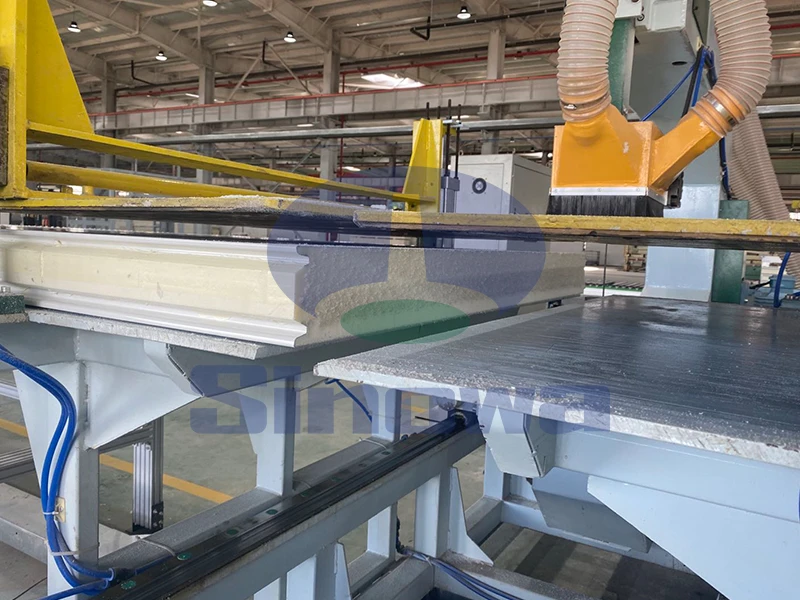
Raw material inconsistency is one of the primary root causes of uneven foam density on the PU foam production line. PU foam manufacturing relies on precise chemical reactions between polyols, isocyanates, catalysts and blowing agents, and minor variations in raw material properties will directly disrupt the foaming balance. Fluctuations in the moisture content and hydroxyl value of polyols can alter reaction rates, while inconsistent purity of auxiliary materials leads to uneven cell formation inside the foam. In addition, uneven mixing of different batches of raw materials before feeding also causes localized density differences in finished foam products. To resolve this issue, production staff must establish standardized raw material inspection and pre-treatment procedures. All raw materials need to be fully stirred and homogenized before entering the PU foam production line, and materials with unstable property indicators should be screened out in advance. Maintaining consistent raw material batch uniformity lays a solid foundation for stable foam density and avoids periodic density deviations in continuous production.
Imprecise material metering and feeding system errors are critical factors triggering uneven density in the PU foam production line. The foaming process requires an accurate proportion of all chemical components, and even tiny metering deviations will magnify density differences during reaction and expansion. Long-term operation of metering pumps, flow valves and delivery pipelines will cause wear, aging and calibration drift, resulting in inconsistent actual feeding volumes compared with set parameters. Blocked filters and unsmooth material delivery pipelines can also lead to intermittent feeding, making the foam expand unevenly in different production sections. The effective solution is to implement regular equipment calibration and daily maintenance for the feeding system. Technicians need to calibrate metering equipment at fixed cycles, replace worn seals and valve components in a timely manner, and clean pipeline filters regularly to ensure smooth and continuous material delivery. Stable and accurate feeding proportion fundamentally eliminates density fluctuations caused by metering errors in the PU foam production line.
Unreasonable mixing process parameters are another major reason for uneven foam density in PU foam production. The mixing head of the PU foam production line undertakes the core task of blending raw materials evenly, and mixing speed, mixing time and pressure directly determine the uniformity of the material mixture. Too low mixing speed or insufficient mixing time will lead to incomplete dispersion of raw materials, forming local high-viscosity areas that affect foaming expansion. Excessively high mixing speed may introduce excessive air bubbles, causing uneven cell structure and inconsistent density after foam curing. Meanwhile, unstable mixing pressure will disrupt the uniform reaction of blowing agents and catalysts. Production operators need to optimize mixing parameters according to actual production conditions. It is necessary to test and determine the optimal matching of speed, time and pressure to ensure full and uniform mixing of all raw materials. Keeping mixing parameters fixed and consistent in batch production effectively improves the uniformity of foam density and reduces defective products.
Fluctuations in production environment temperature and humidity greatly affect the density stability of products from the PU foam production line. PU foaming is a temperature-sensitive chemical reaction process, and ambient temperature changes will alter raw material viscosity, reaction rate and foam expansion efficiency. Low environmental temperature increases raw material viscosity, slowing down the foaming reaction and leading to insufficient foam expansion and higher local density. Excessively high temperature accelerates the reaction speed, causing premature curing of partial foam and uneven expansion space. Humidity fluctuations also interfere with the foaming reaction; excessive ambient humidity will make raw materials absorb moisture, triggering abnormal chemical reactions and disrupting density balance. Enterprises need to build a constant-temperature and constant-humidity production environment for the PU foam production line. Install professional temperature and humidity adjustment equipment to maintain stable environmental indicators throughout the production process, and avoid opening production area doors and windows frequently to prevent sudden environmental changes from affecting foam forming quality.
Unbalanced formula ratio and improper additive usage easily cause uneven foam density in PU foam production. The coordination ratio of main materials and auxiliary additives directly determines the foaming state and final density of PU foam. Unreasonable matching of polyols and isocyanates will lead to unbalanced gelling and blowing reactions, resulting in inconsistent expansion degrees of different foam parts. In addition, unreasonable dosage of silicone oil, catalyst and blowing agent will also destroy the foam cell structure stability. Insufficient silicone oil cannot form uniform foam cells, while excessive catalyst leads to too fast local reaction and irregular foam expansion. Production technicians need to optimize the formula system pertinently, adjust the proportion of main materials and auxiliary additives according to production characteristics, and maintain the coordination of reaction speed and expansion efficiency. Fine-tuning the formula ratio and standardizing additive dosage can effectively improve foam uniformity and solve density unevenness problems stably.
Irregular post-processing and equipment aging also aggravate uneven foam density in the long-term operation of the PU foam production line. Long-term use of production equipment will lead to aging of mixing heads, conveyor belts and forming molds, causing unsmooth material outflow and uneven stress on foam during forming. Residual material accumulation in equipment gaps will affect subsequent material mixing and foaming, forming batch density differences. In addition, inconsistent curing time and temperature in the post-forming stage will lead to different shrinkage degrees of foam products, resulting in uneven overall density. It is essential to establish a complete equipment maintenance and post-production management system. Regularly clean residual materials inside the PU foam production line, repair and replace aging equipment components, and standardize the curing process parameters. Strict post-processing management can further consolidate foam forming quality, eliminate latent density defects, and ensure long-term stable and consistent product density of the production line.
Gallery
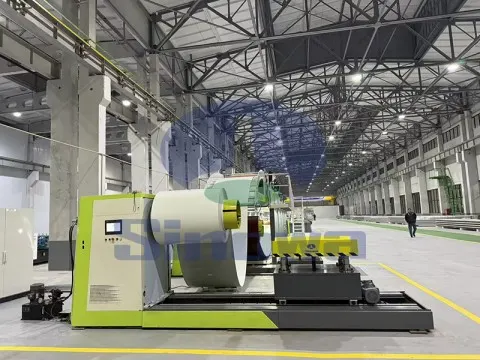
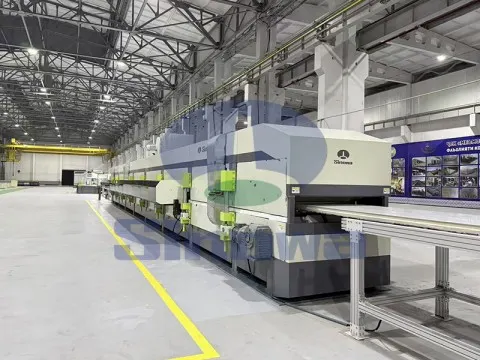
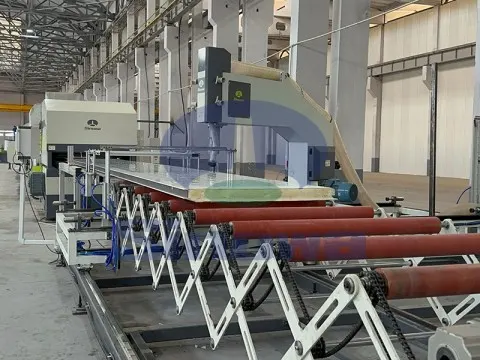
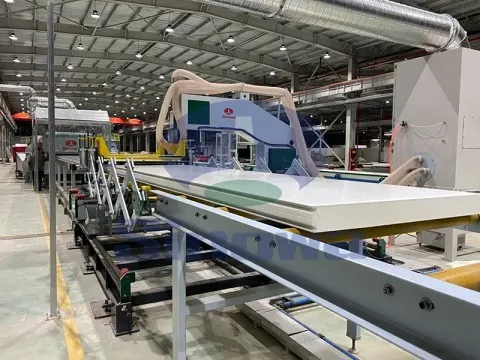
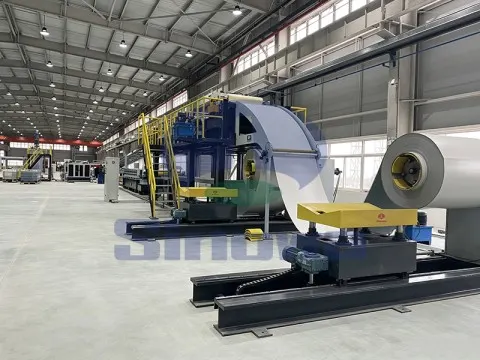
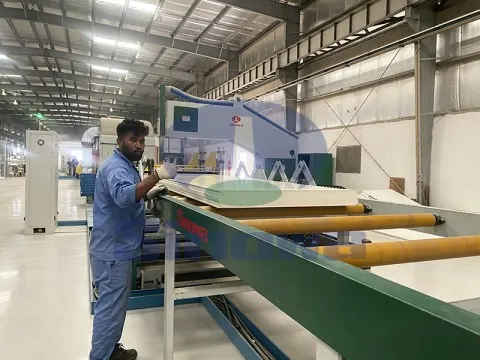
Sinowa is a professional manufacturer of sandwich panel machine in china, we provide diversified and high-performance sandwich panel production lines, including fully automatic continuous PU sandwich panel line and customized special lines to meet mass production and personalized order demands. These sandwich panel lines support processing multiple foam core materials, such as PU, PIR, mineral wool, rock wool and glass wool, covering different insulation and fireproof standards.
Featuring stable operation, high efficiency, energy saving and easy maintenance, our PU sandwich panel line deliver sandwich panels with excellent thermal insulation, fire resistance, sound insulation and lightweight durability. The finished panels are widely applied in industrial workshops, warehouse roofing and wall cladding, cold storage insulation, serving global construction and industrial insulation markets.
https://www.cnsinowa.com/faqs/how-to-fix-uneven-foam-density-on-the-pu-foam-production-line.html
Main Products
-

Continuous PU Sandwich Panel Production Line
This continuous PU sandwich panel production line is an integrated automatic equipment. It covers uncoiling, forming, foaming, curing and cutting processes. With automatic raw material proportioning and precise temperature & pressure control, PIR sandwich panel production line continuously composites panels with double skins. Polyurethane sandwich panel production line stably produces steel and aluminum sandwich panels. Featuring high automation, the line makes fireproof and thermal-insulation panels for building enclosure and cold storage. -

Rock Wool Sandwich Panel Production Line
Continuous rockwool sandwich panel production line is an automatic integrated production equipment, consisting of uncoiling, forming, gluing and compounding, heating curing, fixed-length cutting, automatic stacking and other modules. The mineral wool sandwich panel production line continuously conveys color steel plates and rock wool core materials to automatically complete lamination and curing, which can produce fireproof and thermal insulation sandwich panels. Featuring high automation degree and stable operation, this production line is suitable for mass production of panels used for building walls, roofs and other scenarios. -

Phenolic Insulation Board Production Line
This integrated automatic production line continuously manufactures PU and phenolic insulation boards. The insulation board production line covers raw material proportioning, high-pressure foaming, laminating, curing and fixed-length cutting. Featuring high automation and stable molding, the insulation panel production line supports various surface materials. PU boards offer excellent thermal insulation, while phenolic boards have superior fire resistance. These products are widely used in construction, cold chain, ventilation ducts and other thermal insulation fields.
Other FAQs
- Price Composition Of Complete PU Sandwich Panel Production Line
- Does The Continuous PU Sandwich Panel Manufacturing Line Support Automatic Stacking And Packing
- Can PIR Sandwich Panel Production Line Produce Prefabricated Container House Roof Panels
- Why Is The Foaming Expansion Rate Unstable On The PU Foam Production Line
- How Does A PUF Sandwich Panel Production Line Cut Panels To Fixed Lengths
- Automatic Error Correction Function Of Polyurethane Sandwich Panel Production Line
- Workshop Space Layout Requirement For PU Sandwich Panel Production Line
- Operator Professional Training Content For PU Sandwich Panel Line
- Energy Consumption Standard Of Automatic PU Sandwich Panel Production Equipment
- What Safety Protection Measures Are Needed For A Polyurethane Sandwich Panel Manufacturing Line
Related Articles
- PIR Sandwich Panel Machinery
- Polyurethane Sandwich Panel Line For Prefabricated House Panels
- Composite PU Sandwich Panel Line
- PIR Sandwich Panel Manufacturing Line With Fire-Resistant Core Material
- Simple Maintenance Sandwich Panel Line
- Continuous PU Sandwich Panel Manufacturing Line For Custom Shapes
- Professional Sandwich Panel Line
- PU Sandwich Panel Equipment For Standard Size Composite Panel Production
- Automatic Steel Structure Sandwich Panel Production Line
- PU Sandwich Panel Production Line For Heat-Resistant Panels