How To Improve The Flatness Of Boards From Insulation Panel Production Line
Oct 13, 2026
Insulation panel flatness directly impacts installation efficiency, thermal performance, and long-term structural integrity across diverse building envelope applications.
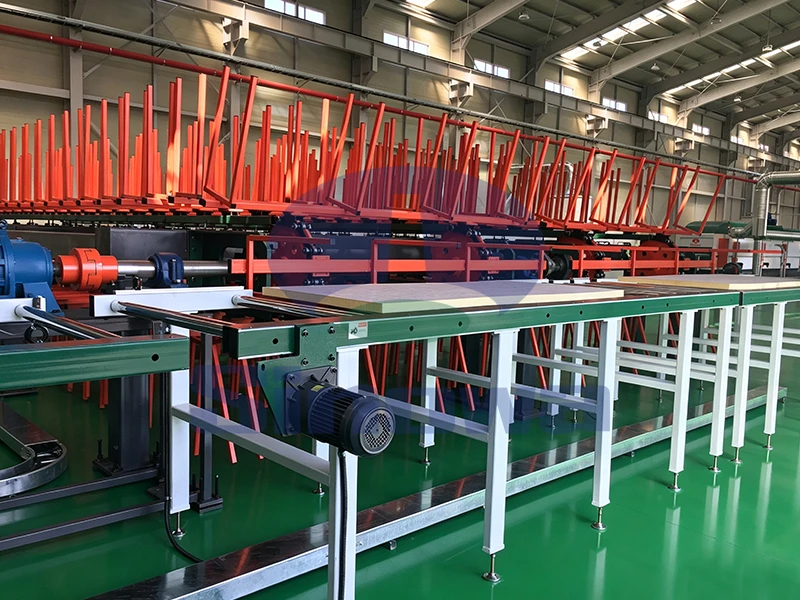
Raw material consistency forms the foundation of flat boards. Variations in foam density distribution, adhesive thickness, and facer material properties all contribute to internal stresses that cause warping or bowing as the panel cures and ages. Polyurethane and polyisocyanurate foam formulations must be precisely metered and mixed to ensure uniform cell structure throughout the panel thickness. Even slight deviations in isocyanate-to-polyol ratio can create differential shrinkage rates across the panel width, leading to concave or convex curvature over time. Facer materials, whether aluminum foil, fiberglass-reinforced kraft, or other laminates, must have consistent tensile strength and dimensional stability; any residual stress from the manufacturing process of the facer itself will transfer to the finished panel. Moisture content in core materials such as expanded polystyrene or mineral wool must also be tightly controlled, since trapped moisture evaporates unevenly during curing and creates localized dimensional changes. Producers should implement incoming material inspection protocols that verify density, thickness tolerance, and moisture levels before materials enter the lamination line, and batch-to-batch variation should be minimized through supplier qualification and regular material audits.
The lamination and pressing stage is where flatness is primarily established. A insulation panel production line must maintain parallel, uniform pressure across the entire width of the panel as materials bond. Calibrating the conveyor belts and press platens to within tight parallel tolerances ensures that pressure is evenly distributed, preventing thinner or thicker zones that translate into uneven foam expansion and subsequent flatness defects. The nip roller gap must be set according to the target panel thickness and checked frequently with feeler gauges or laser measurement devices. Temperature control in the lamination zone is equally critical: facer adhesives must activate uniformly across the panel surface, and the core material must reach its reaction temperature consistently. Hot spots or cold zones create differential curing, leaving residual stresses that manifest as warpage after the panel exits the line. Operators should monitor platen temperatures at multiple points across the width and adjust zone settings based on real-time data, rather than relying on fixed parameters that may drift as equipment wears. Belt speed must also be synchronized with adhesive cure kinetics and foam rise time; running too fast leaves incomplete bonding, while running too slow can over-compress the core and create internal stress patterns.
Cooling and curing after the press represent a critical but often overlooked stage for flatness development. Panels exit the lamination press at elevated temperatures and with chemical reactions still progressing inside the foam core. If they are stacked or constrained before reaching a uniform equilibrium temperature, differential thermal contraction will lock in stresses that later release as bowing or twisting. The cooling conveyor should allow panels to travel freely on a flat, supported surface with forced-air circulation that removes heat evenly from both top and bottom surfaces. Cooling from only one side creates asymmetric shrinkage that curves the panel toward the cooler face. Target exit temperature should approach ambient temperature within a controlled tolerance before panels are conveyed to the cutting and stacking area. Some production lines incorporate a secondary holding section where panels lie flat on spacers that allow air circulation around all edges, promoting even temperature equilibration. The duration of this cooling zone must be matched to panel thickness and ambient conditions; thicker panels require longer dwell time because heat dissipates more slowly from their center. Rushing this stage is one of the most common causes of flatness complaints in the field.
Cutting and trimming operations introduce mechanical stresses that can affect flatness if not handled properly. Hot-wire cutting, band saw cutting, or abrasive cutting each generate heat and mechanical force that can locally distort the panel edges. Excessive cutting speed creates friction heat that softens the foam near the cut line, causing localized shrinkage as it re-cools. Dull cutting tools require more force to penetrate the material, crushing edge cells and creating uneven edge profiles that make panels appear non-flat when laid on a reference surface. Edge trimming should be performed after the panel has fully cooled and stabilized, and the cutting apparatus should maintain consistent feed rate with sharp, properly tensioned blades or wires. Dust and residue buildup on cutting guides can also cause slight deflections in the panel path, introducing subtle irregularities. After cutting, panels should be conveyed on flat rollers or belts without pinched side guides that could introduce edge compression. Any hole drilling or notching should be done in a way that does not create point loads or local stress concentrations that propagate into flatness defects as the panel ages.
Stacking and packaging practices directly determine whether a panel remains flat after it leaves the insulation board production line. Panels that are stacked while still warm or under uneven weight will develop set deformation that becomes permanent once fully cured. Stacking height must be controlled so that bottom panels in a stack are not compressed beyond their elastic limit by the weight above. Spacers between layers should be positioned at consistent intervals aligned with structural support points, never allowing panels to span unsupported between stack corners. The stacking area itself must be flat and level; a sloped or uneven stacking rack will induce progressive warpage as panels rest under their own weight. Plastic or film wrapping applied too tightly around a stack can also pull panels out of flatness as the film contracts with temperature changes. Allow for some slack in wrapping, or apply breathable strapping that holds the stack together without compressing panel faces. Panels should not be strapped tightly across the middle where bending forces are highest. During stacking, operators should also alternate panel orientation with each layer to balance any minor inherent curvature across the stack, reducing the risk of a whole stack adopting a consistent bow.
Environmental conditions in the production and storage facility have a surprisingly strong effect on panel flatness. Temperature and humidity fluctuations cause differential expansion between the foam core and the facer materials, since each has a different coefficient of thermal expansion and moisture absorption rate. A facility that experiences wide diurnal temperature swings will see panels move and shift as they equilibrate, potentially developing permanent set deformation if constrained. Warehouse areas where finished panels are stored should maintain relatively stable temperature and humidity ranges, avoiding direct sunlight through skylights or windows that heats one face of a stack. Cold storage areas can cause moisture condensation on panel surfaces if humidity is high, which may affect adhesive bonds and facer integrity over time. Seasonal changes present particular challenges: winter production lines often run colder, slowing adhesive activation and foam cure, while summer heat accelerates reactions and may cause over-expansion. Production parameters should be adjusted seasonally rather than held constant year-round. Operators should also be alert to drafts from loading docks or ventilation systems that blow across partially cooled panels, creating asymmetric cooling and inducing warpage before the panel has stabilized.
Equipment maintenance and calibration routines are essential for sustaining flatness over the long operational life of a production line. Conveyor belts stretch and wear unevenly over time, causing slight variations in panel support and pressure distribution. Platen surfaces develop wear patterns, thermal expansion inconsistencies, and residue buildup that affect heat transfer uniformity. Roller bearings wear, creating slight dips or rises in the conveyor path that panels follow as they travel. Regular scheduled maintenance should include belt tension checks and alignment, platen surface cleaning and flatness verification, roller replacement on a wear-based schedule, and temperature sensor calibration at multiple points. Laser alignment tools can verify that conveyor sections and press zones are parallel and level within specified tolerances. Keeping a maintenance log that tracks flatness defect rates against equipment servicing intervals helps identify correlations between specific wear patterns and recurring quality issues. Many flatness problems that operators attribute to material variation actually trace back to gradual equipment drift that went undetected until customer complaints triggered an investigation.
Quality control and feedback loops enable producers to catch flatness issues early and trace them to root causes. Implementing inline flatness measurement at the exit end of the line provides continuous data on panel curvature, bow, and twist. Laser scanners or straightedge-based measurement stations can quantify deviations across the panel surface and log them against production parameters from that shift. Statistical process control charts track flatness trends over time, flagging gradual drifts before they become customer-facing defects. Sampling protocols should include measuring panels at different points across the line width, since center-to-edge variation is a common defect pattern. When a panel fails flatness criteria, the production data from that time window—raw material batch, temperature settings, belt speed, cooling duration—should be reviewed to identify contributing factors. Field feedback from installers and contractors should be systematically collected and fed back to the production team, because some flatness issues only become apparent under specific installation conditions or after prolonged outdoor exposure. Closed-loop quality management turns isolated complaints into actionable process improvements.
Handling and transport practices complete the flatness equation. Even a perfectly flat panel can arrive at the job site warped if it is improperly loaded, secured, or supported during transit. Truck beds must be flat and free of protruding obstructions that create point loads. Panels should be loaded in stable, banded stacks with dunnage spaced to support the full panel length without overhang. Straps should be applied over padded contact points to avoid crushing facer surfaces, and tension should be sufficient to prevent shifting but not so tight that it bends the stack. During unloading, panels should be lifted using appropriate suction lifts or supported along their full length, never grabbed at one end and carried like a lever that introduces bending stress. Storage at the job site should follow the same principles as factory storage: flat, level support, protection from direct sun and rain, and reasonable stack heights. Installers should also be trained to lay panels flat on prepared substrates rather than propping them against walls in a curved position. The cumulative effect of careful handling from production line to final installation ensures that the flatness achieved during manufacturing is preserved all the way through to the completed building envelope.
Gallery
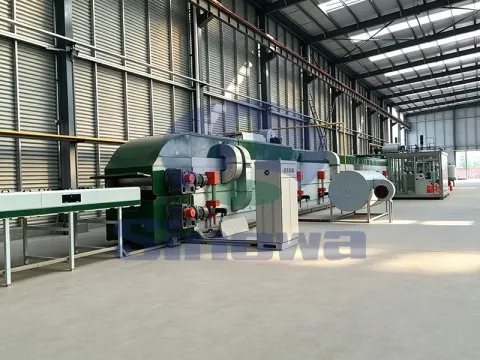
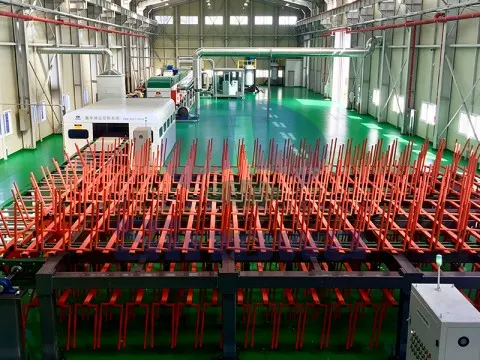
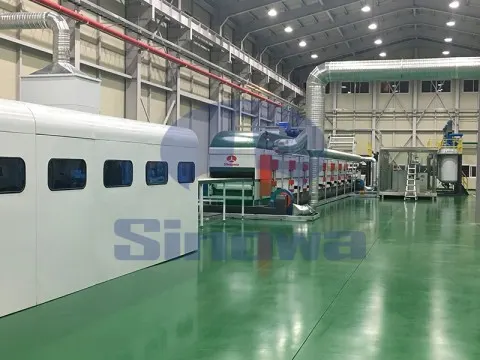
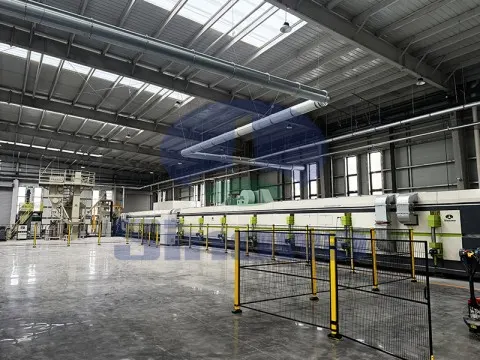
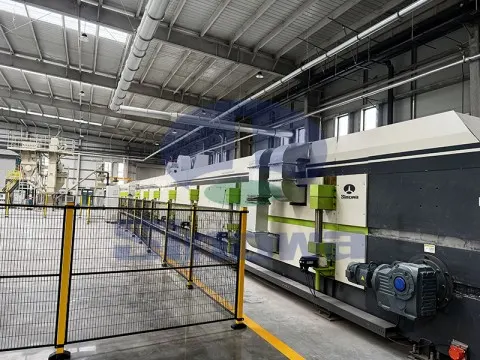
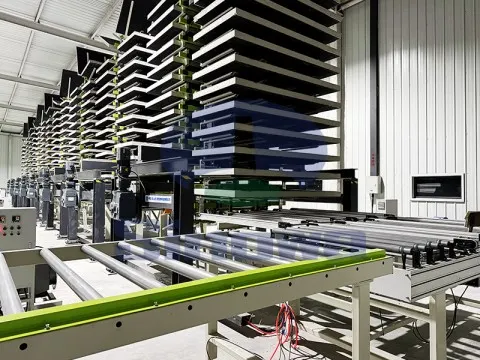
Sinowa is a professional manufacturer of sandwich panel machine in china, we provide diversified and high-performance sandwich panel production lines, including fully automatic continuous PU sandwich panel line and customized special lines to meet mass production and personalized order demands. These sandwich panel lines support processing multiple foam core materials, such as PU, PIR, mineral wool, rock wool and glass wool, covering different insulation and fireproof standards.
Featuring stable operation, high efficiency, energy saving and easy maintenance, our PU sandwich panel line deliver sandwich panels with excellent thermal insulation, fire resistance, sound insulation and lightweight durability. The finished panels are widely applied in industrial workshops, warehouse roofing and wall cladding, cold storage insulation, serving global construction and industrial insulation markets.
Main Products
-

Continuous PU Sandwich Panel Production Line
This continuous PU sandwich panel production line is an integrated automatic equipment. It covers uncoiling, forming, foaming, curing and cutting processes. With automatic raw material proportioning and precise temperature & pressure control, PIR sandwich panel production line continuously composites panels with double skins. Polyurethane sandwich panel production line stably produces steel and aluminum sandwich panels. Featuring high automation, the line makes fireproof and thermal-insulation panels for building enclosure and cold storage. -
Rock Wool Sandwich Panel Production Line
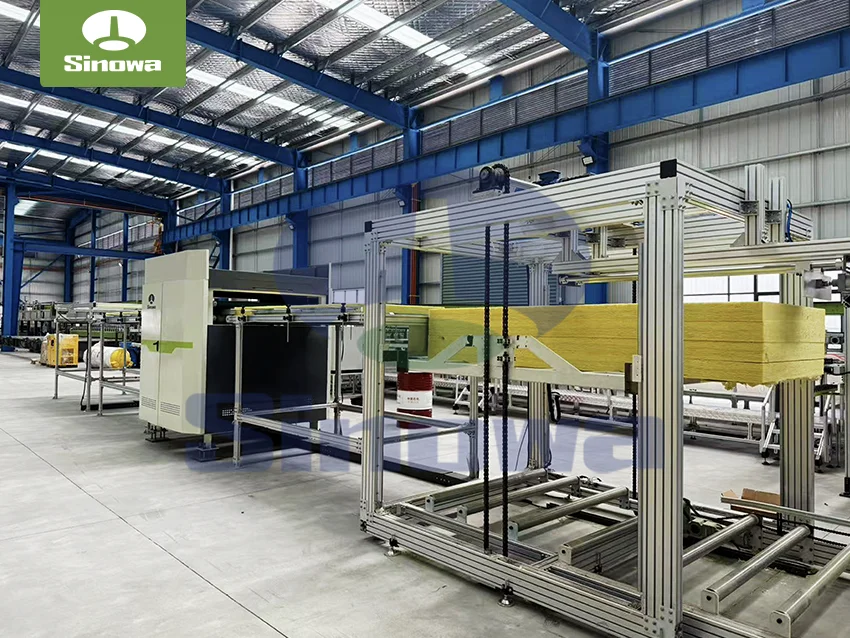
Continuous rockwool sandwich panel production line is an automatic integrated production equipment, consisting of uncoiling, forming, gluing and compounding, heating curing, fixed-length cutting, automatic stacking and other modules. The mineral wool sandwich panel production line continuously conveys color steel plates and rock wool core materials to automatically complete lamination and curing, which can produce fireproof and thermal insulation sandwich panels. Featuring high automation degree and stable operation, this production line is suitable for mass production of panels used for building walls, roofs and other scenarios. -
Phenolic Insulation Board Production Line
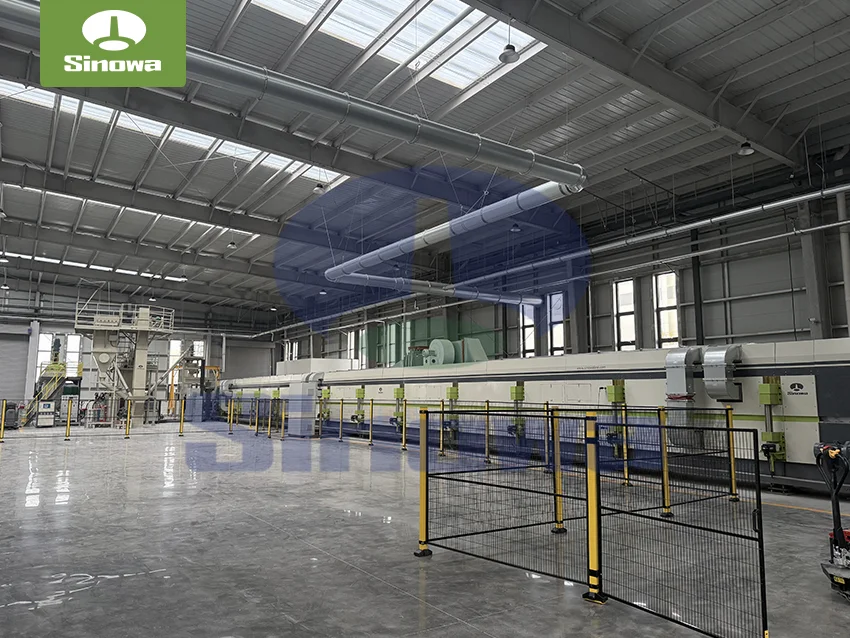
This integrated automatic production line continuously manufactures PU and phenolic insulation boards. The insulation board production line covers raw material proportioning, high-pressure foaming, laminating, curing and fixed-length cutting. Featuring high automation and stable molding, the insulation panel production line supports various surface materials. PU boards offer excellent thermal insulation, while phenolic boards have superior fire resistance. These products are widely used in construction, cold chain, ventilation ducts and other thermal insulation fields.
Other FAQs
- What Are The Main Noise Sources Of Insulation Board Production Line
- What Is The Standard Production Speed Of A Continuous PU Sandwich Panel Line
- How To Troubleshoot Mixing Head Failures Of A Polyurethane Sandwich Panel Production Line
- How To Maintain A Polyurethane Sandwich Panel Machine Daily
- How To Adjust Foaming Density Gradient Of PIR Sandwich Panel Production Line Core Layer
- What Causes Color Difference Of Finished Boards In Insulation Panel Production Line
- How To Reduce Material Waste Of Continuous PU Sandwich Panel Production Line
- What Is The Standard Production Speed Of A PUF Sandwich Panel Production Line
- Polyurethane Sandwich Panel Production Line Energy Saving Transformation Effect
- PU Sandwich Panel Line Installation And Commissioning Steps
Related Articles
- Purification Board Production Line
- Heavy-Duty PIR Sandwich Panel Making Line For Steel Structure Buildings
- Insulated Panel Line
- PU Sandwich Panel Machine For Wall Insulation
- Industrial Sandwich Panel Line
- PU Sandwich Panel Line For Roof Insulation
- PU Sandwich Panel Line For Metal-Faced Panels
- Advanced Sandwich Panel Line
- PU Sandwich Panel Machine For Decorative Board Production
- Sandwich Panel Line For Sale