How To Adjust Foaming Density Gradient Of PIR Sandwich Panel Production Line Core Layer
Sep 29, 2026
Adjusting the core layer foaming density gradient is critical for stable quality of panels manufactured by the PIR sandwich panel production line.
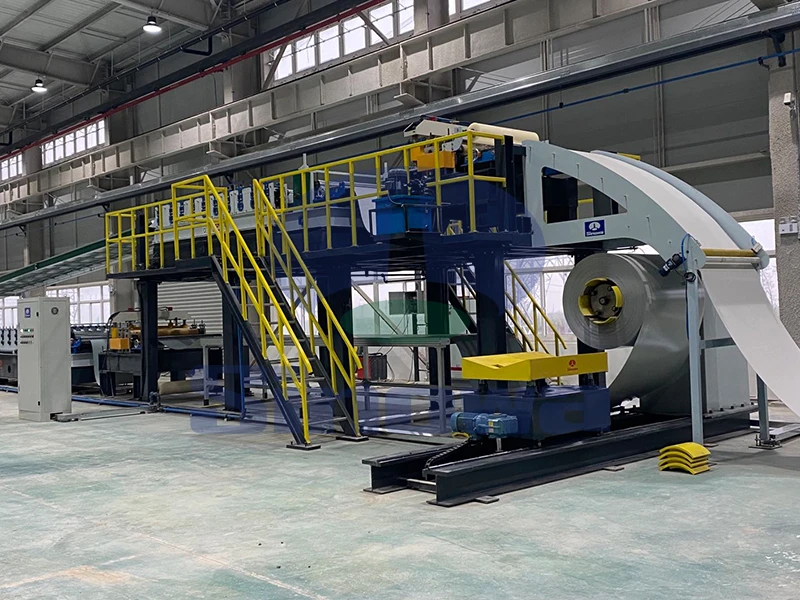
The foaming density gradient of the core layer is a core quality indicator for products from the PIR sandwich panel production line, referring to the subtle density differences between the surface and inner core, as well as the horizontal and vertical sections of PIR foam. Uncontrolled density gradients easily cause inconsistent structural hardness, local thermal insulation attenuation, and panel warpage, which greatly reduce the overall usability and durability of finished panels. In the continuous foaming and molding process of the PIR sandwich panel production line, multiple interconnected factors jointly affect foam expansion and curing effects, including raw material mixing state, system temperature control, material spraying uniformity, and curing environment parameters. Different from ordinary PU foam foaming, PIR foam features faster curing speed and higher cross-linking density, making its density gradient more sensitive to real-time production parameter changes. Therefore, targeted and precise parameter adjustment is required in the operating process of the PIR sandwich panel production line to narrow the density difference of each core layer area and form a uniform and stable foam pore structure. Scientific gradient adjustment can effectively avoid common production defects such as surface dense layer excess, internal hollow pores, and edge density deviation, laying a solid foundation for standardized panel production.
Precise raw material proportioning and mixing optimization is the primary step to regulate the core layer foaming density gradient on the PIR sandwich panel line. PIR foam synthesis relies on the accurate reaction of polyol, isocyanate, blowing agent and catalyst, and any proportion deviation will directly disrupt the foaming balance and cause uneven density distribution. In daily production, slight fluctuations in raw material delivery flow often lead to inconsistent reaction degrees in different foam areas. To solve this problem, the PIR sandwich panel production line needs to calibrate the variable-frequency metering pump system regularly to ensure stable and consistent delivery volume of each raw material component. Meanwhile, the high-speed stirring and mixing device of the production line should be adjusted to a matched rotating speed, which can fully homogenize all raw materials in a short time and eliminate local concentration differences of catalysts and blowing agents. Excessively fast stirring will introduce redundant air bubbles to cause low-density voids, while insufficient stirring will lead to incomplete local reaction and high-density hard blocks. In addition, appropriate adjustment of catalyst dosage can balance the foaming reaction rate and curing speed, preventing premature surface curing that restricts internal foam expansion and avoids the formation of excessive surface-to-core density gradient.
Zoned temperature control in the foaming and curing area is a key measure to balance the core layer density gradient for the PIR sandwich panel production machine. Temperature is the most intuitive factor affecting PIR foam expansion and molding, as different temperature environments correspond to different foam expansion coefficients and curing speeds. The continuous production process of the PIR sandwich panel production line includes multiple temperature zones from material spraying, free foaming to constant-temperature curing, and unreasonable temperature setting will cause obvious density differences between the upper and lower layers and the front and rear sections of the core layer. In actual adjustment, the preheating temperature of the upper and lower color steel plates should be kept consistent to avoid asymmetric heat conduction affecting foam expansion on both sides. The initial foaming zone needs a moderate temperature rise to promote uniform foam expansion and full release of blowing agent gas, while the subsequent curing zone adopts gradient temperature reduction to realize slow and stable foam shaping. Real-time temperature monitoring sensors on the production line can feed back temperature data of each zone in real time, helping operators fine-tune heating power to eliminate local temperature differences. Stable zoned temperature control can make the foam pore size uniform in all core layer positions, effectively reduce the vertical and horizontal density gradient of PIR foam, and improve the overall structural uniformity of the panel.
Optimization of material spraying and cloth distribution system effectively improves the horizontal density gradient of the core layer on the PIR sandwich panel line. Uneven spraying of mixed raw materials is a major cause of inconsistent density on the left, middle and right sides of the panel core. The traditional single-point spraying mode is prone to material accumulation in the middle and insufficient materials on both edges, resulting in higher middle density and lower edge density of the foam core. The PIR sandwich panel production line can optimize the multi-nozzle spraying layout and adjust the spraying flow of each nozzle according to the panel width to realize full-width uniform material distribution. Meanwhile, the height and angle of the spraying head should be calibrated regularly to ensure that the mixed materials fall in a uniform waterfall state between the two layers of plates, avoiding material offset and local accumulation. In addition, the running speed of the production line should be matched with the spraying volume synchronously. Excessively fast line speed leads to insufficient material laying and low overall density, while slow line speed causes material accumulation and excessive local density. Synchronized adjustment of spraying parameters and line speed can eliminate horizontal density deviation, make the core layer density of the whole panel tend to be consistent, and greatly reduce the horizontal foaming density gradient.
Curing pressure and residence time adjustment further optimizes the three-dimensional density gradient of the PIR foam core layer on the PIR sandwich panel manufacturing line. After raw material spraying and preliminary foaming, the foam needs to complete cross-linking curing under stable pressure and time conditions, and unstable pressure and insufficient curing time will lead to inconsistent internal and external density. In the laminating curing section of the production line, excessive pressure will squeeze the surface foam to form an ultra-dense thin layer, while insufficient pressure will cause loose internal foam and low overall density. Operators need to set constant and uniform laminating pressure according to panel thickness to ensure that the foam expands evenly under balanced pressure without surface compression deformation. Meanwhile, the curing residence time in the oven should match the foam thickness and ambient temperature. Thick core panels require appropriately extended curing time to ensure full internal reaction and eliminate the low-density defect caused by incomplete internal foaming. Reasonable pressure and time matching can realize synchronous curing of the surface and inner core of PIR foam, significantly reduce the density difference between the inner and outer layers, and improve the overall molding quality of the panel core layer.
Daily parameter monitoring and standardized operation maintenance ensure the long-term stable control of core layer foaming density gradient for the PIR sandwich panel production line. Density gradient adjustment is not a one-time debugging work but requires long-term real-time monitoring and fine optimization in continuous production. The production line is equipped with multi-point density detection and data feedback devices, which can automatically collect density data of different core layer positions and generate gradient change curves. Operators can timely adjust raw material proportion, temperature parameters and spraying settings according to data changes to correct tiny density deviations in advance. Regular maintenance of production line equipment is also essential, including cleaning mixing nozzles, calibrating metering pumps, and detecting temperature sensor accuracy, to avoid equipment aging and blockage causing parameter drift and uneven foaming. Standardized operation procedures can avoid manual debugging errors, ensure the consistency of each batch of production parameters, and maintain the long-term stability of PIR sandwich panel core layer density gradient, realizing high-quality and standardized continuous production of panels.
Gallery
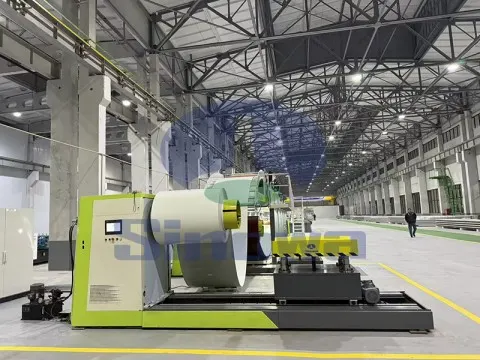
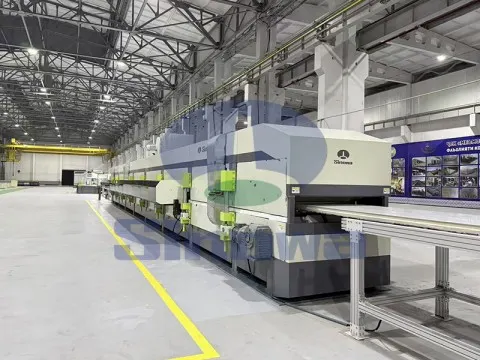
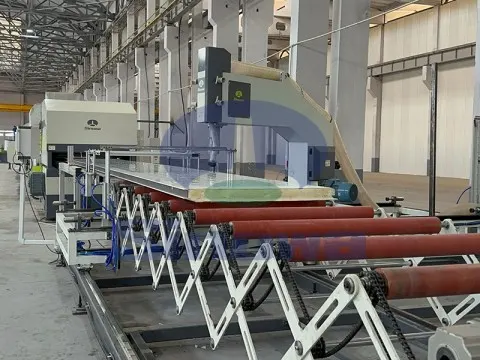
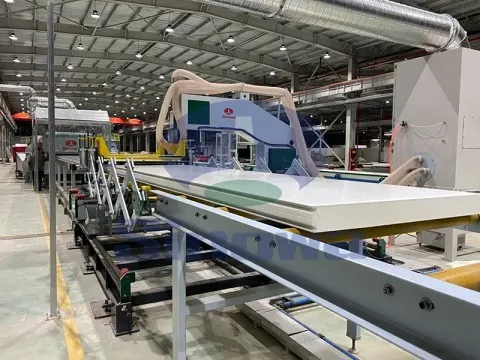
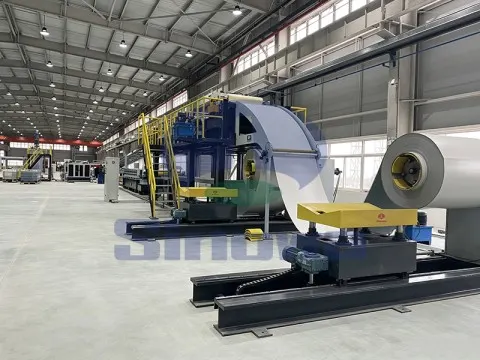
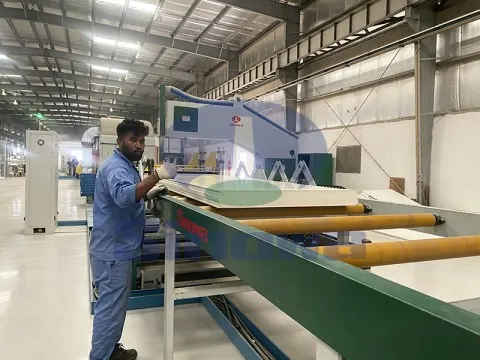
Sinowa is a professional manufacturer of sandwich panel machine in china, we provide diversified and high-performance sandwich panel production lines, including fully automatic continuous PU sandwich panel line and customized special lines to meet mass production and personalized order demands. These sandwich panel lines support processing multiple foam core materials, such as PU, PIR, mineral wool, rock wool and glass wool, covering different insulation and fireproof standards.
Featuring stable operation, high efficiency, energy saving and easy maintenance, our PU sandwich panel line deliver sandwich panels with excellent thermal insulation, fire resistance, sound insulation and lightweight durability. The finished panels are widely applied in industrial workshops, warehouse roofing and wall cladding, cold storage insulation, serving global construction and industrial insulation markets.
Main Products
-

Continuous PU Sandwich Panel Production Line
This continuous PU sandwich panel production line is an integrated automatic equipment. It covers uncoiling, forming, foaming, curing and cutting processes. With automatic raw material proportioning and precise temperature & pressure control, PIR sandwich panel production line continuously composites panels with double skins. Polyurethane sandwich panel production line stably produces steel and aluminum sandwich panels. Featuring high automation, the line makes fireproof and thermal-insulation panels for building enclosure and cold storage. -

Rock Wool Sandwich Panel Production Line
Continuous rockwool sandwich panel production line is an automatic integrated production equipment, consisting of uncoiling, forming, gluing and compounding, heating curing, fixed-length cutting, automatic stacking and other modules. The mineral wool sandwich panel production line continuously conveys color steel plates and rock wool core materials to automatically complete lamination and curing, which can produce fireproof and thermal insulation sandwich panels. Featuring high automation degree and stable operation, this production line is suitable for mass production of panels used for building walls, roofs and other scenarios. -

Phenolic Insulation Board Production Line
This integrated automatic production line continuously manufactures PU and phenolic insulation boards. The insulation board production line covers raw material proportioning, high-pressure foaming, laminating, curing and fixed-length cutting. Featuring high automation and stable molding, the insulation panel production line supports various surface materials. PU boards offer excellent thermal insulation, while phenolic boards have superior fire resistance. These products are widely used in construction, cold chain, ventilation ducts and other thermal insulation fields.
Other FAQs
- How To Maintain A Polyurethane Sandwich Panel Machine Daily
- What Causes Color Difference Of Finished Boards In Insulation Panel Production Line
- How To Reduce Material Waste Of Continuous PU Sandwich Panel Production Line
- What Is The Standard Production Speed Of A PUF Sandwich Panel Production Line
- Polyurethane Sandwich Panel Production Line Energy Saving Transformation Effect
- PU Sandwich Panel Line Installation And Commissioning Steps
- Sandwich Panel Production Line Adaptation For Different Metal Facing Materials
- Price Composition Of Complete PU Sandwich Panel Production Line
- Does The Continuous PU Sandwich Panel Manufacturing Line Support Automatic Stacking And Packing
- Can PIR Sandwich Panel Production Line Produce Prefabricated Container House Roof Panels
Related Articles
- Insulation Board Production Equipment
- Steel Structure PU Sandwich Panel Line
- PU Sandwich Panel Making Machine For Corrugated Composite Boards
- Roof Insulation Board Production Line
- Features of PU Foam Production Line
- PU Sandwich Panel Manufacturing Line With Automatic Cutting Length Setting
- PU Sandwich Panel Machine For Sale
- PIR Sandwich Panel Manufacturing Plant With Pneumatic Control Components
- Continuous Production Line For Color Steel Sandwich Panels
- Automatic PU Sandwich Panel Making Line With Remote Monitoring Function