How To Optimize Cutting Sequence Of PIR Sandwich Panel Production Line Batch Panels
Sep 29, 2026
Optimizing the cutting sequence of batch panels on the PIR sandwich panel production line is critical to reducing material waste, improving processing efficiency, and ensuring consistent product quality.
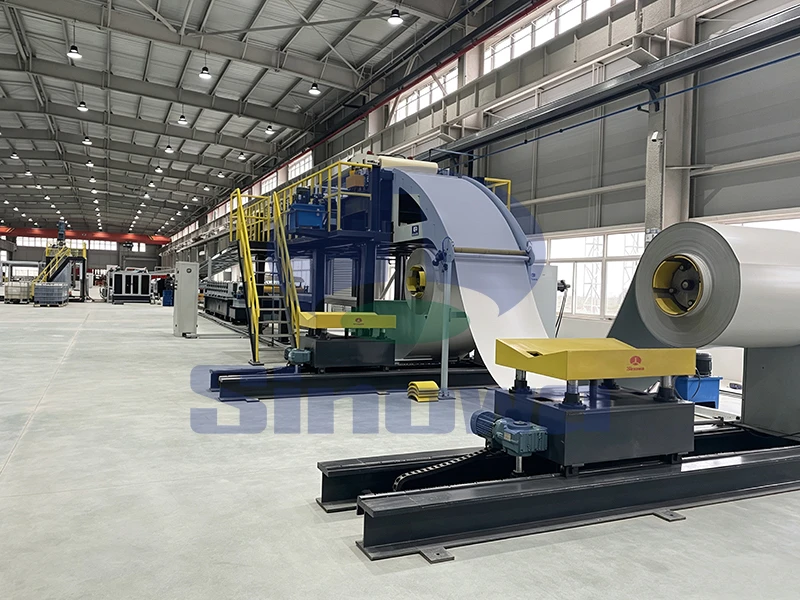
Batch cutting operations in the PIR sandwich panel production line often face prominent operational pain points in traditional sequencing modes, which severely restrict the overall productivity of panel processing. Most conventional production arrangements adopt a single-order cutting logic that follows the incoming material sequence or manual task scheduling, without considering the dimensional matching, structural characteristics, and processing continuity of batch PIR sandwich panels. This rigid sequencing method easily leads to frequent cutting tool switching, repeated positioning of transmission equipment, and scattered leftover materials during batch processing. In actual batch production, panels with different lengths, widths and functional specifications are often mixed in a single production task. Random cutting sequence arrangement will cause the cutting system to repeatedly adjust parameters and calibration benchmarks, increasing idle running time of the PIR sandwich panel production line. Meanwhile, unreasonable sequence planning often generates small and irregular residual panel materials that cannot be reused in subsequent batch tasks, greatly raising material consumption costs. In addition, disordered cutting sequences may cause inconsistent stress release on panel surfaces, resulting in minor deformation or dimensional deviation of finished panels, which affects the uniformity of batch product quality. Therefore, targeted sequence optimization is essential to eliminate these production drawbacks and maximize the operational value of the production line.
Intelligent algorithm-driven sequencing optimization further enhances the precision and comprehensiveness of batch cutting for the PIR sandwich panel line, breaking through the limitations of manual empirical scheduling. Simple dimensional grouping can only solve basic equipment adjustment problems, while intelligent optimization algorithms can comprehensively calculate multiple influencing factors such as panel dimensions, material utilization rate, equipment operation rhythm, and task priority to generate the optimal cutting sequence. Common heuristic sorting algorithms and progressive layout calculation models can automatically traverse all feasible cutting sequences of batch panels, screen out the scheme with the highest material utilization and the shortest processing cycle, and avoid the local optimal problem of manual scheduling. In the operation process of the PIR sandwich panel production line, the algorithm system can real-time identify the real-time operating state of cutting tools and transmission mechanisms, dynamically adjust the cutting order of special-sized panels and conventional panels, and ensure that high-precision complex panels are processed in the best equipment operating state. In addition, the algorithm can predict residual material generation according to panel layout rules, prioritize matching panels that can make full use of raw material areas, and maximize the utilization rate of each raw panel substrate. This intelligent sequencing mode adapts to large-scale and multi-specification batch production scenarios, greatly improving the overall operational intelligence of the PIR sandwich panel production line.
Reasonable coordination of cutting path and processing rhythm is a key link to optimize the cutting sequence of batch panels on the PIR sandwich panel making machine, which directly affects production stability and finished product quality. Many production teams only focus on the cutting order of panels while ignoring the continuity of cutting paths and the matching degree of production line rhythm, resulting in low optimization benefits. In standardized optimization schemes, the cutting sequence should follow the processing logic of from inside to outside and from small batch to large batch, avoiding secondary positioning and repeated cutting of panels. For batch PIR sandwich panels with internal grooving and edge trimming requirements, internal detail cutting processes are completed first, and then overall outline cutting is carried out, which can effectively prevent panel displacement and deformation caused by premature cutting of outer edges. At the same time, the cutting sequence needs to match the transmission speed and processing cycle of each station of the PIR sandwich panel production line, avoiding material accumulation in the cutting area or idle operation of subsequent processing stations. By adjusting the cutting interval and panel processing order, the overall production rhythm of the line can be balanced, eliminating the waiting time of semi-finished products and equipment idling loss. This rhythmic sequencing optimization ensures stable and consistent processing force during batch cutting, effectively improving the dimensional accuracy and surface flatness of finished panels.
Dynamic sequence adjustment based on batch task characteristics can further improve the flexibility and practicability of cutting optimization for the PIR sandwich panel manufacturing line. In actual industrial production, batch panel tasks often have dynamic changes such as temporary order insertion, specification adjustment, and quantity modification, and fixed sequencing schemes cannot adapt to flexible production demands. Dynamic optimization means adjusting the preset cutting sequence in real time according to task priority, production cycle requirements, and equipment loss status. For urgent batch panel tasks, the system can automatically adjust the cutting order, prioritize processing high-priority panels on the premise of ensuring overall production efficiency, and meet delivery cycle requirements. For panels with easy-to-wear cutting characteristics, centralized cutting arrangement can reduce the number of tool changes and extend the service life of cutting accessories. Meanwhile, combined with the real-time monitoring data of the PIR sandwich panel production line, the dynamic sequencing system can avoid continuous high-load operation of cutting equipment, reasonably disperse processing pressure, and reduce equipment failure rates caused by long-term concentrated operation. This flexible adjustment mode makes the cutting sequence optimization more adaptable to complex and changeable batch production scenarios.
Standardized operation management and regular scheme iteration guarantee the long-term stable effect of cutting sequence optimization for batch panels on the PIR sandwich panel production line. Any technical optimization strategy needs standardized manual operation and systematic management to sustain its advantages. Production enterprises need to formulate unified batch cutting sequence operation specifications, clarify the classification standards of panel grouping, algorithm parameter setting rules, and dynamic adjustment trigger conditions, ensuring that all operators follow unified standards to complete cutting scheduling. Regular staff training should be carried out to improve employees' ability to identify panel characteristics and master intelligent sequencing system operation, avoiding operational errors that affect optimization effects. In addition, production data should be accumulated regularly, including material waste rate, single-batch processing cycle, equipment standby time and other key indicators of different cutting sequences. Based on data analysis, the optimization scheme is continuously iterated and upgraded, adjusting grouping rules and algorithm parameters according to the updated batch product specification range and production task characteristics. Through the combination of technical optimization and standardized management, the PIR sandwich panel production line can maintain efficient, low-consumption and high-quality batch cutting operation for a long time, realizing continuous improvement of production benefits.
Gallery
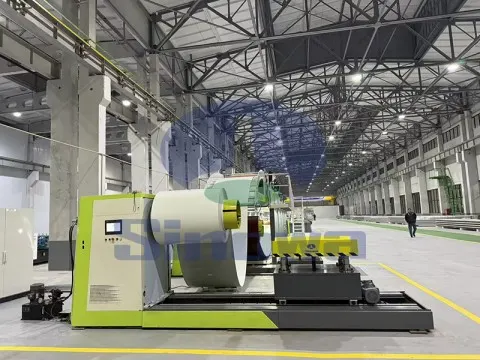
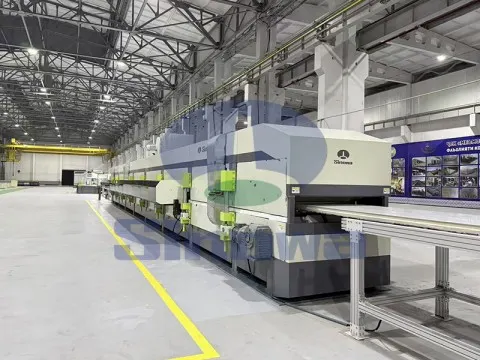
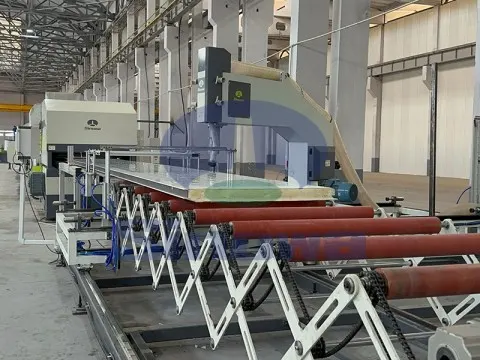
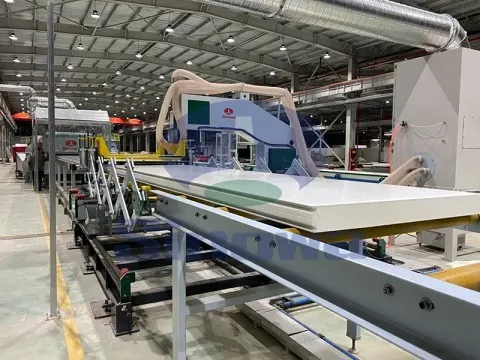
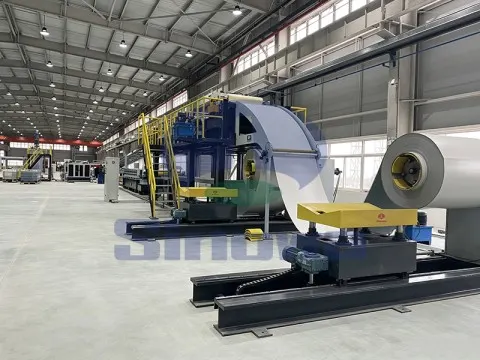
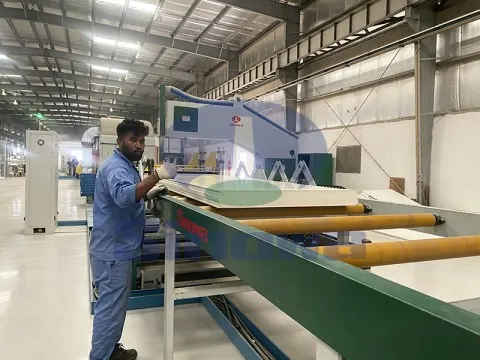
Sinowa is a professional manufacturer of sandwich panel machine in china, we provide diversified and high-performance sandwich panel production lines, including fully automatic continuous PU sandwich panel line and customized special lines to meet mass production and personalized order demands. These sandwich panel lines support processing multiple foam core materials, such as PU, PIR, mineral wool, rock wool and glass wool, covering different insulation and fireproof standards.
Featuring stable operation, high efficiency, energy saving and easy maintenance, our PU sandwich panel line deliver sandwich panels with excellent thermal insulation, fire resistance, sound insulation and lightweight durability. The finished panels are widely applied in industrial workshops, warehouse roofing and wall cladding, cold storage insulation, serving global construction and industrial insulation markets.
Main Products
-

Continuous PU Sandwich Panel Production Line
This continuous PU sandwich panel production line is an integrated automatic equipment. It covers uncoiling, forming, foaming, curing and cutting processes. With automatic raw material proportioning and precise temperature & pressure control, PIR sandwich panel production line continuously composites panels with double skins. Polyurethane sandwich panel production line stably produces steel and aluminum sandwich panels. Featuring high automation, the line makes fireproof and thermal-insulation panels for building enclosure and cold storage. -

Rock Wool Sandwich Panel Production Line
Continuous rockwool sandwich panel production line is an automatic integrated production equipment, consisting of uncoiling, forming, gluing and compounding, heating curing, fixed-length cutting, automatic stacking and other modules. The mineral wool sandwich panel production line continuously conveys color steel plates and rock wool core materials to automatically complete lamination and curing, which can produce fireproof and thermal insulation sandwich panels. Featuring high automation degree and stable operation, this production line is suitable for mass production of panels used for building walls, roofs and other scenarios. -

Phenolic Insulation Board Production Line
This integrated automatic production line continuously manufactures PU and phenolic insulation boards. The insulation board production line covers raw material proportioning, high-pressure foaming, laminating, curing and fixed-length cutting. Featuring high automation and stable molding, the insulation panel production line supports various surface materials. PU boards offer excellent thermal insulation, while phenolic boards have superior fire resistance. These products are widely used in construction, cold chain, ventilation ducts and other thermal insulation fields.
Other FAQs
- How To Improve The Flatness Of Panels Made By PIR Foam Core Sandwich Panel Line
- What Is A PU Sandwich Panel Machine And How Does It Work
- Why Is The Curing Effect Poor In Insulation Board Production Line
- How To Adjust The Foaming Ratio Of A Polyurethane Sandwich Panel Production Line
- Continuous PU Sandwich Panel Production Line Speed Adjustment Synchronization Method
- Compressed Air Supply Requirement For PU Sandwich Panel Line Operation
- Polyurethane Sandwich Panel Production Line Fault Alarm System Debugging Method
- Sandwich Panel Production Line Startup And Shutdown Standard Operating Procedures
- Maximum Production Capacity Of Polyurethane Sandwich Panel Production Line
- How Much Does A Full Automatic Sandwich Panel Machine Cost
Related Articles
- Polyurethane Composite Panel Production Line
- Continuous PU Sandwich Panel Line Layout Design
- Automatic PU Sandwich Panel Making Machine
- PU Sandwich Wall Panel Production Line
- Automatic PU Sandwich Panel Production Line With Auto Stacker
- Cold Storage Panel Manufacturing Plant
- Fireproof PU Sandwich Panel Machine
- PU Sandwich Siding Panel Machine
- Continuous PU Sandwich Panel Line For Insulation Board
- Low-noise PU Sandwich Panel Production Line For Urban Factories