Why Is The Curing Effect Poor In Insulation Board Production Line
Sep 29, 2026
Poor curing effect is a prevalent quality issue in the insulation board production line, undermining board durability, thermal performance and structural stability.
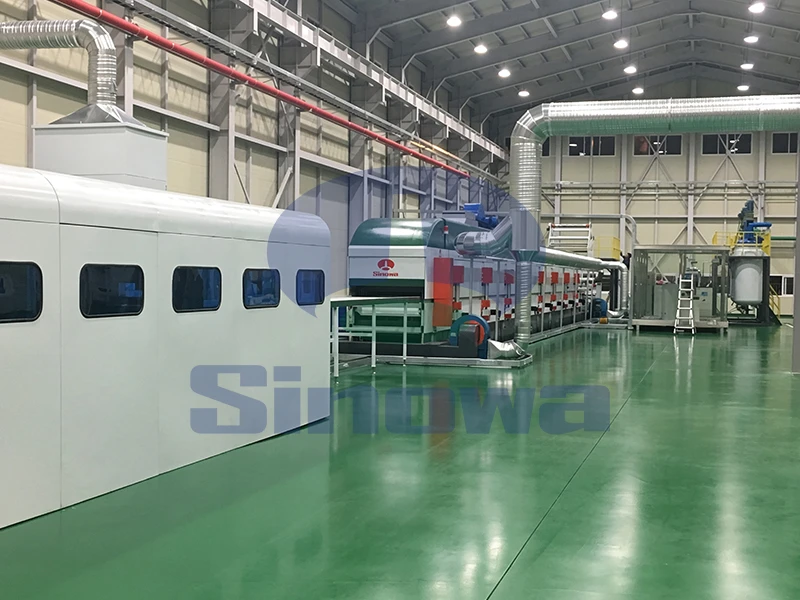
Improper curing parameter setting is the most primary factor leading to substandard curing results in the insulation board production line. Curing relies on matched temperature, processing time and operating speed to complete stable chemical cross-linking of internal materials, and any unbalanced parameter will directly break the curing reaction balance. Many production workshops adopt fixed parameter modes for long-term operation without adjusting according to real-time production conditions. Excessively fast operating speed of the insulation board production line shortens the effective curing time, making it impossible for internal foam materials and bonding components to finish complete molecular reaction, thus resulting in semi-cured soft core layers and weak structural adhesion. In contrast, overly low temperature in the curing zone fails to provide enough energy for chemical reactions, while uneven temperature distribution in different areas of the curing oven causes partial over-curing and partial under-curing on the same board. Additionally, unreasonable pressure control in the curing process leads to inconsistent fitting tightness between board layers, further aggravating uneven curing and greatly reducing the overall qualification rate of finished insulation boards.
Unqualified raw material performance and mismatched material ratios are critical hidden troubles for poor curing in the insulation board production line. The curing quality of insulation boards depends heavily on the chemical activity and component proportion of raw materials such as foaming agents, curing agents and base materials. Slight deviations in the mixing ratio of core chemical components will change the reaction rate and final curing state of materials. If the proportion of curing catalyst is insufficient, the material reaction speed slows down obviously, failing to reach the required curing degree within the specified production cycle. Excessive blowing agent residue will form unstable cellular structures inside the board, which collapse and deform after curing, affecting the compactness and firmness of finished products. Moreover, raw materials affected by moisture or stored for an overly long time will have reduced chemical activity. When such materials are put into the insulation board production line, their reaction consistency declines significantly, resulting in unstable curing effects, frequent defective products with loose texture and poor shaping, and difficulty in meeting basic use requirements.
Equipment aging, failure and incomplete daily maintenance greatly hinder stable curing in the insulation board production line. Long-term continuous operation will cause wear and calibration deviation of key curing equipment, which cannot be identified and corrected in a timely manner in daily production. The temperature sensing components of the curing oven may have detection errors due to dust accumulation and aging, leading to inconsistent actual internal temperature and displayed temperature, so the system cannot accurately adjust the curing temperature. The conveyor belt of the insulation board production line may have deviation and jitter problems, making the transmission speed unstable and causing differences in the curing time of different parts of the insulation board. In addition, residual cured debris and dirt inside the curing equipment will block local heat dissipation and heat conduction channels, forming low-temperature dead zones. Hydraulic pressure systems for pressing and shaping may have uneven pressure output due to component wear, leading to inconsistent compression degrees of boards during curing. These subtle equipment problems accumulate over time, eventually causing large-scale poor curing quality.
Uncontrolled production environment conditions interfere with the curing reaction process and reduce curing uniformity in the insulation board production line. The curing reaction of insulation board materials is extremely sensitive to ambient temperature and humidity, and unstable on-site environments will directly disrupt normal chemical cross-linking. In high-humidity production environments, moisture in the air will mix with raw materials in the curing stage, inhibiting the activity of curing agents and slowing down the foaming and curing reaction speed. Excessively low ambient temperature in winter will increase the heat loss of the curing oven, making it difficult to maintain a constant curing temperature and resulting in incomplete internal curing of boards. In addition, poor on-site ventilation causes unbalanced air circulation inside the curing workshop, leading to inconsistent heat distribution around different products on the production line. Dust and floating impurities in the air may also adhere to the surface of semi-finished boards during curing, affecting surface curing tightness and bonding effect. Most production sites lack real-time environmental monitoring and adjustment measures, making environmental interference a long-term cause of unstable curing effects in the insulation board production line.
Non-standard manual operation and insufficient process management amplify curing quality defects in the insulation board production line. Many curing quality problems stem from irregular manual operations rather than equipment and material defects. Frontline operators often adjust production parameters arbitrarily according to production experience without following standardized process specifications, ignoring the matching relationship between parameters and material batches, which destroys the curing reaction balance. In the material feeding and linking stage, uneven manual feeding speed and inconsistent material laying thickness lead to different heat absorption and reaction degrees of boards in the curing stage. Meanwhile, inadequate daily process inspection management results in failure to timely detect abnormal curing states in the production process. Unfinished regular staff skill training also makes operators lack professional judgment on early curing defects, unable to adjust parameters and eliminate hidden troubles in time. Long-term non-standard operations and loose management make small curing problems evolve into batch quality defects, seriously affecting the production stability of the insulation board production line.
Unreasonable production scheduling and untimely process optimization also induce continuous poor curing effects in the insulation board production line. Many production arrangements prioritize output efficiency excessively, forcing the production line to operate at an overload state for a long time. Continuous high-load operation makes the curing equipment lack necessary heat dissipation and rest time, leading to accumulated heat fatigue and unstable temperature control accuracy. Frequent switching of production specifications without targeted parameter debugging also causes curing adaptation failure, as different types of insulation boards require matched curing temperature, time and pressure parameters. Blindly copying past process parameters cannot adapt to new production conditions, resulting in poor curing consistency. In addition, the lack of regular curing process data sorting and optimization makes the production line always adopt backward process schemes. With the continuous change of raw material batches and equipment states, the old process parameters gradually lose adaptability, leading to recurring curing quality problems and restricting the overall quality improvement of insulation board products.
Gallery
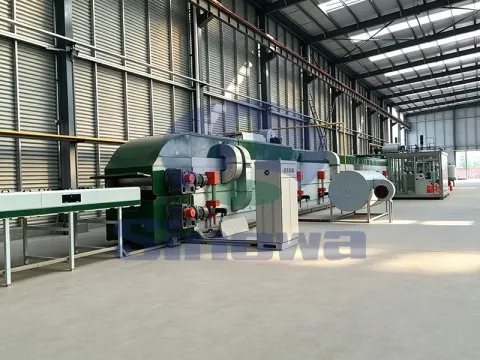
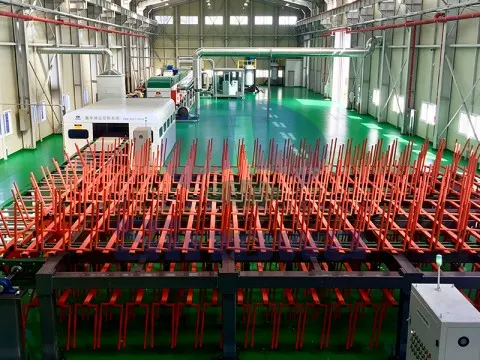
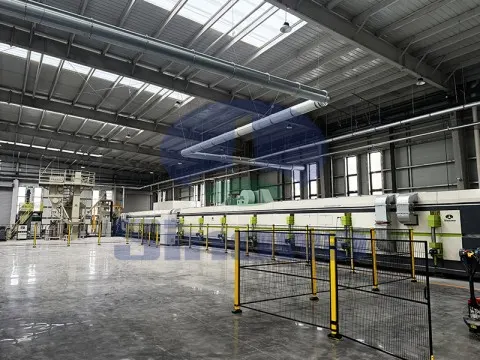
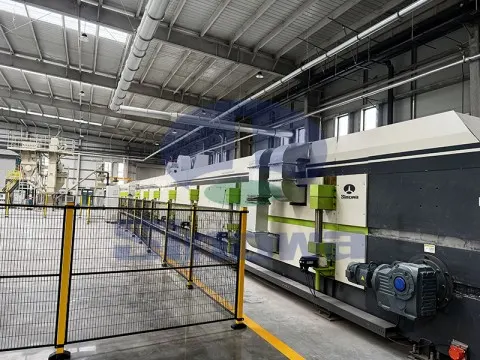
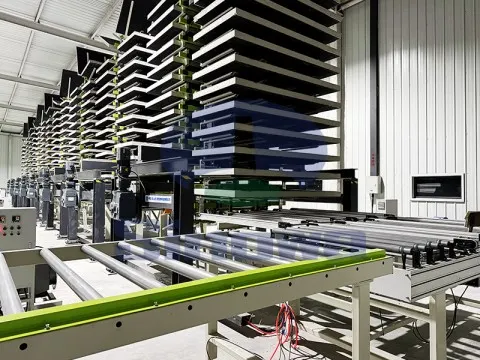
Sinowa is a professional manufacturer of sandwich panel machine in china, we provide diversified and high-performance sandwich panel production lines, including fully automatic continuous PU sandwich panel line and customized special lines to meet mass production and personalized order demands. These sandwich panel lines support processing multiple foam core materials, such as PU, PIR, mineral wool, rock wool and glass wool, covering different insulation and fireproof standards.
Featuring stable operation, high efficiency, energy saving and easy maintenance, our PU sandwich panel line deliver sandwich panels with excellent thermal insulation, fire resistance, sound insulation and lightweight durability. The finished panels are widely applied in industrial workshops, warehouse roofing and wall cladding, cold storage insulation, serving global construction and industrial insulation markets.
https://www.cnsinowa.com/faqs/why-is-the-curing-effect-poor-in-insulation-board-production-line.html
Main Products
-

Continuous PU Sandwich Panel Production Line
This continuous PU sandwich panel production line is an integrated automatic equipment. It covers uncoiling, forming, foaming, curing and cutting processes. With automatic raw material proportioning and precise temperature & pressure control, PIR sandwich panel production line continuously composites panels with double skins. Polyurethane sandwich panel production line stably produces steel and aluminum sandwich panels. Featuring high automation, the line makes fireproof and thermal-insulation panels for building enclosure and cold storage. -

Rock Wool Sandwich Panel Production Line
Continuous rockwool sandwich panel production line is an automatic integrated production equipment, consisting of uncoiling, forming, gluing and compounding, heating curing, fixed-length cutting, automatic stacking and other modules. The mineral wool sandwich panel production line continuously conveys color steel plates and rock wool core materials to automatically complete lamination and curing, which can produce fireproof and thermal insulation sandwich panels. Featuring high automation degree and stable operation, this production line is suitable for mass production of panels used for building walls, roofs and other scenarios. -

Phenolic Insulation Board Production Line
This integrated automatic production line continuously manufactures PU and phenolic insulation boards. The insulation board production line covers raw material proportioning, high-pressure foaming, laminating, curing and fixed-length cutting. Featuring high automation and stable molding, the insulation panel production line supports various surface materials. PU boards offer excellent thermal insulation, while phenolic boards have superior fire resistance. These products are widely used in construction, cold chain, ventilation ducts and other thermal insulation fields.
Other FAQs
- Maximum Production Capacity Of Polyurethane Sandwich Panel Production Line
- How Much Does A Full Automatic Sandwich Panel Machine Cost
- What Causes Uneven Density In Insulation Board Production Line Finished Products
- What Core Materials Can A Continuous PU Sandwich Panel Line Process
- Overload Protection Function Detection Of Polyurethane Sandwich Panel Production Equipment
- Polyurethane Sandwich Panel Production Line Cleaning Cycle And Operation Standard
- Wearing Parts Replacement Cycle Of PU Sandwich Panel Production Line Equipment
- Sandwich Panel Production Line Upgrade And Expansion Feasible Solutions
- Standard Panel Thickness Range Of PU Sandwich Panel Line
- How To Choose A Reliable PU Sandwich Panel Machine Manufacturer
Related Articles
- Cleanroom PU Sandwich Panel Line
- PIR Sandwich Panel Manufacturing Line With Roll Forming System
- High Precision PIR Sandwich Panel Line Factory In China
- PU Sandwich Panel Making Machine For Commercial Building
- Cold Storage PU Sandwich Panel Line
- PU Sandwich Panel Making Line For Partition Wall
- Working Principle of PU Foam Production Line
- Foam Color Steel Sandwich Panel Line
- PU Continuous Sandwich Foam Board Production Line
- PU Sandwich Panel Production Line For Insulation Panels