How To Improve The Production Efficiency Of Insulation Board Production Line
Sep 29, 2026
Improving the efficiency of the insulation board production line is critical for manufacturing profitability and operational stability.
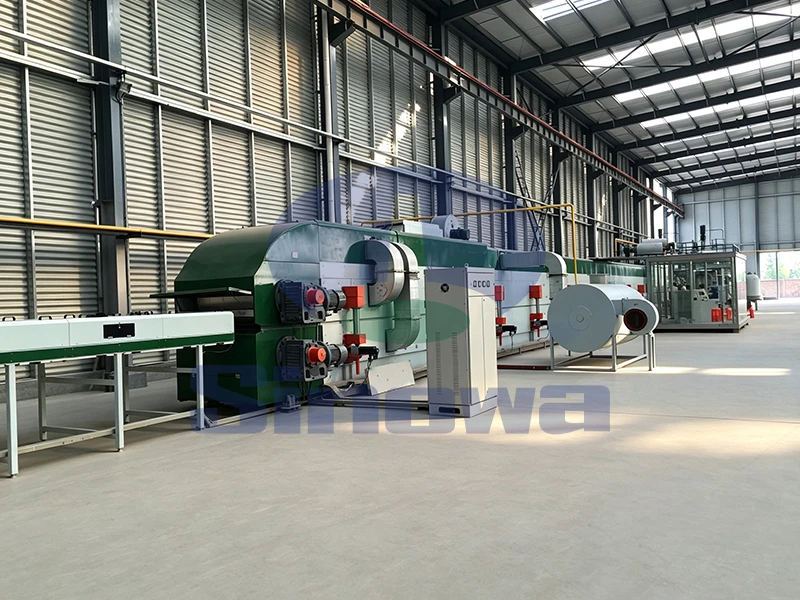
The core foundation of efficient manufacturing lies in optimizing the overall operational workflow of the insulation board production line, as unreasonable process scheduling and discontinuous material flow are the primary causes of low production output. Many traditional production models adopt segmented manual operation, where raw material feeding, mixing, molding, curing and cutting processes operate independently, leading to frequent production pauses and material stagnation. To resolve this issue, manufacturers need to integrate scattered production procedures into a unified, synchronous operational system, realizing seamless connection between each processing link of the insulation board production line. Synchronized material transportation ensures that raw materials are delivered to the processing station in real time, while finished semi-products are transferred to the next procedure without delay, completely avoiding idle equipment and waiting time. Meanwhile, it is essential to streamline redundant operational steps, remove repetitive manual inspection and handling links that do not affect product quality, and simplify the overall production logic. This streamlined workflow not only shortens the single-batch production cycle of insulation boards but also stabilizes the operational rhythm of the entire production line, laying a solid foundation for sustained efficiency improvement and effectively reducing invalid working hours in daily production.
Intelligent equipment upgrading and precise parameter adjustment are key measures to significantly enhance the capacity of the insulation board production line. Traditional production equipment relies heavily on manual parameter setting and mechanical operation, which features low processing precision, poor operational stability and frequent parameter deviation during long-term operation, resulting in unqualified products and repeated processing that waste production time. Upgrading the production line with centralized intelligent control systems enables real-time monitoring and automatic fine-tuning of core operational parameters including mixing ratio, processing temperature, foaming pressure and cutting speed. The intelligent system can automatically correct parameter deviations caused by long-time equipment operation, ensuring consistent processing standards for each batch of products and reducing rework rates effectively. In addition, replacing outdated semi-automatic devices with automated feeding, laminating and stacking equipment further reduces human intervention in the production process. The upgraded insulation board production line can maintain continuous and stable operation for a long time, avoid production interruptions caused by manual operation errors, and greatly improve the overall processing speed and product qualification rate, which directly translates into higher effective production volume.
Scientific raw material management and pretreatment optimization play an indispensable role in improving the operational efficiency of the insulation board production line. Raw material quality and pretreatment effects directly determine the smoothness of subsequent processing procedures, and unprocessed or uneven raw materials often cause equipment blockage, mixing failure and product molding defects, leading to unexpected production shutdowns. Manufacturers need to establish standardized raw material pretreatment processes, including uniform crushing, filtering and moisture adjustment of raw materials before they enter the production line. Uniformly treated raw materials can be fully mixed and molded in the production equipment, avoiding material agglomeration that affects processing efficiency. Meanwhile, reasonable raw material inventory and feeding planning should be formulated to ensure continuous and sufficient material supply for the insulation board production line, preventing production suspension due to material shortage or untimely feeding. In addition, screening and matching high-quality compatible raw materials can reduce the probability of processing abnormalities, lower the frequency of equipment jams and product defects, and ensure that the production line maintains a high-efficiency operational state throughout the production cycle.
Regular preventive equipment maintenance and fault early warning management effectively reduce unplanned downtime of the insulation board production line, which is crucial for stable long-term efficiency improvement. Mechanical wear, component aging and dust accumulation are inevitable during long-term continuous operation of production equipment, and minor hidden faults will gradually evolve into major failures, causing long-time production halts if left unaddressed. Different from passive after-fault maintenance, preventive maintenance formulates regular inspection, cleaning, lubrication and component replacement plans according to the operational frequency and wear rule of each equipment module in the production line. Daily routine inspections check the operational status of key components such as transmission parts and pressure devices, while regular deep maintenance eliminates potential equipment hidden dangers. Equipped with real-time monitoring sensors, the insulation board production line can capture abnormal data such as equipment vibration, temperature fluctuation and pressure change in advance, reminding maintenance personnel to handle minor faults in a timely manner. This proactive maintenance mode greatly reduces unplanned downtime, improves the overall equipment effectiveness of the production line, and ensures continuous and efficient production operation.
Professional operator training and standardized operational management are important guarantees to maximize the efficiency of the insulation board production line. Advanced equipment and optimized processes cannot exert their maximum value without skilled and standardized manual operation. Many efficiency losses in actual production stem from irregular operator operations, unfamiliarity with equipment performance and improper emergency disposal. Manufacturers need to build a systematic staff training system, covering standard operational procedures of production equipment, accurate parameter adjustment methods, daily equipment maintenance skills and rapid response measures for common minor faults. Regular professional training and skill assessment can help operators master proficient operational skills, avoid operational errors caused by unskilled operation, and ensure that each production link is carried out in accordance with standardized procedures. Meanwhile, establishing clear production management rules can standardize staff’s startup, operation and shutdown behaviors, avoid arbitrary parameter adjustment and random operational pause. Well-trained operators can not only improve the operational speed and precision of the production line but also quickly solve minor on-site problems, reduce production delays, and maintain the efficient and orderly operation of the entire production process.
Digital data monitoring and production data analysis help continuously optimize the operational efficiency of the insulation board production line and realize long-term efficiency improvement. Modern production manufacturing relies on data-driven optimization rather than empirical operation. Installed data collection modules in the production line can record all operational data in real time, including equipment operational speed, single-batch production time, material consumption, fault occurrence frequency and product qualification rate. By sorting and analyzing these production data, managers can accurately locate inefficient links in the production process, such as slow cutting speed, excessive material waste or frequent minor faults in a certain equipment module. Targeted optimization schemes can be formulated for these bottleneck links to carry out precise process adjustment and equipment optimization. Continuous data tracking and regular production optimization iteration can eliminate incremental efficiency losses in the production process, gradually improve the overall operational level of the insulation board production line, and achieve stable growth of production efficiency while ensuring product quality stability.
Gallery
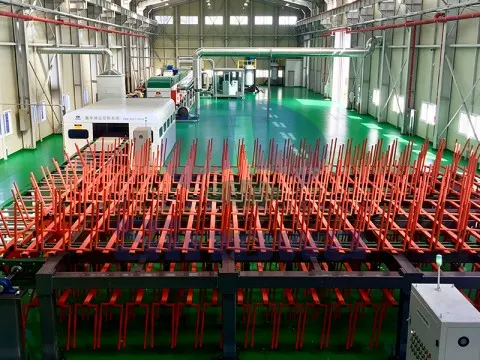
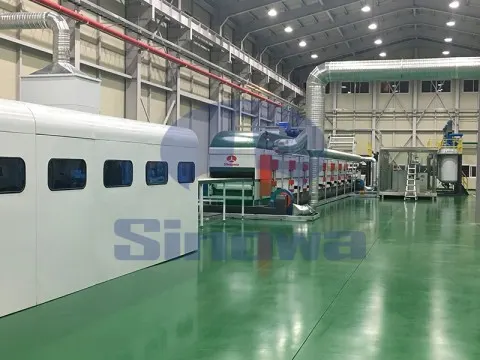
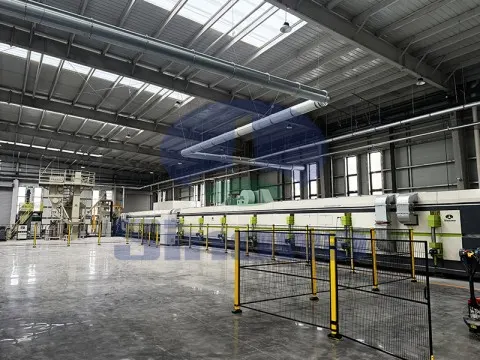
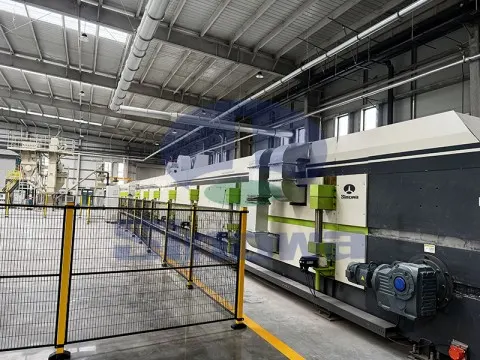
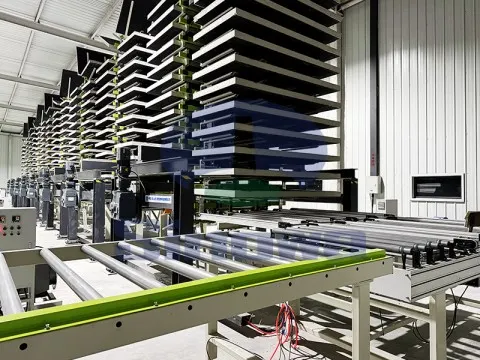
Sinowa is a professional manufacturer of sandwich panel machine in china, we provide diversified and high-performance sandwich panel production lines, including fully automatic continuous PU sandwich panel line and customized special lines to meet mass production and personalized order demands. These sandwich panel lines support processing multiple foam core materials, such as PU, PIR, mineral wool, rock wool and glass wool, covering different insulation and fireproof standards.
Featuring stable operation, high efficiency, energy saving and easy maintenance, our PU sandwich panel line deliver sandwich panels with excellent thermal insulation, fire resistance, sound insulation and lightweight durability. The finished panels are widely applied in industrial workshops, warehouse roofing and wall cladding, cold storage insulation, serving global construction and industrial insulation markets.
Main Products
-

Continuous PU Sandwich Panel Production Line
This continuous PU sandwich panel production line is an integrated automatic equipment. It covers uncoiling, forming, foaming, curing and cutting processes. With automatic raw material proportioning and precise temperature & pressure control, PIR sandwich panel production line continuously composites panels with double skins. Polyurethane sandwich panel production line stably produces steel and aluminum sandwich panels. Featuring high automation, the line makes fireproof and thermal-insulation panels for building enclosure and cold storage. -

Rock Wool Sandwich Panel Production Line
Continuous rockwool sandwich panel production line is an automatic integrated production equipment, consisting of uncoiling, forming, gluing and compounding, heating curing, fixed-length cutting, automatic stacking and other modules. The mineral wool sandwich panel production line continuously conveys color steel plates and rock wool core materials to automatically complete lamination and curing, which can produce fireproof and thermal insulation sandwich panels. Featuring high automation degree and stable operation, this production line is suitable for mass production of panels used for building walls, roofs and other scenarios. -

Phenolic Insulation Board Production Line
This integrated automatic production line continuously manufactures PU and phenolic insulation boards. The insulation board production line covers raw material proportioning, high-pressure foaming, laminating, curing and fixed-length cutting. Featuring high automation and stable molding, the insulation panel production line supports various surface materials. PU boards offer excellent thermal insulation, while phenolic boards have superior fire resistance. These products are widely used in construction, cold chain, ventilation ducts and other thermal insulation fields.
Other FAQs
- Equipment Foundation Construction Standard For PU Sandwich Panel Line
- Anti-corrosion Treatment Standard For PU Sandwich Panel Equipment
- Difference Between Continuous And Discontinuous PU Sandwich Panel Production Lines
- Daily Maintenance Items Of Polyurethane Sandwich Panel Production Line
- What Are The Common Faults Of A Polyurethane Sandwich Panel Machine
- How To Optimize Cutting Sequence Of PIR Sandwich Panel Production Line Batch Panels
- How To Adjust The Feeding Speed Of Insulation Panel Production Line For Stable Output
- Can A Continuous PU Sandwich Panel Production Line Be Customized For Special Panel Profiles
- Why Does The PUR Sandwich Panel Production Line Have Inaccurate Cutting Length
- Working Principle of PU Sandwich Panel Production Line
Related Articles
- Cold Storage Panel Production Line
- Automatic PIR Sandwich Panel Production Line
- PU Sandwich Panel Production Line For Warehouse Partition Panels
- Color Steel Sandwich Panel Line
- Continuous PU Sandwich Panel Line For Prefabricated Building
- High-speed Automatic PU Sandwich Panel Production Line For Roofing Panels
- Continuous PU Sandwich Panel Making Machine
- Metal Sandwich Panel Machine
- PU Sandwich Panel Machine
- Continuous Exterior Wall Sandwich Panel Production Line