How Much Factory Space Does A Full Continuous PU Sandwich Panel Line Require
Sep 29, 2026
A full continuous PU sandwich panel line demands tailored factory space to ensure stable, high-efficiency production.
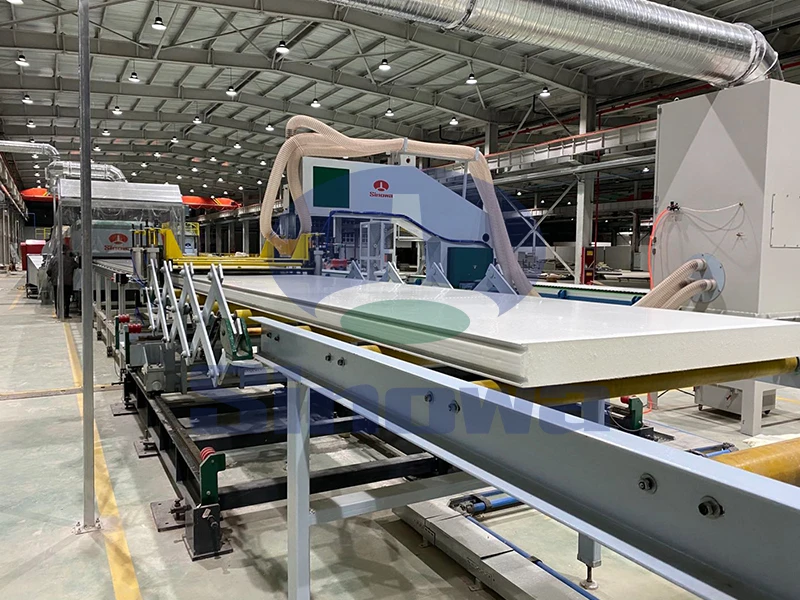
Understanding the basic spatial footprint of a continuous PU sandwich panel line is the foundation for factory layout planning for panel manufacturing projects. Unlike intermittent production equipment, this fully automated assembly system operates in a linear, uninterrupted workflow, which relies on a long, unobstructed production corridor to maintain consistent running speed and stable product quality. The core mechanical body of a standard continuous PU sandwich panel line occupies a structured rectangular area, with mainstream industrial configurations requiring a production length ranging from 80 to 150 meters and a width spanning 15 to 30 meters. This dimensional range accommodates all core processing units, including metal coil unwinding, surface leveling, PU foam continuous pouring, high-pressure laminating, curing, trimming, and automatic cutting modules. Every functional section is arranged in sequential order, and cramped spacing will force adjustments to line speed, disrupt continuous production rhythm, and even cause panel deformation or processing errors. Beyond horizontal floor space, vertical clearance is equally critical, as the line’s upper mechanical structures, heating systems, and ventilation components typically need a minimum factory height of 6 meters to avoid operational obstructions and facilitate daily equipment maintenance.
A complete production setup for the continuous PU sandwich panel production line cannot rely solely on the core equipment footprint, as auxiliary functional zones occupy a large portion of the total factory space. Raw material storage areas are indispensable, mainly dedicated to metal coil stacking and PU chemical raw material placement. Metal coils for panel facings are bulky and heavy, requiring flat, wide ground space and reserved channels for forklift transportation and loading and unloading. PU foam raw materials need independent, ventilated storage zones with stable temperature conditions, which must be adjacent to the feeding system of the continuous PU sandwich panel line to shorten material conveying paths and improve production efficiency. Additionally, a dedicated finished product stacking area is required at the tail of the production line. Continuous production generates large volumes of finished PU sandwich panels nonstop, and sufficient stacking space prevents product accumulation that could block the production outlet and halt operations. Factories also need to reserve dedicated maintenance zones and operator activity corridors around the line, ensuring staff can inspect equipment, replace wearing parts, and handle minor faults without interrupting continuous production processes.
Production capacity and operational flexibility directly adjust the spatial demand of the continuous PU sandwich panel line. Standard medium-speed production lines with conventional output demands fit the smaller end of the spatial range, while high-speed, high-yield configurations require extended factory dimensions to match accelerated production rhythms. High-speed models of the continuous PU sandwich panel line feature faster material feeding, foaming reaction, and cutting cycles, which need longer linear layout space to ensure sufficient curing time for PU foam cores. Insufficient linear space will lead to incomplete foam curing, resulting in unqualified panel bonding strength and structural stability. Moreover, factories pursuing flexible production, such as switching between different panel thicknesses and widths, need extra reserved space for auxiliary mold replacement and parameter adjustment equipment. This reserved space avoids frequent equipment crowding, simplifies model change operations, and effectively improves the line’s overall production adaptability and service life in long-term industrial operation.
Logistics and daily operational safety further define the reasonable spatial boundary for installing a full continuous PU sandwich panel production line. Industrial production of PU sandwich panels involves frequent internal logistics circulation, including raw material inbound, finished product outbound, and equipment accessory transportation. Clear, unobstructed logistics channels must be reserved on both sides and at the front and rear of the production line, with sufficient width to support safe forklift passage and cargo handling. Narrow channels will cause logistics congestion, reduce production turnover efficiency, and even trigger safety hazards during peak production periods. In terms of safety operation, the continuous PU sandwich panel line involves heating, foaming reaction, and mechanical transmission processes, requiring reserved heat dissipation space around heating and curing modules to avoid excessive ambient temperature that affects equipment performance and operational safety. Meanwhile, spaced layout prevents mutual interference between mechanical components, reduces equipment wear caused by crowded operation, and creates a stable and safe working environment for on-site production staff.
Future expansion and equipment upgrade needs should be incorporated into the initial spatial planning of the continuous PU sandwich panel machine. Most panel manufacturing factories pursue long-term capacity growth and technological iteration, making blind full-space occupation in the initial stage an unwise layout choice. Reserving a certain amount of blank factory space around the core production line facilitates subsequent functional upgrades, such as adding automatic packaging systems, intelligent sorting equipment, or online quality detection modules. With the upgrading of continuous PU sandwich panel line technology, new auxiliary devices for energy conservation, emission reduction, and precise production control are continuously optimized and launched, and reserved space can support seamless equipment expansion without large-scale factory reconstruction. This forward-looking spatial design not only saves later renovation costs but also ensures the production line can adapt to evolving market production demands and maintain long-term operational competitiveness in the industry.
Overall space optimization strategies help maximize the utilization rate of the factory area while guaranteeing the stable operation of the continuous PU sandwich panel line. Scientific zoning is the core of space optimization, which divides the factory into independent but connected areas including core production area, raw material storage area, finished product storage area, logistics channel, and maintenance area. Reasonable zoning avoids functional confusion and space waste caused by mixed production and storage. Factories can adopt compact linear layout for the core line on the premise of meeting operational safety and maintenance requirements, and utilize vertical space for storing lightweight auxiliary tools and small accessories to reduce horizontal floor occupation. In addition, regular sorting and layout adjustment of storage areas can effectively release idle space, ensure smooth logistics and production circulation of the continuous PU sandwich panel line, and balance production efficiency, space cost, and long-term operational stability to form a mature and efficient factory layout system.
Gallery
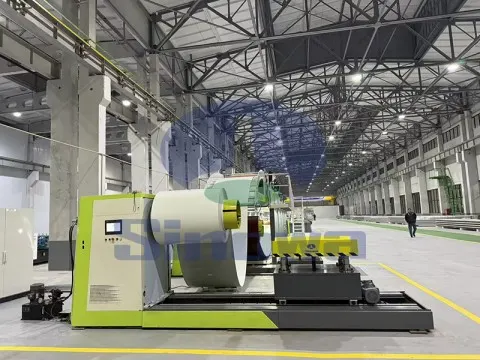
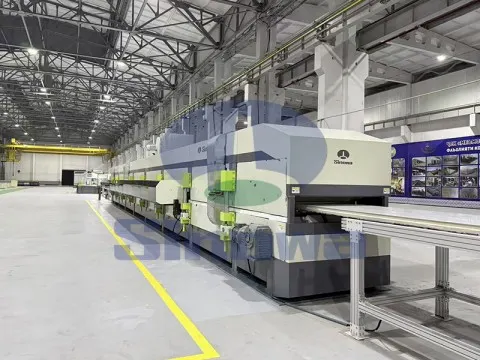
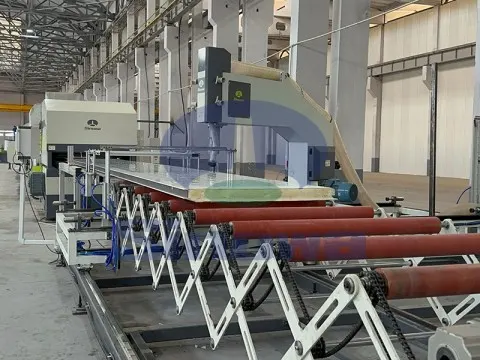
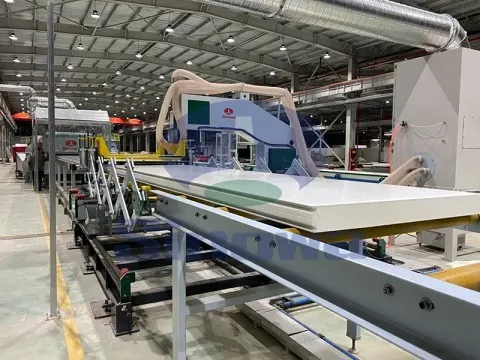
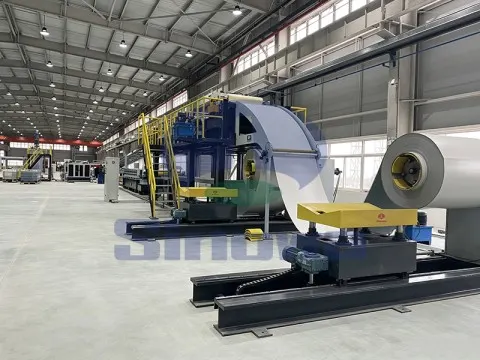
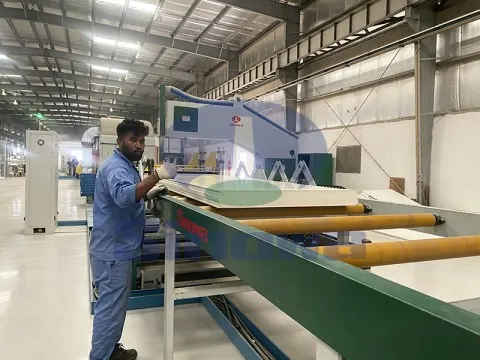
Sinowa is a professional manufacturer of sandwich panel machine in china, we provide diversified and high-performance sandwich panel production lines, including fully automatic continuous PU sandwich panel line and customized special lines to meet mass production and personalized order demands. These sandwich panel lines support processing multiple foam core materials, such as PU, PIR, mineral wool, rock wool and glass wool, covering different insulation and fireproof standards.
Featuring stable operation, high efficiency, energy saving and easy maintenance, our PU sandwich panel line deliver sandwich panels with excellent thermal insulation, fire resistance, sound insulation and lightweight durability. The finished panels are widely applied in industrial workshops, warehouse roofing and wall cladding, cold storage insulation, serving global construction and industrial insulation markets.
Main Products
-

Continuous PU Sandwich Panel Production Line
This continuous PU sandwich panel production line is an integrated automatic equipment. It covers uncoiling, forming, foaming, curing and cutting processes. With automatic raw material proportioning and precise temperature & pressure control, PIR sandwich panel production line continuously composites panels with double skins. Polyurethane sandwich panel production line stably produces steel and aluminum sandwich panels. Featuring high automation, the line makes fireproof and thermal-insulation panels for building enclosure and cold storage. -

Rock Wool Sandwich Panel Production Line
Continuous rockwool sandwich panel production line is an automatic integrated production equipment, consisting of uncoiling, forming, gluing and compounding, heating curing, fixed-length cutting, automatic stacking and other modules. The mineral wool sandwich panel production line continuously conveys color steel plates and rock wool core materials to automatically complete lamination and curing, which can produce fireproof and thermal insulation sandwich panels. Featuring high automation degree and stable operation, this production line is suitable for mass production of panels used for building walls, roofs and other scenarios. -

Phenolic Insulation Board Production Line
This integrated automatic production line continuously manufactures PU and phenolic insulation boards. The insulation board production line covers raw material proportioning, high-pressure foaming, laminating, curing and fixed-length cutting. Featuring high automation and stable molding, the insulation panel production line supports various surface materials. PU boards offer excellent thermal insulation, while phenolic boards have superior fire resistance. These products are widely used in construction, cold chain, ventilation ducts and other thermal insulation fields.
Other FAQs
- Wearing Parts Replacement Cycle Of PU Sandwich Panel Production Line Equipment
- Sandwich Panel Production Line Upgrade And Expansion Feasible Solutions
- Standard Panel Thickness Range Of PU Sandwich Panel Line
- How To Choose A Reliable PU Sandwich Panel Machine Manufacturer
- How To Solve Foaming Instability Issues In Insulation Panel Production Line
- Equipment Foundation Construction Standard For PU Sandwich Panel Line
- Anti-corrosion Treatment Standard For PU Sandwich Panel Equipment
- Difference Between Continuous And Discontinuous PU Sandwich Panel Production Lines
- Daily Maintenance Items Of Polyurethane Sandwich Panel Production Line
- What Are The Common Faults Of A Polyurethane Sandwich Panel Machine
Related Articles
- Automatic Insulation Board Production Line
- Fireproof PU Sandwich Panel Line
- Polyurethane Sandwich Panel Manufacturing Line For Commercial Building
- High Efficiency PU Sandwich Panel Line On Sales
- PU Sandwich Panel Manufacturing Machine For Low Density Composite Panels
- Roof Foam Insulation Board Production Line
- PU Sandwich Panel Production Plant For Decoration Industry
- PU Sandwich Panel Equipment For Insulation Board Production
- PU Foam Core Sandwich Panel Line
- PU Sandwich Panel Manufacturing Machine For Lightweight Composite Panel Production