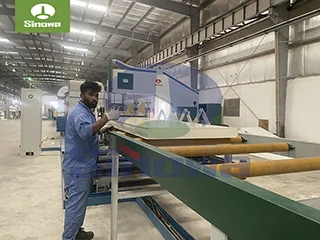
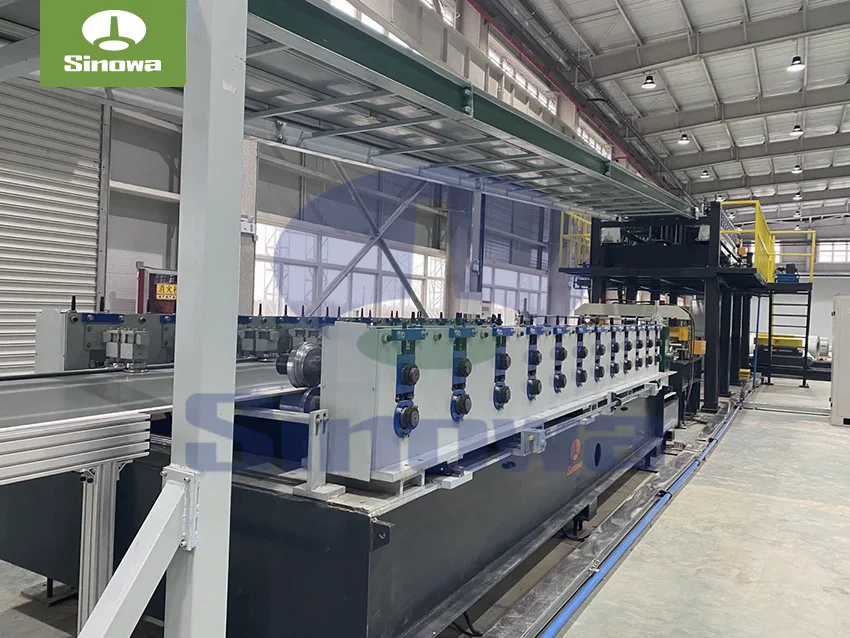
 sandwich panel line
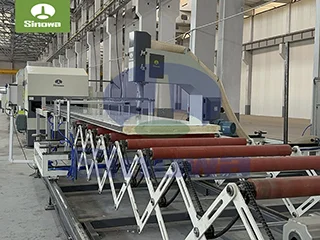
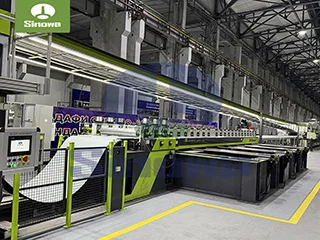
To comprehensively understand the operational logic and application value of the continuous PU sandwich panel line, it is essential to first clarify the basic structural composition and functional division of each core module of the equipment. The entire production system adopts a horizontal linear layout, which conforms to the fluid characteristics of raw material transmission and panel molding, and effectively reduces the space occupation of the production line while simplifying the material transmission path. At the front end of the production line lies the surface material unwinding module, which is responsible for continuously releasing roll-shaped surface materials for sandwich panels. This module is equipped with multiple sets of unwinding structures to meet the synchronous feeding requirements of upper and lower surface materials, and it is embedded with an automatic tension adjustment mechanism. During the material releasing process, the system can dynamically monitor the tension changes of the surface materials in real time, and automatically adjust the unwinding speed and damping force to avoid material deviation, wrinkling, or stretching deformation caused by uneven tension. Different types of surface materials, including metal sheets, fiber-reinforced plates, and decorative composite sheets, can be adapted to this module through simple structural parameter adjustment, realizing the flexible switching of raw material types in the production process and expanding the application scope of finished panels. After the unwinding process, the surface materials will enter the pretreatment area, where the surface cleaning and preheating procedures are completed. The automatic cleaning structure removes dust, oil stains, and fine attachments on the surface of the materials to ensure the bonding tightness between the surface materials and the polyurethane foam layer in the subsequent composite process. The constant-temperature preheating device raises the surface temperature of the materials to a preset reasonable range, eliminating the temperature difference between the surface materials and the foaming raw materials, which effectively prevents the generation of internal bubbles and delamination defects caused by temperature mismatch during the foaming and composite reaction.
Following the surface pretreatment process is the chemical raw material metering and foaming feeding module, which is the core functional unit that determines the foaming quality and internal structure of polyurethane sandwich panels. Polyurethane foam is formed by the chemical reaction between multiple chemical components, and the mixing ratio, feeding flow rate, and mixing uniformity of each component directly affect the foam density, thermal insulation performance, and structural toughness. This polyurethane sandwich panel production line is equipped with a high-precision multi-group metering and conveying system, which uses servo-driven power components to control the transmission speed and flow of different chemical raw materials. Each raw material storage tank is connected to an independent conveying pipeline, and high-sensitivity flow monitoring components are installed inside the pipelines to feed back the flow data to the central control system in real time. The system automatically corrects the feeding parameters according to the real-time monitoring data to ensure that the proportion of each chemical component remains within the optimal reaction range, avoiding product performance fluctuations caused by raw material ratio deviation. All raw materials are transported to the high-pressure mixing chamber through closed pipelines, and the turbulent mixing technology is adopted to realize instantaneous and sufficient fusion of multiple components. Compared with the traditional low-speed mixing mode, the high-pressure turbulent mixing structure can eliminate unmixed raw material residues, make the chemical reaction more uniform, and lay a foundation for the formation of fine and consistent foam pore structures. After mixing, the liquid composite raw materials are evenly coated on the surface of the lower surface material that is stably transported forward at a constant speed through an automatic spreading device. The spreading width and thickness can be adjusted according to the production specifications of the panels to meet the customized production requirements of panels with different thicknesses and widths.
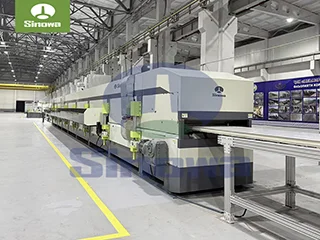
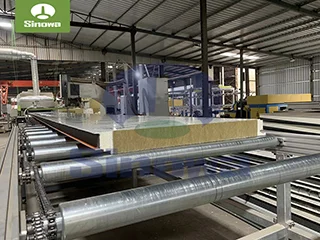
The composite lamination and constant-temperature curing module constitutes the key molding section of the continuous PU sandwich panel production line, undertaking the core processes of foam expansion, composite bonding, and structural curing. After the liquid polyurethane raw materials are laid on the lower surface material, the upper surface material is accurately covered above the foaming raw materials through the deviation correction and guiding structure. At this stage, the upper and lower surface materials and the intermediate liquid foam raw materials form a preliminary composite structure, which is then sent to the closed constant-temperature molding cavity. The interior of the molding cavity is equipped with multi-group roller sets and flat pressing structures. The mutual coordination between the rollers can maintain the flatness of the surface materials and avoid surface warping during the foaming expansion process. The pressing structure provides stable and uniform vertical pressure to ensure that the foam expands evenly in the limited space, fills the gap between the upper and lower surface materials completely, and forms a dense and integrated composite structure. The internal temperature of the molding cavity is controlled by a multi-stage circulating temperature regulation system. The system divides the cavity into multiple independent temperature control areas according to the reaction characteristics of polyurethane foam. In the initial foaming stage, the temperature is maintained at a medium level to accelerate the molecular reaction rate of the raw materials and promote rapid expansion of the foam. In the intermediate curing stage, the temperature is appropriately increased to enhance the cross-linking reaction between chemical molecules and improve the structural stability of the foam. In the final shaping stage, the temperature is gradually reduced to eliminate the internal stress of the composite panel and prevent structural deformation after molding. The whole curing process is carried out in a closed environment, which isolates the interference of external temperature and humidity, ensures the consistency of the curing reaction of each batch of panels, and effectively improves the overall dimensional accuracy and structural stability of finished products.
The traction conveying and fixed-length cutting module is responsible for realizing continuous material transmission and standardized product segmentation, which connects the molding process and the post-processing process of the panels. The traction structure adopts a double-sided synchronous clamping transmission design. The upper and lower traction belts clamp the cured composite panel stably, and the servo motor provides stable traction power to ensure that the panel moves forward at a constant and controllable speed. The traction speed is matched with the foaming and molding speed of the front-end process to maintain the continuity of the entire polyurethane sandwich panel line and avoid production pause caused by speed mismatch. High-precision length detection sensors are installed on the traction transmission support. When the panel is transported to the preset cutting length, the sensor sends a signal to the intelligent control system, which immediately activates the cutting device to perform fixed-length cutting. The cutting mechanism adopts a high-speed non-contact cutting or mechanical sawing structure. During the cutting process, the cutting speed is matched with the panel transmission speed to realize dynamic follow-up cutting, which avoids the production stagnation caused by static cutting and ensures the uninterrupted operation of the continuous production line. The cutting gap is precisely controlled, and the cutting edge is smooth and flat without burrs, cracks, or foam peeling, reducing the subsequent edge trimming workload. After cutting, the finished panels are automatically transported to the sorting and temporary storage area through the inclined conveying platform, completing the primary production process of a single sandwich panel.
The post-processing and auxiliary optimization module, as an important supplementary part of the continuous PU sandwich panel machine, further optimizes the appearance quality and application performance of finished panels. This module includes edge trimming, surface polishing, protective film lamination, and automatic stacking functions. The edge trimming structure cuts and polishes the four sides of the cut panels to eliminate tiny burrs and uneven edges generated during cutting, making the overall outline of the panels neat and standardized. The surface polishing device is mainly used for metal surface panels. Through gentle friction and polishing, it removes surface scratches and oxidation traces generated during the production process, restoring the smooth metallic texture of the surface materials. The automatic film lamination mechanism can attach transparent protective films to the upper and lower surfaces of the panels according to production needs, preventing surface scratches, corrosion, and dust adhesion during transportation, storage, and on-site installation. Finally, the qualified finished panels are automatically stacked by the mechanical stacking structure. The stacking height and arrangement mode can be set through the control system, and the mechanical arm accurately completes the stacking action to replace manual stacking, which not only improves the stacking efficiency but also ensures the neatness of panel placement and reduces the risk of panel damage caused by manual handling. All post-processing procedures are completed in an automated sandwich panel assembly line, realizing the integration of production, processing, and storage of panels.
The intelligent control system runs through all functional modules of the entire continuous PU sandwich panel line and is the brain core to coordinate the synchronous operation of each mechanical structure. The system adopts a centralized control mode with a human-computer interaction interface. Operators can view the real-time operating parameters of each module on the interface, including unwinding tension, raw material flow, molding cavity temperature, traction speed, cutting length, and equipment operating status. All parameter data are dynamically updated and stored in the system database, which is convenient for production data statistics, production process traceability, and equipment operation analysis. The control system has an automatic parameter adjustment function. When the external environment or raw material characteristics fluctuate slightly, the system intelligently corrects the operating parameters of each module to maintain the stability of the production process. In addition, the system is embedded with an abnormal monitoring and early warning mechanism. It can real-time monitor abnormal conditions such as equipment jamming, raw material shortage, temperature overload, and parameter deviation. Once an abnormality is detected, the system will send an early warning signal and automatically execute protection actions such as deceleration and shutdown to avoid equipment failure and product batch defects. The simplified human-computer interaction logic reduces the difficulty of equipment operation. Professional operators can complete production parameter setting, equipment start-stop control, and production mode switching through simple operations, realizing efficient and intelligent management of the production process.
Compared with intermittent batch production equipment, the continuous PU sandwich panel manufacturing line has prominent comprehensive advantages in production efficiency, product quality, resource utilization, and labor cost control. In terms of production efficiency, the continuous production mode eliminates the idle waiting time of equipment in the feeding, molding, and cutting links. The uninterrupted material transmission and processing greatly improve the annual output of a single production line, which can meet the large-scale order production needs of industrial manufacturers. In terms of product quality, the closed and standardized production environment avoids the interference of human factors and external environmental changes. The precise parameter control makes the thickness, density, flatness, and bonding strength of each panel maintain a high consistency rate, effectively reducing the proportion of defective products. In terms of resource utilization, the closed raw material conveying system reduces the volatilization and waste of chemical raw materials. The intelligent metering control realizes the precise matching of raw material dosage, avoiding raw material waste caused by excessive feeding. In terms of labor cost control, the highly automated production process reduces the number of on-site operators. Only a small number of personnel are required to complete equipment monitoring, parameter adjustment, and daily maintenance work, which significantly reduces the labor input cost in the long-term production process.
The polyurethane sandwich panels produced by the continuous production line have excellent comprehensive physical and chemical properties, supporting their wide application in multiple industrial fields. In the field of industrial plant construction, such panels are used as wall and roof enclosure materials for factory buildings. Their lightweight characteristics reduce the load-bearing pressure of the building structure, while the good thermal insulation performance can effectively control the internal temperature of the factory building and reduce the energy consumption of temperature regulation equipment. In the cold chain logistics industry, the panels serve as the main raw material for cold storage construction and refrigerated vehicle compartment manufacturing. The low thermal conductivity of polyurethane foam ensures the stable internal low-temperature environment of cold storage and refrigerated vehicles, reducing cold air loss and improving the energy-saving effect of cold chain equipment. In commercial architectural decoration, the decorative composite panels processed by the polyurethane sandwich panel machine have beautiful surface textures and strong weather resistance, which can be applied to the exterior wall decoration of shopping malls, office buildings, and exhibition halls to balance aesthetic performance and protective performance. In addition, in special environments such as chemical plants and coastal engineering, the panels with customized anti-corrosion and moisture-proof properties can resist the erosion of corrosive gases and humid seawater vapor, extending the service life of building enclosure structures.
In the actual production and application process, the daily maintenance and standardized operation of the continuous PU sandwich panel line are crucial to extend the service life of the equipment and maintain stable production efficiency. The daily maintenance work mainly includes surface cleaning of mechanical structures, lubrication of transmission parts, inspection of sealing components, and calibration of detection sensors. After the daily production is completed, the residual foam raw materials and surface debris inside the production line need to be cleaned to prevent the cured foam from adhering to the equipment structure and affecting the subsequent operation accuracy. The rotating and transmission parts such as traction rollers and conveying chains need to be regularly supplemented with lubricating oil to reduce mechanical friction loss and avoid abnormal noise and jamming during operation. The sealing parts of the raw material conveying pipeline and the molding cavity shall be inspected regularly for aging and damage to prevent raw material leakage and temperature loss. The high-precision detection sensors need to be calibrated periodically to ensure the accuracy of temperature, length, and tension monitoring data and avoid product quality deviation caused by parameter detection errors. In terms of operation management, enterprises need to formulate standardized operation procedures. Operators shall strictly follow the process specifications to complete parameter setting and equipment start-stop operations, and avoid overload operation and random parameter modification. At the same time, regular professional training shall be carried out for operators to improve their ability to judge abnormal equipment conditions and master emergency disposal methods to ensure the safe and stable operation of the sandwich panel machinery.
With the continuous progress of composite material processing technology and the upgrading of industrial manufacturing requirements, the continuous PU sandwich panel line is also evolving towards higher automation intelligence, higher energy-saving efficiency, and stronger production flexibility. In terms of intelligent upgrading, more advanced sensing elements and data analysis modules are gradually applied to the production line. The equipment can collect and analyze multi-dimensional data such as equipment energy consumption, raw material consumption, and product defect rate, providing data support for production optimization and cost control. In terms of energy saving and consumption reduction, the circulating heating and waste heat recovery structure optimizes the energy utilization mode of the molding cavity, reduces the heat loss during the temperature regulation process, and lowers the overall energy consumption of the equipment. In terms of production flexibility, the modular structural design enables the production line to quickly switch production specifications. It can not only produce conventional standard panels but also meet the personalized processing requirements of special-shaped panels and multi-layer composite panels, adapting to the diversified market demand. In addition, with the improvement of environmental protection production standards, the new generation of continuous PU sandwich panel machine is equipped with waste gas collection and purification devices, which can harmlessly treat the trace volatile gas generated in the foaming reaction process, reducing the impact of the production process on the external environment and conforming to the sustainable development concept of modern industrial production.
From the perspective of the industrial chain development, the continuous PU sandwich panel production line plays an important role in promoting the iterative upgrading of the composite material industry. As the core processing equipment of polyurethane sandwich panels, the technical maturity and production performance of the production line directly determine the product quality and market supply capacity of the panel industry. The popularization of continuous production technology has changed the backward production mode dominated by intermittent small-batch processing in the past, improved the overall industrial production efficiency, and reduced the production cost of composite panels. The stable and excellent product performance also expands the application boundary of polyurethane sandwich panels, making them gradually replace traditional building materials such as cement boards and ordinary metal plates in more fields. At the same time, the technological innovation of the production line also drives the upgrading of upstream raw material formula and downstream panel deep processing technology, forming a mutually linked and mutually promoted industrial chain development system. In the context of the rapid development of the global construction industry and cold chain industry, the market demand for high-efficiency and high-quality polyurethane sandwich panels continues to rise, which further promotes the continuous technological optimization and performance improvement of continuous production lines.
In conclusion, the continuous PU sandwich panel line is a highly integrated, automated, and efficient composite material processing equipment. It realizes the continuous and standardized production of polyurethane sandwich panels through the coordinated operation of multiple functional modules such as unwinding, pretreatment, foaming, composite molding, cutting, and post-processing. Its unique continuous production mode has obvious advantages in production efficiency, product consistency, resource utilization, and labor management, and the produced panels have excellent thermal insulation, lightweight, weather resistance, and structural stability, covering multiple application scenarios in industrial, commercial, and special engineering fields. With the continuous advancement of industrial manufacturing technology, this type of production line will continue to evolve in the direction of intelligence, energy saving, environmental protection, and flexibility, continuously optimizing production performance and expanding application scope. In the future development of the composite material industry and construction manufacturing industry, the continuous polyurethane sandwich panel manufacturing line will still maintain an irreplaceable core position, providing reliable equipment support and technical guarantees for the large-scale production and high-quality application of polyurethane sandwich panels, and continuously injecting impetus into the high-quality development of the entire industrial chain.
https://www.cnsinowa.com/sandwich-panel-machines/continuous-pu-sandwich-panel-line.html