sandwich panel line
The basic structure of a thermal insulation panel production line consists of several interconnected modules, each responsible for a specific stage of the manufacturing process. The initial stage involves material handling and preparation systems, which are crucial for ensuring the quality and consistency of raw materials before they enter the core production process. For flexible-faced panels, this module typically includes uncoiling machines, accumulators, and preheating devices. Uncoiling machines handle rolls of flexible substrates such as paper, foil, or film, feeding them into the production line at a steady pace. Accumulators maintain consistent tension in the substrate to prevent wrinkling or tearing, while preheating devices raise the substrate temperature to an optimal level for subsequent foaming and lamination, ensuring better adhesion between the substrate and the insulation core. For rigid materials like cement or mineral fibers, the material preparation module includes feeding systems, mixers, and dosing devices that accurately measure and blend raw materials such as cement, fly ash, foaming agents, and additives, ensuring the uniformity of the mixture before molding.
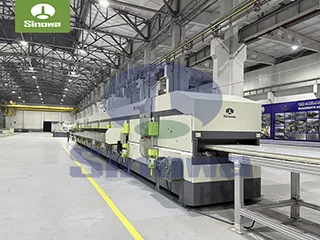
The core formation and lamination module is the heart of the production line, where the insulation core is formed and bonded to the facing materials. For foam-based insulation panels, this module integrates mixing and metering systems, foaming heads, and laminating presses. Mixing and metering systems precisely measure and blend reactive components such as polyols and isocyanates, along with additives like catalysts, foaming agents, flame retardants, and curing agents. The accuracy of these systems is critical for achieving the desired foam density, thermal conductivity, and mechanical strength. The mixed materials are then delivered to foaming heads, which deposit the foam onto one of the facing materials. Laminating presses, often in the form of double-belt conveyors, compress the foam between two facing materials, controlling the thickness and flatness of the panel while facilitating the curing and bonding process. For cement-based insulation panels, the core formation module includes molding equipment, foaming chambers, and initial curing stations. The mixed cement slurry is injected into molds, where foaming agents create a cellular structure. The molds are then transferred to initial curing stations to allow the slurry to set and develop initial strength before demolding.
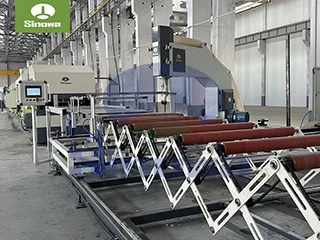
Subsequent to core formation and lamination, the cooling and post-processing module refines the panels into their final form. This module includes cooling devices, trimming machines, cutting equipment, and handling systems. Cooling devices lower the temperature of the panels to accelerate curing and stabilize their dimensions, preventing warping or deformation. Trimming machines remove excess material from the edges of the panels to ensure precise dimensions and clean edges, while cutting equipment, such as crosscut saws and multi-blade cutters, cuts the continuous panel into individual pieces of specified lengths and widths. Some production lines also include profiling devices that shape the panel edges into specific profiles for easier installation, such as tongue-and-groove joints. Finally, handling and stacking systems transfer the finished panels to storage or packaging areas, with automated stackers arranging the panels into neat piles for further processing or shipment.
The control system is an integral part of the production line, overseeing and regulating all operational parameters to ensure consistent quality and efficiency. Modern production lines are equipped with advanced computer-aided control systems that monitor temperature, pressure, material flow rates, conveyor speed, and panel thickness in real time. These systems automatically adjust parameters to compensate for variations in raw materials or environmental conditions, minimizing human error and ensuring the uniformity of the final products. The control system also includes separate modules for managing the "wet end" (material mixing and foaming) and "dry end" (cooling, cutting, and stacking) processes, allowing for precise control over each stage of production. For production lines handling flammable materials like pentane, additional safety control systems are integrated to monitor and maintain safe operating conditions, preventing fire or explosion hazards.
The performance of a thermal insulation panel production line is evaluated based on several key indicators, including production capacity, precision, stability, and energy efficiency. Production capacity refers to the amount of panels the line can manufacture per hour or day, which varies depending on the line design, material type, and panel thickness. High-capacity lines can produce up to several thousand square meters of panels per hour for thin panels, making them suitable for large-scale industrial applications. Precision is another critical performance indicator, encompassing the accuracy of panel dimensions, thickness uniformity, and foam density control. Lines with high precision can consistently produce panels with tight tolerances, reducing material waste and ensuring the panels fit properly during installation. Operational stability refers to the line's ability to run continuously without breakdowns, which is influenced by the quality of components, system integration, and maintenance practices. A stable production line minimizes downtime, improves overall efficiency, and reduces production costs.
Energy efficiency is an increasingly important performance factor, driven by environmental regulations and cost-saving goals. Modern production lines incorporate energy-saving technologies such as heat recovery systems, which capture waste heat from curing or cooling processes and reuse it for preheating materials or heating production facilities. Variable frequency drives adjust the speed of motors and conveyors according to production demand, reducing energy consumption during low-capacity operation. Additionally, optimized material mixing and metering systems minimize raw material waste, further enhancing the line's environmental performance. For inorganic insulation panel production lines, wet cutting technologies are employed to reduce dust emissions, improving workplace safety and reducing environmental impact compared to dry cutting methods.
Thermal insulation panel production lines can be categorized based on the type of insulation material they process, each with unique configurations and operational characteristics. Foam-based production lines are widely used for manufacturing panels with polyurethane (PU), polyisocyanurate (PIR), or phenolic foam cores. These lines are designed for continuous production, with high-speed mixing and lamination systems to handle the fast-curing nature of foam materials. PU and PIR foam production lines often include specialized systems for handling reactive components and controlling foaming reactions, ensuring the formation of closed-cell structures with excellent thermal insulation properties. Phenolic foam production lines are similar in design but are adapted to handle the higher curing temperatures and different material properties of phenolic resins.
Inorganic insulation panel production lines process materials such as cement, mineral wool, and expanded polystyrene (EPS). Cement-based production lines integrate mixing, foaming, molding, and curing systems, with automated controls to ensure the consistency of the cellular structure and mechanical strength of the panels. These lines often feature modular designs, allowing for customization based on production capacity and venue constraints. Mineral wool production lines include melting furnaces, fiberization equipment, collection systems, and curing ovens. Raw materials such as basalt or slag are melted in high-temperature furnaces, then converted into fibers using centrifugal equipment. The fibers are collected, mixed with binders and water repellents, and formed into mats before being cured and cut into panels. EPS production lines consist of pre-expanders, aging silos, molding machines, and cutting equipment. EPS beads are pre-expanded using steam, aged to stabilize their volume, then molded into panels under heat and pressure before being cut to size.
Another classification criterion is production mode, with continuous and batch production lines being the two main types. Continuous production lines are ideal for large-scale manufacturing, offering high capacity and consistent product quality. These lines operate 24/7, with materials moving continuously through each processing stage, making them suitable for foam-based and mineral wool panels. Batch production lines, on the other hand, process materials in discrete batches, making them suitable for small-scale production or specialized products such as custom-sized cement panels or high-performance phenolic foam panels. Batch lines offer greater flexibility in product specifications but have lower overall capacity compared to continuous lines.
The applications of thermal insulation panel production lines are closely linked to the end uses of the panels they manufacture, spanning the construction, industrial, refrigeration, and automotive sectors. In the construction industry, production lines manufacturing PU, PIR, mineral wool, and cement-based panels are widely used to supply materials for building envelopes, including external walls, roofs, floors, and ceilings. These panels provide thermal insulation, fire resistance, and sound insulation, helping to reduce building energy consumption and improve indoor comfort. Mineral wool panels, in particular, are favored for their excellent fire resistance, making them suitable for use in fire barriers and high-rise buildings. Cement-based panels are commonly used as external wall insulation and fire isolation strips, meeting strict fire safety requirements in construction projects.
The industrial sector relies heavily on thermal insulation panels for temperature control and energy conservation in factories, warehouses, and processing facilities. Production lines manufacturing PU and PIR panels supply materials for industrial roofs and walls, where superior thermal insulation is required to maintain stable indoor temperatures and reduce heating or cooling costs. Food processing plants and pharmaceutical facilities often use panels produced by high-precision foam-based lines to create clean, temperature-controlled environments that preserve product quality. Mineral wool panels are used in industrial facilities with high fire safety requirements, such as power plants and chemical factories, providing both insulation and fire protection.
Refrigeration and cold storage is another key application area for thermal insulation panel production lines. Lines producing PU, PIR, and EPS panels supply materials for cold storage warehouses, refrigerated trucks, and food display cabinets. These panels must have low thermal conductivity and excellent moisture resistance to maintain low temperatures efficiently and prevent condensation. PIR panels are particularly suitable for ultra-low temperature applications, such as vaccine storage and cryogenic facilities, due to their stable thermal performance at temperatures as low as -200°C. EPS panels offer a cost-effective solution for general cold storage applications, providing adequate insulation at a lower cost.
Other emerging applications include automotive and marine industries, where lightweight and durable insulation panels are used for thermal and acoustic insulation. Production lines manufacturing flexible insulation panels with rubber and plastic cores supply materials for automotive interiors, reducing noise and improving thermal comfort. Marine applications require panels with high corrosion resistance and fire performance, making mineral wool and phenolic foam panels ideal choices, produced by specialized lines adapted to handle these material requirements.
The versatility of thermal insulation panel production lines allows for customization to meet specific industry needs, with adjustable configurations to produce panels of varying thicknesses, sizes, and performance characteristics. As environmental regulations become stricter and energy efficiency goals become more ambitious, production lines are evolving to incorporate more sustainable technologies, such as using recycled materials, reducing energy consumption, and minimizing waste emissions. The development of new insulation materials, such as bio-based foams and high-performance inorganic composites, is also driving innovations in production line design, enabling the manufacture of panels with enhanced properties and lower environmental impact.
In conclusion, thermal insulation panel production lines are complex, integrated systems that play a vital role in supplying high-quality insulation materials for a wide range of applications. Their structure, comprising material preparation, core formation, lamination, cooling, post-processing, and control modules, is designed to ensure consistent product quality and production efficiency. The performance of these lines, evaluated by capacity, precision, stability, and energy efficiency, varies according to their design and intended use. With diverse types adapted to process foam-based, inorganic, and composite materials, these production lines cater to the unique requirements of the construction, industrial, refrigeration, and automotive sectors. As the demand for energy-efficient and sustainable insulation solutions continues to grow, thermal insulation panel production lines will continue to evolve, incorporating advanced technologies and materials to meet the changing needs of industries worldwide.
https://www.cnsinowa.com/sandwich-panel-machines/thermal-insulation-panel-production-line.html