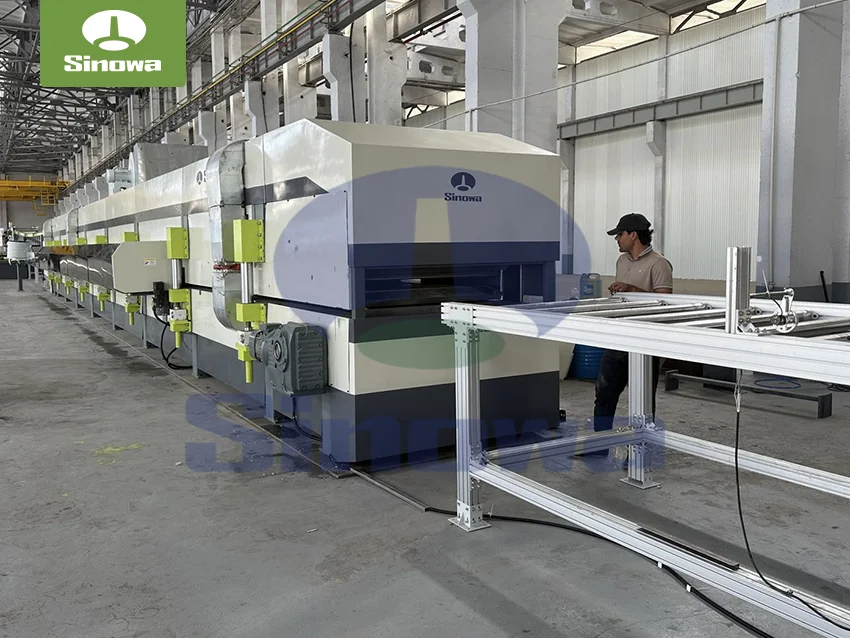
 sandwich panel line
The foundation of any PU sandwich panel production line lies in its ability to handle raw materials with precision and consistency. The primary raw materials include metal coils for the outer facings, polyurethane foam components, and auxiliary materials such as adhesives and protective films. The process begins with the uncoiling and preparation of the metal facings, a critical stage that sets the standard for the panel’s surface finish and structural stability. Metal coils are loaded onto decoilers, which unwind the material at a controlled speed to ensure a continuous feed into the production line. Prior to forming, the metal sheets may undergo additional treatments to enhance their performance and adhesion to the PU core. These treatments can include levelers to correct any warping or unevenness in the metal, corona treatment to improve surface tension for better foam bonding, and the application of protective films to prevent scratches or corrosion during processing and transportation. Some production lines also incorporate embossing units to create decorative patterns on the metal surface, adding aesthetic value to the final wall cladding product without compromising structural strength.
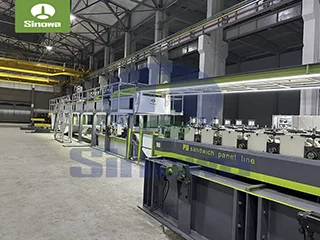
Following the preparation of the metal facings, the roll forming process shapes the sheets into the desired profile for wall cladding. Roll forming machines consist of a series of tandem rolling stands, each equipped with precision rollers that gradually bend the metal sheets into the required shape. The configuration of these rollers can be adjusted to produce panels of varying widths, depths, and edge designs, allowing manufacturers to cater to diverse architectural needs. For wall cladding applications, common profiles include flat panels with interlocking edges, which facilitate seamless installation and enhance weather resistance. The roll forming process is highly automated, with sensors and control systems monitoring the sheet thickness, profile accuracy, and feeding speed to ensure uniformity across all panels. This stage is crucial as the formed profile directly impacts the panel’s ability to interlock, withstand wind loads, and maintain structural integrity over time.
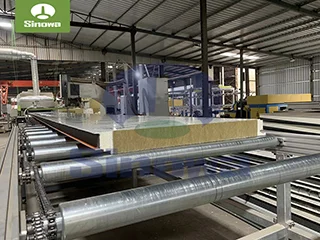
Once the metal facings are formed, they move to the foaming and lamination section, where the PU core is injected and bonded between the two sheets. The PU foam is created by mixing two liquid components—polyol and isocyanate—along with additives such as blowing agents, catalysts, and flame retardants. These components are delivered to a high-pressure foaming machine, which precisely meters and mixes the materials at controlled temperatures and pressures. The high-pressure mixing ensures a homogeneous blend, which is essential for producing a foam core with consistent density and insulation properties. The foaming machine distributes the liquid mixture evenly onto the lower metal facing as it moves through the production line, while the upper metal facing is simultaneously fed into position above the foam layer.
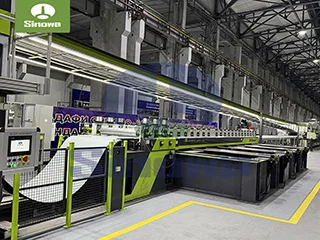
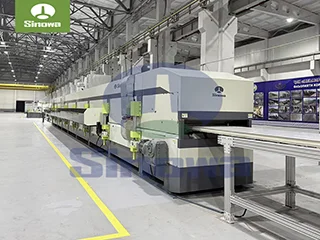
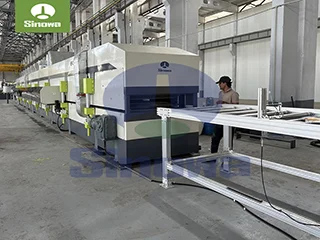
The combined assembly of upper facing, foam core, and lower facing then enters a double belt press, a key component that controls the foam expansion and curing process. The double belt press consists of two parallel conveyors equipped with heated and insulated belts that apply uniform pressure and temperature to the panel assembly. The controlled environment within the press allows the PU foam to expand gradually and cure into a solid, closed-cell structure. The closed-cell nature of the PU foam is critical for wall cladding applications, as it provides excellent thermal insulation, moisture resistance, and sound absorption. The belts of the press also ensure the panel maintains a flat surface and consistent thickness, with insulation and pressure adjustments tailored to the specific foam density and panel dimensions. The curing time within the press varies depending on the foam formulation and panel thickness, typically ranging from several minutes to ensure complete polymerization of the PU core.
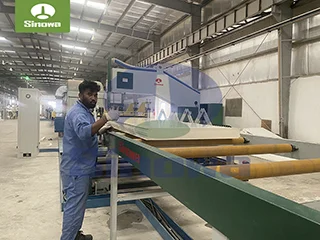
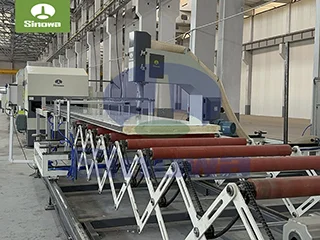
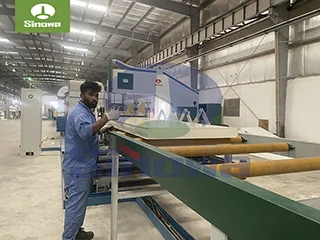
After curing, the continuous panel is moved to the cutting section, where it is trimmed to the required length using a flying saw cutting machine. Flying saws are designed to cut the panel while it is still in motion, ensuring precise length accuracy without disrupting the production flow. These cutting machines are equipped with sharp blades—either band saws or disk blades—that can be adjusted to accommodate different panel thicknesses. Many modern production lines feature 180-degree rotating mechanisms on the flying saws, allowing for bidirectional cutting and enabling the production of shorter panel lengths even at high line speeds. The cutting process is automated, with sensors detecting the desired length and triggering the saw to make clean, straight cuts. After cutting, the panels may undergo a secondary trimming process to remove any excess material or uneven edges, ensuring a finished product that meets exact dimensional specifications.
Post-cutting, the panels proceed to a handling and finishing system to prepare them for storage and transportation. This system typically includes a cooling station, where the panels are allowed to cool slowly to room temperature, ensuring the PU core fully stabilizes and the bond between the core and facings is maximized. Slow cooling prevents thermal stress that could cause warping or delamination. Some production lines also incorporate turning stations to flip the panels, allowing for inspection of both sides and facilitating stacking. The final step in the handling process is packaging, where panels are wrapped in protective materials to prevent damage during transit. Packaging also helps maintain the panels’ surface finish and prevents moisture absorption before installation.
Quality control is an ongoing process throughout the entire production line, integrated into each stage to ensure the final wall cladding panels meet performance standards. Raw material inspection involves verifying the chemical composition and physical properties of the metal coils and PU components, ensuring they are suitable for the intended application. During production, sensors monitor foam density, panel thickness, temperature, and pressure, making real-time adjustments to maintain consistency. Visual inspections are conducted to check for surface defects, such as scratches, dents, or uneven foam distribution. Post-production testing may include checks for thermal conductivity, compressive strength, bond strength, and fire resistance, ensuring the panels deliver reliable performance in real-world conditions. This rigorous quality control process minimizes waste and ensures that every panel leaving the production line is capable of withstanding the demands of wall cladding applications, from extreme weather conditions to daily wear and tear.
The versatility of PU sandwich panel production lines allows for customization to meet specific project requirements. Manufacturers can adjust various parameters, such as panel thickness, metal facing material, foam density, and surface finish, to create panels tailored to different construction scenarios. For example, wall cladding panels for cold storage facilities may require a higher foam density for enhanced insulation, while panels for industrial warehouses may prioritize structural strength and wind resistance. The ability to produce panels in different widths and lengths also simplifies installation, reducing the need for on-site cutting and minimizing material waste. Additionally, the integration of decorative elements, such as embossed patterns or colored metal facings, allows architects and builders to achieve aesthetic goals without sacrificing functionality.
PU sandwich panels produced for wall cladding offer numerous advantages over traditional building materials, contributing to their growing popularity in the construction industry. Their lightweight nature reduces the overall load on the building structure, allowing for simpler foundation designs and faster installation. Despite being lightweight, the panels exhibit high structural strength, with the metal facings providing rigidity and the PU core offering excellent impact resistance. The thermal insulation properties of the PU foam core significantly reduce energy consumption for heating and cooling, leading to lower operational costs for buildings. The closed-cell foam structure also provides effective moisture resistance, preventing mold growth and corrosion of the metal facings, which extends the lifespan of the wall cladding. Furthermore, the sound absorption capabilities of the PU core help create quieter indoor environments, making these panels suitable for commercial and residential buildings located in noisy areas.
In industrial applications, PU sandwich panel wall cladding is particularly valued for its durability and low maintenance requirements. Industrial warehouses and manufacturing facilities often face harsh conditions, including temperature fluctuations, chemical exposure, and heavy machinery vibrations. PU sandwich panels can withstand these conditions without degrading, ensuring long-term performance with minimal upkeep. The panels are also resistant to insects, fungi, and algae growth, making them suitable for use in humid or outdoor environments. For cold storage facilities, the superior insulation of PU sandwich panels is critical for maintaining precise temperature ranges, protecting perishable goods, and reducing refrigeration costs. The seamless interlocking design of the panels eliminates thermal bridges, preventing condensation and ensuring compliance with hygiene standards.
Commercial buildings, such as shopping complexes, office buildings, and retail showrooms, benefit from the aesthetic versatility and functional performance of PU sandwich panel wall cladding. The ability to customize surface finishes and colors allows the panels to complement various architectural styles, creating visually appealing facades. The quick installation process minimizes construction time, allowing businesses to open sooner and reduce labor costs. Additionally, the energy efficiency of the panels contributes to sustainable building practices, helping to meet green building objectives and reduce carbon footprints. Residential buildings can also leverage PU sandwich panel wall cladding for its thermal efficiency, sound insulation, and durability, creating comfortable living environments with lower energy bills.
The operation of a PU sandwich panel production line requires careful maintenance to ensure consistent performance and longevity of the equipment. Regular maintenance tasks include inspecting and lubricating the roll forming rollers, cleaning the foaming machine mixing heads to prevent clogs, and calibrating sensors and control systems for accuracy. The double belt press belts need periodic inspection for wear and tear, with replacements scheduled to avoid uneven pressure application. Proper maintenance not only extends the lifespan of the production line but also ensures that the panels produced meet quality standards consistently. Additionally, operator training is essential to handle the complex equipment, monitor production parameters, and troubleshoot minor issues promptly, minimizing downtime and maximizing productivity.
As the construction industry continues to prioritize sustainability and energy efficiency, the demand for PU sandwich panels for wall cladding is expected to grow, driving innovations in production line technology. Manufacturers are exploring new foam formulations that enhance fire resistance and reduce environmental impact, while maintaining or improving insulation properties. Advances in automation and control systems are also making production lines more efficient, with real-time data monitoring and predictive maintenance capabilities reducing waste and improving overall productivity. The integration of digital technologies, such as computer-aided design (CAD) for roll forming configurations and foam injection optimization, allows for greater precision and customization, catering to the evolving needs of the construction industry.
In conclusion, a PU sandwich panel production line is a complex, automated system that plays a vital role in manufacturing high-performance wall cladding materials for the construction industry. From raw material preparation and roll forming to foam injection, curing, cutting, and finishing, each stage of the production process is carefully coordinated to ensure the final panels meet strict quality standards. The versatility, durability, and energy efficiency of PU sandwich panels make them an ideal choice for a wide range of applications, from industrial warehouses to commercial and residential buildings. As technology continues to advance, production lines will become more efficient, sustainable, and capable of meeting the ever-changing demands of modern construction, solidifying the position of PU sandwich panels as a cornerstone material for wall cladding solutions.
https://www.cnsinowa.com/sandwich-panel-machines/pu-sandwich-panel-production-line-for-wall-cladding.html