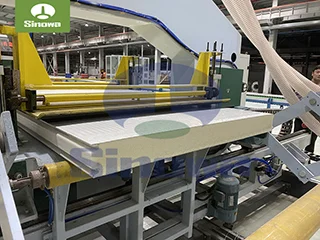
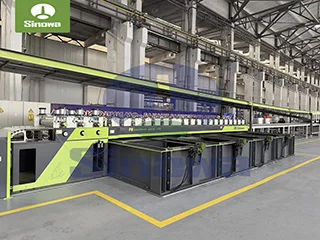
sandwich panel machine
Pneumatics, the use of pressurized air to perform mechanical tasks, offers unique advantages that align perfectly with the demands of PIR sandwich panel manufacturing. Unlike hydraulic systems that rely on liquids, pneumatic systems are lighter, cleaner, and free from the risk of fluid leaks that could contaminate the PIR foam core or facing materials. Compared to electronic systems, pneumatic components exhibit greater durability in harsh industrial environments where dust, moisture, and temperature fluctuations are common—conditions often present in panel manufacturing facilities. The simplicity of pneumatic design also translates to easier maintenance and faster troubleshooting, reducing downtime and ensuring continuous production flow. These inherent benefits make pneumatic control components an ideal choice for powering the automated processes that define modern PIR sandwich panel plants.
The production process of PIR sandwich panels is a sequential operation that demands precision at every step, from material feeding to final cutting and finishing. Pneumatic control components integrate seamlessly into each phase, providing the force, speed, and accuracy required to maintain product consistency. The process begins with the preparation of facing materials, which typically include metal sheets, fiberglass, or other rigid substrates. These materials must be fed into the production line with exact tension to prevent wrinkling or misalignment, which would compromise the panel’s structural integrity. Pneumatic actuators and tension controllers work in tandem to regulate the feed rate of facing materials, adjusting pressure dynamically to accommodate variations in material thickness and stiffness. This ensures that the facing materials move smoothly through the line, maintaining a uniform position relative to the foam core.
Following material feeding, the next critical stage is the application of the PIR foam core. The foam is formed by mixing polyol and isocyanate, along with additives that control expansion, curing time, and fire resistance. This mixture must be dispensed onto the lower facing material in a precise, uniform layer to ensure consistent core thickness across the panel. Pneumatic control valves play a pivotal role here, regulating the flow rate of the foam mixture and adjusting the dispensing width to match the panel dimensions. These valves respond rapidly to control signals, allowing for quick adjustments when switching between different panel sizes or foam densities. Pneumatic cylinders also position the dispensing nozzle with high accuracy, ensuring that the foam is distributed evenly without gaps or excess buildup. The speed of pneumatic components is particularly advantageous here, as it allows for high-volume production without sacrificing the precision required for foam application.
Once the foam mixture is dispensed, the upper facing material is laminated onto the core, and the entire assembly is passed through a press to ensure proper bonding and uniform thickness. Pneumatic presses deliver consistent pressure across the panel surface, a critical factor in achieving strong adhesion between the foam core and facing materials. Unlike mechanical presses, pneumatic systems allow for adjustable pressure settings, enabling manufacturers to tailor the compression force to the specific properties of the materials being used—whether working with thin metal facings or thicker, more rigid substrates. Pneumatic pressure regulators maintain a steady force throughout the pressing process, preventing over-compression that could damage the foam core or under-compression that would result in weak bonding. This level of control ensures that each panel meets the required structural standards, with no variation in thickness or adhesion quality.
As the PIR foam cures, the panel moves through the production line to the cutting stage. Precision cutting is essential to meet the exact dimensions required for construction applications, and pneumatic control components enable high-accuracy cutting operations. Pneumatic actuators drive the cutting tools, providing the speed and force needed to make clean, straight cuts through the rigid foam core and facing materials. These actuators are synchronized with position sensors, which feed real-time data to the control system to ensure that each cut is made at the correct location. Pneumatic systems also allow for quick tool changes, enabling manufacturers to switch between different cutting patterns or panel sizes with minimal downtime. This flexibility is crucial in today’s market, where demand for custom-sized panels is on the rise.
Beyond the core production stages, pneumatic control components contribute to the overall efficiency and safety of the manufacturing plant. Material handling is a key aspect of panel production, as finished panels can be large and heavy. Pneumatic lifts and conveyors simplify the movement of materials throughout the facility, reducing the need for manual labor and minimizing the risk of workplace injuries. Pneumatic grippers, equipped with adjustable pressure settings, can handle delicate facing materials without causing damage, while also providing the strength needed to move fully cured panels. These components are integrated into the plant’s automation system, allowing for seamless coordination between production stages and material handling operations.
The integration of pneumatic control components with modern automation systems further enhances the performance of PIR sandwich panel manufacturing plants. Centralized control panels monitor and adjust pneumatic systems in real time, ensuring that all components work in harmony to maintain production quality. Sensors throughout the production line detect variations in pressure, temperature, and material position, sending signals to the control system to make immediate adjustments. For example, if a sensor detects a drop in air pressure in the foam dispensing system, the control panel automatically adjusts the compressor output to restore pressure, preventing disruptions to the production process. This level of automation not only improves product consistency but also reduces waste, as minor deviations are corrected before they result in defective panels.
Pneumatic systems also offer significant advantages in terms of energy efficiency and sustainability, factors that are increasingly important in modern manufacturing. Compressed air systems can be optimized to reduce energy consumption, with variable-speed compressors that adjust output based on demand. Unlike electric motors, which consume constant power even when idle, pneumatic components only use energy when in operation, reducing overall energy usage. Additionally, pneumatic systems are inherently clean, as they do not require lubricants that could contaminate the production process or the environment. This aligns with the sustainable properties of PIR foam, which is free from harmful refrigerants and has excellent thermal efficiency, reducing the carbon footprint of buildings constructed with these panels.
The reliability of pneumatic control components is another key benefit for PIR sandwich panel manufacturers. Industrial environments are often harsh, with exposure to dust, vibration, and temperature extremes, but pneumatic components are designed to withstand these conditions. Their simple mechanical design, with fewer moving parts than electronic or hydraulic systems, reduces the risk of breakdowns and extends the service life of the equipment. Routine maintenance for pneumatic systems is also straightforward, typically involving air filter replacement and pressure checks, which can be performed without specialized technical knowledge. This reliability ensures that production lines remain operational for longer periods, maximizing throughput and reducing the cost of downtime.
In addition to standard production processes, pneumatic control components enable manufacturers to adapt to evolving market demands and produce specialized PIR sandwich panels. For example, panels used in cold storage facilities require enhanced insulation properties and airtight joints, which demand precise control over foam density and panel dimensions. Pneumatic systems can be easily reconfigured to adjust foam expansion rates and pressing pressure, allowing manufacturers to produce panels tailored to these specific requirements. Similarly, panels used in fire-rated applications require strict adherence to thickness and material bonding standards, and pneumatic control components ensure that these specifications are consistently met. This flexibility allows manufacturers to expand their product offerings and serve a wider range of industries, from construction to food storage and industrial processing.
Safety is a top priority in any manufacturing facility, and pneumatic control components contribute to a safer working environment for plant operators. Pneumatic systems operate at lower pressures than hydraulic systems, reducing the risk of catastrophic failures. Emergency shutoff mechanisms, powered by pneumatic actuators, can quickly stop production in the event of a hazard, minimizing the risk of injury or equipment damage. Additionally, pneumatic tools and components are lighter than their electric or hydraulic counterparts, reducing operator fatigue and the risk of musculoskeletal injuries. The absence of electrical components in some pneumatic systems also eliminates the risk of electric shock, making them ideal for use in environments where moisture or flammable materials are present.
The future of PIR sandwich panel manufacturing will likely see further integration of pneumatic control components with advanced technologies such as artificial intelligence (AI) and the Internet of Things (IoT). IoT-enabled sensors can monitor the performance of pneumatic systems in real time, predicting maintenance needs and preventing breakdowns before they occur. AI algorithms can analyze production data to optimize pneumatic pressure settings, feed rates, and cutting parameters, further improving product quality and efficiency. These advancements will enable manufacturers to achieve even higher levels of automation, reduce waste, and respond more quickly to market demands.
In conclusion, pneumatic control components have become an integral part of modern PIR sandwich panel manufacturing plants, offering a unique combination of precision, efficiency, reliability, and flexibility. From material feeding and foam dispensing to pressing, cutting, and material handling, these components enhance every stage of the production process, ensuring consistent product quality and high-volume output. Their ability to withstand harsh industrial environments, low maintenance requirements, and energy efficiency make them a cost-effective solution for manufacturers. As the demand for high-performance PIR sandwich panels continues to grow, the role of pneumatic control components will only become more important, driving innovation and efficiency in the industry. By leveraging the power of compressed air, manufacturers can meet the evolving needs of the construction and industrial sectors, producing panels that deliver superior insulation, structural integrity, and sustainability.
https://www.cnsinowa.com/sandwich-panel-machines/pir-sandwich-panel-manufacturing-plant-with-pneumatic-control-components.html