Energy Consumption Standard Of Automatic PU Sandwich Panel Production Equipment
Sep 17, 2026
Automatic PU sandwich panel production equipment energy consumption standards focus on rationalizing energy use across full production processes. They cover core links including foaming, heating, laminating and conveying, guiding efficient equipment operation, reducing ineffective energy waste, and balancing production stability and energy conservation in industrial manufacturing scenarios.
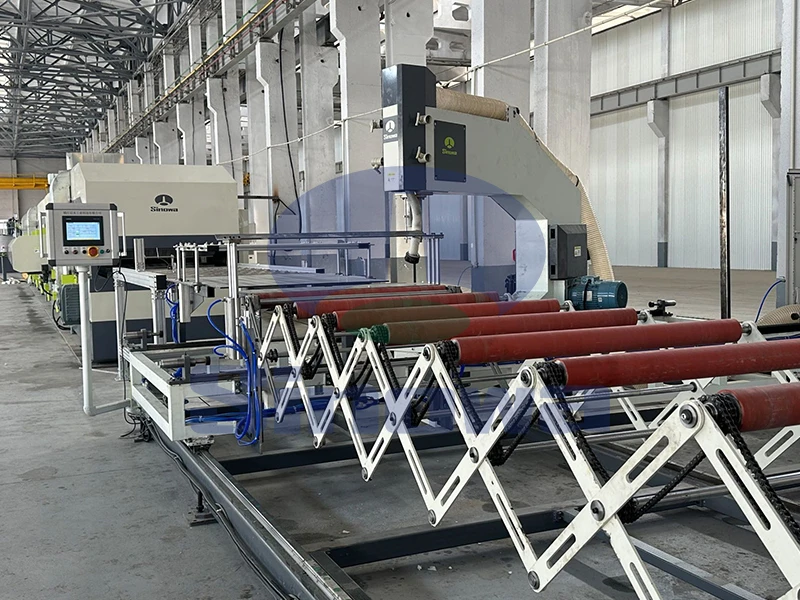
The energy consumption characteristics of automatic PU sandwich panel production equipment determine the core orientation of its consumption standards, as the entire production process involves multiple energy-intensive functional units with differentiated power demands. The core energy-consuming links mainly include raw material preheating, PU foaming reaction, plate curing and shaping, and mechanical transmission operation, each presenting distinct energy consumption rules under different operating states. In the standby state, traditional equipment often maintains continuous high-power operation of heating and power components, resulting in long-term invalid energy loss, while modern automated equipment adjusts basic power output according to idle duration, forming a standardized low-energy standby mode. During formal production, the foaming and curing stages require stable and continuous heat supply to ensure the uniformity of PU material reaction and panel molding quality, and the energy input at this stage must match the production speed and material dosage to avoid excessive energy supply exceeding process demand. Moreover, mechanical transmission systems such as rolling and laminating devices generate variable energy consumption with load changes, and the energy consumption standard restricts the power fluctuation range under no-load, light-load and full-load conditions to eliminate energy waste caused by mismatched power and load. This standardized constraint on differentiated energy consumption of each link lays a fundamental framework for overall energy efficiency control of the equipment.
Thermal energy consumption control is a key core of the energy consumption standard for automatic PU sandwich panel production equipment, as thermal energy accounts for the largest proportion of total energy consumption in panel production. The PU foaming and curing processes rely heavily on constant and uniform temperature environments, and unreasonable heat supply and heat loss are the main causes of excessive thermal energy consumption. The standard focuses on optimizing the thermal circulation and heat preservation performance of equipment thermal systems, requiring the equipment to adopt fully sealed heat insulation structures in curing channels and heating cavities to reduce external heat dissipation. Meanwhile, the standard regulates the waste heat recycling mechanism of the equipment, mandating that heat generated by PU chemical reactions and residual heat from heating units can be recycled for raw material preheating and workshop auxiliary temperature adjustment, realizing secondary utilization of thermal energy. In addition, the standard restricts the temperature adjustment accuracy and heating response efficiency of thermal systems, avoiding repeated heating and temperature overshoot caused by inaccurate temperature control. It also standardizes the startup and preheating energy consumption indicators of thermal equipment, requiring the equipment to reach the optimal production temperature within a reasonable time window with minimal energy input, and eliminating long-term low-efficiency preheating energy waste in traditional production modes.
Power energy consumption management for mechanical operation is an indispensable part of the equipment energy consumption standard, covering all motor-driven functional components in the production line. Automatic PU sandwich panel production lines include multiple power units such as conveying motors, rolling forming motors, cutting servo motors and mixing power motors, and the coordinated operation of these units directly affects overall power consumption. The standard puts forward clear load matching requirements for power systems, advocating the application of variable frequency power regulation structures to realize dynamic power adjustment according to production load changes. When the production speed decreases or individual functional units operate at low load, the equipment can automatically reduce motor operating power instead of maintaining constant high-power operation, which effectively cuts down invalid power consumption. In addition, the standard standardizes the energy consumption threshold of no-load operation of each power component, limiting the no-load operating duration and no-load power consumption of idle equipment during production gaps. It also requires the equipment to be equipped with intelligent power monitoring modules to record real-time power consumption data of each unit, providing data support for energy consumption optimization and standardized operation. Scientific power consumption constraints significantly reduce the comprehensive power cost of continuous production.
Intelligent operation optimization rules embedded in energy consumption standards further improve the overall energy utilization efficiency of automatic PU sandwich panel production equipment. Modern fully automated production lines rely on intelligent control systems to realize integrated management of production processes, and energy consumption standards standardize the intelligent energy-saving operation logic of equipment. The standard requires the equipment to support adaptive energy allocation, which can automatically match the optimal energy supply scheme according to production parameters such as panel thickness, production speed and raw material formula. For different production batches and product specifications, the system adjusts heating power, motor operating frequency and material mixing energy consumption in real time to avoid one-size-fits-all energy supply modes that cause waste. Meanwhile, the standard regulates the automatic energy-saving switching function of the equipment, enabling rapid entry into low-energy standby mode when production is suspended temporarily, and automatically cutting off redundant power and thermal energy supply for non-core components. In addition, it standardizes the fault early warning mechanism related to energy consumption, prompting abnormal energy consumption caused by equipment aging, component failure and parameter deviation in a timely manner, ensuring that the equipment always operates within the standard energy consumption range and avoiding long-term high-energy consumption operation caused by hidden equipment faults.
Structural design and maintenance-based energy consumption specifications form an important guarantee for the long-term implementation of equipment energy consumption standards. The inherent structural design of equipment directly determines its basic energy consumption level, and the standard puts forward standardized requirements for energy-saving structural configuration of new and in-service equipment. In terms of structural optimization, the standard advocates closed-loop material transmission design to reduce raw material leakage and residual waste, as material waste indirectly increases unit product energy consumption. It also requires the equipment to adopt high-efficiency heat conduction and low heat loss structural materials in heating and curing areas to improve thermal energy utilization rate. For daily maintenance, the standard formulates regular maintenance norms for energy-consuming components, including regular calibration of temperature control systems, inspection of heat insulation structures, and maintenance of variable frequency power units. Long-term operation will lead to aging of heat insulation layers, reduced motor operation efficiency and inaccurate temperature control, all of which will cause increased energy consumption. Standardized daily maintenance can effectively maintain the optimal energy-saving state of equipment, ensure that the actual energy consumption of long-term operating equipment is always within the specified standard range, and reduce energy consumption attenuation caused by equipment aging.
The implementation of energy consumption standards for automatic PU sandwich panel production equipment delivers profound practical value for industrial production optimization and sustainable operation. Scientific and standardized energy consumption constraints effectively reduce the comprehensive energy consumption per unit of finished panel products, improving the energy utilization efficiency of the entire production line without affecting product quality and production efficiency. In actual industrial application, equipment operating in line with energy consumption standards can effectively avoid random energy waste in manual operation and unreasonable energy supply caused by parameter mismatches, realizing refined energy management of the production process. At the same time, the standardized energy consumption management mode helps unify the operation and optimization direction of automated production equipment, promote the iterative upgrading of energy-saving technology and structural design of panel production equipment, and drive the entire PU sandwich panel manufacturing industry to develop towards high efficiency, low consumption and green production. It also provides a stable and operable management basis for enterprises to carry out energy consumption assessment and production cost control.
Main Products
-

Continuous PU Sandwich Panel Production Line
This continuous PU sandwich panel production line is an integrated automatic equipment. It covers uncoiling, forming, foaming, curing and cutting processes. With automatic raw material proportioning and precise temperature & pressure control, PIR sandwich panel production line continuously composites panels with double skins. Polyurethane sandwich panel production line stably produces steel and aluminum sandwich panels. Featuring high automation, the line makes fireproof and thermal-insulation panels for building enclosure and cold storage. -

Rock Wool Sandwich Panel Production Line
Continuous rockwool sandwich panel production line is an automatic integrated production equipment, consisting of uncoiling, forming, gluing and compounding, heating curing, fixed-length cutting, automatic stacking and other modules. The mineral wool sandwich panel production line continuously conveys color steel plates and rock wool core materials to automatically complete lamination and curing, which can produce fireproof and thermal insulation sandwich panels. Featuring high automation degree and stable operation, this production line is suitable for mass production of panels used for building walls, roofs and other scenarios. -

Phenolic Insulation Board Production Line
This integrated automatic production line continuously manufactures PU and phenolic insulation boards. The insulation board production line covers raw material proportioning, high-pressure foaming, laminating, curing and fixed-length cutting. Featuring high automation and stable molding, the insulation panel production line supports various surface materials. PU boards offer excellent thermal insulation, while phenolic boards have superior fire resistance. These products are widely used in construction, cold chain, ventilation ducts and other thermal insulation fields.
Other FAQs
- Noise Reduction Measures For PU Sandwich Panel Production Equipment
- Difference Between PUR And PIR Sandwich Panel Production Lines
- Sandwich Panel Production Line Startup And Shutdown Standard Operating Procedures
- Maximum Production Capacity Of Polyurethane Sandwich Panel Production Line
- Sandwich Panel Production Line Upgrade And Expansion Feasible Solutions