Polyurethane Sandwich Panel Production Line Idle Period Maintenance Management Scheme
Sep 23, 2026
A systematic maintenance management scheme for polyurethane sandwich panel production lines during idle periods. It aims to resolve equipment aging, component corrosion and functional failure caused by long-term shutdowns, stabilize subsequent production efficiency, and extend the overall service life of production and processing equipment.
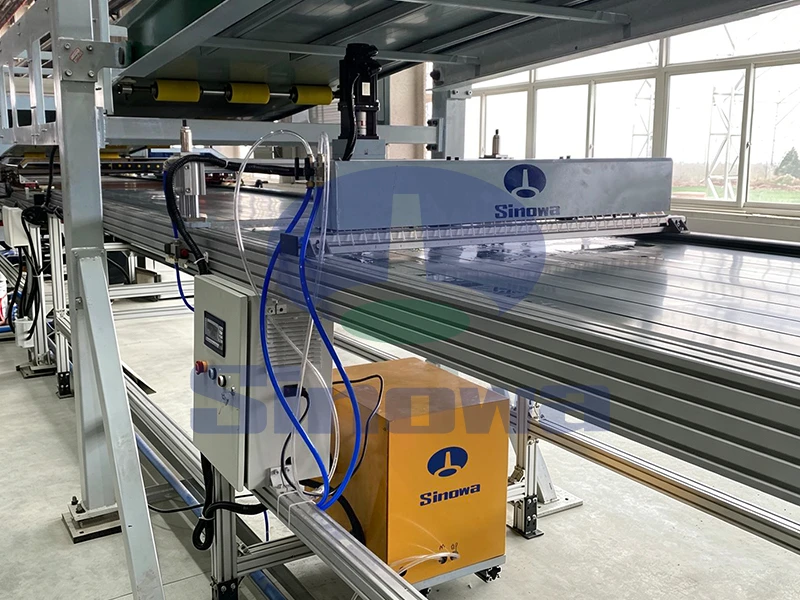
Long-term idle operation of polyurethane sandwich panel production lines easily triggers a series of latent equipment problems that are ignored in daily operational maintenance. When the production line stops running for weeks or even months, the mechanical transmission components lose continuous lubrication protection, leading to gradual drying and solidification of lubricating oil inside gears, bearings and conveyor chain structures. Without regular cleaning and maintenance, accumulated dust, residual polyurethane foam raw materials and industrial debris will adhere tightly to equipment surfaces and internal gaps, forming hardened dirt that affects equipment operation accuracy after restarting. In addition, the humid air in the production workshop will cause oxidation and rust on metal parts such as steel frames, rolling rollers and cutting components of the production line, while electrical components are prone to moisture leakage and circuit aging due to long-term power-off and static placement. These hidden faults will not only reduce the operating stability of the production line after restarting, but also lead to frequent equipment failures, reduced product processing precision and increased post-production maintenance costs if left untreated. Therefore, implementing standardized and refined maintenance management during idle periods is a core link to maintain the good performance of polyurethane sandwich panel production equipment, eliminate potential safety hazards, and ensure seamless and efficient resumption of production work.
The first core work of idle period maintenance is comprehensive cleaning and dirt removal of the entire production line equipment. The cleaning work needs to cover all processing units of the polyurethane sandwich panel production line, including raw material feeding systems, polyurethane foaming and mixing devices, panel pressing and forming equipment, cutting and trimming mechanisms, and finished product conveying platforms. Before cleaning, all equipment power sources and air pressure pipelines must be cut off strictly in accordance with operational specifications to avoid safety risks such as electric leakage and mechanical misoperation. For surface floating dust and loose debris, dry cleaning tools such as soft brushes and dust collectors are used for overall sweeping to prevent secondary dust pollution. For hardened residual foam materials and adhesive dirt attached to equipment gaps and component surfaces, professional non-corrosive cleaning agents are adopted for partial soaking and softening, followed by manual wiping and removal, and hard scraping tools are prohibited to avoid scratching precision equipment surfaces and wearing mechanical matching parts. After mechanical cleaning, the entire equipment surface and internal structure need to be dried thoroughly to eliminate residual cleaning liquid, preventing liquid corrosion and mold growth during subsequent idle storage. Meanwhile, the cleaning status of each equipment area is recorded in detail to form standardized cleaning files, providing basic data support for subsequent maintenance inspection and equipment condition tracking.
Lubrication maintenance and anti-corrosion protection are key measures to maintain the mechanical performance of the production line during idle periods. After completing the overall cleaning work, targeted lubrication treatment must be carried out on all movable transmission components of the equipment. For high-precision moving parts such as production line bearings, transmission gears, rotating shafts and conveyor chains, aged and deteriorated residual lubricating grease is completely removed first, and new high-performance lubricating grease is evenly filled according to the equipment operation matching requirements to ensure full coverage of friction pairs and avoid dry friction and component wear caused by long-term shutdown. It is necessary to control the lubrication dosage reasonably to prevent excessive lubricant accumulation from adsorbing dust and forming new dirt. For metal structural parts exposed to the air for a long time, including equipment supports, rolling system accessories and cutting tool substrates, professional anti-rust oil and protective coatings are evenly sprayed and coated to form a dense protective film on the metal surface, isolating humid air and corrosive dust and effectively inhibiting oxidative rust and electrochemical corrosion. For equipment parts that are prone to wear and corrosion in a humid environment, regular supplementary anti-corrosion treatment is required during the idle period to ensure the long-term stability of metal component performance.
Electrical and control system maintenance is an indispensable part of idle period equipment management, as circuit and control component faults are the main cause of restart failure of idle production lines. First of all, the external electrical cabinets, internal circuit boards, wiring terminals and sensor components of the production line need to be thoroughly de-dusted and cleaned to remove accumulated dust and fine debris that may cause poor circuit contact and short-circuit faults. After cleaning, inspect all circuit wiring to check for aging, peeling, damage and loose wiring of insulating layers, and fix and replace defective wiring and wiring accessories in a timely manner. For precision electrical components such as programmable controllers, frequency converters and temperature control instruments, closed moisture-proof and dust-proof protection measures are adopted, and dehumidification equipment is used regularly in the equipment placement area to keep the internal environment dry and clean, preventing component moisture failure and parameter drift. In addition, all control buttons, switch components and emergency protection devices need to be checked one by one to ensure flexible and effective operation, and the system parameter settings of the production line are backed up completely to avoid parameter loss and setting errors caused by long-term power outage, ensuring that the control system can operate normally after production restart.
Regular inspection and dynamic maintenance management should be implemented throughout the entire idle period of the production line. A fixed inspection cycle needs to be formulated according to the length of equipment idle time, with targeted regular inspections of equipment mechanical structures, protection components, electrical systems and environmental storage conditions. During each inspection, staff need to focus on checking whether there is rust, oil shortage and loose assembly of mechanical parts, whether the electrical system is damp and abnormal, and whether the equipment protection facilities are intact. For minor problems found during inspections, on-site maintenance and adjustment shall be carried out in a timely manner to prevent small faults from evolving into major equipment failures. For potential hidden dangers that cannot be eliminated on site, detailed records shall be made and marked, and special maintenance and debugging shall be arranged before production resumption. At the same time, a complete idle maintenance ledger is established to record cleaning, lubrication, anti-corrosion, inspection and fault handling conditions in real time, realizing traceable management of equipment idle status and providing accurate reference for subsequent equipment operation, maintenance and overhaul work.
Pre-production debugging and final maintenance confirmation is the key link to ensure the safe and efficient operation of the polyurethane sandwich panel production line after idle periods. Before restarting formal production, a full-process no-load test run of the entire production line equipment is required. First, conduct circuit power-on test and control system debugging to verify the normal start and response of each control module, sensor signal accuracy and system parameter stability. Then carry out no-load operation test of mechanical transmission systems such as feeding, foaming, pressing and cutting, observe the operating status of each component, check for abnormal noise, jitter and stuck operation, and adjust the running speed and matching accuracy of each equipment unit in a timely manner. After the no-load test is normal, a small batch of trial production debugging is carried out to detect whether the equipment processing accuracy, foaming effect and panel forming quality meet the production requirements. Combined with the trial production status, the final maintenance inspection and performance optimization of the equipment are completed, all hidden dangers during the idle period are completely eliminated, and the equipment is restored to the optimal operating state, ensuring that the production line can achieve stable, high-quality and efficient production after formal resumption.
Main Products
-

Continuous PU Sandwich Panel Production Line
This continuous PU sandwich panel production line is an integrated automatic equipment. It covers uncoiling, forming, foaming, curing and cutting processes. With automatic raw material proportioning and precise temperature & pressure control, PIR sandwich panel production line continuously composites panels with double skins. Polyurethane sandwich panel production line stably produces steel and aluminum sandwich panels. Featuring high automation, the line makes fireproof and thermal-insulation panels for building enclosure and cold storage. -

Rock Wool Sandwich Panel Production Line
Continuous rockwool sandwich panel production line is an automatic integrated production equipment, consisting of uncoiling, forming, gluing and compounding, heating curing, fixed-length cutting, automatic stacking and other modules. The mineral wool sandwich panel production line continuously conveys color steel plates and rock wool core materials to automatically complete lamination and curing, which can produce fireproof and thermal insulation sandwich panels. Featuring high automation degree and stable operation, this production line is suitable for mass production of panels used for building walls, roofs and other scenarios. -

Phenolic Insulation Board Production Line
This integrated automatic production line continuously manufactures PU and phenolic insulation boards. The insulation board production line covers raw material proportioning, high-pressure foaming, laminating, curing and fixed-length cutting. Featuring high automation and stable molding, the insulation panel production line supports various surface materials. PU boards offer excellent thermal insulation, while phenolic boards have superior fire resistance. These products are widely used in construction, cold chain, ventilation ducts and other thermal insulation fields.
Other FAQs
- Compressed Air Supply Requirement For PU Sandwich Panel Line Operation
- Polyurethane Sandwich Panel Production Line Fault Alarm System Debugging Method
- Sandwich Panel Production Line Startup And Shutdown Standard Operating Procedures
- Maximum Production Capacity Of Polyurethane Sandwich Panel Production Line
- Overload Protection Function Detection Of Polyurethane Sandwich Panel Production Equipment