What Are The Common Faults Of A Polyurethane Sandwich Panel Machine
Sep 29, 2026
The polyurethane sandwich panel machine is core equipment for producing insulated building panels, yet it frequently suffers operational faults in long-term use. These common issues cover feeding, foaming, transmission, temperature control and cutting systems, disrupting production stability and lowering finished panel quality significantly.
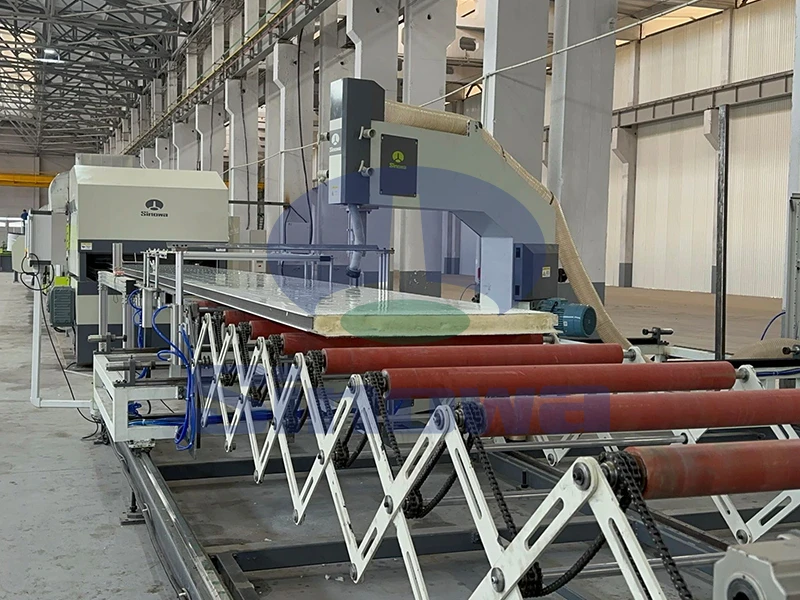
One of the most prevalent faults of a polyurethane sandwich panel machine is abnormal feeding and material deviation, which plagues daily continuous production severely. This fault mainly manifests as uneven conveying of surface metal sheets, intermittent material jamming, and lateral offset of raw materials during operation. Many operators overlook minor wear of guide rollers and loose positioning fixtures in routine use, which gradually causes inconsistent material tension and unbalanced feeding speed. When the polyurethane sandwich panel machine runs for long hours, accumulated dust and residual foam debris can also adhere to the conveyor belt and roller surfaces, increasing material friction and leading to irregular feeding. Persistent feeding abnormalities will directly result in inconsistent panel width and irregular edge shapes, requiring frequent manual adjustment to halt production losses. Regular cleaning of transmission components and periodic calibration of guide positioning structures are essential to mitigate this recurring fault and maintain steady feeding efficiency.
Unstable polyurethane foaming and inconsistent panel bonding quality are typical functional faults of the polyurethane sandwich panel making machine, directly determining the structural performance of finished products. The core problem lies in inaccurate raw material mixing ratios of polyol and isocyanate, which is usually triggered by blocked material pipelines or malfunctioning metering pumps. Slight pipeline blockages can disrupt the precise material delivery volume, causing insufficient foaming, local voids or excessive foam overflow inside the sandwich panels. In addition, unstable operating temperatures of the foaming system will hinder complete chemical reactions of polyurethane materials, leading to weak adhesion between the metal surface layer and the foam core. Long-term operation without pipeline dredging and pump calibration will worsen this fault, resulting in large quantities of defective panels with delamination risks and unqualified internal density uniformity.
Mechanical transmission abnormalities including abnormal vibration and unusual noise are common mechanical faults of the polyurethane sandwich panel manufacturing machine, affecting overall operational stability. These faults mostly stem from worn transmission parts, loose connecting components and inadequate lubrication of moving structures. The cardan driveshaft and roller transmission system bear frequent variable loads during continuous production, and prolonged friction will cause component wear and gap enlargement. Loose fixing bolts and misaligned transmission parts will further trigger intense vibration and harsh running noise during equipment operation. Severe vibration will cause jitter during panel pressing and forming, leading to uneven panel thickness and distorted flatness. Timely component lubrication, regular bolt fastening and periodic transmission system alignment can effectively reduce such mechanical faults and extend the service life of the polyurethane sandwich panel machine.
Temperature control system failure is a hidden but destructive fault that easily occurs in the polyurethane sandwich panel machine during continuous production. The curing channel and heating system need to maintain a constant temperature range to ensure full foaming and solidification of polyurethane materials. Common temperature faults include slow temperature rise, uneven internal temperature distribution of the curing channel and constant temperature deviation. Aging heating components and insensitive temperature sensors are the main internal causes, while poor workshop ventilation and unstable ambient temperature will also interfere with temperature control accuracy. When the temperature is too low, polyurethane materials cannot fully react, resulting in brittle foam and poor panel compression resistance; excessive local temperature will cause partial foam scorching and material performance degradation. Regular inspection of heating components and sensor calibration are key measures to avoid temperature-related production defects.
Cutting system defects are frequent terminal faults of the polyurethane sandwich panel production machine, affecting the dimensional accuracy and appearance quality of finished panels. After long-term high-frequency cutting, the cutting blade will gradually wear and become blunt, producing rough cutting sections, burrs and uneven panel end faces. In addition, displacement of the cutting tool position and inconsistent cutting speed will lead to deviations in panel length and size, failing to meet unified production standards. Residual polyurethane foam accumulated around the cutting mechanism will also hinder flexible tool operation, causing intermittent cutting stagnation and incomplete panel cutting. These faults do not damage core equipment structures in the short term but greatly reduce product qualification rates and increase subsequent manual trimming workload. Regular blade polishing or replacement and timely cleaning of cutting area residues can effectively optimize cutting quality.
Circuit and signal control faults are intermittent but troublesome problems of the polyurethane sandwich panel machine, easily causing sudden production shutdowns. With long-term electrical operation, aging circuit lines, loose signal interfaces and dust accumulation in control components will lead to unstable signal transmission. Typical manifestations include unresponsive parameter adjustment, inconsistent matching between equipment running speed and system settings, and sudden equipment stalling. Minor signal faults will cause disordered production parameters and unqualified panel batches, while severe circuit failures will trigger equipment self-protection and force production suspension. Daily dust removal of electrical control boxes, regular inspection of line connections and stable voltage supply can effectively prevent such control faults, ensuring the long-term stable and safe operation of the polyurethane sandwich panel machine.
Gallery
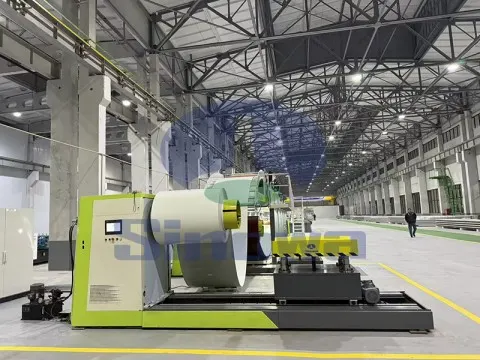
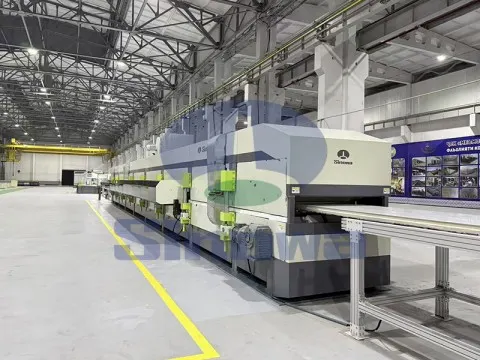
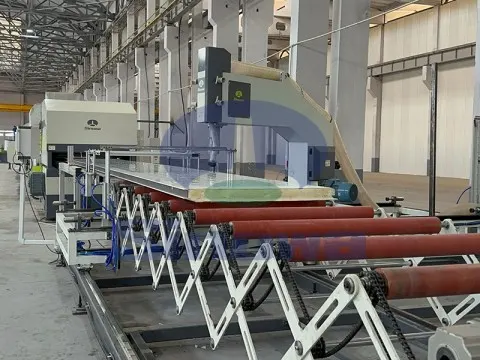
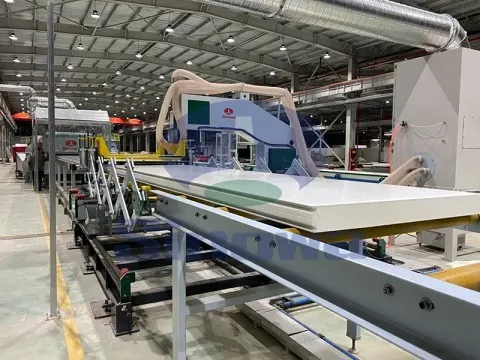
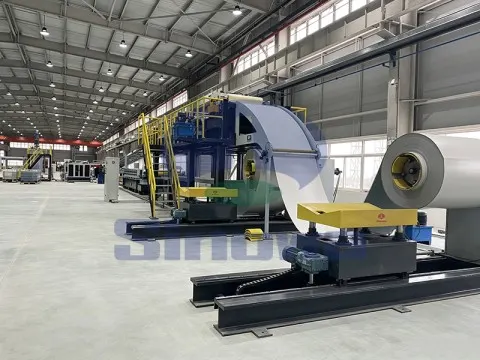
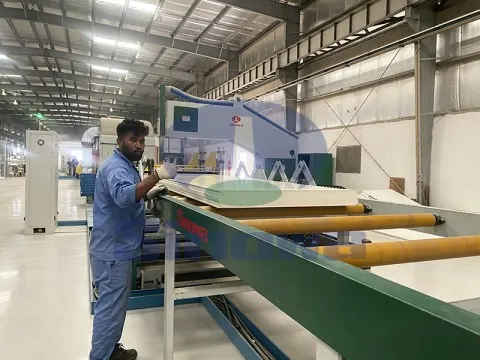
Sinowa is a professional manufacturer of sandwich panel machine in china, we provide diversified and high-performance sandwich panel production lines, including fully automatic continuous PU sandwich panel line and customized special lines to meet mass production and personalized order demands. These sandwich panel lines support processing multiple foam core materials, such as PU, PIR, mineral wool, rock wool and glass wool, covering different insulation and fireproof standards.
Featuring stable operation, high efficiency, energy saving and easy maintenance, our PU sandwich panel line deliver sandwich panels with excellent thermal insulation, fire resistance, sound insulation and lightweight durability. The finished panels are widely applied in industrial workshops, warehouse roofing and wall cladding, cold storage insulation, serving global construction and industrial insulation markets.
Main Products
-

Continuous PU Sandwich Panel Production Line
This continuous PU sandwich panel production line is an integrated automatic equipment. It covers uncoiling, forming, foaming, curing and cutting processes. With automatic raw material proportioning and precise temperature & pressure control, PIR sandwich panel production line continuously composites panels with double skins. Polyurethane sandwich panel production line stably produces steel and aluminum sandwich panels. Featuring high automation, the line makes fireproof and thermal-insulation panels for building enclosure and cold storage. -

Rock Wool Sandwich Panel Production Line
Continuous rockwool sandwich panel production line is an automatic integrated production equipment, consisting of uncoiling, forming, gluing and compounding, heating curing, fixed-length cutting, automatic stacking and other modules. The mineral wool sandwich panel production line continuously conveys color steel plates and rock wool core materials to automatically complete lamination and curing, which can produce fireproof and thermal insulation sandwich panels. Featuring high automation degree and stable operation, this production line is suitable for mass production of panels used for building walls, roofs and other scenarios. -

Phenolic Insulation Board Production Line
This integrated automatic production line continuously manufactures PU and phenolic insulation boards. The insulation board production line covers raw material proportioning, high-pressure foaming, laminating, curing and fixed-length cutting. Featuring high automation and stable molding, the insulation panel production line supports various surface materials. PU boards offer excellent thermal insulation, while phenolic boards have superior fire resistance. These products are widely used in construction, cold chain, ventilation ducts and other thermal insulation fields.
Other FAQs
- What Safety Protection Measures Are Needed For A Polyurethane Sandwich Panel Manufacturing Line
- What Regular Maintenance Does A Polyurethane Sandwich Panel Line Need
- How To Fix Uneven Foam Density On The PU Foam Production Line
- What Raw Materials Are Required For The PUR Sandwich Panel Production Line Operation
- Emergency Fault Handling Process For PU Sandwich Panel Line Shutdown
- Polyurethane Sandwich Panel Production Equipment Lubrication Maintenance Standard
- Troubleshooting For Sandwich Panel Production Line Frequent Shutdown Failure
- How To Solve Surface Bubble Problems Of Panels From PU Foam Core Sandwich Panel Line
- Why Does The Polyurethane Sandwich Panel Line Produce Uneven Foam Distribution
- How To Improve The Production Efficiency Of Insulation Board Production Line
Related Articles
- Punching and Silencing Sandwich Panel Machine
- PU Sandwich Panel Line For Steel Structure House
- PIR Sandwich Panel Production Line With Automatic Thickness Adjustment
- How To Use PU Sandwich Panel Machine
- Automatic and Continuous PU Sandwich Panel Manufacturing Line For Wall And Roof Panels
- PU Sandwich Panel Making Machinery For Custom Size Composite Panel Production
- Clean Room Sandwich Panel Production Line
- PU Sandwich Panel Making Line For Steel Structure Workshop
- Color Steel Foam Sandwich Panel Machine
- Safe Insulation Sandwich Panel Machine