Wearing Parts Replacement Cycle Of PU Sandwich Panel Production Line Equipment
Sep 17, 2026
PU sandwich panel production line relies on multiple wearable core parts for continuous operation, whose regular replacement determines production stability and product quality.
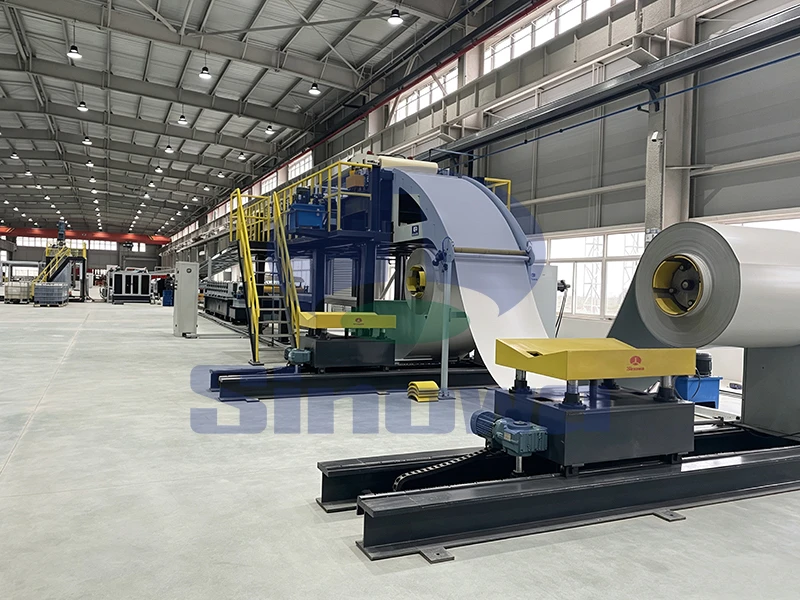
The normal operation of PU sandwich panel production lines is highly dependent on the working state of wearable components, which are constantly subjected to mechanical friction, material impact, high temperature aging and chemical corrosion during long-term continuous production. Unlike fixed structural parts, these wearing parts will gradually suffer from surface wear, dimensional deviation and performance attenuation with the accumulation of working hours, even under standardized operating conditions. Without timely replacement, worn parts will directly cause uneven panel foaming, inconsistent surface flatness, dimensional errors of finished products, and even trigger equipment jams, shutdown faults and continuous production interruptions. Formulating a scientific and targeted replacement cycle for different wearable parts is the core of daily equipment maintenance, which not only ensures the long-term stable operation of the production line but also effectively avoids excessive maintenance costs caused by premature part replacement or loss caused by delayed replacement. The formulation of replacement cycles needs to comprehensively combine part material characteristics, daily production load, operating environment and routine maintenance quality, rather than adopting a unified standard for all components. Reasonable cycle management can maximize the service life of parts, maintain consistent production efficiency and stabilize the overall quality of PU sandwich panel products in mass production.
Roller system components are among the most frequently worn parts in PU sandwich panel production lines, undertaking the core tasks of material conveying, pressing and shaping throughout the production process. These rollers are in continuous contact with metal sheets, PU foaming materials and auxiliary processing accessories, resulting in gradual surface wear, coating peeling and micro-deformation after long-term operation. Conveying rollers responsible for raw material transmission will produce uniform friction marks on the surface after long-hour operation, which will cause raw material deviation and unstable conveying speed once the wear degree exceeds the tolerance range. Pressing rollers used for panel shaping are more prone to local wear and deformation due to long-term uniform pressure bearing, leading to uneven pressing force on sandwich panels and inconsistent thickness of finished products. In conventional continuous production scenarios, the basic replacement cycle of conventional roller surface accessories and wear-resistant sleeves is maintained according to the actual wear state after long-term operation. For rollers with frequent high-load operation and long daily working hours, the wear speed is significantly accelerated, and the inspection and replacement cycle need to be appropriately shortened. Daily cleaning and lubrication maintenance can effectively slow down roller wear, while poor on-site environment with dust and debris accumulation will aggravate component loss and shorten the effective service life of rollers.
PU material spraying and foaming system accessories are key wearable parts affecting the core quality of sandwich panels, including spray nozzles, material delivery hoses, mixing core components and sealing parts. In the production process, PU raw materials have certain viscosity and chemical activity, which will cause gradual adhesion, scaling and corrosion on the inner wall of spraying and mixing components. Spray nozzles are the most vulnerable to blockage and wear; long-term material impact will change the nozzle aperture and spray angle, resulting in uneven material spraying, local insufficient foaming or excessive material accumulation on the panel surface. The inner wall of material delivery hoses will age and harden after long-term contact with chemical raw materials, accompanied by internal wall peeling and pipeline blockage risks, while frequent equipment start-stop operation will accelerate hose bending fatigue and crack generation. Sealing gaskets and ring parts in the foaming system are prone to high-temperature aging and elastic failure under the working temperature of foaming reaction, causing material leakage and insufficient system pressure. The replacement cycle of these parts is closely related to production frequency and raw material types. Continuous batch production will lead to faster material scaling and component aging, requiring more frequent inspection and replacement, while intermittent production can appropriately extend the replacement cycle on the premise of regular cleaning and maintenance.
Transmission and drive system wearable parts provide power support for the whole production line, mainly including drive belts, chain assemblies, gear wear sleeves and bearing accessories. These power transmission components bear repeated tension, friction and mechanical vibration during the operation of the production line, belonging to typical fatigue wearing parts. Drive belts will gradually appear elastic fatigue, surface cracking and thickness thinning after long-term high-speed operation, leading to insufficient transmission power, slipping phenomenon and inconsistent operating speed of production line equipment. Chains will produce tooth surface wear and gap increase after long-term meshing operation, resulting in unstable transmission accuracy and abnormal equipment noise. Bearings and their matching wear-resistant parts are prone to lubricant failure and internal wear after long-term operation, which will cause equipment jitter, increased operating resistance and even stuck faults in severe cases. The replacement cycle of transmission parts is greatly affected by equipment operating load. Long-term full-load operation will significantly accelerate fatigue loss, while regular lubrication, dust removal and tension adjustment can effectively delay component aging. It is necessary to carry out regular state inspection for transmission parts, replace aging and worn components in a targeted manner before failure, and avoid sudden equipment shutdown caused by damage of transmission system parts.
Cutting and trimming system wearable parts directly determine the dimensional accuracy and edge quality of finished PU sandwich panels, with cutting blades, trimming cutters and wear-resistant positioning fixtures as the core wearable components. In the cutting process, the blade needs to cut composite plates composed of metal sheets and PU foam layers for a long time, and repeated cutting friction will cause blade edge passivation, tooth surface wear and local gap increase. Passivated blades will lead to rough cutting edges, burrs and edge cracking of sandwich panels, seriously affecting the appearance quality and assembly accuracy of finished products. Trimming cutters used for edge finishing will also produce uneven wear after long-term operation, resulting in inconsistent trimming size and irregular plate edges. Positioning fixtures will have surface wear and positioning gap changes due to long-term repeated clamping and impact, reducing the positioning accuracy of plates and causing overall dimensional deviation of finished products. The wear speed of cutting parts is related to production batch and plate thickness specifications. Processing thickened sandwich panels and high-volume continuous production will accelerate tool wear, requiring regular blade sharpening and timing replacement to maintain cutting precision and production quality stability.
Scientific cycle management and regular inspection and replacement of wearable parts are important guarantees for the efficient and low-consumption operation of PU sandwich panel production lines. In actual production management, it is necessary to establish a complete parts inspection and replacement file system, record the operating hours, maintenance records and wear state of each key wearable part, and formulate personalized replacement cycles combined with on-site production conditions rather than relying on fixed experience values blindly. For easily worn and low-cost conventional parts, regular batch replacement can be adopted to reduce frequent inspection workload; for core precision parts affecting product quality, real-time state monitoring and early replacement early warning should be realized through daily patrol inspection. At the same time, standardized daily maintenance operations such as equipment cleaning, lubrication, dust removal and parameter calibration can effectively reduce the abnormal wear speed of parts, extend the effective service cycle of components, reduce equipment maintenance costs and failure shutdown frequency. Reasonable matching of replacement cycle and maintenance management can keep the production line in a stable operating state for a long time, ensure the consistency and stability of PU sandwich panel product quality, and improve the overall operational efficiency and economic benefits of production equipment.
Main Products
-

Continuous PU Sandwich Panel Production Line
This continuous PU sandwich panel production line is an integrated automatic equipment. It covers uncoiling, forming, foaming, curing and cutting processes. With automatic raw material proportioning and precise temperature & pressure control, PIR sandwich panel production line continuously composites panels with double skins. Polyurethane sandwich panel production line stably produces steel and aluminum sandwich panels. Featuring high automation, the line makes fireproof and thermal-insulation panels for building enclosure and cold storage. -
Rock Wool Sandwich Panel Production Line
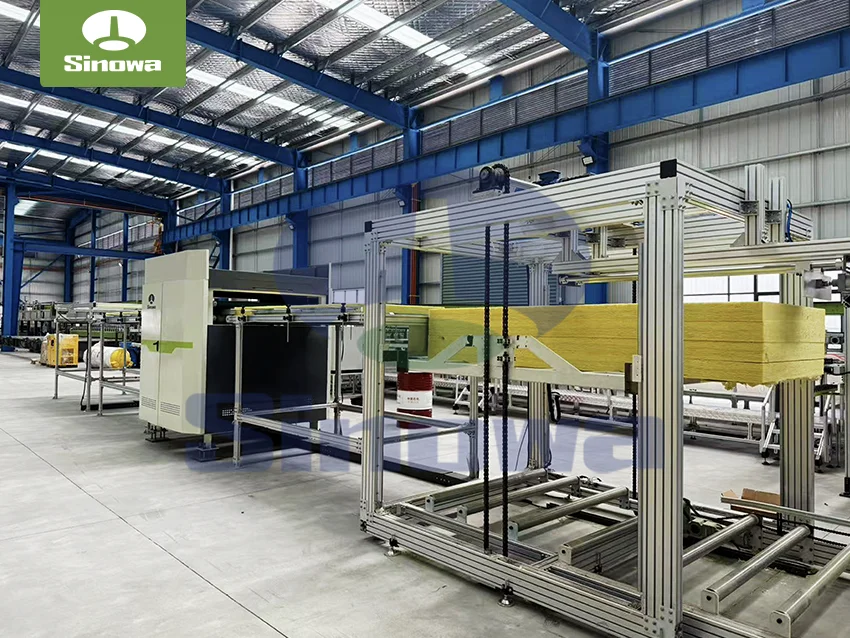
Continuous rockwool sandwich panel production line is an automatic integrated production equipment, consisting of uncoiling, forming, gluing and compounding, heating curing, fixed-length cutting, automatic stacking and other modules. The mineral wool sandwich panel production line continuously conveys color steel plates and rock wool core materials to automatically complete lamination and curing, which can produce fireproof and thermal insulation sandwich panels. Featuring high automation degree and stable operation, this production line is suitable for mass production of panels used for building walls, roofs and other scenarios. -
Phenolic Insulation Board Production Line
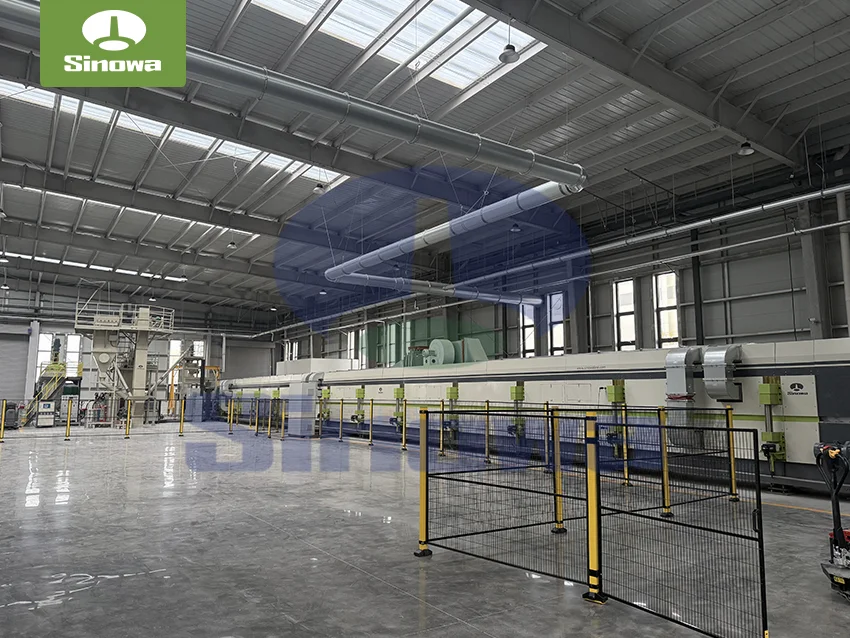
This integrated automatic production line continuously manufactures PU and phenolic insulation boards. The insulation board production line covers raw material proportioning, high-pressure foaming, laminating, curing and fixed-length cutting. Featuring high automation and stable molding, the insulation panel production line supports various surface materials. PU boards offer excellent thermal insulation, while phenolic boards have superior fire resistance. These products are widely used in construction, cold chain, ventilation ducts and other thermal insulation fields.
Other FAQs
- Difference Between Continuous And Discontinuous PU Sandwich Panel Production Lines
- Daily Maintenance Items Of Polyurethane Sandwich Panel Production Line
- Production Efficiency Improvement Measures Of Sandwich Panel Production Line
- Production Line Operation Steps For Continuous PU Sandwich Panel Molding
- Price Composition Of Complete PU Sandwich Panel Production Line