sandwich panel machine
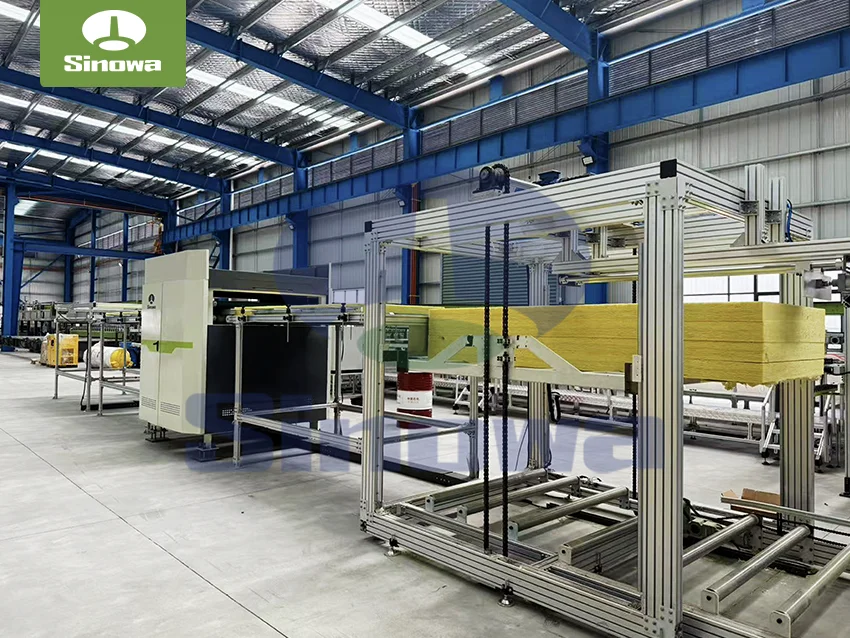
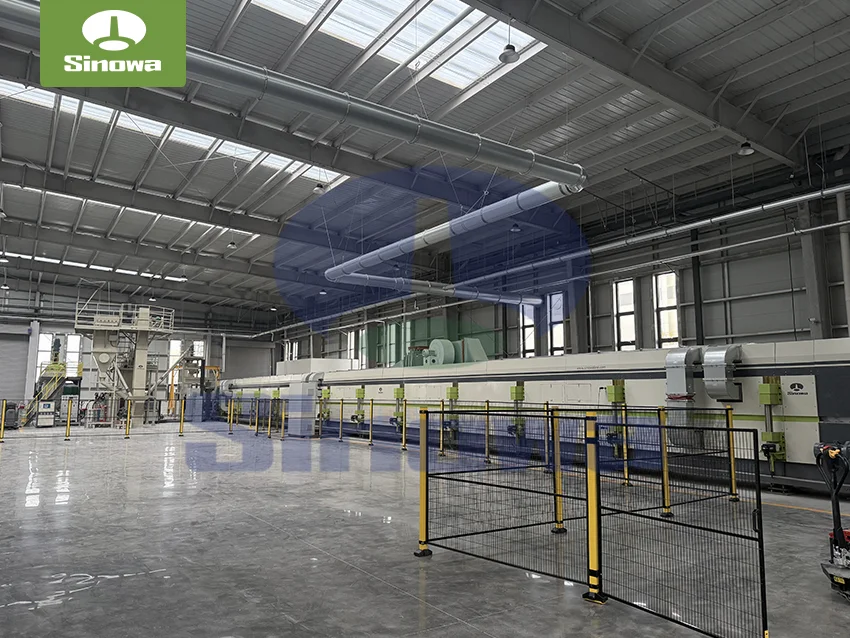
Customized PU sandwich panel manufacturing machinery is a complete set of integrated production systems specially developed for the characteristics of housing construction. Unlike large-scale industrial panel production lines that pursue high-volume standardized output, this type of machinery prioritizes production flexibility, parameter adjustability, and targeted material optimization to satisfy the differentiated needs of various residential types, including rural self-built houses, urban prefabricated residences, small villas, and renovated residential spaces. The overall structure of the machinery consists of multiple interconnected functional modules, each of which can be independently adjusted and optimized according to production customization requirements. The basic components include raw material unwinding units, surface material pretreatment mechanisms, high-precision foaming systems, continuous composite molding structures, constant-temperature curing tunnels, intelligent cutting devices, and finished product sorting and stacking modules. Every functional unit adopts a modular design concept, which facilitates subsequent mechanical debugging, component replacement, and functional expansion, laying a solid structural foundation for personalized customization.
The raw material unwinding unit is the initial link of the entire production line, responsible for stably transporting different types of surface materials required for household PU sandwich panels. Common surface materials applicable to the machinery include color-coated metal sheets, non-metal decorative boards, and lightweight fiber boards, all of which are frequently used in residential building interiors and exteriors. This unit is equipped with tension control components to maintain consistent flatness of surface materials during the conveying process, effectively avoiding material wrinkling, deviation, and overlapping defects that may affect the surface quality of finished panels. For customized production demands, the unwinding structure can adjust the feeding width and unwinding speed according to the preset panel specifications, and it supports rapid switching between different surface materials without lengthy line shutdown and debugging procedures. This flexible switching capability is particularly suitable for small-batch and multi-type panel production in personalized housing construction, enabling manufacturers to simultaneously produce exterior wall panels with weather resistance and interior decorative panels with aesthetic textures on one production line.
Following the unwinding process, the surface material pretreatment mechanism conducts standardized cleaning and shaping of raw materials to ensure the bonding firmness between surface materials and PU foam interlayers. Household sandwich panels require excellent surface flatness and interface cleanliness to prevent degumming and peeling during long-term residential use. The pretreatment module is embedded with dust removal and surface polishing components, which can remove fine particles, oil stains, and oxide layers on the material surface. For customized decorative panels with special surface textures, the machinery can additionally be equipped with embossing and grooving auxiliary structures to create diverse surface textures such as imitation wood grain and stone grain, meeting the personalized aesthetic decoration needs of different residential spaces. All pretreatment parameters, including polishing strength and embossing depth, can be electronically adjusted through the central control system, realizing precise customization of panel surface characteristics.
The foaming system stands as the core functional component of customized PU sandwich panel machine, directly determining the thermal insulation performance, density uniformity, and structural stability of household panels. This system adopts an independent material storage and metering structure, with two sealed tanks for storing polyurethane resin and curing agent respectively. Each tank is matched with a variable frequency drive metering pump, which can independently adjust the material delivery flow rate according to customized formula requirements. During operation, the two raw materials are transported to the mixing head in accurate proportions, and the fully mixed foaming materials are evenly sprayed between the upper and lower surface materials through a movable distribution device. In view of the different usage scenarios of household panels, the foaming system can adjust the foaming density and expansion thickness in real time: low-density foaming formulas are applied to indoor partition panels to reduce the overall weight of buildings, while high-density foaming structures are adopted for exterior wall and roof panels to enhance wind resistance and pressure resistance. The internal temperature of the foaming system is intelligently controlled to maintain a constant reaction temperature, ensuring stable foaming effects in different external environments and avoiding quality fluctuations caused by seasonal temperature changes.
The continuous composite molding structure undertakes the key task of bonding surface materials with PU foam interlayers. This module is composed of multi-group composite pressing rollers with built-in circulating temperature control pipelines. The temperature range of the pressing rollers is scientifically regulated to accelerate molecular diffusion at the bonding interface and strengthen the integration between materials. For customized panels with different thicknesses, the gap between the pressing rollers can be automatically adjusted through hydraulic transmission components, covering the common thickness specifications required for household construction. Meanwhile, the internal pressure of the composite structure is precisely controlled to adapt to different material hardness: low-pressure molding parameters are set for soft decorative surface materials to prevent extrusion deformation, while appropriately increased pressure is applied to hard metal surface materials to ensure compact internal structure of panels. The integrated design of mechanical pressure and constant temperature heating enables the composite process to be completed efficiently in a continuous conveying state, balancing production efficiency and panel molding quality.
The constant-temperature curing tunnel is an essential structure for stabilizing the physical properties of customized PU sandwich panels. After composite molding, the panels enter the sealed curing channel to complete the final chemical reaction and structural shaping of the PU foam layer. The tunnel adopts a segmented temperature control mode, setting gradual temperature gradients to avoid internal stress caused by rapid temperature changes. For customized panels with special flame retardant and moisture-proof formulas, the curing time and temperature parameters can be optimized to promote the full reaction of functional additives and enhance the durability of panels in complex household usage environments. The internal circulating air system of the tunnel ensures uniform temperature distribution, eliminating local incomplete curing problems that may lead to panel deformation and performance degradation. Reasonable curing treatment enables household PU sandwich panels to maintain stable thermal insulation and mechanical properties for a long time in different climatic regions.
The intelligent cutting and finishing module realizes fixed-length cutting and edge trimming of continuous molded panels, adapting to the dimensional customization requirements of residential construction. The system is equipped with high-precision sensing components to detect the conveying speed and position of panels in real time, and automatically trigger cutting actions according to preset length parameters. Different from fixed-size cutting of standard production lines, customized machinery supports arbitrary setting of panel length and width within the adjustable range, meeting the dimensional requirements of non-standard building structures such as special-shaped house corners and curved walls. The edge trimming device can smooth the panel edges to remove burrs and uneven residues, ensuring the tightness of assembly and splicing during on-site house construction. In addition, this module is integrated with an automatic counting and sorting function, which can classify finished products according to different specifications and facilitate centralized management and transportation of finished panels.
The core competitiveness of customized PU sandwich panel machine for houses lies in its highly flexible customized design logic, which takes the actual construction needs of residential buildings as the starting point to carry out multi-dimensional personalized optimization. In terms of structural customization, the machinery can adjust the number of functional modules according to the production scale of manufacturers: small-scale production configurations are suitable for local building material suppliers to meet the decentralized construction needs of rural houses, while expanded combined configurations can support batch production for large-scale prefabricated residential projects. In terms of material customization, the equipment is compatible with various environmentally friendly auxiliary materials, and can add antibacterial, mildew-proof, and corrosion-resistant functional layers to panels according to the usage environment, making the panels more suitable for closed indoor living spaces. In terms of appearance customization, by replacing embossing molds and adjusting surface coating processes, the machinery can produce panels with diverse colors and textures, matching different residential decoration styles from simple modern to retro pastoral.
Compared with traditional standardized panel production equipment, customized PU sandwich panel manufacturing machinery has obvious advantages in residential construction application scenarios. First of all, it has lower production threshold and space occupation. The modular structure simplifies the equipment layout, and the compact overall volume is convenient for installation in small and medium-sized production workshops, which is in line with the production conditions of regional building material manufacturers. Secondly, the equipment has low energy consumption. The intelligent temperature control and frequency conversion speed regulation technologies effectively reduce ineffective energy loss during production, meeting the energy-saving and emission-reduction requirements of modern green buildings. In addition, the machinery has a high degree of operational intelligence. The centralized control panel integrates all production parameter adjustment functions, and workers can complete formula switching, specification modification, and equipment debugging through simple operations, reducing the dependence on professional technical personnel. The simplified operation logic makes the equipment more adaptable to the actual production management mode of the residential building material industry.
In terms of production quality control, customized PU sandwich panel manufacturing machinery establishes a comprehensive internal detection mechanism to ensure that finished panels meet the safety and comfort standards of residential use. Multiple pressure sensors and temperature sensors are installed inside each production module to monitor key production parameters in real time. Once abnormal data such as uneven foaming temperature and unstable composite pressure are detected, the system will automatically trigger an early warning and fine-tune the operating parameters to avoid defective products. At the same time, the conveying speed of each production link is synchronously matched to ensure the consistency of panel density, thickness, and bonding strength in the same batch. For customized panels used in high-standard residential buildings, the machinery can be matched with auxiliary testing components to conduct real-time sampling detection of thermal insulation coefficient and compression resistance, providing reliable quality guarantee for household building construction.
With the continuous development of the residential construction industry towards greening and prefabrication, customized PU sandwich panel manufacturing machinery is also undergoing continuous technological iteration and optimization. In terms of environmental protection upgrading, the latest equipment optimizes the raw material mixing and sealing structure to reduce the volatilization of chemical substances during production, realizing low-pollution and clean production. In terms of intelligent upgrading, the machinery is embedded with data recording and analysis functions, which can store the production parameter data of different customized panels, forming a mature production formula database. When reproducing panels of the same specification, the system can directly call historical data to shorten the debugging cycle and improve production efficiency. In terms of structural optimization, the equipment adopts lightweight and wear-resistant alloy materials to reduce equipment maintenance costs and extend the service life of mechanical components, further improving the economic benefits of residential panel production.
The wide application of customized PU sandwich panel manufacturing machinery has profoundly changed the production and application mode of modern residential building materials. In rural housing reconstruction and self-built house projects, the flexible customization capability of the equipment can produce low-cost and high-insulation panels adapted to local climatic conditions, solving the problems of poor thermal insulation and high energy consumption of traditional rural buildings. In urban prefabricated residences, the machinery can produce high-precision assembled panels with standardized interfaces, realizing rapid on-site assembly of houses and greatly shortening the construction cycle. In residential renovation and expansion projects, small-sized customized panels produced by the equipment can adapt to complex renovation spaces, avoiding resource waste caused by mismatched specifications of standard panels. While promoting the popularization of PU sandwich panels in the housing field, the machinery also drives the standardized and refined development of the residential building material manufacturing industry.
In conclusion, customized PU sandwich panel manufacturing machinery for houses is a special production equipment integrating personalized regulation, intelligent control, and efficient molding. It is tailored to the diversified and differentiated needs of residential construction, covering the whole production process from raw material pretreatment to finished product output through modular functional components. The equipment not only retains the excellent production characteristics of high efficiency and stability of traditional panel machinery, but also breaks through the limitation of single specification of standardized production lines, realizing flexible customization of panel size, material, performance, and appearance. With the continuous progress of construction technology and the improvement of people's requirements for living environment, customized PU sandwich panel manufacturing machinery will further develop towards higher intelligence, lower energy consumption, and stronger compatibility. It will continue to provide high-quality customized panel materials for modern residential construction, make important contributions to the optimization of housing structure, improvement of living comfort, and realization of green building goals, and become an indispensable key equipment in the sustainable development of the global residential construction industry.
https://www.cnsinowa.com/sandwich-panel-machines/customized-pu-sandwich-panel-manufacturing-machinery-for-house.html