Emergency Fault Handling Process For PU Sandwich Panel Line Shutdown
Sep 23, 2026
The complete emergency fault handling process for PU sandwich panel production line shutdowns. It covers on-site emergency response, fault diagnosis, targeted troubleshooting, post-recovery inspection, and preventive measures to ensure stable, safe and efficient resumption of production operations.
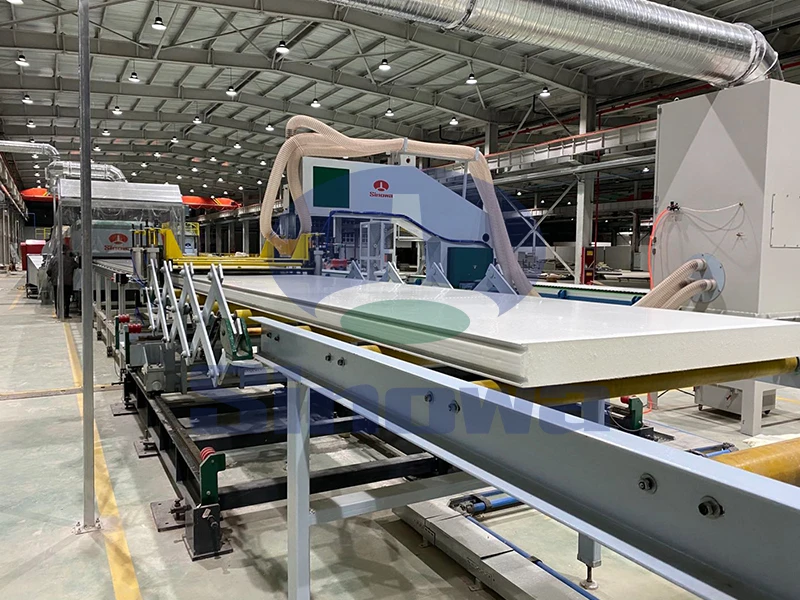
Unexpected shutdown faults of PU sandwich panel production lines often occur due to mechanical jamming, electrical system anomalies, pneumatic pipeline failures and abnormal material feeding statuses, which can instantly interrupt continuous production and bring potential safety hazards and production losses. The core principle of emergency handling is to prioritize personnel safety, quickly contain fault expansion, and carry out standardized disposal without blind operation. Once an unplanned shutdown happens, on-site operators must immediately suspend all manual and automatic operation actions of the production line, cut off the core power and air supply of the equipment in accordance with on-site operation norms, and isolate the faulty equipment area to prevent irrelevant personnel from entering the operation zone. Meanwhile, the on-site person in charge should be notified at the first time to record the specific time of shutdown, abnormal sounds, equipment display prompts and operating status before the fault, which provides accurate basic information for subsequent fault diagnosis. It is strictly prohibited to restart the equipment privately or disassemble faulty parts without confirmation, as irregular operations may aggravate equipment damage and trigger secondary safety accidents such as electric leakage and mechanical collision. After completing basic safety isolation and information recording, the on-site team will initiate the preliminary emergency response mechanism to coordinate professional maintenance personnel to arrive at the scene for targeted inspection and processing.
After the completion of on-site emergency isolation, professional maintenance personnel will conduct systematic and hierarchical fault diagnosis on the PU sandwich panel production line to accurately locate the root cause of the shutdown fault. The inspection work follows the sequence from external to internal, from simple to complex, first checking the peripheral operation links that are prone to low-frequency faults. The first step is to inspect the material feeding system, including the raw material conveying device for PU foam materials and sandwich panel base materials, to check for material blockage, deviation of conveying tracks, abnormal tension of transmission belts and material stacking overload that may trigger automatic shutdown protection. Then, the pneumatic and hydraulic systems of the production line are inspected to detect pipeline air leakage, pressure instability, valve block failure and hydraulic oil leakage, as abnormal pressure parameters are common causes of equipment self-protection shutdown. Next, the electrical control system is comprehensively checked, including circuit connection looseness, sensor signal failure, PLC program signal interruption and overload tripping of electrical components. For mechanical parts, key inspection is carried out on rolling forming units, bonding pressing devices and cutting equipment to check for part jamming, bearing abrasion, gear dislocation and mechanical fatigue damage. In the diagnosis process, all abnormal phenomena are recorded in detail, and preliminary fault classification is carried out to distinguish minor adjustable faults and major component damage faults, so as to formulate targeted disposal schemes.
For minor adjustable faults confirmed after diagnosis, on-site rapid troubleshooting operations can be carried out directly to shorten production downtime and improve operational efficiency. Common minor faults include material feeding deviation, slight pipeline pressure fluctuation, loose circuit terminals and minor parameter deviation of control system. When handling material feeding anomalies, operators need to clean up blocked residual materials, adjust the positioning of conveying guide rails, calibrate the operating speed of the feeding device, and ensure uniform and stable conveying of PU raw materials and base plates. For pneumatic and hydraulic pressure anomalies, staff need to check and fasten loose pipeline joints, replace damaged sealing rings, adjust system pressure parameters to the normal operating range, and exhaust residual air and impurities in the pipeline to restore stable power output of the system. For electrical circuit minor faults, maintenance personnel will sort out disordered circuits, fasten loose wiring terminals, clean dust and oxide layers on sensor probes, and reset abnormal control parameters to ensure normal signal transmission and equipment sensing accuracy. After the completion of single-item troubleshooting, partial trial operation of the corresponding equipment module is required to verify the elimination of faults, and confirm that there is no abnormal vibration, noise and parameter fluctuation in the equipment before proceeding to the next inspection link, ensuring each repair link is effective and reliable.
In view of major equipment faults such as core component damage, program failure and structural mechanical failure that cannot be solved by on-site rapid adjustment, standardized professional maintenance and replacement processes need to be implemented strictly. When key mechanical components such as pressing rollers, cutting blades and transmission gears are worn, deformed or damaged, the faulty parts need to be disassembled safely in a power-off and pressure-relief state, and matched qualified spare parts should be selected for replacement and assembly. After assembly, precision calibration of equipment operation accuracy is required to ensure the fitting clearance and operating coordination of each mechanical structure meet production operation requirements. For complex electrical system faults such as PLC program confusion and main control board failure, professional technicians need to carry out program detection, data recovery and parameter recalibration, and test the linkage operation of each control module to ensure the consistency and stability of automatic control commands. For pipeline system burst and large-area leakage faults, damaged pipeline sections and invalid valve components need to be completely replaced, and overall pressure testing and leakage detection of the system should be carried out to eliminate potential leakage points. During the whole maintenance process, the operation area is kept closed, maintenance records are updated in real time, and each maintenance step is checked and confirmed to avoid incomplete maintenance leading to repeated faults.
After the completion of all fault troubleshooting and maintenance work, comprehensive post-maintenance inspection and joint debugging tests must be carried out before the formal resumption of production to ensure the overall operating performance of the production line is up to standard. Firstly, a static inspection of the whole line is conducted to check the firmness of all mechanical connection parts, the tightness of pneumatic and hydraulic pipelines, the normality of circuit connection and the accuracy of sensor installation positions, and clean up all maintenance tools and residual sundries in the equipment operation area to eliminate potential safety hazards. Then, no-load trial operation of the production line is carried out, and the operating speed, running stability, sound and temperature of each equipment module are monitored in real time to confirm that all technical parameters are within the normal operating range. After the no-load test runs stably for a certain period, low-load trial production is carried out by putting in a small amount of raw materials, inspecting the forming quality, bonding effect and cutting precision of PU sandwich panels, and verifying the coordination of each link of the assembly line. If no abnormal faults and product quality problems are found in the trial operation, the equipment operation parameters can be gradually restored to the standard production state, and the formal production resumption work can be completed. Meanwhile, the whole process records of fault occurrence, diagnosis, maintenance and trial operation are sorted out and filed for subsequent equipment management.
To reduce the frequency of emergency shutdown faults of PU sandwich panel production lines, long-term standardized daily maintenance and fault prevention mechanisms need to be established and implemented. Daily routine inspection work should be standardized, with special personnel responsible for checking equipment operating status, pipeline tightness, circuit stability and raw material conveying conditions before and after daily production, and timely handling minor abnormal problems found to avoid small faults evolving into major shutdown failures. Regular equipment maintenance and overhaul plans are formulated, including regular lubrication of mechanical moving parts, regular cleaning and calibration of sensing components, regular pressure testing and maintenance of fluid pipelines, and regular detection and optimization of electrical control systems, so as to maintain the good operating performance of the equipment for a long time. In addition, regular professional skill training should be carried out for on-site operation and maintenance personnel to improve their ability of rapid fault judgment and standardized emergency disposal, standardize daily operation behaviors, and avoid equipment faults caused by human misoperation. By integrating daily inspection, regular maintenance and personnel training, the stability of the production line is fundamentally improved, the emergency shutdown risk is reduced, and the continuous and stable operation of PU sandwich panel production is guaranteed.
Main Products
-

Continuous PU Sandwich Panel Production Line
This continuous PU sandwich panel production line is an integrated automatic equipment. It covers uncoiling, forming, foaming, curing and cutting processes. With automatic raw material proportioning and precise temperature & pressure control, PIR sandwich panel production line continuously composites panels with double skins. Polyurethane sandwich panel production line stably produces steel and aluminum sandwich panels. Featuring high automation, the line makes fireproof and thermal-insulation panels for building enclosure and cold storage. -
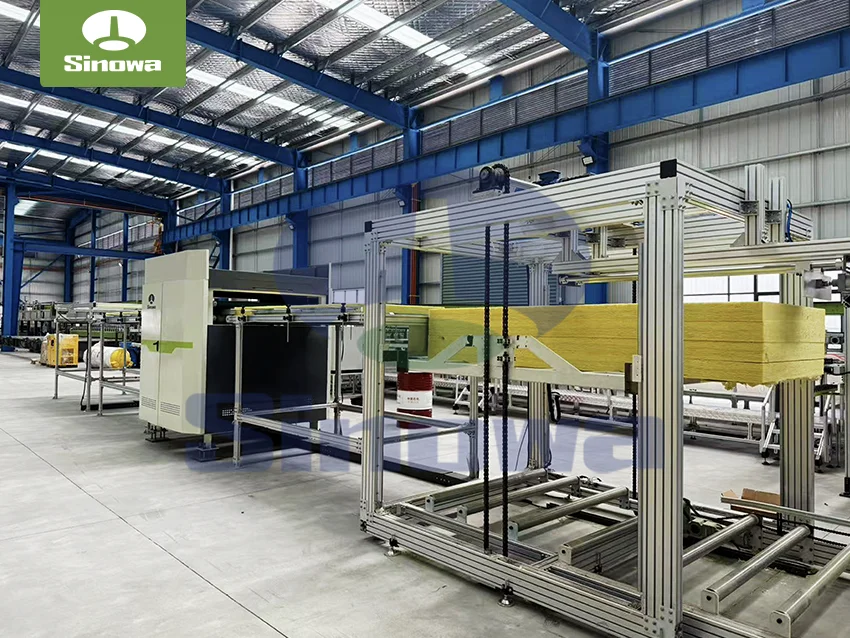
Rock Wool Sandwich Panel Production Line
Continuous rockwool sandwich panel production line is an automatic integrated production equipment, consisting of uncoiling, forming, gluing and compounding, heating curing, fixed-length cutting, automatic stacking and other modules. The mineral wool sandwich panel production line continuously conveys color steel plates and rock wool core materials to automatically complete lamination and curing, which can produce fireproof and thermal insulation sandwich panels. Featuring high automation degree and stable operation, this production line is suitable for mass production of panels used for building walls, roofs and other scenarios. -
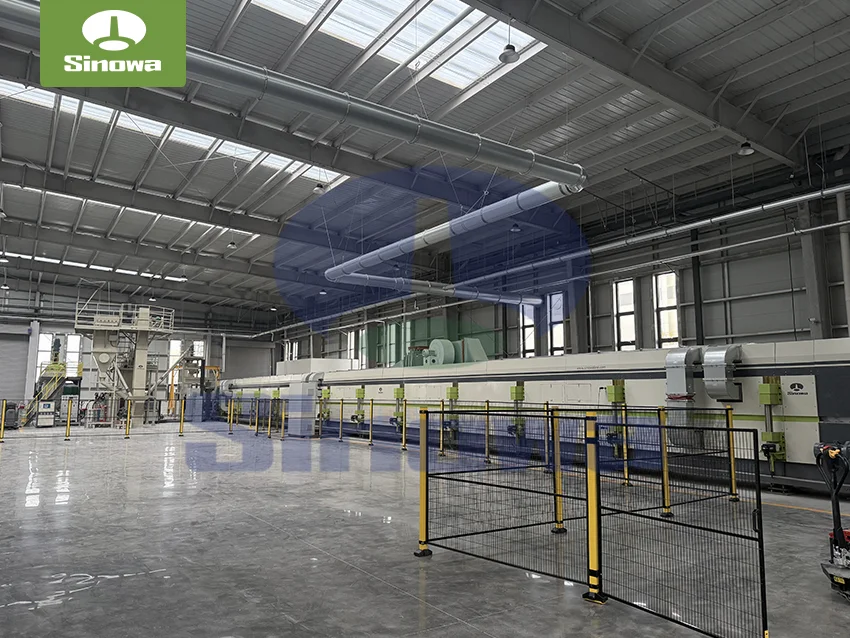
Phenolic Insulation Board Production Line
This integrated automatic production line continuously manufactures PU and phenolic insulation boards. The insulation board production line covers raw material proportioning, high-pressure foaming, laminating, curing and fixed-length cutting. Featuring high automation and stable molding, the insulation panel production line supports various surface materials. PU boards offer excellent thermal insulation, while phenolic boards have superior fire resistance. These products are widely used in construction, cold chain, ventilation ducts and other thermal insulation fields.
Other FAQs
- Automatic Error Correction Function Of Polyurethane Sandwich Panel Production Line
- Workshop Space Layout Requirement For PU Sandwich Panel Production Line
- Operator Professional Training Content For PU Sandwich Panel Line
- Energy Consumption Standard Of Automatic PU Sandwich Panel Production Equipment
- Polyurethane Sandwich Panel Production Equipment Lubrication Maintenance Standard