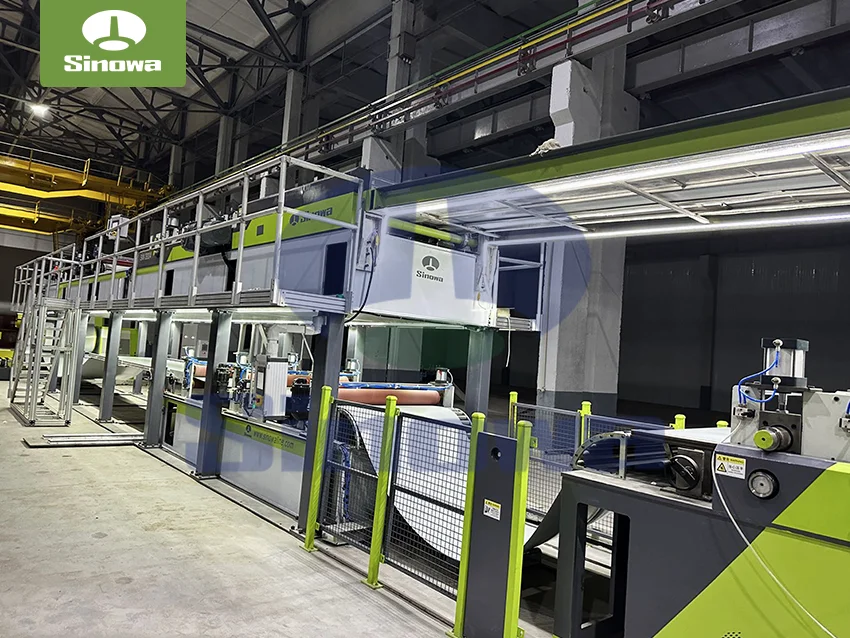
 sandwich panel machine
The fundamental function of a PU sandwich panel roll forming machine is to produce composite panels with a "sandwich" structure, consisting of two outer facing materials (typically metal coils such as galvanized steel, aluminum, or color-coated steel) and a core layer of polyurethane foam. The PU sandwich panel machine accomplishes this through a series of coordinated processes, each designed to ensure precision, consistency, and efficiency. Unlike traditional manual or semi-automatic production methods, modern roll forming machines automate the entire workflow, from raw material feeding and forming to foam injection, lamination, and cutting, minimizing human intervention and reducing the risk of errors. This automation not only enhances production efficiency but also ensures that each panel adheres to strict dimensional and performance standards, a critical factor in maintaining the structural safety and energy efficiency of buildings.
The working principle of the PU sandwich panel roll forming machine revolves around a continuous sandwich panel production line that integrates multiple functional modules. The process begins with the uncoiling of metal coils, which serve as the outer facings of the sandwich panel. Each coil is mounted on an uncoiler, which feeds the metal sheet into a series of roll forming stations. These stations, equipped with precision-engineered rollers, gradually shape the flat metal sheet into the desired profile—such as corrugated, trapezoidal, or standing seam—through a series of incremental bends. The number of forming stations can vary depending on the complexity of the profile, with more intricate designs requiring additional stations to ensure smooth, accurate shaping without causing material fatigue or damage. The rollers are typically made of high-grade steel with hard chrome plating, a material choice that ensures durability and resistance to wear, even during long-term high-volume production.
Once the outer facings are formed, the next step involves the application of the polyurethane core. This is achieved through a foam injection system, which precisely mixes polyol and isocyanate— the two main components of polyurethane foam—before injecting the mixture between the upper and lower metal facings. The injection process must be carefully controlled to ensure uniform distribution of the foam, as any inconsistencies can compromise the panel's thermal insulation performance and structural integrity. As the foam expands and cures, it bonds tightly to the metal facings, creating a composite structure that combines the strength of the metal with the insulation properties of the polyurethane. The curing process is often accelerated through a combination of temperature control and pressure application, with the panels passing through a laminating press that ensures proper bonding and flatness. This integrated lamination process is crucial for achieving the high bond strength required to withstand the stresses of transportation, installation, and long-term use.
After the foam core has cured, the continuous panel is fed into a cutting system, which trims the panel to the required length with high precision. The cutting mechanism is typically driven by a servo motor, ensuring accurate length control even at high production speeds. Some advanced machines also feature automatic edge trimming and chamfering functions, further enhancing the quality of the finished product and simplifying the installation process. Once cut, the finished panels are conveyed to a stacking system, where they are neatly arranged for storage or transportation. The entire production process is controlled by a central control system, usually equipped with a touchscreen interface that allows operators to monitor and adjust key parameters such as production speed, foam density, and panel dimensions. This centralized control ensures consistency across the production line and enables quick adjustments to meet specific customer requirements.
The structural design of the PU roll forming sandwich panel line is characterized by high rigidity and stability, essential for maintaining precision during the forming and lamination processes. The main frame is typically constructed from heavy-duty H-beams, providing a solid foundation that minimizes vibration and deformation. The use of modular design in many modern machines allows for greater flexibility, enabling manufacturers to reconfigure the machine to produce different types of panels—such as roof panels, wall panels, or cold storage panels—by simply changing the forming rollers and adjusting the foam injection parameters. This modularity also simplifies maintenance and repair, as individual components can be easily accessed and replaced without disrupting the entire production line. Additionally, many machines are equipped with advanced safety features, such as emergency stop buttons, safety guards, and automatic fault detection systems, which help to ensure the safety of operators and prevent damage to the equipment.
The performance of a PU sandwich panel roll forming line is influenced by several key factors, including production speed, precision, and energy efficiency. Production speeds can vary depending on the type of panel being produced and the complexity of the profile, but modern machines are capable of achieving speeds of up to 20 meters per minute, enabling high-volume production to meet the demands of large construction projects. Precision is another critical factor, with advanced machines capable of maintaining dimensional tolerances within a few millimeters, ensuring that the panels fit together seamlessly during installation. Energy efficiency is also a growing concern in the manufacturing industry, and many modern machines are designed with energy-saving features such as high-efficiency motors, variable frequency drives, and insulated heating systems, which help to reduce energy consumption and lower operating costs. These features not only improve the economic viability of the production process but also align with global efforts to reduce carbon emissions and promote sustainable manufacturing practices.
PU sandwich panels produced by these roll forming machines offer a wide range of advantages that make them ideal for modern construction. Their excellent thermal insulation properties, due to the closed-cell structure of the polyurethane core, help to reduce energy consumption for heating and cooling, making buildings more energy-efficient and environmentally friendly. The composite structure also provides high structural strength, with the metal facings resisting impact and the foam core distributing loads evenly, resulting in panels that are both lightweight and durable. This lightweight nature reduces the overall weight of the building, which can lead to significant savings in foundation costs. Additionally, PU sandwich panels are highly versatile, available in a variety of colors, profiles, and thicknesses, allowing them to be tailored to the specific aesthetic and functional requirements of different projects. They are also quick and easy to install, with interlocking designs that simplify the assembly process and reduce construction time, making them a popular choice for fast-track projects.
The application of PU sandwich panel machine spans a wide range of industries and construction sectors. In the industrial sector, they are used to produce panels for factory warehouses, workshops, and industrial sheds, where thermal insulation and structural durability are essential. The logistics and warehousing industry also relies heavily on these panels, as they provide efficient insulation for cold storage facilities, helping to maintain stable temperatures for perishable goods. In the commercial sector, PU sandwich panels are used in shopping malls, exhibition centers, and office buildings, where their aesthetic appeal and energy efficiency make them a preferred choice. They are also widely used in the construction of modular and prefabricated housing, where rapid production and easy installation are key requirements. Beyond traditional construction, these panels are also used in specialized applications such as ship interiors, highway sound barriers, and clean rooms, demonstrating the versatility of the product and the machines that produce them.
The operation and maintenance of a PU sandwich panel roll forming machine are critical to ensuring its long-term performance and reliability. Regular maintenance includes inspecting and lubricating the moving parts, checking the alignment of the forming rollers, and cleaning the foam injection system to prevent clogging. The control system should also be regularly calibrated to ensure accurate parameter control. Proper operator training is also essential, as skilled operators can recognize potential issues early and make adjustments to prevent downtime. Many manufacturers provide comprehensive training programs to help operators understand the machine's functionality and maintenance requirements. Additionally, the use of high-quality replacement parts and consumables—such as lubricants, seals, and cutting blades—can extend the machine's lifespan and reduce the frequency of repairs.
Looking toward the future, the development of PU sandwich panel line is likely to be driven by several key trends. The ongoing focus on sustainability and energy efficiency is expected to lead to further improvements in machine design, with the integration of more advanced energy-saving technologies and the use of environmentally friendly materials. The adoption of Industry 4.0 technologies, such as the Internet of Things (IoT), artificial intelligence (AI), and big data analytics, is also set to transform the operation of these machines. IoT sensors can be used to monitor machine performance in real-time, providing data that can be analyzed to optimize production processes, predict maintenance needs, and reduce downtime. AI algorithms can also be used to adjust production parameters automatically, ensuring consistent product quality and improving overall efficiency. Additionally, the demand for greater customization and flexibility is expected to drive the development of more advanced modular machines, capable of producing a wider range of panel types and sizes with minimal reconfiguration.
Another emerging trend is the increasing focus on safety and ergonomics in machine design. Manufacturers are incorporating more advanced safety features, such as intelligent safety guards and automatic emergency shutdown systems, to protect operators from potential hazards. Ergonomic design improvements, such as adjustable control panels and automated material handling systems, are also being implemented to reduce operator fatigue and improve workplace comfort. These developments not only enhance the safety and well-being of operators but also contribute to higher productivity and better product quality.
In conclusion, the PU sandwich panel roll forming machine is a critical piece of equipment in the modern construction materials industry, enabling the efficient, high-quality production of PU sandwich panels that offer exceptional thermal insulation, structural strength, and versatility. Its advanced automation, precision design, and modular construction make it well-suited to meet the diverse needs of the construction sector, from large industrial projects to small-scale modular housing. As the industry continues to evolve toward sustainability, energy efficiency, and digitalization, the PU sandwich panel roll forming machine is poised to undergo further innovations, enhancing its performance, reducing its environmental impact, and expanding its range of applications. Whether in the production of insulation panels for cold storage facilities, wall panels for commercial buildings, or roof panels for industrial warehouses, this sandwich panel machinery plays an indispensable role in shaping the future of construction, contributing to the development of more efficient, sustainable, and resilient buildings around the world.
https://www.cnsinowa.com/sandwich-panel-machines/pu-sandwich-panel-roll-forming-machine.html






