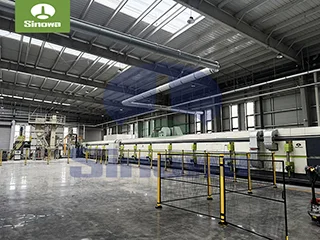
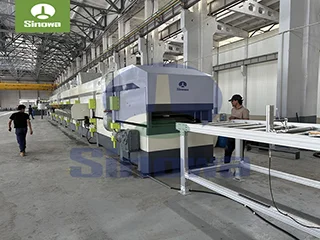
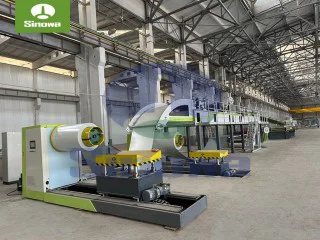
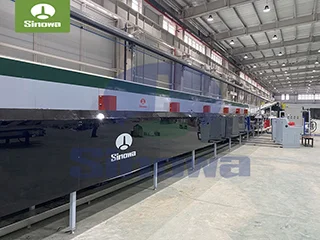
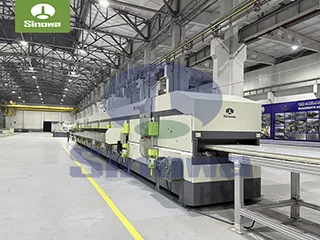
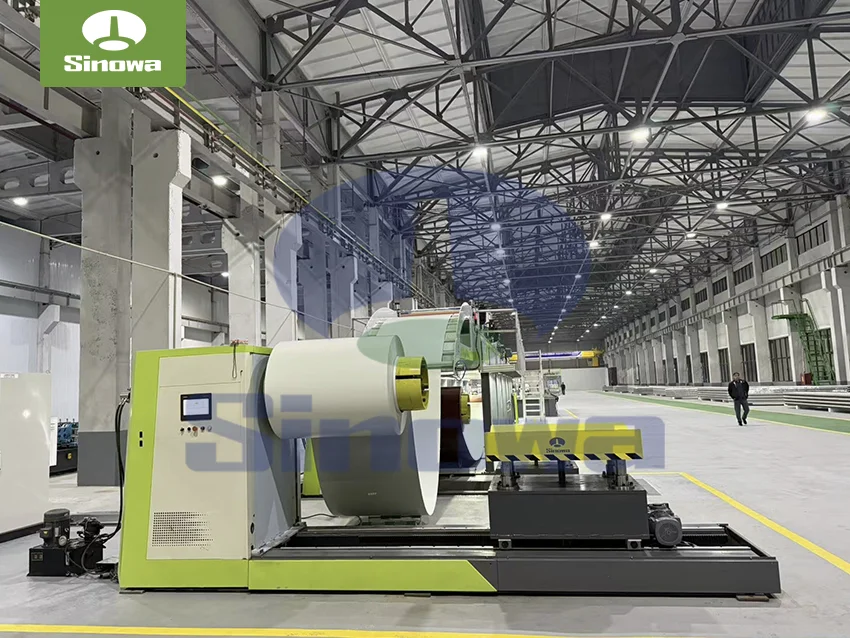
 sandwich panel line
The core advantage of a customized PU sandwich panel line for different thickness panels lies in its highly flexible and adjustable mechanical and control system architecture, which is professionally optimized to cope with thickness changes ranging from thin lightweight panels to thick high-insulation panels. In practical industrial production, the thickness of PU sandwich panels directly determines their thermal insulation efficiency, structural bearing capacity, and application scenarios. Thin-specification panels, usually ranging from 20mm to 50mm, are mostly used for temporary prefabricated buildings, interior partition walls, and ordinary factory enclosure structures, prioritizing light weight and convenient installation. Medium-thickness panels between 50mm and 120mm balance insulation performance and structural strength, suitable for commercial building roofs, exterior wall insulation, and general cold storage insulation projects. Thick panels with a thickness of 120mm to 200mm or above are designed for ultra-low temperature cold storage, special industrial thermal insulation workshops, and high-standard energy-saving buildings, requiring extremely low thermal conductivity and stable structural compression resistance. The customized production line is fully adaptable to all these thickness ranges, achieving seamless switching and stable production of various specifications without major equipment reconstruction or component replacement.
The overall structural design of the customized sandwich panel production line adopts a modular and assembled heavy-duty steel frame structure, which provides solid structural support for high-precision thickness adjustment and long-term stable operation. The main frame is welded with thickened steel plates, featuring high overall rigidity, strong shock resistance, and minimal deformation during long-term high-speed continuous operation. This robust structural foundation ensures that the equipment can maintain consistent production accuracy even when frequently switching between different panel thicknesses, avoiding product size deviation caused by equipment vibration or structural displacement. All key load-bearing and operating components are optimized for wear resistance and fatigue resistance, effectively reducing equipment failure rates and extending the overall service life of the production line, which is highly suitable for continuous and intensive industrial production scenarios.
The thickness adjustment system serves as the core functional module of the customized polyurethane sandwich panel production line, adopting a fully automatic electric and mechanical linkage adjustment mode to replace the cumbersome manual adjustment structure of traditional equipment. The upper and lower double-belt conveyor systems, which undertake panel molding and curing tasks, are equipped with precise height adjustment mechanisms. The system can automatically calibrate and adjust the gap between the upper and lower belts according to the preset panel thickness parameters, with a high adjustment accuracy that ensures uniform thickness of the entire panel surface and consistent internal core material density. Different from fixed-gap production lines, this adjustable structure can complete thickness parameter switching in a short time without stopping production, realizing uninterrupted conversion between multiple specifications and greatly improving production efficiency. Meanwhile, the system is equipped with a real-time parameter monitoring function, which automatically detects gap deviation during operation and performs micro-correction to avoid defective products caused by mechanical tolerance changes.
In the raw material feeding and foaming molding stage, the customized line achieves adaptive matching for different thickness panel production through optimized PU foaming and material distribution systems. For thin panels with small thickness, the system intelligently adjusts the PU material output, foaming pressure, and material spreading speed to ensure that the foaming core material is uniform and dense without voids or uneven thickness. For thick panels that require more core materials, the system increases material supply stably and adjusts the foaming reaction speed and flow uniformity, ensuring that the PU foam fully fills the entire molding space and forms a compact and uniform thermal insulation core layer. The material mixing and spraying device adopts a high-precision proportional control structure, which can dynamically adjust the material ratio and spraying flow according to panel thickness changes, ensuring that the physical properties of the PU foam core such as thermal conductivity, compression strength, and dimensional stability remain optimal under different thickness specifications. This adaptive foaming technology fundamentally solves the problems of uneven core density, insufficient filling, or excessive material waste that are prone to occur in traditional equipment when producing multi-thickness panels.
The surface roll forming process of the polyurethane sandwich panel line is also customized for multi-thickness panel production. The roll forming unit is composed of multiple groups of precision forming rollers with adjustable spacing and pressure, which can adapt to surface metal sheets of different thicknesses and match the molding requirements of sandwich panels with different overall thicknesses. When producing panels of different thicknesses, the system automatically adjusts the leveling pressure and forming radian of the rollers to ensure that the surface metal sheets are flat and smooth with uniform molding precision, effectively avoiding surface wrinkling, deformation, or uneven board edges caused by thickness specification changes. In addition, the preheating system before composite molding achieves temperature linkage adjustment with panel thickness parameters. Thin panels adopt moderate preheating temperature to accelerate composite bonding efficiency, while thick panels use graded preheating and constant temperature curing to ensure that the internal and external curing degree of the PU core material is consistent, preventing product quality problems such as core material delamination and insufficient curing caused by inconsistent heat conduction speed of thick panels.
The post-processing system of the polyurethane sandwich panel machine, including cutting, cooling, stacking and packaging modules, also realizes full-process adaptive customization for multi-thickness products. The online flying saw cutting system supports fixed-length cutting of panels with different thicknesses, with stable cutting speed and smooth and burr-free cutting sections. The cutting system can automatically identify panel thickness parameters and adjust cutting tension and tool operating speed to ensure cutting accuracy and avoid edge collapse or core material damage of thick panels during cutting. The circulating cooling system is equipped with multi-stage temperature regulation function, which adjusts the cooling air volume and cooling time according to panel thickness to ensure that thick panels are fully cooled and shaped internally and thin panels avoid excessive cooling leading to structural shrinkage. The automatic stacking and packaging device can intelligently adjust stacking spacing, clamping force and packaging tension according to panel thickness and weight, realizing safe and orderly stacking and dust-proof and moisture-proof packaging of finished panels of various specifications.
In terms of intelligent control, the customized PU sandwich panel machine adopts an integrated electronic control system that integrates mechanical transmission, material control, temperature regulation, and parameter monitoring. All production parameters including panel thickness, production speed, material flow, and curing temperature can be set and adjusted through a centralized operating interface. The system stores multiple sets of preset production parameters for common thickness specifications, enabling one-click switching of production modes and greatly simplifying the operation process. The real-time data monitoring module tracks the operating status of each equipment unit and product quality indicators throughout the production process, realizing early warning of abnormal parameters and automatic fault diagnosis. This intelligent control mode not only improves the precision and stability of multi-thickness panel production but also reduces the technical threshold for equipment operation, lowering the error rate caused by manual operation.
The customized design for different thickness panels also endows the sandwich panel machinery with excellent production efficiency and energy-saving performance. Traditional single-specification production lines often face low efficiency and high energy consumption when forced to produce non-matching thickness panels, while the customized line achieves optimal matching of energy consumption and production parameters for each thickness specification. When producing thin panels, the system automatically reduces equipment operating power, material consumption and heating energy consumption to avoid energy waste; when producing thick panels, it dynamically adjusts power output to ensure production quality without excessive energy loss. Meanwhile, the production line is equipped with a waste recycling structure, which can automatically collect and process leftover materials generated during the cutting and molding process of panels of different thicknesses, improving the comprehensive utilization rate of raw materials and reducing production costs. The adjustable production speed of the line can adapt to different thickness production requirements, realizing efficient output while ensuring product quality stability, with a wide adjustable speed range to meet both small-batch customized production and large-scale mass production needs.
In practical industrial application, the customized continuous PU sandwich panel line shows extremely high market adaptability and application value. For prefabricated building manufacturers with diverse product needs, one customized line can replace multiple traditional single-specification production equipment, effectively saving workshop space and equipment investment costs, and improving the flexibility of enterprise product layout. For engineering projects with differentiated thermal insulation needs, the line can quickly produce matching thickness panels according to project design standards, meeting the thermal insulation, energy-saving and structural load-bearing requirements of different regions and different building types. In the field of cold storage and special industrial thermal insulation, the multi-thickness production capability enables manufacturers to provide targeted panel products for low-temperature storage, constant-temperature workshops and high-temperature isolation facilities, effectively solving the problem of mismatched insulation effect caused by single panel thickness specification.
In terms of equipment durability and maintenance convenience, the modular customized structure brings obvious advantages. All adjustable components and core wearing parts are designed with standardized and detachable structures, which facilitates daily inspection, maintenance and partial replacement. The unified mechanical transmission and control system avoids the complex structural redundancy of multi-equipment combination production, reduces daily maintenance difficulty and maintenance costs, and ensures long-term stable operation of the equipment. Whether in high-intensity continuous production environments or intermittent customized production modes, the equipment can maintain stable operation accuracy and product consistency, with strong environmental adaptability to cope with different workshop temperature, humidity and site conditions.
With the continuous upgrading of the construction industry's energy-saving standards and the increasingly personalized market demand for building thermal insulation materials, the multi-functional and flexible customized PU sandwich panel production line will become the mainstream development direction of the panel manufacturing industry. Its core advantage of adapting to different thickness panel production breaks the shackles of traditional fixed-mode production, realizes the integration of diversified product production, and helps production enterprises quickly respond to market changes and customized order demands. By combining precise mechanical adjustment, intelligent parameter control and optimized production technology, this customized production line not only improves the production quality and yield of PU sandwich panels of various thicknesses but also enhances the overall production efficiency and economic benefits of the enterprise, providing reliable equipment support for the high-quality development of the modern building thermal insulation and prefabricated construction industry.
https://www.cnsinowa.com/sandwich-panel-machines/customized-pu-sandwich-panel-line-for-different-thickness-panels.html