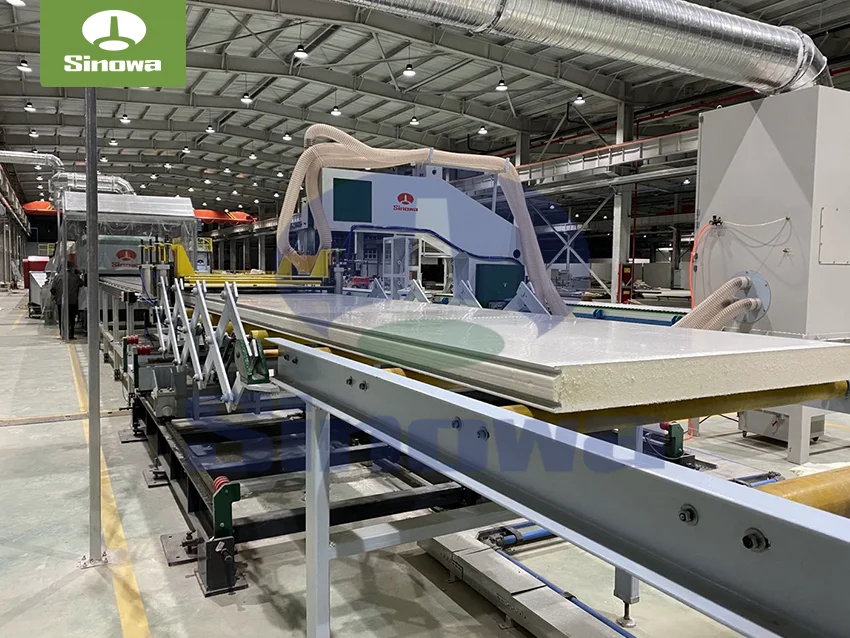
 sandwich panel machine
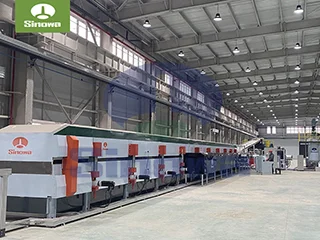
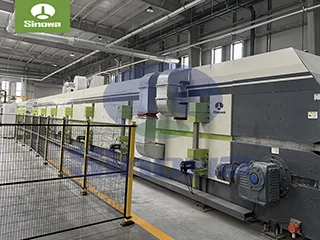
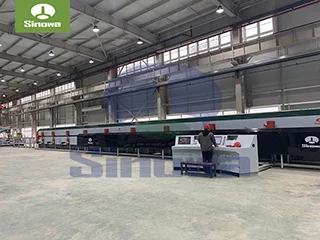
The overall structural design of high-strength sandwich panel production line follows a systematic and modular integration concept, with every functional unit closely linked to form a closed-loop continuous production process from raw material input to finished product output. The complete equipment system covers raw material unwinding and leveling, surface sheet precision forming, core material automatic arrangement and conveying, high-precision adhesive coating, integrated pressing and compounding, constant temperature curing and shaping, fixed-length precision cutting and finished product stable conveying, eliminating discontinuous manual intervention links that affect panel strength in traditional production modes. Each functional module is independently adjustable in parameters while maintaining overall collaborative operation, which lays a solid foundation for the consistent high strength and stable quality of batch-produced sandwich panels.
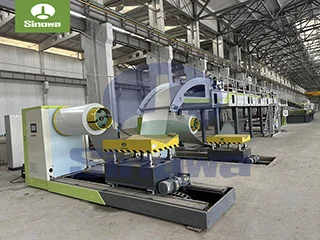
The raw material pretreatment and feeding system is the primary guarantee for producing high-strength sandwich panels, undertaking the standardized processing of metal surface sheets and lightweight core materials. For metal coil raw materials used for panel surfaces, the sandwich panel production machine is equipped with a hydraulic automatic unwinding structure and multi-stage leveling device, which can steadily release coiled metal sheets and eliminate internal stress generated during coil processing and storage. This pretreatment process effectively avoids surface unevenness, local warping and micro-deformation of metal sheets in subsequent compounding and curing stages, ensuring the flatness and structural uniformity of the outer protective layer of the panel. Meanwhile, the core material conveying unit adopts a quantitative and ordered arrangement structure, which can carry out regular layout and dense filling of porous core materials such as lightweight foam and inorganic fiber materials. The uniform arrangement of core materials prevents hollow gaps and sparse areas inside the panel, enabling the internal stress of the finished panel to be evenly dispersed when bearing external pressure, and significantly improving the overall compression resistance and bending resistance of the sandwich panel.
The gluing and composite pressing system constitutes the core functional part that determines the interlayer bonding strength of sandwich panels, and is also the most critical module that distinguishes high-strength equipment from ordinary panel machines. This sandwich panel line is equipped with a high-precision uniform gluing system, which can form a continuous and uniform adhesive layer between the metal surface layer and the core material without local excessive glue accumulation or missing coating. Uniform adhesive distribution ensures that every contact interface between the surface layer and the core material can form a tight bonding structure, avoiding layered separation and peeling problems caused by uneven glue application during long-term use of the panel. In the pressing stage, the equipment adopts an adjustable constant-pressure pressing structure, which can dynamically stabilize the pressing force according to the hardness of different core materials and the preset thickness specifications of finished panels. The precise pressure control system effectively prevents structural damage to porous core materials caused by excessive pressure and insufficient bonding tightness caused by insufficient pressure, ensuring that the composite structure of the metal layer and core material remains integrated and stable after molding.
Temperature control and constant temperature curing technology is an indispensable link to realize the high-strength stable structure of sandwich panels, as the adhesive materials used for interlayer bonding need accurate thermal environment conditions to complete chemical curing reactions and form high-adhesion bonding interfaces. The high-strength sandwich panel machine is equipped with a sealed heat preservation and constant temperature curing bin, which can form a stable and uniform temperature field inside the curing area. Compared with natural curing and open heating modes, the sealed constant temperature system accelerates the full curing of adhesives, promotes the complete combination of adhesive molecules with metal surfaces and core material structures, and greatly improves the shear resistance and peel resistance of the panel interlayer. In addition, the gradient temperature control design of the curing system enables the internal and external curing speed of the composite panel to be synchronized, avoiding structural cracks and internal stress concentration caused by inconsistent curing degrees between the surface and the interior of the panel. After constant temperature curing, the integrated composite structure of the sandwich panel is completely finalized, with significantly improved overall structural rigidity and long-term structural stability, and the panel can maintain stable bonding performance and mechanical strength under variable temperature environments and long-term load conditions.
The precision forming and fixed-length cutting system further optimizes the overall structural uniformity and assembly accuracy of high-strength sandwich panels. After curing and shaping, the continuously produced integrated panel will enter the automatic cutting station, where the high-precision servo cutting device realizes fixed-length cutting according to production setting parameters. The cutting mechanism features stable operation and high dimensional accuracy, ensuring that the end face of the panel is flat and neat without burrs, collapses or irregular notches. Smooth and flat panel end faces avoid local stress concentration at the edges during panel installation and use, preventing edge cracking and local damage that often occur in poorly processed panels. At the same time, the sandwich panel equipment is equipped with a follow-up conveying and positioning device during the cutting process, which can maintain the horizontal tension and flatness of the continuous panel, prevent displacement and deformation during cutting, and ensure that the thickness, width and flatness of each finished panel meet unified high-standard specifications. The consistent dimensional accuracy of finished panels ensures uniform stress bearing capacity of each part of the panel, which is an important prerequisite for the overall high-strength performance of engineering assembled wall and roof structures.
In terms of operational performance and production stability, high-strength sandwich panel production machine adopt an integrated automated control logic, which realizes collaborative operation of all functional modules from raw material feeding to finished product output. The centralized control system can uniformly adjust key parameters such as feeding speed, gluing volume, pressing pressure, curing temperature and cutting length, and maintain real-time dynamic calibration of parameters during continuous production. This intelligent control mode avoids quality fluctuations caused by manual parameter adjustment errors in traditional production processes, ensuring that the mechanical strength and structural performance of each batch of finished panels remain highly consistent. The equipment’s transmission structure adopts reinforced mechanical components, which can adapt to long-term continuous industrial production conditions, reduce equipment vibration and operation deviation during high-speed operation, and further guarantee the molding stability of sandwich panels. The optimized mechanical transmission structure also reduces equipment failure rates and maintenance intervals, improving the continuity and efficiency of high-strength panel production while maintaining stable product quality.
The structural advantages of panels produced by high-strength sandwich panel manufacturing line is fully reflected in practical engineering application scenarios. Benefiting from the tight interlayer bonding structure and uniform internal stress distribution, these sandwich panels have excellent compression resistance, bending resistance and impact resistance, and can withstand larger external loads compared with ordinary composite panels. In industrial factory building roofs and wall enclosure structures, high-strength sandwich panels can resist external pressure such as strong wind and accumulated snow, avoiding structural deformation and damage of enclosure components. In cold chain warehouses and constant-temperature storage projects, the stable integrated structure of the panels not only maintains excellent thermal insulation performance, but also prevents structural loosening and interlayer peeling caused by long-term alternating cold and hot environments, ensuring the long-term stable operation of thermal insulation structures. In clean workshop and sterile production environment construction, the flat and high-strength panel surface is not easy to deform and crack, which can effectively maintain the airtightness and cleanliness of the internal environment, and reduce the maintenance and replacement frequency of building enclosure materials.
In addition to mechanical strength advantages, the production characteristics of high-strength sandwich panel making machine also endow finished panels with comprehensive environmental adaptability. The precise compounding and curing process makes the panel structure have good waterproof, moisture-proof and anti-aging properties. The tight bonding interface effectively blocks the penetration of water vapor and humid air, avoiding core material mildew, corrosion and structural deterioration caused by moisture intrusion. The fully cured composite structure can resist natural aging such as ultraviolet radiation and temperature cycle changes, maintaining stable mechanical strength and structural integrity in long-term outdoor and harsh industrial environments. This excellent environmental adaptability expands the application scope of sandwich panels in outdoor engineering, petrochemical industry, coastal humid areas and other complex scenarios, and provides reliable material support for durable building enclosure structures.
From the perspective of industrial production value, high-strength sandwich panel manufacturing machine optimize the production logic of traditional composite panels and realize the integration of high efficiency and high quality. The fully continuous automated production mode greatly reduces manual operation links, shortens the production cycle of single panels, and improves the overall production efficiency of the production line. More importantly, the equipment’s core design orientation of focusing on panel structural strength solves the common pain points of ordinary sandwich panels such as easy layering, low compression resistance and poor durability in engineering applications. The standardized and high-strength panel production mode reduces the defective rate of finished products, lowers the comprehensive cost of material replacement and later maintenance for engineering projects, and improves the economic efficiency of building construction and industrial facility transformation.
With the continuous upgrading of modern building industrialization and green building standards, the market demand for high-performance, durable and lightweight composite building panels is constantly escalating. High-strength sandwich panel machinery, as core equipment for high-quality panel production, are also evolving towards more refined parameter control, more stable structural operation and more diversified material adaptation. Modern optimized equipment structures can adapt to the compounding production of multiple core materials and different thickness specifications of metal surface layers, realizing flexible production of diversified high-strength sandwich panels to meet the personalized needs of different engineering scenarios. The continuous technological innovation of the equipment further promotes the lightweight and high-strength development of composite building materials, reduces the self-weight of building enclosure structures while ensuring structural safety, and saves overall building energy consumption and structural construction costs.
In practical industrial application, the stable operation performance of high-strength sandwich panel production machine directly determines the popularization effect of high-quality sandwich panel structures in the construction industry. The equipment’s modular design facilitates daily maintenance and component replacement, ensuring long-term stable production operation. The precise parameter adjustment function enables the equipment to cope with different production requirements of high-strength panels, and can adjust the bonding compactness, curing degree and structural rigidity of panels according to the actual use environment and load requirements of engineering projects. This flexible and high-precision production capability makes high-strength sandwich panel machine an indispensable key equipment in the field of modern green building material production, providing continuous technical support for the high-quality development of prefabricated buildings, industrial enclosure engineering and special functional building facilities.
https://www.cnsinowa.com/sandwich-panel-machines/high-strength-sandwich-panel-machine.html