 sandwich panel machine
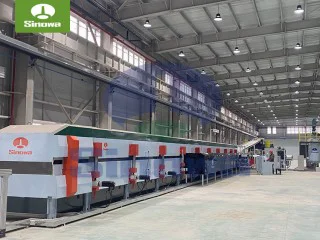
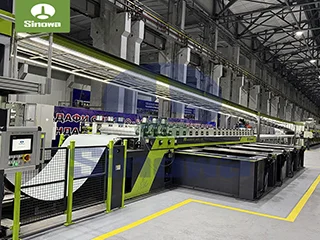
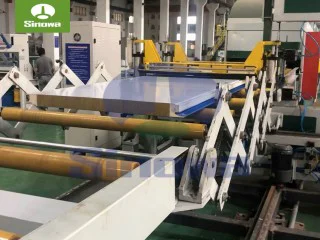
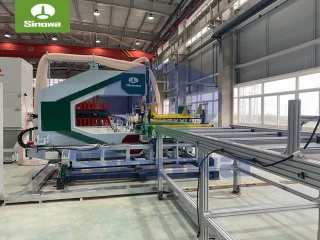
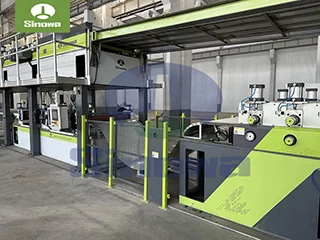
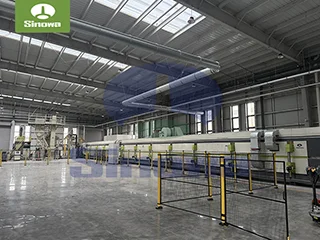
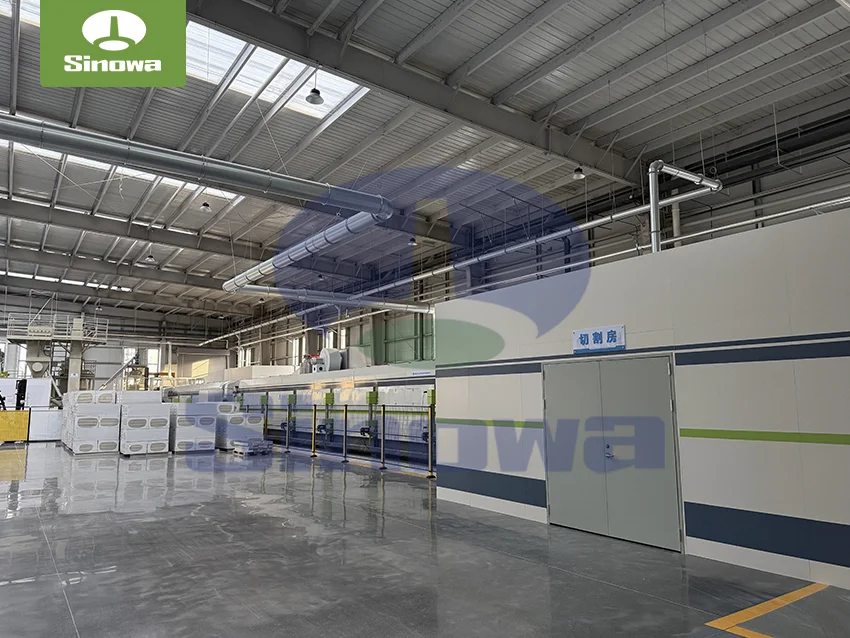
The core of the PU sandwich panel machine lies in its ability to accurately and efficiently complete the composite processing of the three-layer structure of the sandwich panel. PU sandwich panels are typical composite materials, usually consisting of two outer panels and a middle PU insulation core. The outer panels are mostly metal materials such as galvanized steel, galvalume or aluminum sheets, which provide structural strength and weather resistance for the panels. The middle PU core, with its extremely low thermal conductivity, endows the panels with excellent thermal insulation performance. The manufacturing machine needs to realize the organic combination of these three layers, ensuring that the bonding is firm, the thickness is uniform and the overall performance is stable. Unlike traditional manual or semi-automatic production methods, modern PU sandwich panel manufacturing machine adopts a continuous production mode, which greatly improves production efficiency while reducing the influence of human factors on product quality.
The working process of the PU insulation sandwich panel machine is a highly coordinated system engineering, which can be roughly divided into several key links: raw material preparation, panel pretreatment, core material foaming and casting, composite molding, curing, cooling and cutting, and post-processing. Each link is closely connected, and the parameters of the equipment need to be precisely controlled to ensure the smooth progress of the entire production process. In the raw material preparation stage, the metal coil for the outer panel needs to be uncoiled through the uncoiling system of the machine. The uncoiling system is usually equipped with a tension control device to ensure that the metal coil is uncoiled at a stable speed, avoiding problems such as material deviation or surface scratches caused by uneven tension. At the same time, the PU raw materials (mainly isocyanate and polyol) used for the core need to be stored in special storage tanks and preheated to the appropriate temperature to ensure their fluidity and reaction activity.
After uncoiling, the metal panel enters the pretreatment link. This link includes processes such as leveling, embossing and preheating. The leveling process is to eliminate the deformation of the metal coil during storage and transportation, ensuring that the panel surface is flat and smooth, which lays a foundation for the subsequent composite process. The embossing process is to press specific patterns on the surface of the metal panel through a embossing roller, which not only enhances the aesthetic appearance of the panel but also improves its structural rigidity. For some applications with special requirements, the embossing pattern can also be customized according to needs. Preheating of the metal panel is a crucial step, which can improve the bonding effect between the panel and the PU core. The preheating temperature is usually controlled between 35-45℃. If the temperature is too low, the reaction speed of the PU raw material will be affected, resulting in insufficient bonding strength. If the temperature is too high, it may cause aging of the surface coating of the metal panel.
The core material foaming and casting link is the key to determining the thermal insulation performance of the PU sandwich panel. The PU raw materials that have been preheated and proportioned are transported to the foaming machine through a dedicated pipeline. The foaming machine mixes the two components of isocyanate and polyol in a precise proportion through a high-pressure mixing head, and then injects the mixed liquid into the gap between the upper and lower metal panels that have been positioned. The injection amount and speed of the foaming machine need to be strictly matched with the production speed of the machine. Too much or too little injection will affect the thickness and density of the core material. During the injection process, the PU raw material undergoes a rapid chemical reaction, generating a large number of bubbles and expanding to fill the entire gap between the panels. This foaming process needs to be completed in a closed environment to ensure that the bubbles are uniform and the core material structure is dense. Some advanced manufacturing machines are also equipped with a positive pentane foaming system, which is more environmentally friendly and meets the requirements of modern environmental protection policies.
After the PU core material is injected, the composite structure composed of the upper and lower metal panels and the middle PU core enters the composite molding and curing stage. This stage is completed in the double-track laminating machine of the manufacturing machine. The double-track laminating machine clamps the composite structure through two parallel tracks and applies a certain pressure and temperature. The pressure is usually controlled between 0.15-0.25MPa, which ensures that the PU core material is closely bonded to the metal panels and eliminates the gaps between them. The temperature in the laminating machine is set according to the curing characteristics of the PU material, generally between 50-80℃. The composite structure stays in the laminating machine for a certain period of time to complete the curing reaction of the PU core material. The curing time is usually not less than 30 minutes, which ensures that the PU core material reaches sufficient strength and bonding strength. The double-track laminating machine adopts a continuous conveying mode, which makes the composite structure move forward at a stable speed while being pressed and heated, realizing the continuous curing process and ensuring the consistency of product quality.
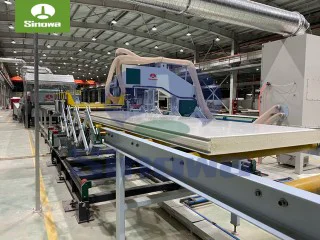
After curing, the composite panel enters the cooling and cutting stage. Due to the high temperature during the curing process, the panel needs to be cooled to room temperature to ensure its dimensional stability. The cooling system of the manufacturing machine usually adopts air cooling or water cooling. The air cooling system cools the panel through a high-speed fan, which is suitable for general production requirements. The water cooling system has a better cooling effect and is usually used in high-speed production lines. After cooling, the panel is cut to the required length by a precision cutting device. The cutting device is usually composed of a circular saw and a band saw, which can meet the cutting needs of different types of panels. The cutting system is equipped with an automatic tracking device, which can accurately track the movement speed of the panel, ensuring that the cutting length is precise and the cut surface is flat. At the same time, the cutting device is also equipped with a dust removal system to collect the dust and debris generated during the cutting process, ensuring a clean production environment.
The post-processing link is the last step in the production process, including edge trimming, grooving, punching and quality inspection. Edge trimming is to trim the irregular edges of the cut panels to ensure the neatness of the panel edges. Grooving and punching are carried out according to the installation needs of the panels. For example, grooving the ends of the panels to facilitate the lap joint between the panels, and punching to install accessories or realize ventilation functions. Quality inspection is an important guarantee for product quality. The inspection items include the appearance of the panel (such as whether there are scratches, bubbles and deformation), dimensional accuracy (such as thickness, length and width), bonding strength (sampling inspection) and core material density (deviation not exceeding ±5%). The panels that pass the inspection will be sent to the automatic stacking system for stacking and packaging, while the unqualified products will be sorted out for reprocessing or scrapping. The automatic stacking system can stack the panels neatly according to the specified specifications, reducing manual operation and improving stacking efficiency.
The PU sandwich panel line has a series of technical advantages that make it widely used in the production of thermal insulation panels. First of all, it has high production efficiency. The continuous production mode can realize the uninterrupted production of panels, with a production speed much higher than that of traditional production methods. This is particularly important for large-scale construction projects that require a large number of thermal insulation panels. Secondly, the product quality is stable. The machine adopts precise parameter control and automatic production processes, which reduces the influence of human factors such as manual operation errors on product quality. The produced PU sandwich panels have uniform thickness, firm bonding, precise dimensions and stable thermal insulation performance. Thirdly, it has strong versatility. By adjusting the parameters of the equipment and replacing the corresponding molds, the same manufacturing machine can produce PU sandwich panels of different specifications, thicknesses and surface patterns, which can meet the needs of different application scenarios. For example, it can produce wall panels, roof panels, cold storage panels and other products, and can also produce composite panels with different core materials such as rock wool and PU.
In addition, the modern PU sandwich panel production line also pays attention to environmental protection and energy conservation. In the aspect of environmental protection, the equipment is equipped with dust removal systems and waste gas treatment devices to reduce the emission of dust and harmful gases during the production process. For example, the dust generated during the cutting process is collected by the dust removal system, and the volatile organic compounds generated during the PU foaming process are treated by the waste gas treatment device to meet the environmental emission standards. In terms of energy conservation, the equipment adopts efficient heating systems and energy recovery devices, which reduces energy consumption during the production process. For example, the waste heat generated during the curing process is recovered and reused for preheating raw materials, improving energy utilization efficiency.
The PU sandwich panels produced by the manufacturing machine are widely used in various fields due to their excellent performance, which in turn promotes the continuous development of the manufacturing machine. In the construction field, PU sandwich panels are widely used as wall and roof materials in industrial workshops, warehouses, logistics centers, commercial buildings, public buildings and assembled houses. In industrial workshops and warehouses, the thermal insulation performance of PU sandwich panels can reduce the energy consumption of heating and cooling equipment, and their lightweight characteristics can reduce the load of the building structure. In assembled houses, the prefabricated production of PU sandwich panels can greatly shorten the construction period and improve construction efficiency. In the cold storage and refrigeration field, PU sandwich panels are the preferred thermal insulation materials because of their extremely low thermal conductivity. The cold storage panels produced by the manufacturing machine can maintain a stable low-temperature environment inside the cold storage, reducing the energy consumption of the refrigeration system. In the agricultural field, PU sandwich panels are used in greenhouses and livestock breeding facilities, which can adjust the internal temperature of the facilities and create a suitable growth environment for crops and livestock.
With the continuous development of the market, the requirements for PU sandwich panel production machine is also constantly improving. The future development trends of these machines are mainly reflected in several aspects: higher automation level, more intelligent control systems, and better environmental protection performance. In terms of automation, the future manufacturing machines will realize the full automation of the entire production process, from raw material input to product output, without manual intervention. This will further improve production efficiency and reduce labor costs. In terms of intelligent control, the manufacturing machine will be equipped with more advanced sensors and control systems, which can realize real-time monitoring and adjustment of production parameters. For example, through sensors to detect the thickness and density of the PU core material, and automatically adjust the injection amount and speed of the foaming machine to ensure the stability of product quality. At the same time, the intelligent control system can also realize remote monitoring and fault diagnosis of the equipment, which is convenient for operators to manage the equipment and timely deal with faults.
In terms of environmental protection performance, the future polyurethane sandwich panel production line will adopt more environmentally friendly raw material processing technologies and waste treatment methods. For example, using more environmentally friendly foaming agents to replace traditional foaming agents, reducing the emission of harmful gases. At the same time, the equipment will also strengthen the recycling of waste materials, such as recycling and reprocessing the leftover materials generated during the production process, improving the utilization rate of raw materials and reducing environmental pollution. In addition, with the development of lightweight and high-strength materials, the manufacturing machine will also adapt to the processing needs of new materials, realizing the production of PU sandwich panels with better performance.
It should be noted that the operation and maintenance of the polyurethane sandwich panel machine is also crucial to ensure the stable operation of the equipment and the quality of the products. During the operation process, the operators need to be familiar with the performance and operation specifications of the equipment, and strictly follow the operating procedures to operate. Regular inspection of the equipment is required, including checking the wear of the rollers, the tightness of the belts, the operation of the motors and the status of the pipelines. Timely replacement of worn parts and maintenance of the equipment can extend the service life of the equipment. In addition, the storage and transportation of raw materials also need to be standardized. For example, PU raw materials need to be stored in a dry and ventilated environment to avoid moisture and deterioration. The metal coils need to be protected from scratches and corrosion during transportation and storage.
In conclusion, the polyurethane sandwich panel line for thermal insulation board production is an important equipment in the field of thermal insulation material production, which plays a key role in improving product quality, improving production efficiency and promoting the application of thermal insulation materials. With the continuous progress of technology, these machines will be more automated, intelligent and environmentally friendly, adapting to the increasingly diverse market demands and the increasingly strict environmental protection requirements. The continuous development of PU sandwich panel manufacturing machines will further promote the development of the thermal insulation material industry, contributing to global energy conservation and environmental protection causes. At the same time, the wide application of PU sandwich panels will also bring more energy-saving and efficient solutions to the construction, industrial and agricultural fields, promoting the sustainable development of related industries.
https://www.cnsinowa.com/sandwich-panel-machines/pu-sandwich-panel-manufacturing-machine-for-thermal-insulation-board-production.html