Low Power Consumption Operation Mode Of Rock Wool Sandwich Panel Line
Sep 17, 2026
The low power consumption operation mode of rock wool sandwich panel production lines optimizes overall energy utilization through intelligent control and structural optimization. It cuts invalid energy loss during full production cycles while maintaining stable panel quality, bringing sustainable operational efficiency for modern building material manufacturing.
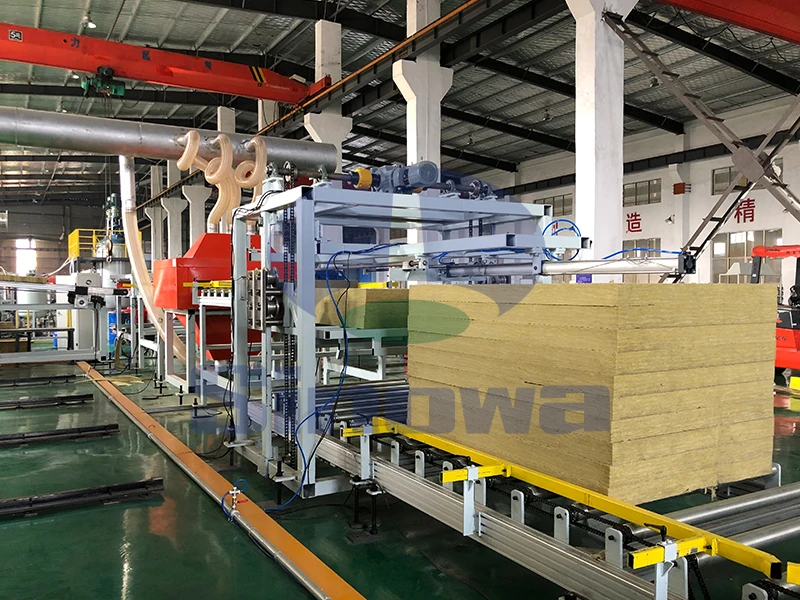
Traditional rock wool sandwich panel production lines often suffer from excessive energy waste due to fixed-power operation and outdated mechanical matching modes. Most conventional equipment runs at constant maximum power regardless of actual production load, resulting in severe idle power consumption during material waiting, parameter adjustment, and product switching stages. In addition, mismatched operating speed between different production units often causes repeated start-stop operations and mechanical friction loss, which further increases unnecessary power consumption. The low power consumption operation mode fundamentally solves these pain points by adopting dynamic load matching operation logic. This mode abandons the rigid fixed-power operating mechanism and realizes real-time power adjustment based on production progress, raw material specifications, and operating conditions of each equipment unit. Every driving and processing component can automatically match the optimal operating power and speed, effectively eliminating invalid energy output in low-load and no-load scenarios, and laying a core foundation for long-term energy-saving production of rock wool sandwich panels.
Intelligent frequency conversion drive system is the core technical support for the low power consumption operation mode of rock wool sandwich panel lines. Different from ordinary fixed-speed motors, the full-set frequency conversion power assembly configured in this mode can sense the real-time operating load of the production line through high-precision sensing modules. When the production line is in full-load continuous processing state, the system maintains stable power output to ensure production efficiency; when the production pace slows down or individual equipment units are in standby state, the system automatically reduces motor operating frequency and output power without frequent shutdowns. This flexible power regulation avoids the high energy consumption caused by repeated equipment startup, which is far more energy-efficient than traditional full-power standby modes. Moreover, the frequency conversion drive system optimizes the operating rhythm of feeding, pressing, cutting and conveying units, realizing synchronous operation of the whole line. It reduces mechanical impact and additional power loss caused by asynchronous operation, and also extends the service life of mechanical parts while reducing power consumption, achieving a win-win effect of energy saving and equipment maintenance.
Thermal energy loss control is a key link optimized by the low power consumption operation mode, as heating and curing processes account for a large proportion of the total energy consumption of rock wool sandwich panel production. Traditional production lines usually adopt open or semi-open heating and curing structures, which lead to massive heat dissipation during continuous production, requiring continuous high-power heating to maintain process temperature. The low-power operation mode adopts fully enclosed thermal insulation structural design for heating chambers and curing channels, which greatly reduces outward heat diffusion and maintains stable internal temperature with lower thermal energy input. Meanwhile, the intelligent temperature control subsystem in this mode realizes hierarchical and regional heating management. It accurately distributes heat energy according to the curing requirements of different rock wool core materials and panel composite layers, avoiding uniform high-power heating for the entire production area. The system can also automatically adjust heating power according to ambient temperature and production speed, maintaining the optimal process temperature range with minimum energy consumption, which significantly reduces the thermal energy waste existing in traditional production modes.
Intelligent program memory and adaptive operation functions further enhance the energy-saving effect of the low power consumption mode. Rock wool sandwich panels have diverse specifications, and different thicknesses, densities and composite structures correspond to different production parameters and equipment operating states. Traditional production requires repeated parameter debugging and equipment adaptation when switching product types, during which the equipment runs in inefficient high-power debugging state for a long time. The low power consumption operation mode is equipped with an intelligent parameter storage module, which can record and store the optimal operating power, speed and temperature parameters corresponding to various panel specifications. When switching production products, the system can quickly call up matching parameter programs to complete mode switching in a short time, eliminating energy waste caused by repeated debugging and parameter trial operation. In addition, the system has self-adaptive adjustment capability, which can subtly optimize operating parameters in real time according to subtle changes in raw material performance and production environment, always keeping the production line in the most energy-efficient operating state without affecting product quality and production efficiency.
Optimized mechanical operation logic and idle energy suppression mechanisms are important supplements to the low power consumption operation mode. In the traditional production mode, auxiliary equipment such as conveying devices and dust removal systems keep running at full power throughout the production cycle, even during intermittent production gaps and short-term standby periods, resulting in continuous invalid power consumption. The low-power operation mode sets scientific idle judgment and delayed shutdown logic for all auxiliary equipment. The system automatically identifies production interval states, reduces the operating speed and power of auxiliary equipment in short standby periods, and automatically shuts down non-essential equipment in long-term standby states. At the same time, the mode optimizes the mechanical transmission structure and operating rhythm of the whole line, reducing idle running time and mechanical friction resistance of equipment. It avoids ineffective mechanical movement and power loss, and realizes refined energy consumption management from the perspective of full-process mechanical operation, further reducing the comprehensive energy consumption of the production line.
The low power consumption operation mode also realizes collaborative energy saving of the whole production line through systematic linkage control. Each equipment unit of the rock wool sandwich panel production line is interlocked and controlled by a unified intelligent system in this mode, forming a coordinated and efficient operating system rather than independent discrete operation. The system can predict production load changes in advance according to production plans and real-time operating data, and pre-adjust the operating state of each unit to avoid energy consumption fluctuations and invalid power surge caused by sudden load changes. This overall linkage optimization eliminates the energy waste caused by uncoordinated operation of individual equipment in traditional modes. In addition, the mode is equipped with real-time energy consumption monitoring and data analysis functions, which can automatically identify high-energy consumption links and abnormal operating states of the production line. It makes dynamic optimization adjustments in real time, ensuring that the production line always maintains low-power and high-efficiency operating characteristics in long-term continuous production, and effectively reduces the comprehensive operating energy consumption of rock wool sandwich panel manufacturing.
Main Products
-

Continuous PU Sandwich Panel Production Line
This continuous PU sandwich panel production line is an integrated automatic equipment. It covers uncoiling, forming, foaming, curing and cutting processes. With automatic raw material proportioning and precise temperature & pressure control, PIR sandwich panel production line continuously composites panels with double skins. Polyurethane sandwich panel production line stably produces steel and aluminum sandwich panels. Featuring high automation, the line makes fireproof and thermal-insulation panels for building enclosure and cold storage. -

Rock Wool Sandwich Panel Production Line
Continuous rockwool sandwich panel production line is an automatic integrated production equipment, consisting of uncoiling, forming, gluing and compounding, heating curing, fixed-length cutting, automatic stacking and other modules. The mineral wool sandwich panel production line continuously conveys color steel plates and rock wool core materials to automatically complete lamination and curing, which can produce fireproof and thermal insulation sandwich panels. Featuring high automation degree and stable operation, this production line is suitable for mass production of panels used for building walls, roofs and other scenarios. -

Phenolic Insulation Board Production Line
This integrated automatic production line continuously manufactures PU and phenolic insulation boards. The insulation board production line covers raw material proportioning, high-pressure foaming, laminating, curing and fixed-length cutting. Featuring high automation and stable molding, the insulation panel production line supports various surface materials. PU boards offer excellent thermal insulation, while phenolic boards have superior fire resistance. These products are widely used in construction, cold chain, ventilation ducts and other thermal insulation fields.
Other FAQs
- Daily Maintenance Methods For Rock Wool Sandwich Panel Production Line
- Energy Saving Measures For Rock Wool Sandwich Panel Production Line Operation
- Panel Bonding Strength Improvement Methods In Rockwool Board Production Line
- Automatic Operation Debugging Steps For Rock Wool Sandwich Panel Production Line
- Production Speed Optimization Methods For Rock Wool Sandwich Panel Line