Daily Maintenance Methods For Rock Wool Sandwich Panel Production Line
Sep 17, 2026
Regular daily maintenance is essential to keep rock wool sandwich panel production lines stable, extend equipment service life, and ensure consistent product quality. Scientific daily upkeep reduces sudden failures, lowers operational risks, and maintains continuous and efficient production operations in long-term industrial use.
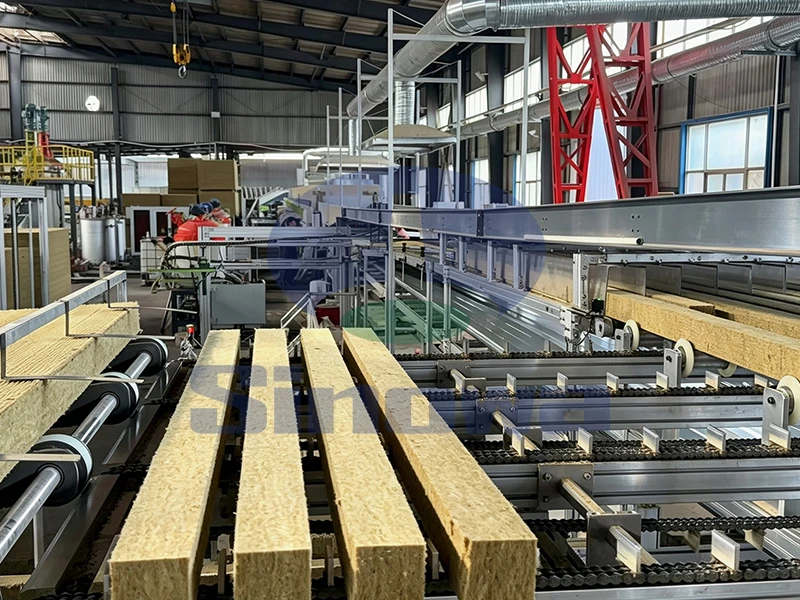
The foundation of daily maintenance for rock wool sandwich panel production lines lies in comprehensive pre-production inspection, which runs through every key operational link before equipment startup. Operators need to conduct a full visual and manual check of all mechanical components to eliminate hidden dangers caused by idle downtime or minor component displacement. First, it is necessary to inspect the transmission parts including conveyor belts, rollers and gear sets, checking for abnormal wear, looseness, deviation or surface adhesion of residual rock wool debris and industrial dust. Any accumulated debris should be completely cleaned to avoid friction resistance affecting transmission stability and causing panel molding deviation. Meanwhile, the tightness of all connecting bolts and fasteners on the production line must be verified, as long-term mechanical vibration can easily lead to loose connections and further cause equipment vibration and operational noise during production. In addition, the lubrication state of key rotating and friction components needs focused inspection. Sufficient and clean lubricating oil ensures flexible component operation, reduces mechanical wear and avoids high-temperature damage caused by dry friction. Before startup, operators should also check the tightness and flatness of the rock wool feeding and pressing structures, ensuring that raw materials can be conveyed evenly and stably to prevent uneven feeding which affects the compactness and flatness of finished sandwich panels. This systematic pre-production inspection can effectively avoid most minor failures that may occur in the production process and lay a solid foundation for stable daily production.
Real-time operational monitoring and dynamic maintenance during production are crucial to guarantee the continuous and stable operation of the rock wool sandwich panel production line. During the formal production process, operators cannot leave the equipment unattended for a long time and need to observe the operational status of each processing link in real time. Focus should be placed on checking the running speed consistency of the entire production line to avoid speed differences between front and rear processes that lead to raw material accumulation, panel wrinkling or molding distortion. For the heating and curing area of the production line, real-time temperature operation status needs regular observation to ensure uniform heat distribution, as uneven temperature will directly cause inconsistent curing degrees of rock wool sandwich panels and affect the overall structural stability of finished products. In addition, attention should be paid to abnormal sounds, vibrations and odors generated during equipment operation. Any harsh friction sound, irregular vibration or burnt odor indicates potential component failure or abnormal operation, requiring timely temporary shutdown inspection and troubleshooting to prevent minor faults from expanding into large-scale equipment shutdown. During continuous production, residual rock wool scraps and adhesive residues generated in the cutting, pressing and bonding processes should be cleaned intermittently to prevent material accumulation from blocking equipment gaps and affecting subsequent production processes. Reasonable dynamic maintenance during production can effectively reduce equipment failure rates and ensure the continuity and uniformity of product processing.
Post-production thorough cleaning and component resetting are indispensable core links of daily maintenance, which directly determine the service life and secondary startup stability of the production line. After the daily production task is completed, operators must first cut off all power and air supply of the equipment following standardized operating procedures to ensure safety before cleaning and maintenance operations. The first cleaning focus is the material contact parts of the production line, including feeding hoppers, pressing rollers, cutting tools and molding platforms. A large amount of residual rock wool fibers, dust and adhesive residues will adhere to these parts after long-term production; if not cleaned in time, these residues will harden over time, cause equipment jamming, affect the precision of subsequent processing, and even lead to surface scratches and quality defects on new panels. Soft brushes and professional non-corrosive cleaning tools should be used for cleaning to avoid scratching precision equipment surfaces. After cleaning all residual materials, operators need to reset all adjustable components of the production line, including adjusting the gap of pressing equipment, correcting the horizontal position of conveyor rollers, and resetting the cutting positioning scale, to ensure all parts are in standard standby state. Meanwhile, the internal and external dust of the equipment shell should be cleaned to prevent dust accumulation from affecting equipment heat dissipation and circuit stability. Complete post-production cleaning and resetting can eliminate hidden dangers left by daily production and ensure the equipment can start up efficiently and stably the next day.
Daily lubrication and anti-wear maintenance of precision mechanical components is a key measure to extend the service life of rock wool sandwich panel production lines. Mechanical friction and operation wear are unavoidable during daily production, and standardized daily lubrication can greatly reduce wear loss and maintain equipment operation precision. Operators need to formulate targeted daily lubrication plans according to different component attributes of the production line. For high-frequency rotating components such as bearings, gears and transmission chains, residual old lubricating oil and dirt should be removed first every day before supplementing clean and matched lubricating oil, to ensure full lubrication of friction surfaces and avoid dry friction and component aging. For sliding guide rails and telescopic structures used for positioning and adjustment, a small amount of lubricant should be applied daily to keep the sliding flexible and prevent jamming and positioning deviation caused by rust or dust accumulation. It is necessary to avoid excessive lubrication during operation, as excess lubricating oil will easily adhere to dust and rock wool debris to form dirt deposits, which will affect component operation instead. In addition, after daily lubrication, operators need to manually test the flexibility of component operation to confirm the lubrication effect. Long-term adherence to standardized daily lubrication maintenance can effectively reduce equipment failure caused by component wear, maintain the long-term operation precision of the production line, and reduce subsequent equipment replacement and maintenance costs.
Daily inspection and protection of electrical and control systems are critical to ensure the safe and intelligent operation of the entire production line. The electrical control system is the core command center of the rock wool sandwich panel production line, and its stable operation directly determines the safety and efficiency of production. Every day before and after production, operators need to inspect electrical components including power lines, control cabinets, sensors and switch buttons. First, check whether the lines are worn, aged or loosely connected, and ensure there is no dust or moisture accumulation inside the control cabinet, as dust and moisture will easily cause short circuits, poor contact and electrical failures. Precision sensors responsible for detecting speed, temperature and positioning need daily calibration inspection to ensure accurate data feedback, because inaccurate sensor data will lead to abnormal equipment operation and unqualified product processing. All control buttons and emergency stop devices should be tested daily to confirm flexible and sensitive response, ensuring that the equipment can be shut down quickly in case of unexpected situations. In addition, the heat dissipation system of electrical equipment needs daily inspection to ensure unobstructed heat dissipation channels and avoid equipment failure caused by overheating. Standard daily electrical system maintenance can effectively prevent electrical faults, ensure the safe operation of the production line, and avoid production accidents and economic losses caused by electrical abnormalities.
Daily maintenance record sorting and hidden danger summary analysis are important guarantees for the long-term stable operation and iterative optimization of production line maintenance work. After completing all daily maintenance operations, operators need to truthfully record all maintenance contents in detail, including pre-production inspection results, abnormal problems found during production, cleaning and lubrication implementation status, and electrical system inspection conditions. The records should clearly mark minor faults, component abnormalities and potential hidden dangers found on the day, as well as corresponding troubleshooting and adjustment measures. Through sorting daily maintenance data, maintenance personnel can intuitively grasp the daily operation state and aging law of each component of the production line, and form systematic maintenance experience. For repeated minor hidden dangers found in daily records, targeted improvement measures can be formulated to optimize subsequent maintenance plans and avoid the evolution of minor problems into major equipment faults. At the same time, complete daily maintenance records can provide effective reference for regular comprehensive equipment maintenance, help form a full-cycle equipment maintenance system, further improve the overall stability and service life of the rock wool sandwich panel production line, and ensure long-term efficient and high-quality production operation.
Main Products
-

Continuous PU Sandwich Panel Production Line
This continuous PU sandwich panel production line is an integrated automatic equipment. It covers uncoiling, forming, foaming, curing and cutting processes. With automatic raw material proportioning and precise temperature & pressure control, PIR sandwich panel production line continuously composites panels with double skins. Polyurethane sandwich panel production line stably produces steel and aluminum sandwich panels. Featuring high automation, the line makes fireproof and thermal-insulation panels for building enclosure and cold storage. -

Rock Wool Sandwich Panel Production Line
Continuous rockwool sandwich panel production line is an automatic integrated production equipment, consisting of uncoiling, forming, gluing and compounding, heating curing, fixed-length cutting, automatic stacking and other modules. The mineral wool sandwich panel production line continuously conveys color steel plates and rock wool core materials to automatically complete lamination and curing, which can produce fireproof and thermal insulation sandwich panels. Featuring high automation degree and stable operation, this production line is suitable for mass production of panels used for building walls, roofs and other scenarios. -

Phenolic Insulation Board Production Line
This integrated automatic production line continuously manufactures PU and phenolic insulation boards. The insulation board production line covers raw material proportioning, high-pressure foaming, laminating, curing and fixed-length cutting. Featuring high automation and stable molding, the insulation panel production line supports various surface materials. PU boards offer excellent thermal insulation, while phenolic boards have superior fire resistance. These products are widely used in construction, cold chain, ventilation ducts and other thermal insulation fields.