sinowa@sinowa.cn
+0086 151 0610 6366

Sandwich Panel Machines

Home > Sandwich Panel Machines > Rock Wool Sandwich Panel Production Line For Thermal Insulation Integration

Rock Wool Sandwich Panel Production Line For Thermal Insulation Integration

Jan 6, 2026

In the context of global attention to energy conservation and environmental protection, the construction industry is undergoing a profound transformation towards high efficiency, low carbon and sustainability. Thermal insulation integration technology, as a key link in promoting energy-saving buildings, has become a core focus of industry development. Among various thermal insulation materials, rock wool sandwich panels stand out due to their excellent thermal insulation, fire resistance, sound absorption and durability. The rock wool sandwich panel production line for thermal insulation integration, which integrates multiple advanced technologies, is the core guarantee for the mass production of high-quality rock wool sandwich panels, providing strong support for the popularization of energy-saving buildings and the upgrading of the construction industry.

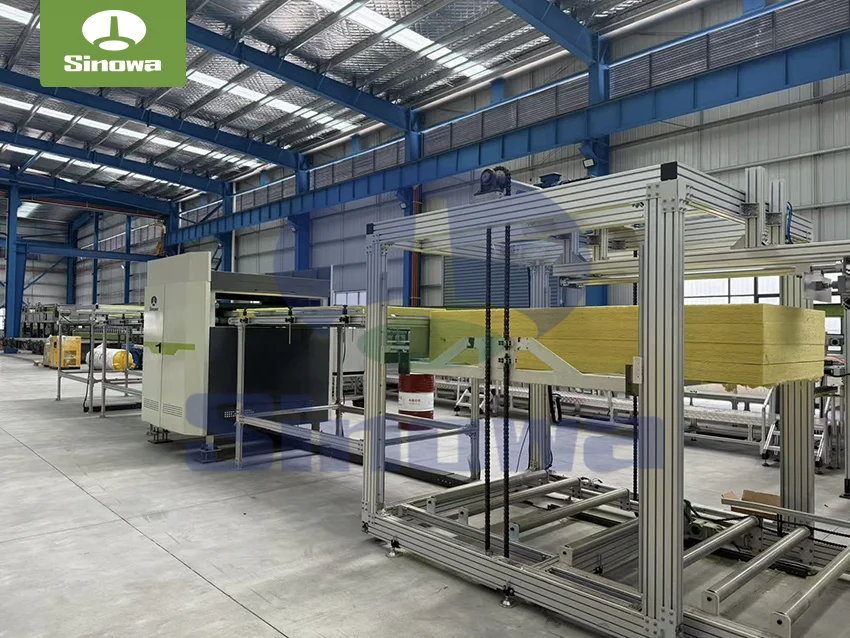
Rock Wool Sandwich Panel Production Line For Thermal Insulation Integrationsandwich panel line

Rock wool sandwich panels for thermal insulation integration are composite materials composed of two layers of metal panels (usually color-coated steel plates) and a rock wool core material in the middle. The unique three-layer structure combines the mechanical strength of metal panels with the thermal insulation and fire resistance of rock wool, making the panels have comprehensive performance that single materials cannot match. Unlike traditional on-site thermal insulation construction, the thermal insulation integration system formed by rock wool sandwich panels realizes the integration of enclosure structure and thermal insulation function, which not only improves the construction efficiency, but also avoids the quality problems such as thermal insulation layer falling off and thermal bridge effect caused by on-site construction. The production line of such panels is a complex systematic project integrating machinery, electronics, hydraulics, chemical engineering and other disciplines, and its technological level directly determines the quality and performance of the final products.

1. The Composition and Working Principle of Rock Wool Sandwich Panel Production Line for Thermal Insulation Integration

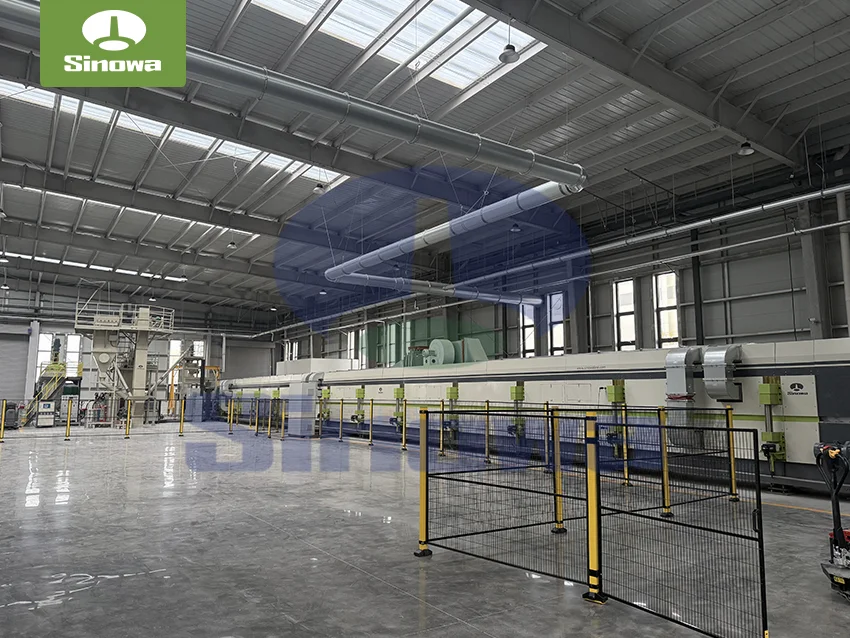
A complete rock wool sandwich panel production line for thermal insulation integration is composed of multiple functional units, which are closely connected and coordinated to realize the automatic production from raw material input to finished product packaging. The main components include uncoiling system, roll forming system, rock wool feeding and processing system, gluing system, composite pressing system, cutting system, cooling system, stacking and packaging system, as well as the central control system that integrates all units. Each system undertakes specific functions, and the rationality of its design and the advanced nature of technology are crucial to the production efficiency and product quality.

1.1 Uncoiling System

The uncoiling system is the starting link of the production line, mainly responsible for uncoiling the coiled metal base material (color-coated steel plate) stably and continuously. The system is usually equipped with hydraulic uncoilers, which have the functions of automatic centering and tension control. The tension control is particularly important, as too large or too small tension will cause deformation of the metal plate, affecting the flatness and dimensional accuracy of the final product. The uncoiling system can be equipped with multiple uncoilers according to the production needs, so as to realize the simultaneous uncoiling of upper and lower metal plates, laying the foundation for the subsequent composite process. In addition, the system is also equipped with auxiliary devices such as plate cleaning and leveling, which can remove the dust and impurities on the surface of the metal plate and correct the slight deformation of the plate, ensuring the cleanliness and flatness of the base material.

1.2 Roll Forming System

After uncoiling and leveling, the metal plate enters the roll forming system, which is responsible for forming the metal plate into the required shape and cross-section according to the design requirements. The roll forming process adopts the method of progressive forming, that is, through a series of sequentially arranged forming rolls, the flat metal plate is gradually bent and formed. The roll forming system adopts advanced digital servo technology and frequency conversion vector control technology, which can accurately control the forming speed and forming pressure, ensuring the consistency of the cross-sectional shape of the metal plate and the accuracy of geometric dimensions. The forming rolls are usually made of high-strength alloy steel, which has good wear resistance and service life. According to the different uses of rock wool sandwich panels (such as wall panels, roof panels), the roll forming system can be adjusted and replaced with different forming rolls to produce products of different specifications and types.

1.3 Rock Wool Feeding and Processing System

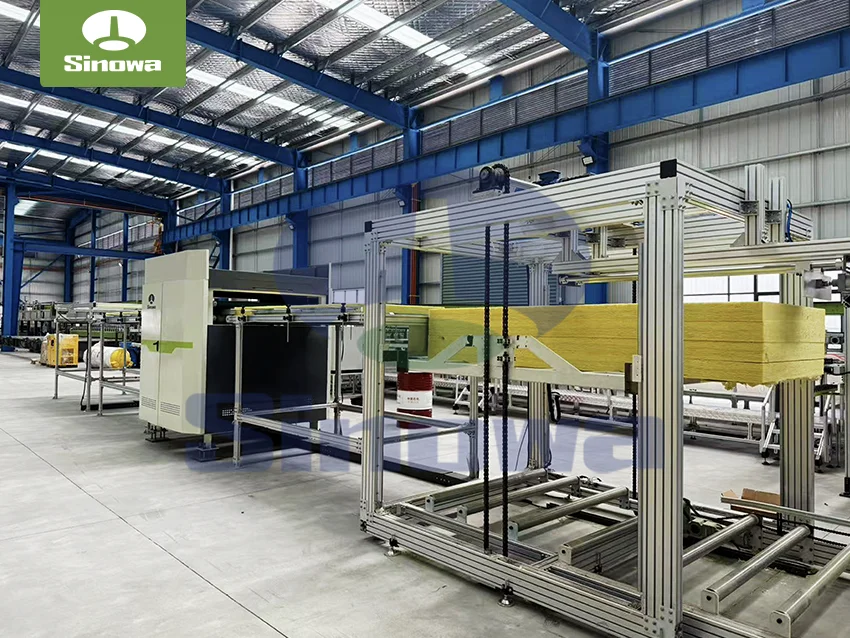
The rock wool feeding and processing system is the core link that determines the thermal insulation performance of the product, and its main function is to process the original rock wool slab into a rock wool core material that meets the requirements of composite processing, and accurately transport it to the composite position. The system is composed of rock wool slitting device, conveying device, turning device and edge milling device. First, the large rock wool slab (usually with a size of 2400mm×1200mm or 1800mm×1200mm) is cut into rock wool strips of the required thickness by the slitting device. The slitting thickness can be adjusted according to the thermal insulation requirements of the product, generally ranging from 50mm to 250mm. Then, the rock wool strips are conveyed to the turning device, which adjusts the fiber direction of the rock wool strips to be vertical. This vertical fiber arrangement can greatly improve the tensile strength and anti-sagging ability of the rock wool core material, avoiding the phenomenon of core material sagging and thermal insulation performance attenuation during long-term use.

After turning, the rock wool strips enter the edge milling device to process the edges of the rock wool strips to ensure that the edges are flat and fit closely with the metal plates on both sides. At the same time, the system also needs to control the density and moisture content of the rock wool core material. The density of the rock wool core material for thermal insulation integration is usually between 80kg/m³ and 120kg/m³, which can ensure both good thermal insulation performance and mechanical strength. The moisture content of the rock wool core material must be strictly controlled below a certain standard, otherwise it will affect the bonding effect with the metal plate and the long-term durability of the product.

1.4 Gluing System

The gluing system is responsible for uniformly applying the adhesive to the inner surface of the formed metal plate or the surface of the rock wool core material, so that the metal plate and the rock wool core material can be firmly bonded. The adhesive used in the production line is usually a two-component polyurethane adhesive, which has the advantages of high bonding strength, good weather resistance and corrosion resistance. The gluing system adopts high-pressure spraying technology, which can realize uniform spraying of the adhesive. The amount of glue sprayed can be accurately adjusted according to the production speed and product specifications, generally between 180g and 250g per square meter. Too little glue will lead to insufficient bonding strength between the metal plate and the rock wool core material, and too much glue will not only increase the production cost, but also cause the adhesive to overflow, affecting the appearance and performance of the product.

In addition, the gluing system is also equipped with a preheating device for the adhesive and the metal plate. Proper preheating can improve the fluidity of the adhesive and the activity of the bonding surface, thereby enhancing the bonding effect. The preheating temperature is usually controlled between 40℃ and 60℃, which needs to be adjusted according to the ambient temperature and the type of adhesive.

1.5 Composite Pressing System

The composite pressing system is the key link to realize the combination of metal plates and rock wool core materials. After the upper and lower metal plates are glued and the rock wool core material is placed between them, they enter the composite pressing system together. The system is mainly composed of a double-belt conveyor and a heating device. The double-belt conveyor uses two high-strength stainless steel belts to clamp the composite board blank, and applies uniform pressure to it during the conveying process. The heating device heats the composite board blank while pressing, which can accelerate the curing of the adhesive and improve the bonding strength between the layers.

The pressure and temperature in the composite pressing process are strictly controlled. The pressure is usually between 0.3MPa and 0.5MPa, and the temperature is between 80℃ and 120℃. The conveying speed of the double-belt conveyor is consistent with the production speed of the whole line, which can be adjusted between 3m/min and 8m/min according to the product specifications and the curing speed of the adhesive. The length of the double-belt conveyor is usually more than 20 meters, which can ensure that the composite board blank has sufficient pressing time and curing time, so that the adhesive can be fully cured and the bonding effect is stable.

1.6 Cutting System

After the composite pressing and curing, the continuous composite board enters the cutting system, which is responsible for cutting the continuous board into finished products of the required length. The cutting system adopts an automatic tracking band saw cutting technology, which can realize non-stop cutting during the production process, ensuring the continuity of production and improving the production efficiency. The cutting length can be set through the central control system, and the cutting accuracy is high, with an error of no more than ±2mm. The cutting system is also equipped with a dust removal device, which can collect the dust generated during the cutting process, avoiding environmental pollution and ensuring the health of the operators.

1.7 Cooling, Stacking and Packaging System

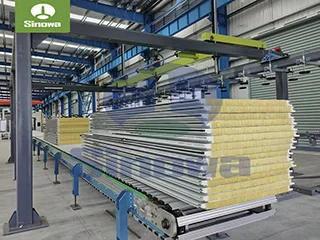
The cut finished products need to enter the cooling system for cooling. The cooling system usually uses natural cooling or forced air cooling to reduce the temperature of the finished products to room temperature, avoiding the deformation of the products due to high temperature. After cooling, the finished products are conveyed to the stacking system. The stacking system adopts automatic stacking technology, which can stack the finished products neatly according to the set quantity and specifications. The stacking process is controlled by a robot or a hydraulic system, which has high stacking efficiency and good stability, and can avoid damage to the finished products during stacking.

Finally, the stacked finished products enter the packaging system. The packaging system uses plastic film or waterproof cloth to wrap the finished products, which can protect the finished products from moisture, dust and damage during transportation and storage. The packaging process can also be completed automatically, which further improves the automation level of the production line.

1.8 Central Control System

The central control system is the "brain" of the entire production line, integrating digital servo technology, frequency conversion vector technology and hydraulic control technology. The system adopts a man-machine interaction interface, through which operators can set production parameters (such as product specifications, production speed, gluing amount, etc.), monitor the operation status of each system in real time, and alarm and handle faults in time. The central control system can realize the centralized control and management of the entire production line, ensuring the coordination and stability of each link. At the same time, the system can also record production data (such as production output, product quality, equipment operation time, etc.), which provides a basis for production management and quality traceability.

2. Core Technologies of Rock Wool Sandwich Panel Production Line for Thermal Insulation Integration

The rock wool sandwich panel production line for thermal insulation integration relies on a number of core technologies to ensure the high quality and high efficiency of the products. These core technologies involve material processing, composite molding, automatic control and other fields, and are the key to the competitiveness of the production line.

2.1 Vertical Fiber Anchoring Technology

Vertical fiber anchoring technology is a key technology to improve the mechanical performance and long-term stability of rock wool sandwich panels. Traditional rock wool fibers are randomly intertwined, and after long-term vertical installation, the rock wool core material is prone to sag due to its own weight, resulting in gaps between the core material and the metal plates, forming thermal bridges and reducing thermal insulation performance. The vertical fiber anchoring technology reconstructs the internal force of the fibers through a special process, making most of the fibers arranged vertically and anchored. This vertical fiber structure is equivalent to building numerous micro "load-bearing columns" in the vertical direction of the rock wool core material, which greatly improves the tensile strength and anti-sagging ability of the core material.

At the same time, this technology also constructs a stable three-dimensional fiber network structure in the three-dimensional space, which can effectively disperse and offset the deformation risks caused by gravity, temperature stress and other factors during long-term use. By ensuring the constant thickness of the rock wool core material, the thermal insulation performance of the product is maintained for a long time, avoiding the additional energy waste and maintenance costs caused by the attenuation of thermal insulation performance.

2.2 Precision Roll Forming Technology

Precision roll forming technology is the basis for ensuring the geometric accuracy and surface quality of metal panels. The technology adopts progressive forming method, and through the precise design and processing of forming rolls, the metal plate is gradually bent into the required shape. The forming process is controlled by digital servo technology, which can realize the real-time adjustment and precise control of forming speed and pressure. Compared with traditional stamping forming technology, precision roll forming technology has the advantages of high production efficiency, good product consistency, and low mold cost.

In addition, the precision roll forming technology can also realize the forming of complex cross-sectional shapes, meeting the different functional requirements of rock wool sandwich panels in different application scenarios. For example, the roof panels need to have a wave-shaped cross-section to enhance water resistance, while the wall panels need to have a flat cross-section to facilitate installation and decoration. The precision roll forming technology can meet these different forming requirements by replacing different forming rolls.

2.3 High-Precision Gluing and Composite Technology

High-precision gluing and composite technology is the key to ensuring the bonding strength and thermal insulation performance of rock wool sandwich panels. The technology uses high-pressure spraying equipment to uniformly apply the adhesive to the bonding surface, and the amount of glue is controlled by a flow meter with high precision. At the same time, the preheating of the adhesive and the metal plate is accurately controlled to ensure the optimal bonding condition.

In the composite pressing process, the double-belt conveyor applies uniform pressure to the composite board blank, and the heating device provides a stable heating environment, which accelerates the curing of the adhesive. The coordination of pressure, temperature and conveying speed is controlled by the central control system, ensuring that the adhesive is fully cured and the bonding strength between the metal plate and the rock wool core material meets the design requirements. In addition, the side sealing technology is also an important part of the composite technology. By using polyurethane foam to seal the sides of the rock wool sandwich panel, the thermal insulation performance and mechanical strength of the product are further improved, and the intrusion of water and moisture is prevented.

2.4 Full-Automatic Control Technology

Full-automatic control technology is the guarantee for improving the production efficiency and reducing the labor cost of the production line. The technology integrates multiple control technologies such as PLC, frequency conversion control and servo control, realizing the automatic operation of the entire production line from raw material input to finished product packaging. Operators only need to set production parameters through the man-machine interaction interface and monitor the operation status of the equipment, and the production line can complete the production process automatically.

The full-automatic control technology can also realize the real-time monitoring and fault diagnosis of the production line. When an abnormality occurs in the equipment, the system can immediately alarm and display the fault location and cause, which is convenient for operators to handle the fault in time and reduce the downtime. In addition, the system can record and statistics the production data, providing data support for production management and quality control.

3. Performance Advantages of Rock Wool Sandwich Panels Produced by Thermal Insulation Integration Production Line

The rock wool sandwich panels produced by the thermal insulation integration production line inherit the advantages of rock wool materials and metal materials, and have excellent comprehensive performance, which can meet the high requirements of modern energy-saving buildings for enclosure materials.

3.1 Excellent Thermal Insulation Performance

The rock wool core material has a low thermal conductivity, usually around 0.035W/(m·K) to 0.043W/(m·K), which has excellent thermal insulation performance. The vertical fiber structure of the rock wool core material and the tight bonding between the core material and the metal plates further enhance the thermal insulation effect of the product. The rock wool sandwich panel can effectively block the transfer of heat, reduce the energy consumption of buildings for heating and cooling, and improve the energy efficiency of buildings. According to relevant tests, the use of rock wool sandwich panels for enclosure can reduce the energy consumption of buildings by 70% compared with traditional building materials.

3.2 Superior Fire Resistance

Rock wool is an inorganic non-combustible material, with a melting point higher than 1000℃. The rock wool sandwich panels produced by the production line have the highest fire resistance rating (A1 class). In the event of a fire, the rock wool core material will not burn, melt or release toxic and harmful gases, which can effectively block the spread of fire and protect the safety of people's lives and property. The metal plates on both sides also have a certain fire resistance, which can further enhance the fire resistance of the product. This superior fire resistance makes rock wool sandwich panels widely used in buildings with high fire safety requirements, such as hospitals, schools, shopping malls and industrial workshops.

3.3 Good Sound Absorption and Noise Reduction Performance

The rock wool core material has a porous structure formed by numerous long and thin fibers, which has excellent sound absorption performance. The porous structure can absorb the sound waves entering the material, convert the sound energy into heat energy and dissipate it, thereby achieving the effect of noise reduction. The rock wool sandwich panel can effectively block the transmission of external noise, reduce the interference of noise on the internal environment of the building, and improve the comfort of the building. The sound insulation capacity of the product can reach more than 30dB, which can meet the noise reduction requirements of most buildings.

3.4 High Mechanical Strength and Durability

The metal plates on both sides of the rock wool sandwich panel provide high mechanical strength for the product, making the panel have good impact resistance, compressive strength and shear strength. The vertical fiber structure of the rock wool core material further improves the mechanical performance of the product, avoiding the deformation and damage of the panel during transportation and installation. In addition, the rock wool material has good chemical stability, is neutral or weakly alkaline (pH value 7-8), and has no corrosive effect on metal materials such as carbon steel, stainless steel and aluminum. The adhesive used in the product has good weather resistance and corrosion resistance, ensuring that the product can maintain stable performance in harsh environments such as high temperature, humidity and ultraviolet radiation. The service life of rock wool sandwich panels can reach more than 65 years.

3.5 Light Weight and Easy Installation

Compared with traditional building materials such as bricks and concrete, rock wool sandwich panels are lightweight, with a unit weight of only 10-20kg/m². The lightweight feature makes the transportation and installation of the product more convenient and efficient, reducing the labor intensity of construction workers and shortening the construction period. The rock wool sandwich panel is usually connected by snap-in or bolt connection, which is simple and fast to install, and can realize the rapid construction of the enclosure structure. This advantage is particularly obvious in prefabricated buildings, which can greatly improve the construction efficiency of prefabricated buildings.

3.6 Environmental Protection and Sustainability

Rock wool is made of natural volcanic rock as the main raw material, which is a renewable and environmentally friendly material. The production process of rock wool does not produce toxic and harmful substances, and the product itself is non-toxic, odorless and free of volatile organic compounds (VOCs), which meets the requirements of green buildings. In addition, the rock wool sandwich panel can be recycled and reused after the end of its service life, reducing the generation of construction waste and protecting the environment. The energy-saving effect of the product during use also contributes to the reduction of carbon emissions, in line with the global trend of low-carbon development.

4. Application Scenarios of Rock Wool Sandwich Panels for Thermal Insulation Integration

Due to their excellent comprehensive performance, rock wool sandwich panels produced by the thermal insulation integration production line are widely used in various fields of the construction industry, including industrial buildings, commercial buildings, residential buildings, public buildings and prefabricated buildings.

4.1 Industrial Buildings

Industrial buildings such as factories, warehouses and logistics centers have high requirements for the thermal insulation, fire resistance and durability of enclosure materials. Rock wool sandwich panels are particularly suitable for these scenarios. The excellent thermal insulation performance of the product can reduce the energy consumption of industrial buildings for heating and cooling, and reduce the operating cost of enterprises. The superior fire resistance can ensure the safety of industrial production and protect the equipment and products in the workshop. In addition, the lightweight and easy installation features of the product can shorten the construction period of industrial buildings and speed up the commissioning and production of enterprises.

4.2 Commercial Buildings

Commercial buildings such as shopping malls, supermarkets, hotels and office buildings have high requirements for the comfort, safety and appearance of the building. Rock wool sandwich panels can meet these requirements well. The sound absorption and noise reduction performance of the product can create a quiet and comfortable environment for commercial buildings. The fire resistance and thermal insulation performance can ensure the safety and energy efficiency of the building. The metal plates on the surface of the product can be processed into various colors and patterns, which can meet the decorative requirements of commercial buildings and improve the appearance quality of the building.

4.3 Residential Buildings

With the improvement of people's living standards, the requirements for the energy efficiency and comfort of residential buildings are getting higher and higher. Rock wool sandwich panels are gradually being applied to the enclosure structure of residential buildings. The product can effectively improve the thermal insulation performance of residential buildings, reduce the energy consumption of heating and air conditioning, and create a comfortable living environment for residents. The fire resistance and sound insulation performance of the product also can improve the safety and living comfort of residential buildings. In addition, the lightweight feature of the product can reduce the load of the building structure, reducing the construction cost of residential buildings.

4.4 Public Buildings

Public buildings such as hospitals, schools, gymnasiums and exhibition halls have high requirements for fire safety and comfort. Rock wool sandwich panels are an ideal enclosure material for these buildings. The superior fire resistance of the product can ensure the safety of the public in the event of a fire. The sound absorption and noise reduction performance can create a quiet environment for hospitals and schools, and the thermal insulation performance can ensure the comfort of the internal environment of gymnasiums and exhibition halls. The durability and easy maintenance features of the product also can reduce the maintenance cost of public buildings.

4.5 Prefabricated Buildings

Prefabricated buildings are an important development direction of the construction industry, which have the advantages of high construction efficiency, good quality control and low environmental impact. Rock wool sandwich panels are perfectly matched with prefabricated buildings, as the product can be prefabricated in the factory according to the design requirements, and then transported to the construction site for assembly. The lightweight and easy installation features of the product can greatly improve the assembly efficiency of prefabricated buildings, shorten the construction period, and realize the rapid construction of buildings. The excellent comprehensive performance of the product also can ensure the quality and performance of prefabricated buildings.

5. Development Trends of Rock Wool Sandwich Panel Production Line for Thermal Insulation Integration

With the continuous development of the construction industry and the continuous improvement of energy-saving and environmental protection requirements, the rock wool sandwich panel production line for thermal insulation integration is also facing new development opportunities and challenges. In the future, the production line will develop in the direction of higher automation, intelligence, customization and greenization.

5.1 Higher Automation Level

At present, the rock wool sandwich panel production line has realized a high degree of automation, but there is still room for improvement in some links. In the future, with the development of robotics and automatic control technology, the production line will realize full-process automation from raw material inspection to finished product inspection. For example, the use of vision inspection technology to automatically detect the surface quality and dimensional accuracy of products, the use of robots to complete the packaging and stacking of products, and the realization of unmanned operation of the entire production line. This will further improve production efficiency, reduce labor costs, and ensure product quality consistency.

5.2 Intelligence Upgrade

Intelligent upgrade is an important trend in the development of the production line. In the future, the production line will be equipped with more intelligent sensors and monitoring equipment to realize real-time monitoring of the production process and product quality. Through the collection and analysis of big data, the system can predict potential faults of the equipment, realize predictive maintenance of the equipment, and reduce the downtime of the production line. At the same time, the intelligent system can also automatically adjust production parameters according to the changes of raw materials and environmental conditions, ensuring the stability of product quality. The combination of industrial Internet and production line will also realize the remote monitoring and management of the production line, improving the management efficiency of enterprises.

5.3 Customized Production

With the diversification of building design and the individualization of user needs, the demand for customized rock wool sandwich panels is increasing. In the future, the production line will have stronger flexibility and adaptability, which can realize the rapid switching of products of different specifications, types and performances. Through the modular design of the production line, enterprises can quickly adjust the production process according to user needs, produce customized products, and improve the market competitiveness of enterprises. For example, the production line can produce rock wool sandwich panels with different thermal insulation thicknesses, surface colors and patterns according to the specific requirements of different projects.

5.4 Green and Low-Carbon Development

Under the background of global carbon neutrality, green and low-carbon development has become an inevitable requirement for the development of the production line. In the future, the production line will adopt more energy-saving and environmental protection technologies and equipment to reduce energy consumption and carbon emissions during the production process. For example, the use of renewable energy (solar energy, wind energy) to supply power for the production line, the adoption of energy-saving motors and frequency conversion control technology to reduce energy consumption of equipment, and the recycling of waste materials generated during the production process. At the same time, the research and development of more environmentally friendly adhesives and rock wool materials will further improve the environmental performance of products, meeting the higher requirements of green buildings.

6. Conclusion

The rock wool sandwich panel production line for thermal insulation integration is an important part of the modern construction industry, which provides high-quality, high-performance thermal insulation materials for the construction industry. The production line integrates multiple advanced technologies, with a reasonable structure and complete functions, which can realize the automatic production of rock wool sandwich panels. The products produced by the production line have excellent performance advantages such as thermal insulation, fire resistance, sound absorption and noise reduction, high mechanical strength and durability, and are widely used in various types of buildings.

With the continuous progress of technology and the continuous improvement of market demand, the rock wool sandwich panel production line will develop in the direction of higher automation, intelligence, customization and greenization. In the future, the production line will not only improve production efficiency and product quality, but also pay more attention to energy conservation and environmental protection, making greater contributions to the sustainable development of the construction industry. The popularization and application of rock wool sandwich panel production lines for thermal insulation integration will promote the transformation and upgrading of the construction industry, help achieve the goal of energy conservation and emission reduction, and create a more comfortable, safe and environmentally friendly living and working environment for people.

Any Questins About Continuous Sandwich Panel Production Lines or Other Products

Email us with inquiries or use our contact infomations

Get In Touch