Automation Program Upgrade Steps For Rock Wool Sandwich Panel Production Line
Sep 21, 2026
The systematic automation upgrade steps for rock wool sandwich panel production lines covers pre-upgrade assessment, program design, equipment debugging, system integration, trial operation, optimization and final acceptance, aiming to boost production efficiency and operational stability of the production line.
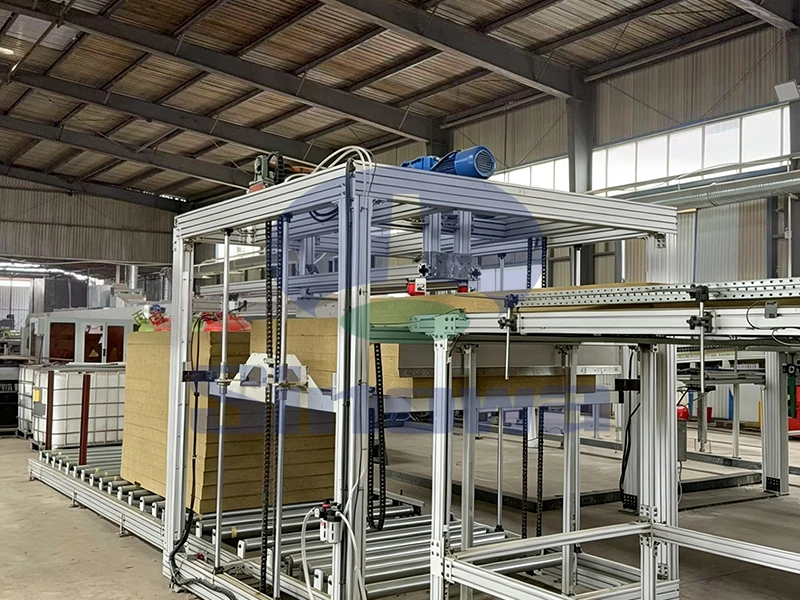
The first core step of upgrading the automation program for rock wool sandwich panel production lines is comprehensive pre-upgrade investigation and demand assessment, which lays a solid foundation for all subsequent transformation work. Production staff and technical engineers need to conduct in-depth on-site inspection of every link of the existing production line, including raw material feeding, rock wool filling, plate pressing, gluing, cutting and finished product stacking. It is essential to record the current operating status of automated components, the frequency of manual intervention, existing program loopholes and equipment matching problems in real time. Meanwhile, it is necessary to sort out the practical production pain points, such as unstable parameter adjustment, low production consistency and low intelligent operation level, which restrict production capacity and product quality. In addition, the technical team needs to define clear upgrade objectives based on actual production demands, including improving automatic operation rate, reducing human error, optimizing production parameter matching logic and enhancing the line’s intelligent adjustment capability. This full-scale assessment can avoid blind upgrade construction, ensure that the subsequent program upgrade is highly targeted, and make the upgraded automation system more adaptable to the actual production rhythm of rock wool sandwich panels.
After completing the pre-upgrade assessment and demand confirmation, the second step is targeted automation program scheme design and technical demonstration. Combined with the collected on-site data and sorted upgrade demands, the technical team needs to redesign and optimize the core control program of the production line, covering logic control, parameter adjustment, signal transmission and linkage control of each production node. For the unique production characteristics of rock wool sandwich panels, such as uniform rock wool filling density and accurate gluing thickness control, the program needs to add intelligent real-time sensing and dynamic adjustment functions to replace the fixed parameter mode of the original system. During the design process, it is necessary to conduct multi-round technical demonstrations to verify the rationality of program logic, the compatibility of new control modules with original production equipment, and the stability of signal linkage between front and rear production processes. The design scheme also needs to reserve a certain functional expansion space to facilitate subsequent minor function optimization and intelligent module iteration. After the preliminary scheme is formed, internal technical review is required to modify and perfect unreasonable links, ensuring that the designed automation program can fully cover all production links and solve the existing production bottlenecks of the original line.
The third step of the upgrade work is offline program writing, module debugging and equipment adaptation testing. On the basis of the finalized design scheme, professional programmers complete the writing and compilation of the new automation control program, standardizing each control logic and instruction code to ensure the simplicity and maintainability of the program. After the program writing is completed, offline simulation debugging is carried out through professional simulation equipment to simulate the full production process of rock wool sandwich panels, detect and repair program bugs such as delayed signal response and wrong logic linkage in advance. After the offline debugging is qualified, the technical team needs to carry out single-equipment adaptation testing on the production line, installing and matching the new control modules with on-site mechanical equipment, and testing the independent operation effect of each single process link including feeding, pressing and cutting. In this process, engineers need to fine-tune the program parameters according to the actual operation feedback of the equipment to eliminate the mismatch between program instructions and mechanical operation. Repeated single-machine debugging ensures that each automated component can operate stably and accurately under the control of the new program, creating basic conditions for the subsequent overall system linkage operation.
System integration and overall linkage debugging serves as the fourth key step in the automation program upgrade, which determines the overall coordination performance of the upgraded production line. After the single equipment and single program module are debugged normally, the technical team will integrate all independent control modules of each production link into a unified overall automation control system, realizing seamless signal connection and synchronous linkage operation between front and rear processes. The core of this step is to optimize the program linkage logic between adjacent processes, solve the problems of production pause, parameter deviation and process dislocation caused by asynchronous signal transmission, and realize the continuous and automatic operation of the entire production line from raw material input to finished product output. During the overall debugging stage, the team needs to simulate various production working conditions, including conventional production and slightly fluctuating raw material states, to test the adaptive adjustment ability and operation stability of the integrated system. All abnormal problems found during the linkage debugging process are recorded in detail and solved one by one through program modification and parameter calibration to ensure that the entire production line can maintain coordinated and efficient automatic operation without manual intervention in the whole process.
The fifth step is on-site trial production operation and dynamic program optimization, which is the key link to verify the practical effect of the upgraded automation program. After the completion of system integration debugging, the production line will enter a staged trial operation stage, adopting low-load and medium-load progressive production modes to carry out trial production of rock wool sandwich panels. Production technicians and program engineers track the whole trial production process in real time, focusing on monitoring the operation stability of the automation system, the accuracy of production parameter control, the consistency of finished product quality and the failure rate of program operation. Different from simulated debugging, on-site trial production can expose subtle program defects and adaptive problems under actual production conditions. For the problems such as occasional parameter drift and slow response of individual linkage actions in the trial operation, the technical team will carry out targeted program optimization and parameter fine-tuning. Meanwhile, according to the production efficiency data and product quality feedback of trial production, the program operation logic is further optimized to make the automation system more in line with the actual production needs, and gradually improve the operational efficiency and stability of the production line.
The final step of the automation program upgrade is standardized acceptance, system sorting and daily operation training. After the trial production runs stably for a scheduled period and all production indicators meet the upgrade expectations, a comprehensive acceptance inspection of the entire automation upgrade project is carried out. The acceptance content includes program operation stability, full-process automatic control capability, production efficiency improvement effect, product quality consistency and system safety performance, and all acceptance data are sorted and filed completely. After passing the acceptance, the technical team sorts out the final version of the automation program, completes the backup of program data and technical documents, and forms standardized operation and maintenance guidelines. In addition, professional operation and maintenance training is provided for on-site production and management personnel, covering daily operation specifications of the new automation system, common fault judgment and simple troubleshooting methods. This step ensures that the production team can proficiently use and independently maintain the upgraded automation system, realize the long-term stable and efficient operation of the rock wool sandwich panel production line, and lay a solid technical foundation for subsequent continuous production optimization and intelligent upgrading.
Main Products
-

Continuous PU Sandwich Panel Production Line
This continuous PU sandwich panel production line is an integrated automatic equipment. It covers uncoiling, forming, foaming, curing and cutting processes. With automatic raw material proportioning and precise temperature & pressure control, PIR sandwich panel production line continuously composites panels with double skins. Polyurethane sandwich panel production line stably produces steel and aluminum sandwich panels. Featuring high automation, the line makes fireproof and thermal-insulation panels for building enclosure and cold storage. -
Rock Wool Sandwich Panel Production Line
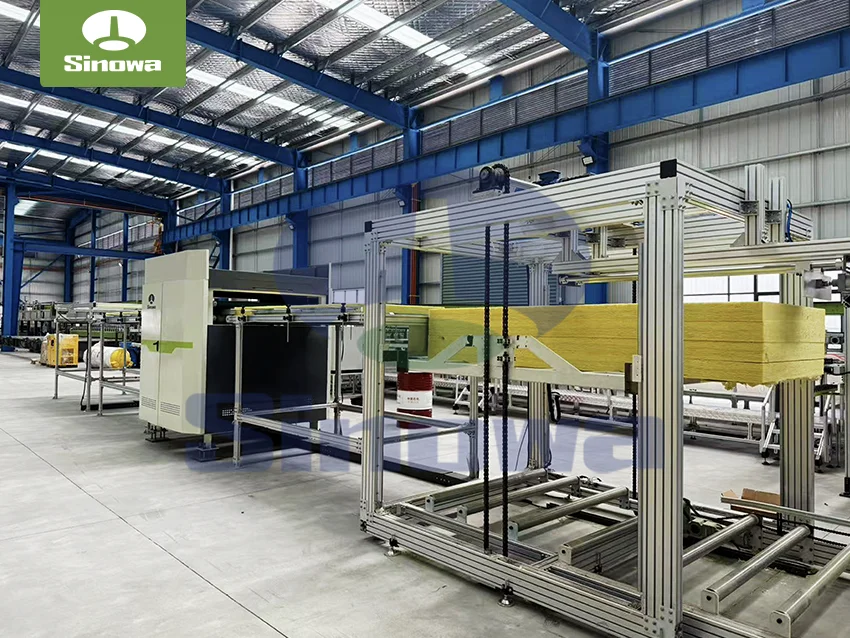
Continuous rockwool sandwich panel production line is an automatic integrated production equipment, consisting of uncoiling, forming, gluing and compounding, heating curing, fixed-length cutting, automatic stacking and other modules. The mineral wool sandwich panel production line continuously conveys color steel plates and rock wool core materials to automatically complete lamination and curing, which can produce fireproof and thermal insulation sandwich panels. Featuring high automation degree and stable operation, this production line is suitable for mass production of panels used for building walls, roofs and other scenarios. -
Phenolic Insulation Board Production Line
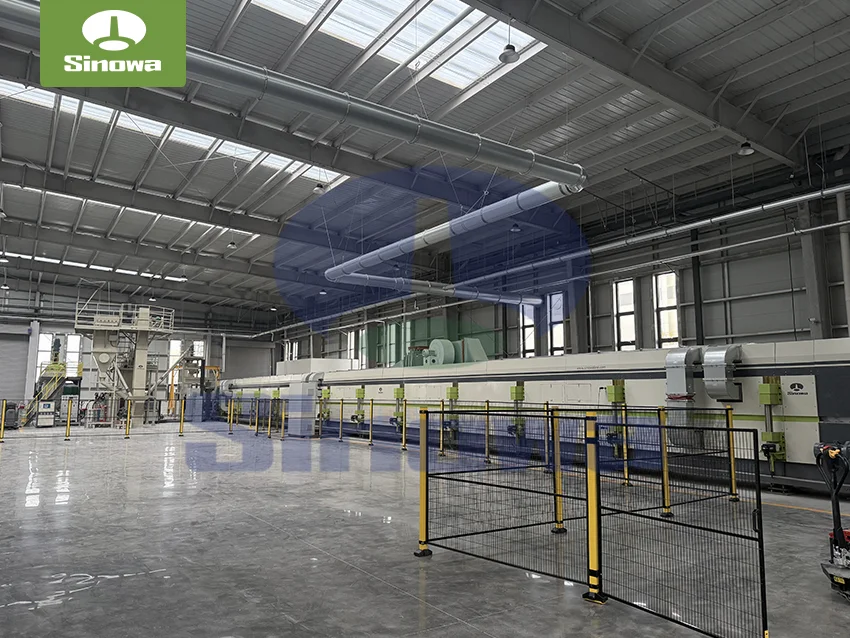
This integrated automatic production line continuously manufactures PU and phenolic insulation boards. The insulation board production line covers raw material proportioning, high-pressure foaming, laminating, curing and fixed-length cutting. Featuring high automation and stable molding, the insulation panel production line supports various surface materials. PU boards offer excellent thermal insulation, while phenolic boards have superior fire resistance. These products are widely used in construction, cold chain, ventilation ducts and other thermal insulation fields.
Other FAQs
- Daily Maintenance Methods For Rock Wool Sandwich Panel Production Line
- Energy Saving Measures For Rock Wool Sandwich Panel Production Line Operation
- High Temperature Resistance Performance Of Rockwool Sandwich Panel Production Equipment
- Panel Bonding Strength Improvement Methods In Rockwool Board Production Line
- Automatic Operation Debugging Steps For Rock Wool Sandwich Panel Production Line