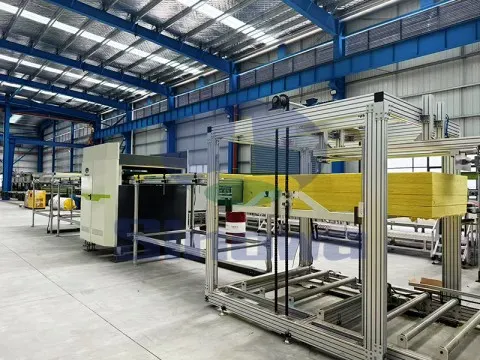
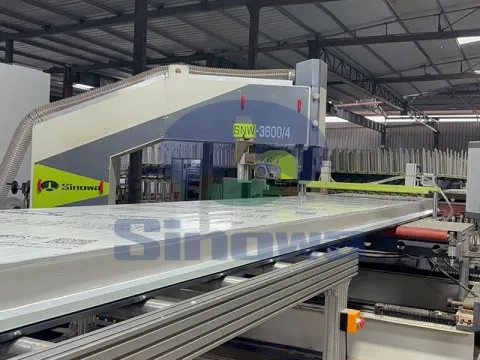
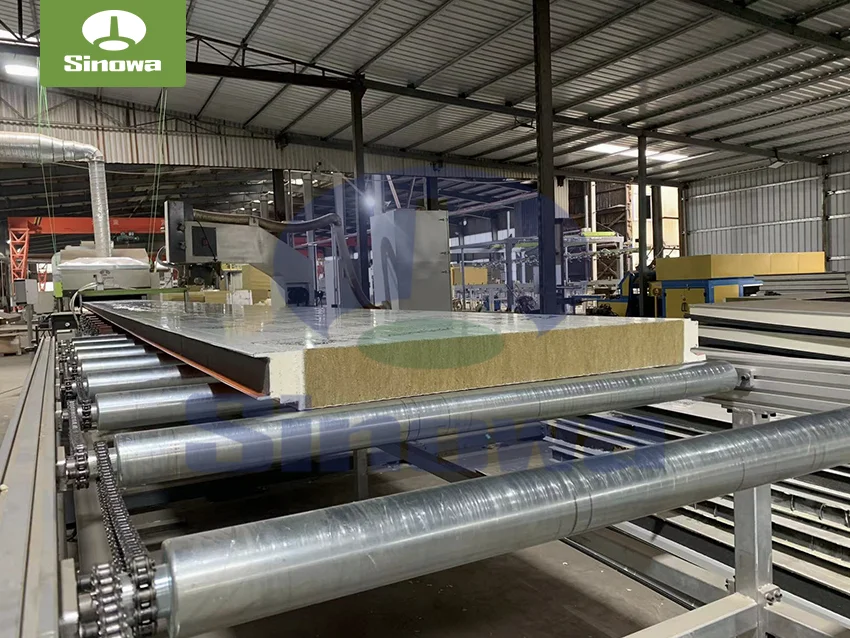
 sandwich panel line
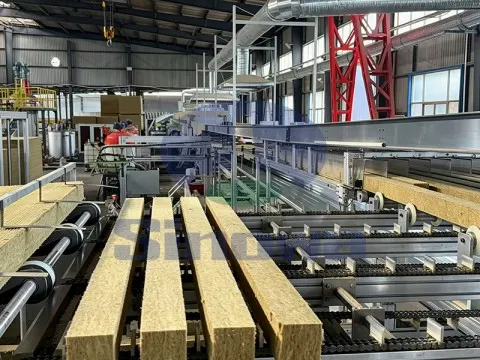
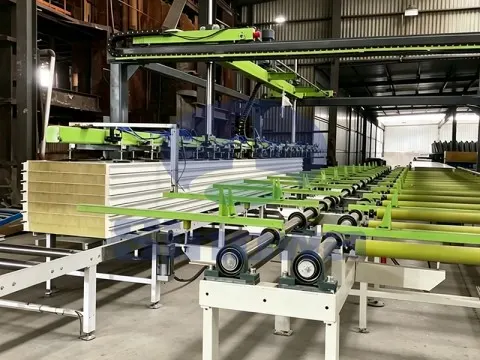
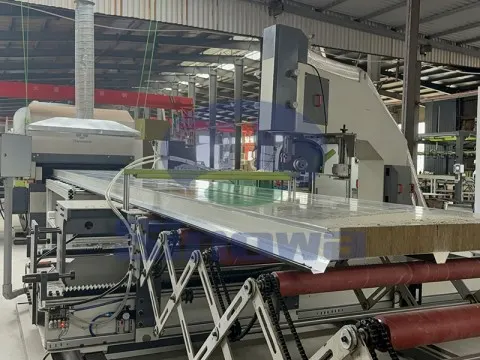
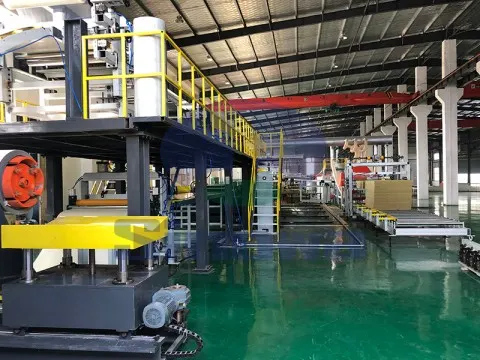
The overall operational logic of a rock wool sandwich panel production line covers multiple continuous processing links, including raw material feeding, rock wool fiber laying, surface plate pressing, glue bonding, fixed-size cutting, and finished product stacking. Traditional production lines often have drawbacks such as complex internal structures, scattered transmission components, and poor environmental adaptability. These defects lead to frequent wear of vulnerable parts, easy accumulation of production dust inside equipment, and cumbersome daily inspection procedures. In contrast, low-maintenance production lines adopt streamlined mechanical layouts and optimized component matching schemes during the design stage, fully considering the harsh production environment characteristics of rock wool processing. A large amount of fine fiber dust will be generated during rock wool material transportation and molding, which is easy to adhere to the surface of transmission bearings, gears, and electrical control components. Long-term dust accumulation will cause slow heat dissipation of equipment, increased operating friction, and even short-circuit failures of electrical circuits. Low-maintenance production lines are equipped with sealed protective structures for key moving parts, which can effectively isolate rock wool dust and corrosive impurities in the production environment, reducing the frequency of component cleaning and replacement.
The structural optimization of the transmission system is one of the core designs to reduce the maintenance cost of the continuous sandwich panel line. Most conventional rock wool sandwich panel production line uses scattered chain transmission structures, which require a large number of connecting accessories. These accessories are prone to loosening, deformation, and rust after long-term high-load operation, requiring regular manual tightening, rust removal, and lubrication maintenance. The improved low-maintenance production line adopts integrated synchronous transmission components. The number of connecting parts in the transmission system is greatly reduced, and the overall structural compactness is significantly improved. The integrated transmission design avoids transmission jitter and part abrasion caused by excessive gaps between scattered parts. Meanwhile, the matching precision between driving and driven parts is optimized to lower mechanical friction loss during equipment operation. This optimization not only cuts down the consumption of lubricating oil and anti-rust materials in daily maintenance but also extends the service life of the transmission system by more than twice compared with traditional structures. Manufacturers do not need to arrange special personnel for daily inspection of loose parts, which greatly saves labor costs invested in equipment maintenance.
In terms of raw material processing modules, low-maintenance automatic sandwich panel production line carry out targeted upgrades for rock wool feeding and cotton laying links. Rock wool raw materials have irregular fiber structures and certain hardness, which easily cause winding and extrusion wear on the feeding roller set of traditional equipment. Some production lines are also troubled by uneven feeding, resulting in frequent blockage failures. Each blockage requires manual shutdown for cleaning and maintenance, which seriously affects production continuity. The optimized feeding mechanism of low-maintenance equipment is equipped with anti-winding smooth roller surfaces and adjustable spacing structures. The surface of the roller set is treated with special wear-resistant and anti-sticking processes to prevent rock wool fibers from adhering and winding on the roller body. The internal material guiding channel adopts an inclined streamlined design, which reduces material accumulation and extrusion resistance during transportation. This structural improvement minimizes the probability of feeding blockages. In actual production operation, the frequency of shutdown cleaning caused by material jamming is reduced to a very low level, avoiding labor waste and energy consumption loss brought by frequent startup and shutdown. Moreover, the wear-resistant treatment of the feeding module components weakens the corrosion and abrasion of rock wool raw materials on metal parts, extending the replacement cycle of vulnerable roller parts.
The pressing and composite molding area is the core working section of the continuous sandwich panel production line, and the operating stability of this section directly determines the molding quality of rock wool sandwich panels. Traditional composite molding equipment mostly uses open pressing structures. Adhesive overflow generated during the bonding process of metal surface plates and rock wool core materials is easy to drip and adhere to the surface of pressing rollers and hydraulic parts. After the adhesive is air-dried and solidified, it forms hard attachments that are difficult to clean. Long-term accumulation of attachments will lead to uneven pressing surfaces, affecting the flatness of finished panels, and even causing local stress concentration on the pressing structure to accelerate component fatigue damage. Low-maintenance production lines adopt fully enclosed composite molding cabins with built-in adhesive recovery and diversion structures. The excess adhesive generated in the pressing process can flow into the recovery container along the preset diversion pipeline without adhering to key mechanical components. The inner wall of the molding cabin is smooth and easy to wipe, and daily surface cleaning can be completed with simple manual wiping without the need for professional cleaning tools and chemical detergents. In addition, the hydraulic power system of the pressing module is optimized with constant-pressure stable output technology. The hydraulic pressure fluctuation range is controlled within a narrow interval, reducing the impact load on hydraulic cylinders and connecting pipelines during frequent pressure adjustment. This effectively avoids leakage failures caused by pipeline aging and seal wear, lowering the maintenance difficulty and replacement frequency of hydraulic accessories.
The electrical control and intelligent monitoring system further endow the rockwool sandwich panel production line with low-maintenance operational characteristics. Early rock wool sandwich panel production lines adopt discrete electrical control circuits with scattered circuit layouts. Dust and humid air in the production workshop easily invade the circuit connection points, causing poor contact and line aging. Once a circuit failure occurs, maintenance personnel need to spend a lot of time checking scattered lines to locate the fault point. Modern low-maintenance production lines integrate electrical components into centralized sealed control cabinets. The cabinets are equipped with moisture-proof, dust-proof, and heat dissipation structures to isolate external environmental interference. The internal circuit layout is standardized and classified, with clear marking of each circuit control area. When minor electrical abnormalities occur, the built-in intelligent monitoring system can automatically locate the fault range and feed back early warning signals through simple data prompts. This intelligent monitoring mode changes the passive maintenance mode of traditional equipment, realizing early prediction and timely intervention of potential faults. Minor hidden dangers can be eliminated during daily routine inspections without waiting for equipment shutdown and failure. Meanwhile, the control system simplifies the operation logic, reduces redundant electronic components, and lowers the probability of electronic component aging and damage.
In terms of daily maintenance and post-operation management, low-maintenance rock wool sandwich panel line has obvious advantages in human resource allocation and consumable consumption. The overall structure of the equipment focuses on modular assembly design. Each functional module is relatively independent, with standardized connecting interfaces. When individual components fail and need to be replaced, maintenance personnel can complete disassembly and replacement without disassembling a large number of peripheral structures. The modular design reduces the professional threshold for maintenance work. ordinary operators can complete daily simple maintenance and part replacement after basic training, without relying on senior professional maintenance engineers for long-term resident maintenance. In terms of maintenance consumables, due to the optimization of wear-resistant, anti-corrosion, and dust-proof structures, the consumption of lubricants, sealing gaskets, and cleaning supplies is significantly reduced. The replacement cycle of vulnerable parts such as bearings, rollers, and transmission gears is extended, and the annual procurement frequency of spare parts is greatly decreased. For medium and small-sized building material manufacturing enterprises with limited operating budgets, this consumption reduction directly optimizes the enterprise's cost structure and improves capital utilization efficiency.
The environmental adaptability optimization of low-maintenance rock wool sandwich panel machine also indirectly reduces long-term maintenance costs. Most rock wool sandwich panel production workshops have characteristics of high dust concentration, slightly high humidity, and complex temperature changes. ordinary production equipment is prone to metal rust, circuit dampness, and component aging in such working environments. Low-maintenance equipment undergoes integral anti-rust and anti-corrosion treatment on metal structures. The exposed metal surfaces are coated with high-performance protective coatings, which can resist the erosion of humid air and fine rock wool dust. The connection gaps of all equipment structures are filled with sealed anti-dust strips to prevent dust from accumulating in the internal dead corners of the equipment. Even after long-term continuous operation in harsh workshop environments, the equipment can maintain a clean internal operating state. This environmental adaptation optimization avoids component damage caused by environmental erosion, reduces the maintenance frequency of rust removal, anti-corrosion, and dust cleaning, and ensures that the equipment can maintain stable operating performance throughout the service cycle.
From the perspective of long-term economic benefits, the low-maintenance design of the rock wool sandwich panel production line brings multi-dimensional cost optimization for manufacturers. In the initial equipment investment stage, although the manufacturing process and material selection of low-maintenance equipment are more refined, bringing a certain improvement in manufacturing cost, the subsequent maintenance cost saved throughout the equipment service cycle is far higher than the initial cost difference. Traditional production lines usually require regular shutdown maintenance every few months, including dust cleaning, lubricating oil replacement, vulnerable part renewal, and circuit inspection. Each shutdown maintenance will interrupt the production process, resulting in production output loss and additional labor expenditure. Low-maintenance production lines can extend the interval of comprehensive shutdown maintenance. Most routine maintenance work can be completed without stopping production, ensuring the continuity of production arrangements. The stable operating state also reduces the defective product rate caused by equipment jitter and parameter fluctuation, further improving the utilization rate of raw materials and increasing the effective output of qualified products.
In actual industrial production application scenarios, low-maintenance rock wool sandwich panel line is suitable for continuous batch production of different specifications of rock wool panels. Whether it is conventional wall insulation panels or special-shaped composite panels used in special buildings, the equipment can maintain stable processing accuracy without frequent parameter debugging and mechanical calibration. The flexible adjustment function of the production line is matched with the low-wear mechanical structure. When switching production specifications, the friction loss of the adjusting mechanism is small, and the service life of the adjusting parts is effectively prolonged. For manufacturing enterprises with diverse product orders, this performance characteristic avoids mechanical wear and aging caused by frequent parameter adjustment, reducing the maintenance investment generated by product switching.
In conclusion, the low-maintenance rock wool sandwich panel production line realizes systematic optimization from structural design, component selection, intelligent control to environmental adaptation. Through the integrated transmission structure, dust-proof and anti-wear protection measures, modular assembly mode, and intelligent fault monitoring system, it effectively solves the pain points of high maintenance frequency, large consumable consumption, complex operation steps, and high labor cost of traditional production equipment. In the fiercely competitive building material market, the low-maintenance operational advantage not only helps manufacturing enterprises reduce comprehensive operating costs and improve profit margins but also ensures the stability and consistency of production capacity. With the continuous upgrading of the building material manufacturing industry towards intelligence and energy conservation, low-maintenance production equipment will become the mainstream development trend of the rock wool sandwich panel processing industry. It provides reliable equipment support for the high-quality and sustainable development of the building insulation material industry, and also creates stable and long-term economic benefits for production enterprises in the ever-changing market environment.
Sinowa is a professional manufacturer of sandwich panel machine in china, we provide diversified and high-performance sandwich panel production lines, including fully automatic continuous PU sandwich panel line and customized special lines to meet mass production and personalized order demands. These sandwich panel lines support processing multiple foam core materials, such as PU, PIR, mineral wool, rock wool and glass wool, covering different insulation and fireproof standards.
Featuring stable operation, high efficiency, energy saving and easy maintenance, our PU sandwich panel line deliver sandwich panels with excellent thermal insulation, fire resistance, sound insulation and lightweight durability. The finished panels are widely applied in industrial workshops, warehouse roofing and wall cladding, cold storage insulation, serving global construction and industrial insulation markets.
https://www.cnsinowa.com/sandwich-panel-machines/rock-wool-sandwich-panel-production-line-with-low-maintenance-cost.html