sandwich panel line
Fiberization treatment is the core process that endows rock wool boards with thermal insulation and sound absorption functions. The high-purity molten rock liquid flows out steadily from the furnace outlet and enters the high-speed centrifugal fiberization system. Driven by high-speed rotating centrifugal equipment, the viscous molten liquid is stretched and split into countless fine and flexible inorganic fibers with uniform diameter. During the fiberization process, professional atomizing devices spray quantitative environmentally friendly binders and functional additives onto the newly formed fibers. The low-emission phenolic resin binders can effectively bond loose fibers into an integral structure without damaging the inorganic flame-retardant characteristics of rock wool. Meanwhile, water-repellent additives and anti-aging modifiers are evenly attached to the fiber surface, enhancing the finished product's moisture resistance, weather resistance, and structural stability. In addition, the production line is equipped with professional shot removal equipment, which screens and removes unfiberized solid particles and residual impurities through airflow classification and mechanical screening, further optimizing the fiber structure and ensuring the fineness and uniformity of the fiber raw materials for subsequent forming.
Fiber settling and blanket forming processes shape the dispersed rock wool fibers into continuous fluffy wool blankets. The treated fibers are transported to a sealed settling chamber through negative pressure airflow, where uniform airflow distribution technology is adopted to make fibers settle layer by layer in an orderly manner. Unlike traditional disordered settling methods, modern rock wool sandwich panel production line realize layered and staggered fiber distribution, forming a fluffy, uniform, and gap-free wool layer structure. The automatic lapping system continuously folds and superimposes the single-layer fiber blanket according to preset thickness and density parameters, accurately adjusting the stacking thickness and compactness of the wool layer. This precise forming technology enables the internal fiber structure of the wool blanket to be tight and uniform, avoiding local hollowing, density deviation, or fiber agglomeration. The formed continuous wool blanket has stable thickness, uniform density, and good overall flatness, which directly determines the dimensional accuracy and mechanical strength of the final rock wool board products.
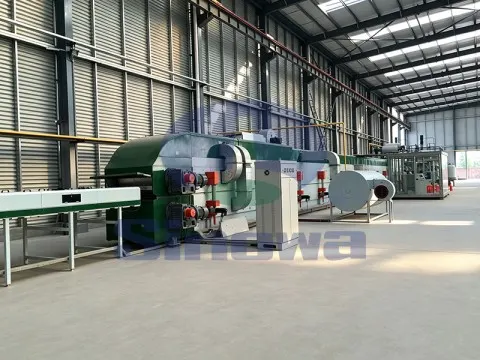
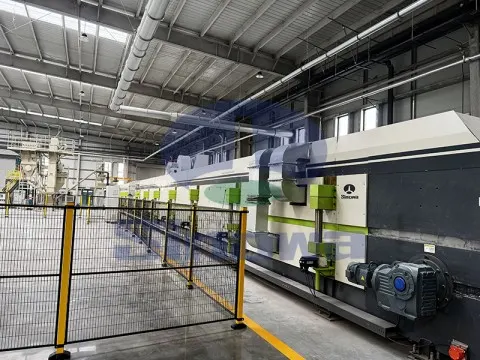
High-temperature curing and fixed molding are key steps to convert fluffy fiber blankets into rigid rock wool boards. The continuously moving wool blanket is automatically sent to a constant-temperature curing furnace through a closed conveyor system. The internal temperature and air circulation of the curing furnace are precisely controlled to ensure that the binder attached to the fiber surface undergoes full and uniform curing reaction. Under moderate high-temperature and constant-air-volume conditions, the binder quickly solidifies and bonds the cross-distributed fibers into a stable three-dimensional network structure, realizing the qualitative change from loose semi-finished fiber blankets to rigid solid boards. The intelligent curing system can dynamically adjust curing temperature, operating speed, and air volume according to different product density and thickness requirements, ensuring thorough curing without fiber scorching or binder failure. After curing, the rock wool board preliminarily forms stable structural strength, with excellent overall toughness and compression resistance, and its core thermal insulation and flame-retardant properties are fully finalized.
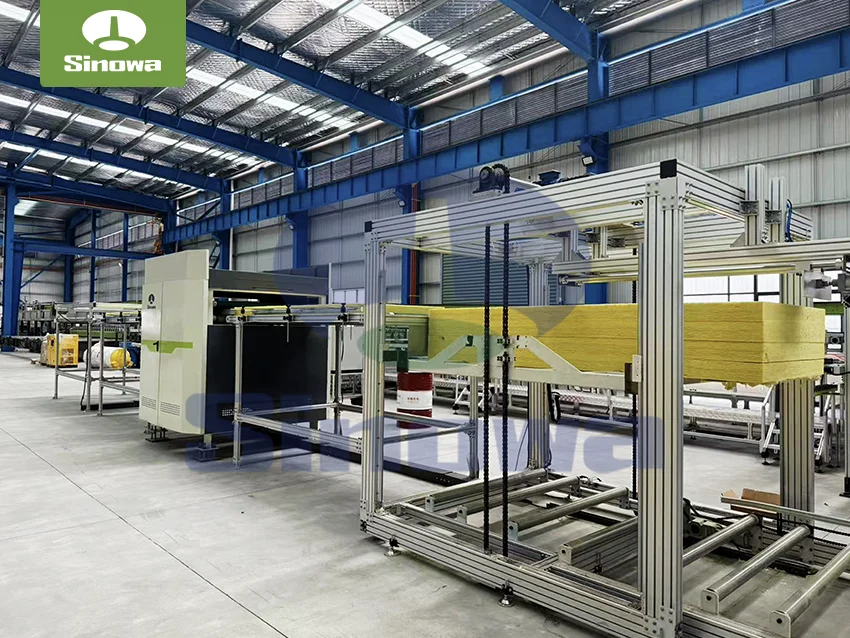
Precision cutting and finishing processing endows rock wool boards with standardized dimensional specifications and neat appearance. The cured continuous rock wool board base material is transported to the intelligent cutting unit, which completes longitudinal trimming and transverse fixed-length cutting through numerically controlled automated equipment. The high-precision numerical control system realizes micron-level positioning control, ensuring ultra-low error in product length, width, and thickness dimensions. For products requiring special processing such as grooving and chamfering, the rock wool sandwich panel line can support customized finishing procedures to meet the diverse application needs of different engineering scenarios. All cutting and trimming processes are completed in a fully enclosed environment, which not only ensures neat and smooth board edges without burrs but also effectively controls fiber dust diffusion. After finishing, the surface of the rock wool board is flat, the specifications are unified, and the internal fiber structure remains intact, avoiding structural damage or performance degradation caused by improper cutting.
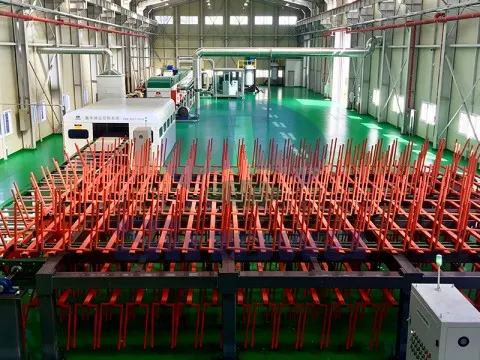
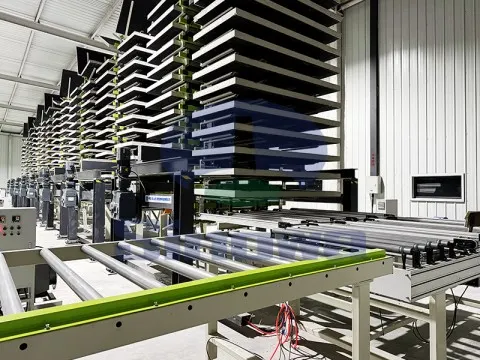
Quality inspection and automatic packaging are the final links to ensure factory product qualification rate and standardized delivery. The complete rock wool board production line is equipped with online real-time quality detection systems, which continuously monitor key indicators such as product density, thickness uniformity, surface flatness, and structural strength during the production process. Intelligent detection equipment automatically identifies and screens unqualified products, realizing real-time elimination of defective products and stable control of batch product quality. At the same time, professional performance sampling inspections are carried out regularly, covering thermal conductivity, flame retardant grade, water absorption rate, and sound absorption coefficient, to ensure that all performance indicators fully meet industry and national standards. Qualified finished products enter the automatic packaging system, which completes stacking, wrapping, and sealing through automated mechanical equipment. The sealed packaging can effectively prevent dust pollution and moisture absorption during transportation and storage, protecting the structural stability and performance integrity of rock wool boards.
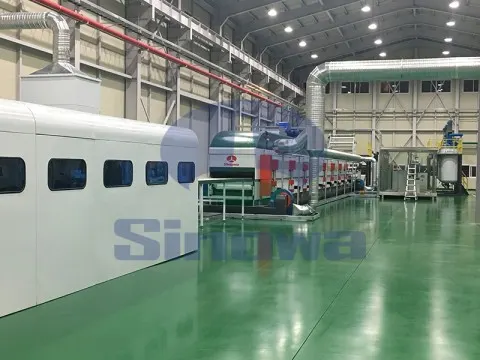
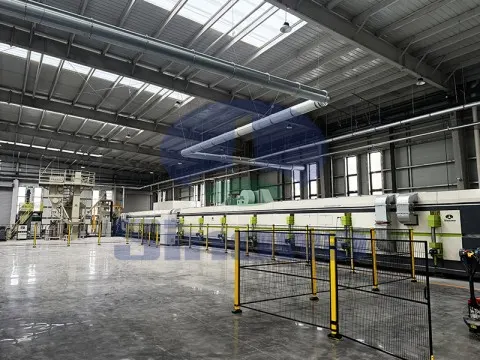
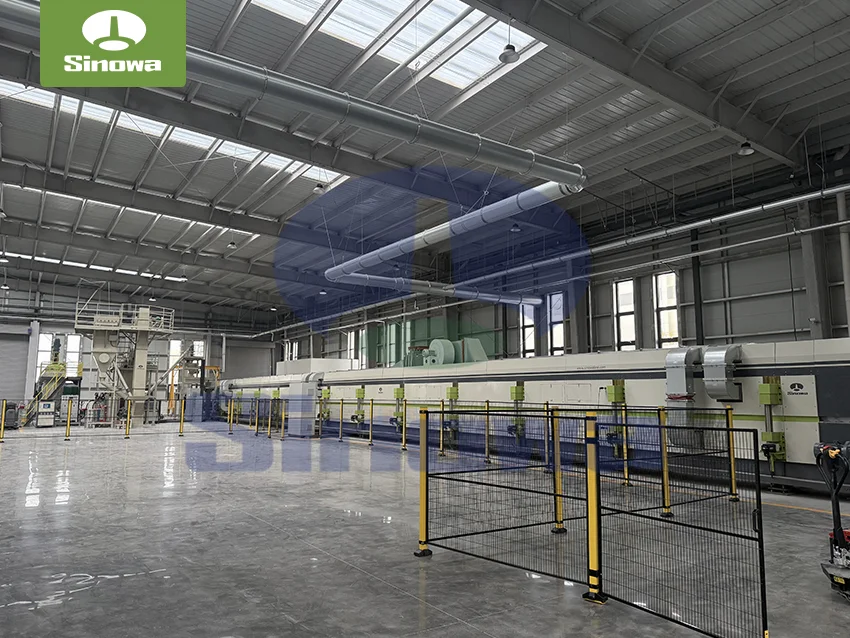
Modern thermal insulation rockwool board production line features high integration, intelligent automation, and green environmental protection, completely subverting the defects of traditional intermittent production modes. The entire production process from raw material feeding to finished product packaging realizes closed-loop automated operation, with linkage control of all equipment units, effectively reducing manual intervention and human error. The intelligent central control system can monitor the operating parameters of each production link in real time, including furnace temperature, operating speed, material proportioning, and curing parameters, and automatically optimize and adjust parameters according to production conditions, realizing intelligent management of the whole production process. In terms of environmental protection, the production line is equipped with complete dust removal, waste gas treatment, and noise reduction systems. All fiber dust and waste gas generated during production are collected and purified through professional environmental protection equipment, reaching industry emission standards. The waste materials and screened hard particles generated during production can be recycled and reused, realizing resource recycling and low-carbon production.
The advanced process design and stable operating performance of modern rock wool insulation board production line directly determine the superior comprehensive performance of finished products. The rock wool boards produced by standardized production lines have ultra-low thermal conductivity, excellent high-temperature resistance, and non-combustible characteristics, capable of withstanding high temperatures above 1000℃ without combustion or deformation, meeting the highest fire protection requirements in the construction industry. At the same time, the unique fine fiber porous structure gives the product excellent sound absorption and noise reduction performance, which can effectively isolate and eliminate environmental noise. In addition, the products have good chemical stability, corrosion resistance, and aging resistance, and will not deteriorate or deform in long-term complex environments such as high humidity and chemical erosion, with a service life far exceeding that of ordinary organic insulation materials.
In terms of industrial application value, the standardized and efficient operation of thermal insulation rock wool sandwich panel machine provides reliable material support for the development of energy-saving and environmental protection industries. With the global emphasis on building energy conservation, carbon emission reduction, and building fire safety, rock wool boards, as typical green inorganic insulation materials, are widely used in building exterior wall thermal insulation, roof heat preservation, interior fire partition, industrial equipment thermal insulation, pipeline anti-freezing and heat preservation, and subway and tunnel sound insulation and fire protection projects. The stable mass production capacity of advanced production lines meets the huge market demand for high-performance insulation materials in infrastructure construction, industrial manufacturing, and new energy industries. At the same time, the continuous upgrading of production line technology also promotes the iterative optimization of rock wool product performance, driving the high-quality development of the thermal insulation material industry.
In conclusion, the thermal insulation rock wool board production line is a comprehensive intelligent industrial system integrating thermal processing, physical fiberization, automated forming, and green environmental protection technologies. Each production link is closely linked and precisely controlled, realizing the efficient conversion from natural inorganic rock raw materials to high-performance fire-resistant and thermal insulation materials. With the continuous progress of industrial intelligence and green manufacturing technology, rock wool board production lines are developing towards higher automation, lower energy consumption, more precise control, and more environmentally friendly production. As a core production carrier in the field of energy-saving insulation materials, it will continue to play an important role in promoting building energy conservation, improving building safety performance, and accelerating the low-carbon transformation of the construction and industrial fields, with broad market development prospects and important industrial application significance.
Sinowa is a professional manufacturer of sandwich panel machine in china, we provide diversified and high-performance sandwich panel production lines, including fully automatic continuous PU sandwich panel line and customized special lines to meet mass production and personalized order demands. These sandwich panel lines support processing multiple foam core materials, such as PU, PIR, mineral wool, rock wool and glass wool, covering different insulation and fireproof standards.
Featuring stable operation, high efficiency, energy saving and easy maintenance, our PU sandwich panel line deliver sandwich panels with excellent thermal insulation, fire resistance, sound insulation and lightweight durability. The finished panels are widely applied in industrial workshops, warehouse roofing and wall cladding, cold storage insulation, serving global construction and industrial insulation markets.
https://www.cnsinowa.com/sandwich-panel-machines/thermal-insulation-rock-wool-board-production-line.html