 sandwich panel line
The core strength of Chinese manufacturers lies in their comprehensive mastery of the entire production line workflow, from raw material processing to final product packaging. Rock wool board production begins with the selection and preparation of raw materials, primarily basalt, slag, and dolomite—resources that are abundant in China, particularly in regions such as East China and Northwest China. Manufacturers design production lines with automated batching and feeding systems that ensure precise proportioning of raw materials, a critical factor in maintaining consistent product performance. These systems minimize human error, optimize resource utilization, and lay the groundwork for stable production efficiency. The raw materials are transported via enclosed conveyors to storage silos, preventing contamination and ensuring a continuous supply to the melting furnace, which is the heart of the production process.
The melting stage is a technical focal point where Chinese manufacturers have made significant advancements. The furnace must reach temperatures exceeding 1500°C to fully melt the raw materials into a homogeneous molten mass. To achieve this efficiently, production lines are equipped with advanced heating systems that can use multiple energy sources, including natural gas, electricity, and optimized coal-based solutions, depending on regional energy availability and environmental requirements. Heat recovery systems are integrated into the furnace design to capture waste energy, which is then reused for heating production facilities or preheating raw materials, reducing overall energy consumption. This focus on energy efficiency aligns with China’s national goals for carbon reduction and green manufacturing, making the production lines more sustainable and cost-effective for operators.
After melting, the molten material is converted into fibers through a spinning process—a stage that demands high precision to ensure fiber quality and consistency. Chinese manufacturers have upgraded spinning systems with high-speed rotating wheels and powerful air streams that draw the molten material into fine fibers. During this process, binders and cooling water are precisely sprayed onto the fibers to enhance their cohesion and stability, while hydrophobic agents are added to improve water resistance. The fibers are then collected on rotating drums and formed into thin layers, which are subsequently stacked and compressed to create the initial board structure. The compression process is controlled by intelligent systems that adjust pressure and speed according to the desired density and thickness of the final rock wool board, allowing for flexibility in producing products for different applications, from building exteriors to industrial insulation.
Curing and cooling are critical steps that determine the mechanical strength and durability of the rock wool board. Production lines feature large curing ovens where the boards are heated to specific temperatures to activate the binder, ensuring the fibers bond tightly together. The curing process is monitored and adjusted in real time by central control systems, which maintain uniform temperature distribution to avoid inconsistencies in product performance. After curing, the boards pass through cooling zones that use air or water-based systems to lower their temperature gradually, preventing thermal stress and structural damage. This careful control over curing and cooling ensures that the final products meet strict performance standards, including high compressive strength, low thermal conductivity, and excellent fire resistance.
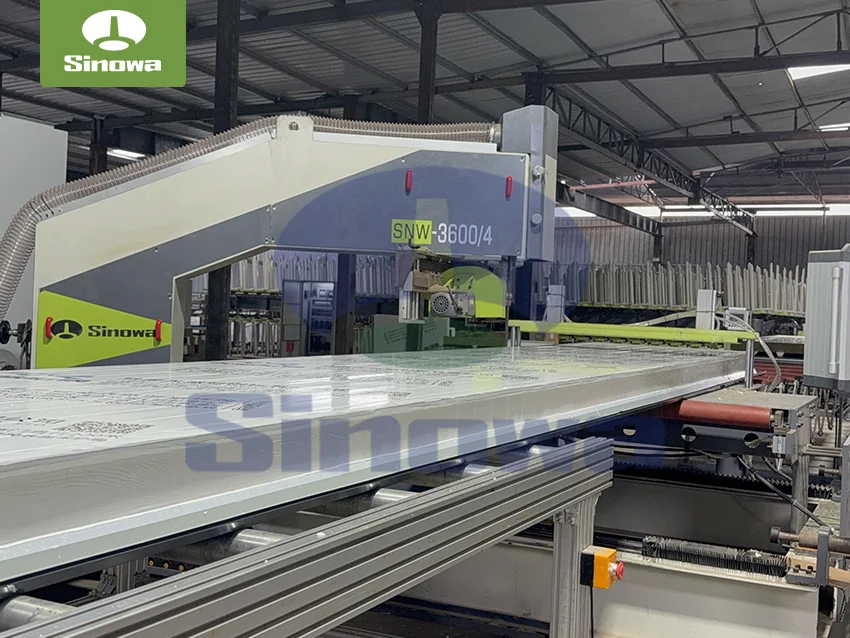
The cutting and packaging stages of the production line are designed for efficiency and precision, with automated systems that reduce labor costs and improve product uniformity. After cooling, the rock wool boards are cut to standard or customized sizes using high-precision cutting equipment, which minimizes material waste and ensures clean edges. Dust generated during cutting is captured by advanced filtration systems and recycled back into the production process, reducing environmental impact and improving resource efficiency. The finished boards are then automatically stacked, wrapped, and prepared for shipment, with packaging systems that protect the products from damage during transportation. Chinese manufacturers offer flexible packaging solutions to accommodate different shipping requirements, from bulk containers for large-scale projects to smaller bundles for regional distribution.
Technological innovation is a key driver of competitiveness for Chinese manufacturers of rock wool board production lines. In recent years, there has been a strong focus on intelligentization and automation, with the integration of industrial control systems, sensors, and data analytics to optimize production processes. Central control platforms allow operators to monitor every stage of production in real time, adjust parameters remotely, and identify potential issues before they affect output. This level of automation not only improves production efficiency and product consistency but also reduces labor requirements, making the production lines more adaptable to changing workforce dynamics.
Another area of innovation is the development of production lines that can manufacture high-performance rock wool boards tailored to specific application needs. For example, the demand for rock wool boards with enhanced hydrophobicity (water repellency) and compressive strength has grown in the construction of high-rise buildings and industrial facilities. Manufacturers have responded by optimizing the binder formula and spinning process, enabling the production of boards with a water absorption rate of less than 1.0 kg/m² and compressive strength exceeding 40 kPa. Additionally, production lines are now capable of producing rock wool boards with varying densities, from 120 kg/m³ for general building insulation to 200 kg/m³ for heavy-load applications such as roofing systems. This versatility allows customers to select the most suitable product for their specific project requirements.
Environmental compliance is a top priority for Chinese manufacturers, as stricter regulations on emissions and waste management drive the adoption of cleaner production technologies. Rock wool board production lines are equipped with comprehensive environmental protection systems, including dust collection, desulfurization, and denitrification equipment to treat exhaust gases before they are released into the atmosphere. These systems ensure that emissions meet national and international standards, reducing the environmental footprint of the production process. Wastewater generated during production is treated and recycled, with water reuse rates exceeding 90% in advanced facilities. Additionally, waste fibers and offcuts are collected and reintroduced into the production cycle, minimizing material waste and promoting a circular economy.
The adaptability of Chinese production lines to different market conditions is another key advantage. Manufacturers offer customized solutions based on customer needs, including production capacity, product specifications, and energy sources. For example, small-scale production lines with an annual capacity of 20,000 tons are suitable for regional markets with limited demand, while large-scale lines with a capacity of 40,000 tons or more cater to large construction companies and industrial clients. Manufacturers also provide technical support and after-sales services, including installation, commissioning, and maintenance, to ensure that the production lines operate smoothly and efficiently. This customer-centric approach has helped Chinese manufacturers expand their global reach, with production lines exported to regions such as Southeast Asia, the Middle East, and Africa.
The growth of the rock wool board production line industry in China is closely linked to the development of the country’s construction and industrial sectors. The implementation of strict building energy efficiency standards and fire safety regulations has driven demand for high-quality rock wool products, as they are classified as non-combustible materials with excellent thermal insulation properties. The expansion of green building initiatives, including the construction of affordable housing and the renovation of existing buildings, has further boosted the market for rock wool boards, in turn driving investment in advanced production lines. Additionally, the industrial sector, particularly petrochemicals, power generation, and shipbuilding, has increased its use of rock wool for equipment insulation, creating new opportunities for production line manufacturers.
Chinese manufacturers are also responding to global trends in sustainable construction and carbon neutrality. By developing production lines that reduce energy consumption and carbon emissions, they are positioning themselves to meet the growing demand for eco-friendly building materials worldwide. The use of biomass fuels and renewable energy sources in production lines is being explored, while research into new raw material substitutes, such as industrial waste slag, is ongoing to reduce reliance on natural resources. These efforts not only align with global sustainability goals but also enhance the competitiveness of Chinese production lines in international markets.
Quality control is an integral part of the production line design and operation. Manufacturers integrate testing equipment and quality inspection processes throughout the production cycle to ensure that every batch of rock wool boards meets the required performance standards. Testing is conducted on key parameters such as thermal conductivity, compressive strength, water absorption, and fire resistance. The data collected from these tests is analyzed to identify areas for process improvement, ensuring continuous quality enhancement. This commitment to quality has earned Chinese production lines a strong reputation in both domestic and international markets, as customers recognize the reliability and consistency of the products produced by these lines.
The supply chain ecosystem supporting Chinese rock wool board production line manufacturers is well-developed, with a network of suppliers providing high-quality components and materials. This ecosystem includes suppliers of furnaces, spinning equipment, control systems, and environmental protection devices, many of which are based in China, reducing lead times and costs. The close collaboration between manufacturers and suppliers allows for rapid innovation and customization, as components can be tailored to specific production line requirements. This integrated supply chain also ensures that manufacturers can quickly respond to changes in market demand, providing customers with timely and efficient solutions.
Looking ahead, the Chinese rock wool board production line industry is poised for continued growth, driven by ongoing urbanization, infrastructure development, and global demand for sustainable building materials. Manufacturers will continue to focus on technological innovation, particularly in automation, energy efficiency, and environmental protection, to maintain their competitive edge. The adoption of digital technologies, such as artificial intelligence and the Internet of Things, will further optimize production processes, improving efficiency and product quality. Additionally, the expansion of international markets will create new opportunities for Chinese manufacturers, as they leverage their expertise in producing cost-effective and high-performance production lines.
In conclusion, Chinese manufacturers of rock wool board production lines have established themselves as global leaders through their mastery of production technology, commitment to quality and sustainability, and ability to adapt to customer needs. Their production lines combine advanced engineering with environmental compliance, delivering efficient and reliable solutions for the production of high-quality rock wool boards. As the world continues to prioritize energy efficiency and fire safety in construction and industry, Chinese manufacturers are well-positioned to meet the growing demand for innovative and sustainable production line solutions, driving the industry forward both domestically and internationally.
https://www.cnsinowa.com/sandwich-panel-machines/manufacturer-of-rock-wool-board-production-line-in-china.html