How To Adjust The Pressing Temperature Of Mineral Wool Sandwich Panel Production Line
Sep 29, 2026
Proper pressing temperature adjustment is core to stable operation of the mineral wool sandwich panel production line, directly determining panel bonding quality, structural stability and thermal insulation performance.
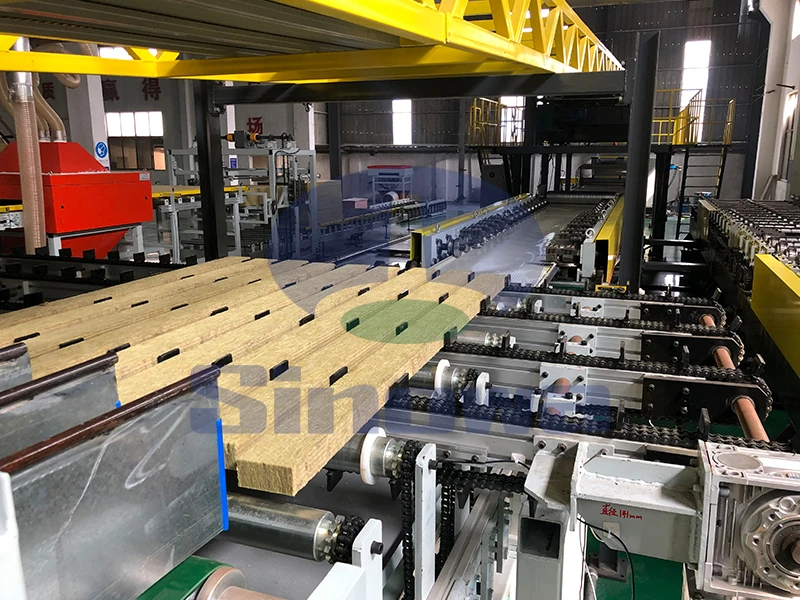
The pressing temperature serves as one of the most critical process parameters in the mineral wool sandwich panel production line, as it governs the entire adhesive curing process and the composite forming effect of mineral wool cores and metal surface layers. Unlike ordinary sandwich panel production equipment, the mineral wool sandwich panel production line requires precise temperature matching to adapt to the porous fibrous structure of mineral wool and the curing characteristics of special structural adhesives. Insufficient pressing temperature will lead to incomplete adhesive curing, resulting in weak bonding between layers, easy delamination and reduced overall structural strength of finished panels. Conversely, excessively high temperature will damage the internal fiber structure of mineral wool, destroy its inherent heat insulation and sound insulation performance, and even cause local deformation of metal surface layers and residual thermal stress on panels. Before starting temperature adjustment, operators need to fully understand the basic working principle of the heating and pressing system of the mineral wool sandwich panel production line, including the hot air circulation mechanism and constant temperature control module of the pressing equipment, to ensure all adjustments are based on the actual operating state of the production line and the material characteristics of processed panels.
The first step in adjusting pressing temperature is pre-production parameter confirmation and equipment preheating inspection, which lays a solid foundation for accurate temperature control of the mineral wool sandwich panel line. Operators need to first check the integrity and sensitivity of the temperature sensing probes distributed on the upper and lower pressing plates of the production line, as aging, offset or contaminated probes will cause inaccurate temperature feedback and lead to faulty parameter adjustment. After confirming the normal operation of sensing components, start the equipment for idle preheating, and observe the temperature rise curve of the pressing system in real time through the control terminal. During the preheating process, it is necessary to verify the temperature uniformity of the entire pressing area, avoiding local overheating or insufficient heating caused by uneven hot air circulation. According to the thickness and density of the mineral wool core material to be produced, preliminarily set the basic temperature range of the pressing section. Thicker and higher-density mineral wool cores require a slightly higher and more stable pressing temperature to ensure the adhesive fully penetrates the fiber gaps and achieves firm lamination, while thin and low-density cores need appropriately reduced temperature to prevent fiber compression and performance attenuation.
Fine temperature calibration during formal production is the key link to optimize product quality on the mineral wool sandwich panel manufacturing line. After the production line runs stably and formal feeding and pressing operations start, operators need to continuously track the forming state of semi-finished panels and dynamically adjust the pressing temperature in real time. In the initial stage of formal production, sample inspection should be carried out every ten minutes to check the bonding tightness, surface flatness and core material integrity of the panels. If edge degumming or partial weak bonding is found, it indicates that the current pressing temperature is slightly low, and the temperature can be increased by a small margin in a graded manner, with each adjustment controlled within a tiny range to avoid excessive temperature fluctuation. If the mineral wool core is found to be collapsed, the panel surface has obvious thermal indentations, or the internal fibers are brittle after pressing, it means the temperature is too high, and the heating power of the pressing system needs to be reduced gradually. It is essential to maintain synchronous coordination between temperature adjustment and production line operating speed; faster operating speed requires a stable and appropriate temperature rise to ensure sufficient curing time for adhesives during rapid pressing.
Temperature balance adjustment for variable working conditions effectively solves quality fluctuations in the operation of the mineral wool sandwich panel line. The ambient temperature of the production workshop, continuous operating time of equipment and batch changes of raw materials will all affect the actual pressing temperature effect, so targeted adjustment strategies are required for different working conditions. In low-temperature workshop environments, the heat loss of the pressing system accelerates, and the surface temperature of the pressing plate drops easily, so the set pressing temperature should be appropriately increased to offset environmental heat loss and ensure the actual curing temperature of the panel remains stable. When the mineral wool sandwich panel production line operates continuously for a long time, the heating system will accumulate residual heat, leading to a slow rise in the overall temperature of the pressing area; at this time, the set temperature needs to be reduced moderately, and the hot air circulation frequency should be increased to maintain temperature balance. In addition, when switching between different types of adhesive raw materials, the pressing temperature must be adjusted according to the curing temperature range of the new adhesive to avoid quality problems caused by mismatched temperature and adhesive characteristics.
Regular system debugging and parameter maintenance ensure the long-term temperature control accuracy of the mineral wool sandwich panel production machine. Daily production cannot rely solely on real-time temporary adjustments; standardized regular debugging is required to eliminate potential temperature control deviations. Operators should conduct a full calibration of the pressing temperature system every week, check the temperature difference between multiple detection points of the upper and lower pressing plates, and correct parameter offsets for any detection points with excessive temperature tolerance. It is also necessary to clean the heating pipeline and ventilation holes of the pressing system regularly to prevent dust and adhesive residues from blocking the hot air circulation channel, which would affect uniform heat distribution and cause local temperature anomalies. After each equipment shutdown and restart, the pressing temperature parameters need to be reset and calibrated again, because the equipment will generate temperature drift after stopping operation, and direct production without calibration will lead to unstable panel quality.
Scientific post-adjustment recording and effect verification form a closed-loop management system for temperature adjustment of the mineral wool sandwich panel production line. Every temperature adjustment operation, including adjustment time, original parameters, adjusted parameters, corresponding raw material specifications and workshop environmental conditions, needs to be accurately recorded in the production parameter log. These recorded data can form a complete parameter database, providing effective reference for subsequent production of different specifications of mineral wool sandwich panels and avoiding repeated debugging and parameter trial and error. After each temperature adjustment, continuous quality tracking of finished products must be carried out to verify the stability of panel bonding strength, thermal insulation performance and appearance quality. By summarizing the matching rules between temperature parameters, raw material types and production speeds, operators can gradually form standardized temperature adjustment schemes, realizing intelligent and precise temperature control of the mineral wool sandwich panel production line, and ultimately improving overall production efficiency and product qualification rate.
Gallery
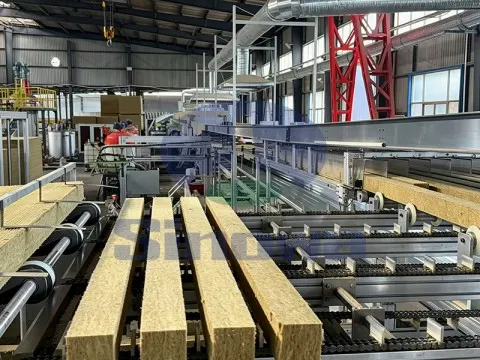
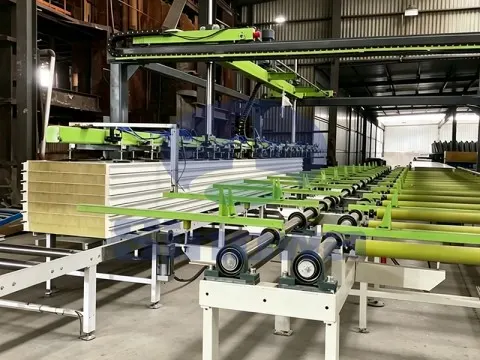
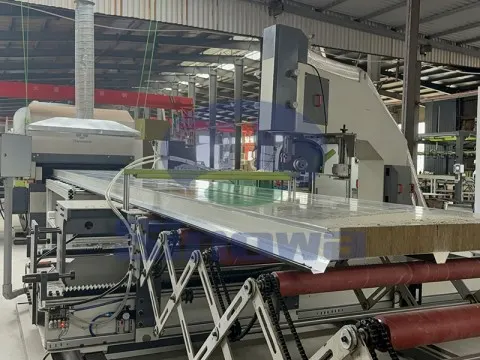
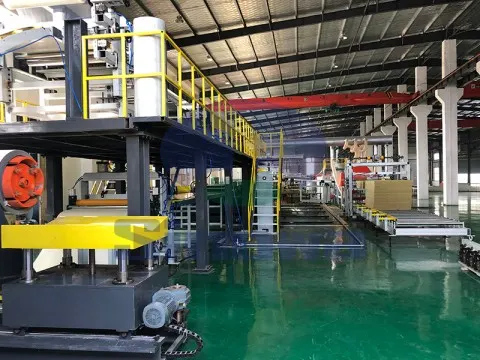
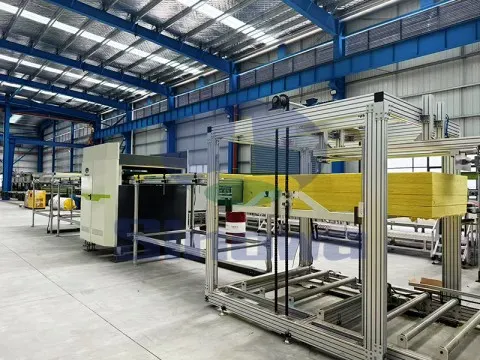
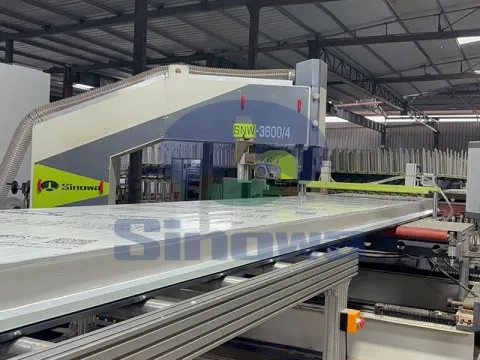
Sinowa is a professional manufacturer of sandwich panel machine in china, we provide diversified and high-performance sandwich panel production lines, including fully automatic continuous PU sandwich panel line and customized special lines to meet mass production and personalized order demands. These sandwich panel lines support processing multiple foam core materials, such as PU, PIR, mineral wool, rock wool and glass wool, covering different insulation and fireproof standards.
Featuring stable operation, high efficiency, energy saving and easy maintenance, our PU sandwich panel line deliver sandwich panels with excellent thermal insulation, fire resistance, sound insulation and lightweight durability. The finished panels are widely applied in industrial workshops, warehouse roofing and wall cladding, cold storage insulation, serving global construction and industrial insulation markets.
Main Products
-

Continuous PU Sandwich Panel Production Line
This continuous PU sandwich panel production line is an integrated automatic equipment. It covers uncoiling, forming, foaming, curing and cutting processes. With automatic raw material proportioning and precise temperature & pressure control, PIR sandwich panel production line continuously composites panels with double skins. Polyurethane sandwich panel production line stably produces steel and aluminum sandwich panels. Featuring high automation, the line makes fireproof and thermal-insulation panels for building enclosure and cold storage. -

Rock Wool Sandwich Panel Production Line
Continuous rockwool sandwich panel production line is an automatic integrated production equipment, consisting of uncoiling, forming, gluing and compounding, heating curing, fixed-length cutting, automatic stacking and other modules. The mineral wool sandwich panel production line continuously conveys color steel plates and rock wool core materials to automatically complete lamination and curing, which can produce fireproof and thermal insulation sandwich panels. Featuring high automation degree and stable operation, this production line is suitable for mass production of panels used for building walls, roofs and other scenarios. -

Phenolic Insulation Board Production Line
This integrated automatic production line continuously manufactures PU and phenolic insulation boards. The insulation board production line covers raw material proportioning, high-pressure foaming, laminating, curing and fixed-length cutting. Featuring high automation and stable molding, the insulation panel production line supports various surface materials. PU boards offer excellent thermal insulation, while phenolic boards have superior fire resistance. These products are widely used in construction, cold chain, ventilation ducts and other thermal insulation fields.
Other FAQs
- Energy Saving Measures For Rock Wool Sandwich Panel Production Line Operation
- What Causes Low Bonding Strength Of Panels From Rock Wool Sandwich Panel Production Line
- High Temperature Resistance Performance Of Rockwool Sandwich Panel Production Equipment
- Panel Bonding Strength Improvement Methods In Rockwool Board Production Line
- How To Maintain The Rock Wool Sandwich Panel Production Line Daily
- Automation Program Upgrade Steps For Rock Wool Sandwich Panel Production Line
- Automatic Operation Debugging Steps For Rock Wool Sandwich Panel Production Line
- Why Is The Operating Speed Of Rock Wool Sandwich Panel Production Line Unstable
- Cold Start Operation Precautions Of Rock Wool Sandwich Panel Production Machine
- Production Speed Optimization Methods For Rock Wool Sandwich Panel Line
Related Articles
- Composite Rock Wool Board Production Line
- Rock Wool Sandwich Panel Production Line with Automatic Width Adjustment
- Rockwool Sandwich Panel Machine with Double Belt Press System
- Partition Wall Composite Rock Wool Sandwich Panel Line
- External Wall Rock Wool Insulation Board Production Line
- Rock Wool Thermal Insulating Sandwich Panel Production Line
- Rock Wool Color Steel Sandwich Panel Machine
- Edge Sealing Rock Wool Sandwich Panel Line
- Manufacturer of Rock Wool Sandwich Panel Assembly Line In China
- Polyurethane Edge Sealing Rock Wool Panel Line