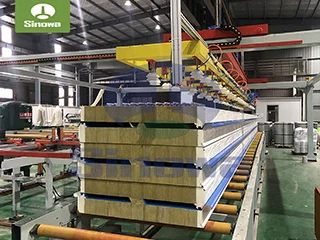
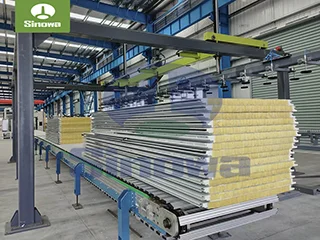
sandwich panel line
The main raw materials of Rock Wool Panel Production Line include mineral fiber cotton such as basalt, slag and dolomite, which melt at high temperature and form the basic structure of rock wool.
Technological Process of Production
Raw material batching: raw materials such as basalt and slag are put into a high furnace according to a certain proportion.
High-temperature melting: the raw materials are melted at high temperature to change their physical structure and prepare for building the structural foundation of rock wool board.
Centrifugal fibrosis: molten raw materials are thrown into fibers under the action of high-speed centrifuges to form inorganic cotton.
Pendulum cotton laying: use pendulum method to spread inorganic cotton evenly to increase its hardness and density.
Bonding and curing: binder is added to inorganic cotton to make its shape more fixed and its performance more stable.
Cutting and molding: cutting the made rock wool material into rock wool boards with different specifications and sizes.
Packaging and shipment: use automatic code machine and brand packaging bag to package the rock wool board and wait for shipment.
Composition of Main Equipment
Raw material feeding system: including automatic dosing machine, control cabinet, feeder, etc., used to automatically and accurately feed raw materials into the furnace.
Melting system: including cupola, melting charge level control system, dust collector, etc., which is used to melt raw materials at high temperature and treat the generated waste gas.
Cotton making system: including high-speed centrifuge, fan, cotton blowing bellows, etc., used to throw molten raw materials into fibers.
Cotton collecting and distributing system: including cotton collecting machine, pendulum cotton distributing machine, etc., which is used to collect and spread inorganic cotton evenly.
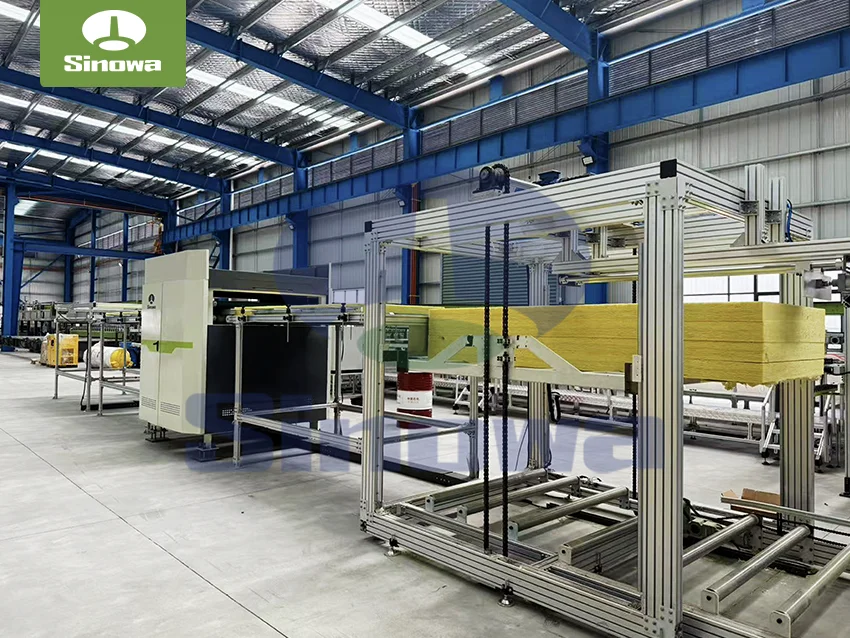
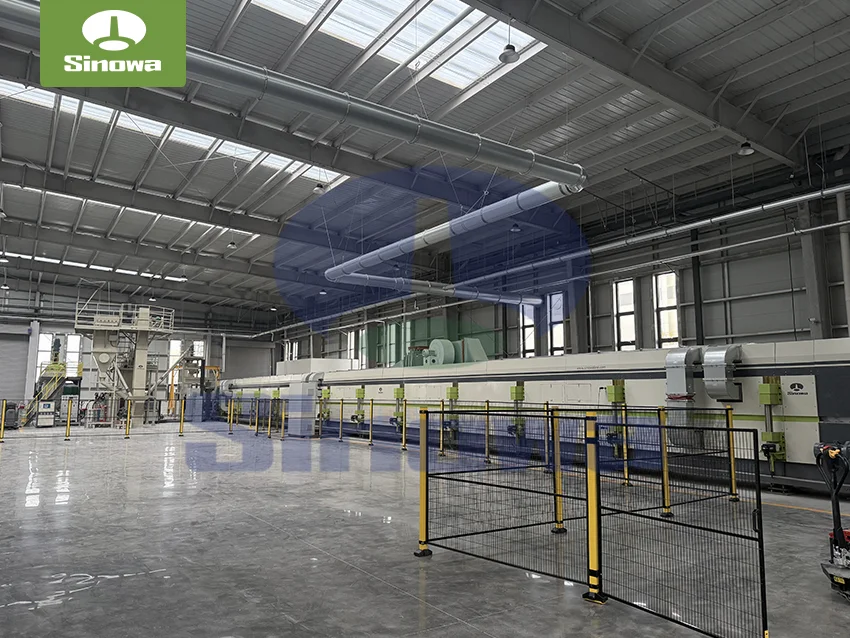
Curing molding system: including curing furnace, discount preloading machine, etc., used to shape inorganic cotton and increase its strength.
Cutting system: including longitudinal cutting machine, transverse cutting machine, etc., used to cut the shaped rock wool material into different specifications of rock wool boards.
Scrap recycling system: including pulverizer, scrap recycling fan, etc., which is used to recycle the scrap generated in the cutting process and realize the reuse of resources.
Technical Superiority
Vertical wire structure technology: the vertical wire pendulum cotton distributor swings back and forth above the inclined conveying mechanism, so that the rock wool fibers are vertically arranged, which significantly improves the compressive strength of the products.
Intelligent control technology: integrate pressure sensor and visual monitoring device to build a closed-loop control system, which realizes the advantages of small detection error of melt weight and short response time of production line speed adjustment.
Environmental protection measures: the combined process of cyclone dust removal and activated carbon adsorption is adopted to treat waste gas, and the dust emission concentration is controlled at a low level; The waste recycling device can crush the cut scraps and reuse them.
Rock wool board has good thermal insulation, fire prevention and other properties, and is widely used in thermal insulation projects in buildings, industrial equipment, ships and other fields. Especially in some complex environments that require high thermal insulation performance, the application of rock wool board has obvious advantages.
Rock Wool Panel Production Line is an efficient, environmentally friendly and automatic production line, which can transform natural ore into building insulation materials with specific properties. With the continuous progress of technology and market development, the application prospect of Rock Wool Panel Production Line will be broader.
A rock wool panel production line stands as a highly integrated, automated manufacturing system designed to convert raw mineral materials into finished rock wool panels, a versatile building and industrial material prized for its exceptional functional properties. Unlike fragmented manual production setups, modern rock wool panel production lines operate as a continuous, streamlined workflow that unifies multiple specialized modules, each performing a distinct task in sequence to ensure consistent product quality, high production efficiency, and stable output. The entire line is engineered to handle the entire production cycle from raw material preparation to finished product stacking and packaging, with minimal manual intervention required for daily operation. At its core, the structural framework of a standard rock wool panel production line consists of several key interconnected components, starting with the raw material handling and feeding system, which is responsible for storing, conveying, and preprocessing the primary raw materials, mainly natural basalt and other volcanic minerals, along with auxiliary additives that enhance the final product’s performance. These raw materials are first crushed and sorted to meet uniform particle size requirements, then fed into a high-temperature melting furnace, a critical structural unit that heats the minerals to extremely high temperatures to transform them into a homogeneous molten liquid, eliminating impurities and ensuring the purity of the subsequent fiber formation process.
Following the melting stage, the molten mineral liquid is transferred to the fiber forming module, where it is spun into fine, flexible mineral wool fibers through high-speed centrifugal force or air blowing technology. This module is precision-engineered to control fiber diameter, length, and uniformity, as these factors directly impact the density, strength, and insulation performance of the final rock wool panels. After fiber formation, a binder application system sprays a specialized adhesive evenly onto the loose fibers, binding them together to form a cohesive fiber mat; the dosage and distribution of the binder are strictly regulated to maintain the panel’s structural integrity without compromising its porous, lightweight nature. The fiber mat then moves through a pendulum laying system that layers the fibers to achieve the desired thickness and density uniformity, preventing unevenness or weak spots that could compromise performance. Next, the layered fiber mat enters a continuous pressing and curing oven, which applies controlled pressure and heat to compress the mat into a rigid panel shape and cure the binder, solidifying the panel’s structure and enhancing its mechanical strength. This oven is equipped with temperature and pressure regulation systems to ensure consistent curing across the entire panel surface, avoiding warping, delamination, or incomplete bonding. After curing, the semi-finished panels pass through a precision cutting system, which trims them to standard or custom dimensions based on production requirements, with high-precision cutting tools ensuring smooth edges and accurate sizing for seamless installation. The final structural components include a cooling system to lower the panel temperature to ambient levels, a quality inspection station to check for surface defects, density variations, and dimensional accuracy, and a stacking and packaging system to organize finished panels for storage and transportation. The entire production line is governed by a centralized automatic control system, typically powered by programmable logic controllers, which monitors and adjusts all operational parameters in real time, including feeding speed, melting temperature, fiber forming speed, binder dosage, pressing pressure, curing temperature, and cutting length, ensuring the entire line operates in sync and maintains consistent product quality batch after batch.
The performance of rock wool panels produced by a standardized production line is defined by a unique combination of physical, thermal, mechanical, and durable properties that set them apart from other insulation and building materials, and these performance traits are directly shaped by the line’s structural design and production precision. One of the most prominent performance features is exceptional thermal insulation capability, rooted in the porous, fibrous structure of rock wool. The fine, interwoven fibers create countless tiny air pockets within the panel, which significantly impede heat transfer through conduction, convection, and radiation. This low thermal conductivity allows rock wool panels to effectively block heat flow in both hot and cold environments, making them highly efficient at maintaining stable indoor temperatures and reducing energy consumption for heating and cooling systems. Unlike many organic insulation materials, rock wool panels are inherently non-combustible, a critical fire-resistant performance attribute that makes them ideal for fire safety-critical applications. The inorganic mineral composition of rock wool means it does not ignite, melt, drip, or release toxic fumes when exposed to high temperatures or open flames, acting as a reliable fire barrier that slows the spread of fire and provides valuable time for evacuation and firefighting. This fire resistance is stable across a wide range of temperatures, maintaining its structural integrity and protective properties even under extreme heat exposure.
In addition to thermal and fire performance, rock wool panels offer excellent sound absorption and noise reduction properties, thanks to their open porous fiber structure. Sound waves passing through the panels are trapped and dissipated within the fiber gaps, reducing echo and noise transmission between spaces, making them suitable for environments that require quiet and acoustic comfort. Mechanically, panels produced on a well-designed production line boast reliable compressive strength, flexural strength, and dimensional stability. They can withstand moderate external pressure and impact without cracking, deforming, or collapsing, and maintain their original shape and size even under long-term use, fluctuating temperatures, or humid conditions. This mechanical stability ensures the panels do not settle, shrink, or expand excessively over time, preserving their insulation and structural performance for extended service life. Rock wool panels also exhibit strong weather resistance and moisture tolerance; they are hydrophobic by design, repelling liquid water while allowing water vapor to pass through, preventing water absorption, mold growth, and material degradation. They can withstand exposure to ultraviolet radiation, wind, rain, and freeze-thaw cycles without losing performance, making them suitable for both interior and exterior applications. Furthermore, rock wool panels are chemically stable, resistant to corrosion, oxidation, and degradation from most chemicals, ensuring they do not react with adjacent building materials or release harmful substances, aligning with environmental protection and healthy indoor environment requirements.
Rock wool panel production lines are engineered to produce a diverse range of panel varieties, each tailored to specific performance needs and application scenarios, with variations primarily in density, thickness, surface treatment, and structural form. The most common classification is based on panel density, which directly correlates to performance and use cases. Low-density rock wool panels, typically with a density range suitable for lightweight insulation and sound absorption, are softer and more flexible, making them ideal for non-load-bearing applications where thermal insulation and acoustic comfort are the primary priorities, such as interior wall partitions, ceiling insulation, and noise barriers. Medium-density panels strike a balance between insulation performance and mechanical strength, offering versatile functionality for general construction purposes, including external wall insulation, roof insulation, and industrial equipment insulation. High-density rock wool panels are manufactured with greater compression during the production process, resulting in higher compressive and flexural strength, making them suitable for load-bearing or high-stress applications that require both insulation and structural support, such as industrial facility walls, cold storage structures, and high-rise building fire barriers.
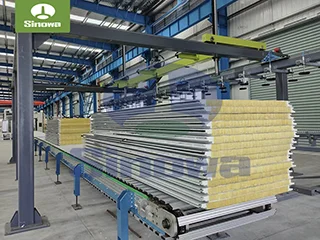
Another key variety is the rock wool sandwich panel, a composite product produced on specialized integrated production lines that combine a rock wool core with rigid outer facing materials, usually metal sheets. These sandwich panels enhance the structural strength and weather resistance of traditional rock wool panels, featuring a smooth, durable outer surface that protects the rock wool core from physical damage and moisture, while maintaining the core’s inherent thermal, fire, and acoustic properties. Sandwich panels can be further categorized by their profile design, including flat panels, corrugated panels, and interlocking panels, each optimized for different installation methods and structural requirements. Additionally, production lines can produce rock wool panels with custom surface treatments, such as coated surfaces for enhanced water resistance or dustproofing, and panels of varying thicknesses, ranging from thin lightweight panels for interior use to thick, heavy-duty panels for extreme temperature insulation in industrial settings. Some specialized production lines also manufacture shaped or cut-to-size rock wool panels, tailored to fit unique structural components or equipment, eliminating the need for on-site cutting and reducing material waste. The flexibility of modern production lines allows manufacturers to adjust production parameters quickly to switch between different panel varieties, accommodating the diverse needs of various industries without extensive reconfiguration of the production system.
The combination of robust structural design, consistent production quality, and versatile performance makes rock wool panels from standardized production lines widely applicable across construction, industrial, commercial, and residential sectors, with each application leveraging the material’s unique advantages to solve specific engineering and functional challenges. In the construction industry, rock wool panels are a staple for building insulation, used extensively in external wall insulation systems, roof insulation, floor insulation, and fire partition walls. For residential and commercial buildings, they improve energy efficiency by reducing heat loss in winter and heat gain in summer, lowering heating and cooling costs, while also enhancing indoor acoustic comfort by blocking external noise and internal sound transmission. In high-rise buildings, the non-combustible fire-resistant properties of rock wool panels are critical for meeting strict fire safety standards, acting as a fire barrier between floors and compartments to prevent fire spread and protect building occupants. Prefabricated buildings and modular construction also rely heavily on rock wool panels, particularly sandwich panels, due to their lightweight nature, ease of installation, and all-in-one insulation, fireproofing, and structural support capabilities, accelerating construction timelines and reducing on-site labor requirements.
Industrial applications represent another major segment for rock wool panels, where their high-temperature resistance, thermal insulation, and durability are indispensable. They are widely used for insulating industrial furnaces, boilers, pipelines, and processing equipment, preventing heat loss from high-temperature machinery, improving energy utilization efficiency, and protecting workers from burns and heat exposure. In cold chain logistics and cold storage facilities, rock wool panels, especially high-density sandwich panels, provide superior thermal insulation to maintain consistent low temperatures, reducing energy consumption for refrigeration systems and ensuring the quality and freshness of perishable goods such as food, pharmaceuticals, and chemical products. The non-combustible and moisture-resistant properties of these panels also make them suitable for cold storage environments where fire safety and humidity control are critical. Additionally, rock wool panels are used in manufacturing facilities, warehouses, and workshops as wall and roof cladding, offering a combination of thermal insulation, soundproofing, and structural protection, creating a safe and comfortable working environment for employees while protecting equipment and inventory from temperature fluctuations.
Beyond construction and industry, rock wool panels find specialized uses in transportation, marine engineering, and public infrastructure projects. In marine applications, they are used for insulation and fire protection on ships and offshore structures, where resistance to salt spray, moisture, and fire is essential. For transportation infrastructure, such as highways, railways, and airports, rock wool panels serve as effective noise barriers, reducing traffic noise pollution for nearby residential and commercial areas. They are also used in public facilities such as schools, hospitals, theaters, and sports arenas, where acoustic comfort, fire safety, and energy efficiency are top priorities. The environmentally friendly nature of rock wool panels, made from natural mineral materials that are non-toxic, recyclable, and free from harmful chemicals, further expands their applications in green building projects and sustainable construction initiatives, aligning with global efforts to reduce carbon emissions and promote eco-friendly building materials. As building energy efficiency standards and fire safety regulations become increasingly stringent worldwide, the demand for high-quality rock wool panels produced by advanced production lines continues to rise, driving ongoing innovations in production line technology to enhance performance, efficiency, and sustainability.
The evolution of rock wool panel production lines has been closely linked to advancements in manufacturing automation, material science, and process control, with modern lines focusing on improved energy efficiency, reduced waste generation, and higher product consistency. Unlike older semi-automated lines, contemporary production lines integrate smart monitoring and control systems that optimize resource usage, minimize raw material waste, and reduce energy consumption during the melting, curing, and pressing processes. The modular structural design of these lines also allows for easy maintenance, component upgrades, and scalability, enabling manufacturers to adapt to changing market demands and produce higher volumes of premium-quality rock wool panels. Every aspect of the production line, from raw material processing to finished product inspection, is calibrated to preserve and enhance the inherent performance advantages of rock wool, ensuring that each panel meets the rigorous functional requirements of its intended application. Whether used for basic thermal insulation, critical fire protection, acoustic noise reduction, or structural support, rock wool panels delivered by a well-designed production line offer a reliable, long-lasting, and cost-effective solution that addresses core challenges across multiple industries, solidifying their position as one of the most versatile and essential mineral-based building materials in the global market.
https://www.cnsinowa.com/sandwich-panel-machines/rock-wool-panel-production-line.html