sandwich panel line
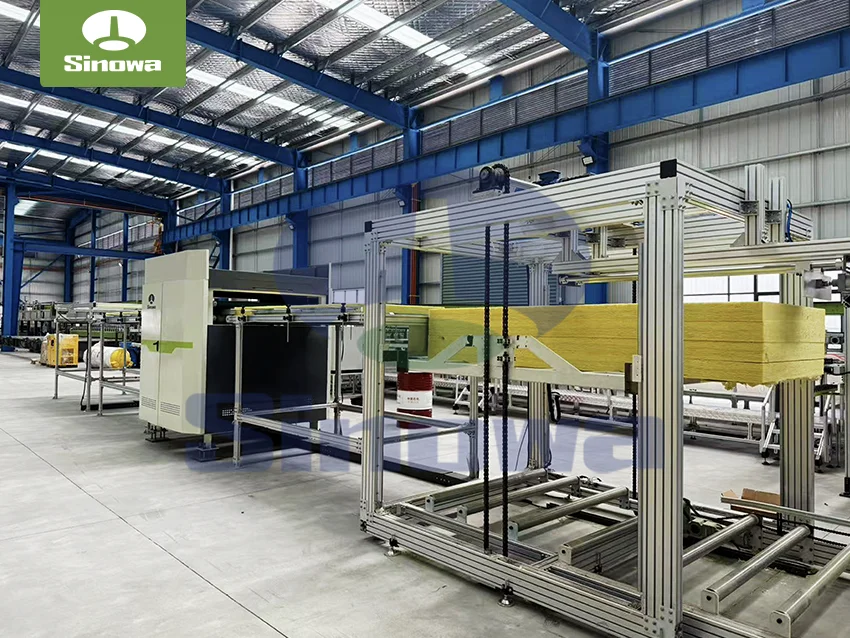
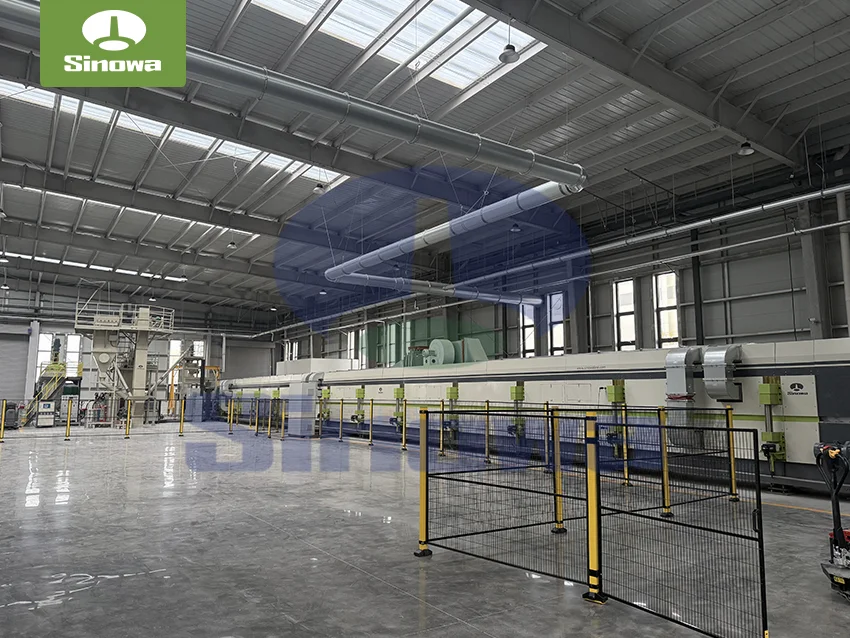
The overall structural design of the PU edge sealing rock wool sandwich panel line follows modular integration concepts, and each functional unit is logically arranged in accordance with the forward flow of production procedures to ensure the continuous transmission of raw materials and semi-finished products. The whole line can be divided into multiple core functional sections including metal surface material unwinding and pretreatment section, rock wool core material processing and conveying section, polyurethane edge sealing foaming section, high-pressure composite laminating section, constant-temperature curing section, fixed-length cutting and trimming section, as well as finished product conveying and stacking section. Each section is connected by synchronous transmission mechanisms, and the operating speed of all equipment is uniformly coordinated by the central control system to avoid production stagnation or structural dislocation caused by asynchronous operation. The mechanical framework of the production line adopts high-strength steel structural components, which can withstand long-term continuous load operation and resist slight vibration generated during high-speed transmission and pressing processes, effectively maintaining the overall structural stability of the equipment. In addition, the transmission parts of the production line are equipped with anti-wear and anti-corrosion treatments, which adapt to the humid and dusty production environment of building material processing factories and extend the stable service cycle of mechanical components.
The front-end unwinding and pretreatment module serves as the starting link of the entire production flow, mainly responsible for the supply and surface optimization of metal surface materials for sandwich panels. Metal coils used for panel surfaces are fixed on hydraulic unwinding racks, which adopt automatic tension control structures to ensure that the metal plates are released smoothly without wrinkles, stretching or lateral deviation during the unwinding process. After unwinding, the continuous metal plates first pass through the leveling unit composed of multiple groups of precision pressure rollers. The staggered arrangement of pressure rollers eliminates the internal stress of the metal plates generated during coil winding, correcting tiny bending deformations to ensure the flatness of subsequent composite processing. Following the leveling procedure, the surface cleaning and gluing process is carried out. The automatic spraying equipment uniformly coats high-viscosity adhesive on the inner surface of the metal plates, and the spraying dosage is precisely controlled by flow monitoring components. Compared with manual gluing and simple roller gluing methods, the spraying process forms a uniform adhesive film on the plate surface, increasing the bonding contact area between the metal surface layer and the core material, and laying a solid foundation for the overall structural firmness of composite panels. During the pretreatment process, the edge trimming device also preliminarily calibrates the two sides of the metal plates to ensure consistent plate width, avoiding dimensional errors in subsequent composite molding.
The rock wool core material processing and conveying section undertakes the arrangement and shaping of the core thermal insulation medium, which directly determines the thermal insulation and mechanical bearing performance of finished panels. Rock wool raw materials are transported to the production line in the form of compacted wool blocks, and the internal fiber arrangement of raw rock wool is disordered with uneven bulk density. Therefore, the production line is equipped with a special wool spreading and reshaping mechanism. Through mechanical vibration and layered paving technology, compacted rock wool is dispersed into uniform fiber layers, eliminating internal gaps and agglomeration defects. A key technological innovation of this production line lies in the vertical flipping treatment of rock wool fibers. The flipping mechanism adjusts the horizontal scattered rock wool fibers to a vertical arrangement perpendicular to the metal surface layer. This structural adjustment significantly enhances the compressive resistance and shear resistance of rock wool core materials, preventing fiber collapse and deformation under long-term external pressure. After reshaping, the rock wool core materials are quantitatively cut into fixed-width strips by precision cutting equipment, and then evenly laid on the lower metal plate through an intelligent distributing system. The spacing and overlapping degree of rock wool strips are accurately controlled to ensure no hollow gaps inside the composite panels, maintaining the uniformity of thermal insulation performance across the entire panel area.
The polyurethane edge sealing foaming section is the core functional unit that distinguishes this production line from ordinary rock wool sandwich panel production equipment. Traditional rock wool sandwich panels usually adopt simple edge wrapping or direct exposure of rock wool edges, which leads to poor air tightness, easy moisture absorption of edge fibers, and accelerated aging and damage of the panel structure. The PU edge sealing structure perfectly solves these inherent problems by injecting polyurethane foaming materials into the two side gaps of the rock wool core layer. The polyurethane raw materials are stored in independent sealed storage tanks, and the high-pressure metering system accurately extracts raw materials in proportion according to the preset formula. After sufficient mixing through a high-speed stirring device, the mixed liquid is transported to the automatic spraying and pouring equipment at the edge of the production line. The fluid polyurethane mixture is evenly injected into the reserved edge gaps on both sides of the rock wool core material. With the characteristics of rapid foaming and curing, the liquid polyurethane expands rapidly at room temperature to fill the edge gaps completely, forming dense and seamless edge sealing layers. During the foaming process, the monitoring system tracks the foaming density and expansion range in real time to avoid excessive foaming causing edge bulging or insufficient filling leading to sparse edge structures. The formed polyurethane edge not only wraps the exposed rock wool fibers to prevent moisture and dust erosion but also forms a rigid protective structure on both sides of the panel, improving the overall flatness and impact resistance of the panel edges.
After the completion of core material arrangement and edge sealing injection, the semi-finished products enter the high-pressure composite laminating section to realize the integrated bonding of upper and lower metal plates, rock wool core material and polyurethane edge sealing layers. The composite pressing unit consists of multiple groups of upper and lower matched pressure rollers, and the spacing between roller sets is adjusted according to the customized thickness of finished panels. All pressure rollers operate at a constant synchronous speed to ensure that each layer of materials maintains consistent transmission speed without relative sliding displacement. The internal pressure of the pressing system is dynamically regulated by hydraulic components, maintaining stable and uniform pressing force on the composite materials. This uniform pressure distribution enables the adhesive between the metal plates and the core material to fully infiltrate, eliminating residual air bubbles inside the panel and enhancing the integration of the composite structure. Different from intermittent pressing equipment, the continuous composite structure of this production line realizes uninterrupted feeding and pressing, greatly improving production efficiency while ensuring the consistency of pressing effect of each panel. The surface of the pressure rollers is processed with high-precision polishing and anti-sticking coating, which can protect the outer coating of metal plates from scratches and keep the surface smooth and flat after panel molding.
The constant-temperature curing section is an essential link to stabilize the internal structural performance of composite panels. The initially pressed semi-finished panels have not yet completed the complete curing reaction of adhesive and polyurethane foaming materials, and the internal bonding strength is relatively low, which makes the panels prone to deformation under external force. The curing box of the production line adopts an integrated thermal insulation shell, and the internal temperature is maintained within a constant range through circulating heating equipment. The hot air circulation system inside the curing box realizes three-dimensional uniform heating, ensuring that the temperature of each position of the panels is consistent without local overheating or low temperature dead zones. During the slow transmission process in the curing box, the adhesive undergoes complete chemical cross-linking reaction, and the polyurethane edge sealing layer completes secondary shaping and densification. The rock wool fibers are firmly bonded with the adjacent structural layers under the dual effect of temperature and pressure. The curing time is intelligently adjusted according to the panel thickness and raw material characteristics to ensure that all chemical reactions are fully completed. After curing, the internal bonding strength of the panels reaches the design standard, and the structural stability is significantly improved, which can resist external temperature changes and mechanical extrusion without permanent deformation.
The post-processing stage includes fixed-length cutting, edge trimming, surface finishing and finished product conveying, which is responsible for turning cured continuous plate blanks into standardized finished products. The high-precision cutting equipment is installed at the rear end of the curing section, and the cutting length is set through the central control system in advance. The cutting tool adopts alloy sharp blades, which can complete smooth cutting of composite structures composed of metal plates, rock wool and polyurethane without burrs and edge cracks. Before cutting, the positioning sensor accurately identifies the transmission position of the plate blanks to ensure the error of cutting length is controlled within a tiny range. After cutting, the edge trimming device polishes the cutting end faces to remove tiny metal burrs and residual foaming materials, making the end faces flat and neat. Meanwhile, the surface finishing unit cleans dust and residual impurities on the outer surface of the metal plates, and carries out fine correction on local slight depressions to optimize the appearance quality of finished panels. The processed finished panels are transported to the stacking platform through the low-speed conveying roller table. The automatic stacking mechanism neatly arranges the panels in stacks according to the preset stacking height, reducing manual carrying operations and avoiding surface abrasion caused by human contact.
In terms of intelligent control and system configuration, the PU edge sealing rock wool sandwich panel manufacturing line adopts a centralized integrated control system. The human-computer interaction touch screen is set at the main operation console, and operators can complete parameter setting, equipment debugging, speed adjustment and data monitoring through simple touch operations. The system integrates multiple sensing components such as temperature sensors, pressure sensors, speed sensors and displacement sensors, which collect real-time operating data of each functional section and feed it back to the central processing unit. Once abnormal conditions such as excessive temperature, insufficient pressure and material deviation occur during production, the system will automatically trigger early warning prompts and perform emergency deceleration or shutdown protection to avoid equipment failure and defective product generation. In addition, the production line is equipped with an automatic material recycling device. The leftover materials generated during rock wool cutting and edge trimming are collected through the air suction conveying system, and the recycled materials can be reprocessed after crushing and screening, realizing efficient utilization of raw materials and reducing production waste. The power distribution system of the production line adopts energy-saving optimized design, which can automatically adjust the power consumption of each unit according to the production load, effectively reducing comprehensive energy consumption in the production process.
Compared with traditional ordinary rock wool sandwich panel production lines, this edge-sealing production line has obvious technical advantages in product performance optimization. First of all, the polyurethane edge sealing structure greatly improves the sealing performance of the panels. The dense polyurethane layer completely isolates the internal rock wool core material from the external humid air, avoiding the problem of thermal insulation performance decline caused by moisture absorption and water accumulation of rock wool fibers. Secondly, the composite structure formed by vertical rock wool fibers and rigid polyurethane edges enhances the overall mechanical strength of the panels. The panels can withstand larger bending loads and lateral pressure, and are not easy to deform during transportation, hoisting and installation. In terms of weather resistance, the polyurethane edge has excellent anti-aging and anti-corrosion capabilities, which can resist the erosion of extreme temperature, rainwater and ultraviolet rays in the external environment, extending the service life of building enclosure panels. In addition, the integrated continuous production mode ensures that the thickness, density and structural uniformity of each batch of finished panels are highly consistent, avoiding performance differences caused by manual operation errors in intermittent production equipment.
From the perspective of production application and industrial value, this type of production line is suitable for large-scale standardized manufacturing of building thermal insulation composite panels. The finished panels produced by the line have the dual characteristics of fire resistance and thermal insulation, and can adapt to diverse application scenarios such as industrial production workshops, cold storage enclosures, large public venues, logistics warehouses and temporary engineering buildings. In industrial building construction, these panels are used for wall and roof enclosure structures, which can effectively block heat conduction, reduce building energy consumption, and meet the fire protection and safety requirements of industrial production spaces. In low-temperature storage buildings, the sealed edge structure avoids cold air leakage and external moisture penetration, maintaining the low-temperature stability of the internal storage space. In addition, the neat edge structure and smooth surface of the finished panels simplify the on-site installation process. The reserved assembly structures at the edges can realize rapid splicing between panels, reducing the construction cycle and labor cost of building enclosure projects.
In terms of daily maintenance and operational management, the structural design of the PU edge sealing rock wool sandwich panel making line takes into account the convenience of later maintenance. Each functional module is equipped with independent detachable protective shells, which facilitates staff to inspect internal transmission parts, heating components and spraying equipment. The key mechanical rotating parts are designed with automatic lubrication interfaces, which can regularly supplement lubricating oil to reduce mechanical friction loss. The dust removal and cleaning system inside the production line can regularly remove rock wool dust and adhesive residues generated during production, keeping the internal working environment of the equipment clean and avoiding dust accumulation affecting the precision of transmission and pressing components. The production line also has a fault self-diagnosis function, which can record abnormal operating data and generate fault analysis reports, providing accurate maintenance guidance for technical personnel and shortening the equipment maintenance cycle. Scientific daily maintenance can effectively reduce equipment failure rate, ensure long-term stable operation of the production line, and create continuous economic benefits for production enterprises.
With the continuous improvement of global building energy conservation standards and the upgrading of building material manufacturing technology, the market demand for high-performance sealed rock wool sandwich panels is showing a steady growth trend. As professional special manufacturing equipment, the PU edge sealing rock wool sandwich panel production line is constantly optimized and upgraded in structural design and technological logic. The future development direction of the production line focuses on higher automation integration, more precise parameter control and greener production processes. By introducing more intelligent sensing algorithms and automatic debugging systems, the production line can realize adaptive adjustment according to different raw material characteristics and panel customization requirements. At the same time, the optimization of energy-saving heating structures and low-consumption power distribution systems will further reduce the carbon emission level of the production process, conforming to the sustainable development concept of the modern building material industry. Driven by technological progress, this type of production line will become more adaptable to diversified customized production needs, providing higher-quality composite panel products for the construction industry and promoting the overall upgrading level of building enclosure material manufacturing technology.
In conclusion, the PU edge sealing rock wool sandwich panel production line integrates multiple advanced processing technologies such as continuous composite molding, high-pressure foaming edge sealing, constant-temperature curing and intelligent synchronous control. It realizes efficient, stable and standardized manufacturing of high-performance composite panels through streamlined production procedures and modular mechanical structures. The production line not only optimizes the internal structure and comprehensive performance of rock wool sandwich panels, making up for the structural defects of traditional panels, but also improves the production efficiency and product consistency of building thermal insulation materials. With unique technological advantages and wide application value, this production line occupies an important position in the field of modern building material manufacturing. It provides reliable equipment support for the production of high-quality enclosure materials, and makes an important contribution to the development of energy-saving, safe and high-quality modern construction engineering. In the long-term industrial development, the continuous technological iteration and performance optimization of the production line will further release its application potential, bringing more diversified development possibilities to the composite sandwich panel manufacturing industry.
https://www.cnsinowa.com/sandwich-panel-machines/pu-edge-sealing-rock-wool-sandwich-panel-production-line.html