What Humidity Environment Is Suitable For Continuous PU Sandwich Panel Line Production
Oct 5, 2026
Stable humidity is a core environmental factor for continuous PU sandwich panel production, directly affecting PU foaming, curing, bonding and final product quality.
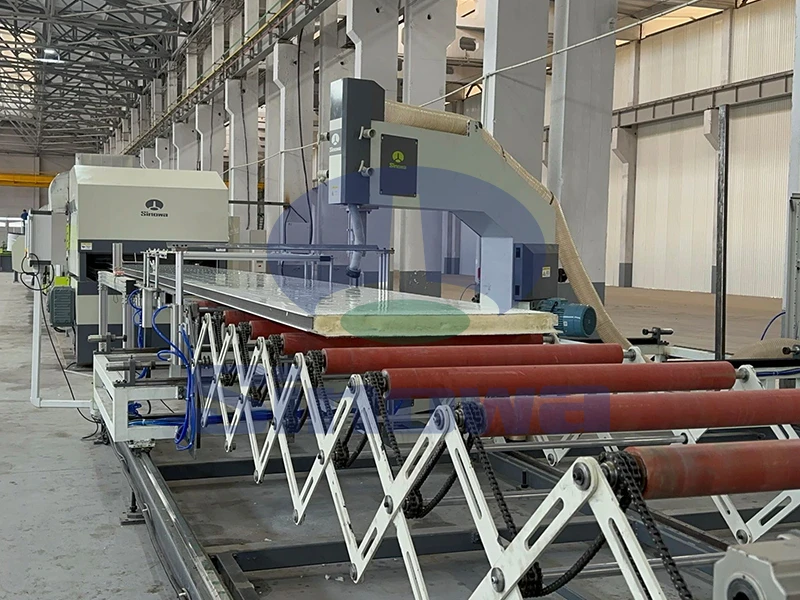
Polyurethane raw materials used for continuous sandwich panel production feature high moisture sensitivity, making ambient humidity the primary environmental variable that restricts production stability and product consistency throughout the full manufacturing process. The continuous production mode operates non-stop for long hours, which means even minor and persistent humidity fluctuations can accumulate into large-scale quality defects and production losses, unlike intermittent production that allows for process adjustments between batches. The core chemical reaction of PU foaming and curing involves the cross-linking of isocyanate and polyol components, and excess moisture in the air will trigger side reactions with isocyanate groups. These unwanted reactions generate tiny gas bubbles inside the foam core, destroy the uniform closed-cell structure of PU foam, and reduce the compactness and structural uniformity of the panel core layer. In excessively dry environments, although side chemical reactions are avoided, the rapid volatilization of trace auxiliary agents in raw materials will disrupt the foaming rate and curing rhythm, leading to uneven foam expansion and inconsistent panel thickness. Therefore, maintaining a mild and stable humidity state is the basic prerequisite to ensure the smooth progress of all production links in the continuous PU sandwich panel line.
The optimal ambient humidity range for long-term continuous operation of PU sandwich panel production lines is a moderate and stable humidity level that balances chemical reaction stability and physical molding effects. In actual continuous production scenarios, overly humid conditions with high relative humidity bring the most prominent quality risks. When air humidity exceeds the suitable range, moisture adheres to the surface of metal facing materials and raw material conveying pipelines, causing subtle surface dampness that weakens the interfacial adhesion between the PU foam core and the upper and lower panel facings. This weakened bonding force will lead to edge delamination, local hollowing, and poor overall composite performance of finished panels after long-term placement. Moreover, excessive humidity slows down the overall curing speed of PU foam. In continuous production, each panel has a fixed passing speed through the laminating and curing area. Insufficient curing caused by high humidity makes the foam core unable to complete solidification and shaping within the specified time, resulting in soft core layers, easy deformation, and reduced structural rigidity of finished products. Long-term high-humidity operation will also cause subtle moisture accumulation inside production equipment, accelerating the aging of precision metering and mixing components and reducing the operational accuracy of the continuous production line.
While high humidity poses obvious threats to production quality, ultra-dry environments also bring non-negligible adverse effects on continuous PU sandwich panel manufacturing. When ambient humidity is too low, the air has strong water absorption, which accelerates the loss of trace moisture and volatile auxiliary ingredients in the PU raw material mixture. These auxiliary substances play a key role in regulating foaming speed, controlling bubble size, and promoting uniform cross-linking reactions. Excessive loss will cause accelerated and disordered foaming of PU materials, forming irregular large bubbles and voids inside the foam core. This defect directly reduces the thermal insulation performance and structural uniformity of the sandwich panels, leading to inconsistent product quality in the continuous production batch. In addition, ultra-dry air easily generates static electricity on the surface of metal facings and production equipment. Static adsorption will attract fine dust and debris in the air, adhering to the composite interface of panels and further damaging the bonding tightness between the foam core and facings. Extreme dryness also aggravates the volatilization of raw material components, causing slight deviations in the material ratio of each production cycle and reducing the overall production stability of the assembly line.
Different key stages of the continuous PU sandwich panel production line have slightly differentiated humidity adaptation requirements, though all adhere to the core principle of stable moderate humidity. The raw material storage and pre-mixing stage is the most sensitive link to humidity fluctuation. Unprocessed PU raw materials need to be stored in a constant humidity environment to prevent moisture infiltration and component volatilization before entering the production line. Slightly stable humidity helps maintain the original chemical activity and component ratio of raw materials, laying a foundation for subsequent stable foaming. In the online foaming and laminating stage, humidity stability is crucial for real-time reaction control. Stable humidity ensures synchronous and uniform foaming and curing of PU materials between the upper and lower facings, avoiding local inconsistent curing and foaming differences caused by humidity changes. In the final cooling and shaping stage of finished panels, appropriate humidity can prevent rapid water loss on the panel surface, avoid surface cracking and internal stress concentration caused by excessive drying, and ensure the dimensional stability and flatness of finished panels after molding.
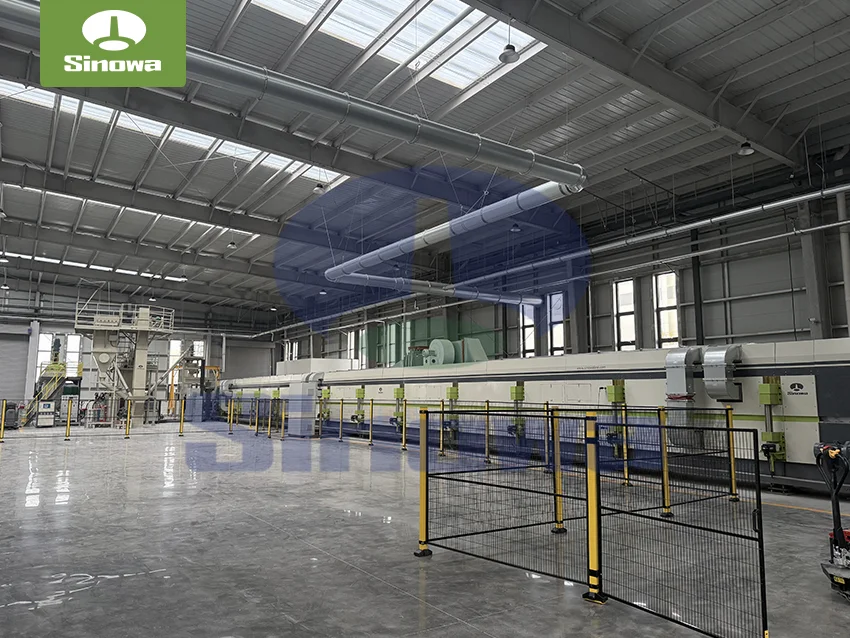
Long-term stable humidity control is the key to realizing uninterrupted high-quality operation of continuous PU sandwich panel production lines, requiring systematic environmental regulation throughout the workshop. First, it is necessary to configure professional workshop humidity adjustment equipment to maintain real-time humidity balance, avoid sudden humidity surges caused by external weather changes such as rainy days and dry seasons, and eliminate periodic humidity fluctuations. Second, the raw material feeding area and production core area should be isolated from the external environment to reduce the exchange of internal and external humid air, preventing external moisture or dry air from interfering with the production reaction process. Regular sealing inspection of raw material storage containers is also essential to avoid raw material deterioration caused by moisture ingress or component volatilization due to poor sealing. Meanwhile, real-time humidity monitoring should be implemented in the production workshop to track environmental changes throughout the day, and fine-tune the humidity adjustment equipment according to subtle fluctuations to ensure the production environment remains in a stable and suitable state all the time.
Reasonable humidity environment maintenance effectively improves the comprehensive yield and product performance consistency of continuous PU sandwich panel production. Under suitable and stable humidity conditions, the PU foam core can form a complete and uniform closed-cell structure, with stable density, excellent thermal insulation performance, and reliable structural toughness. The bonding interface between the foam core and metal facings maintains high compactness and adhesion strength, effectively avoiding common quality problems such as delamination, hollowing, and deformation of finished panels. Stable humidity also reduces the failure rate of production equipment caused by environmental interference, lowers the frequency of shutdown maintenance and raw material waste, and greatly improves the continuous operation efficiency and production continuity of the assembly line. In the long run, standardized humidity environment management helps form a stable and standardized production process, ensuring that each batch of panels produced continuously maintains consistent quality indicators and meets the application requirements of various usage scenarios.
Gallery
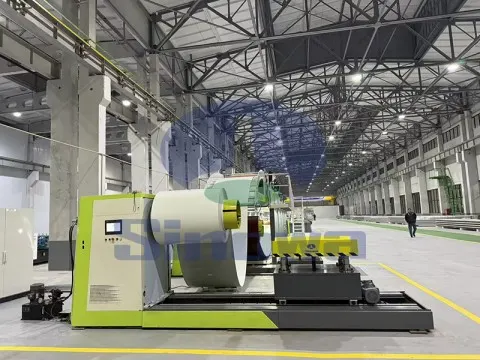
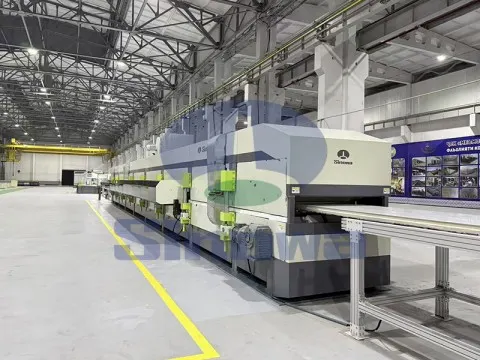
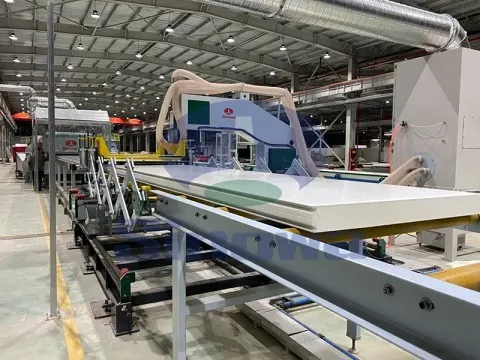
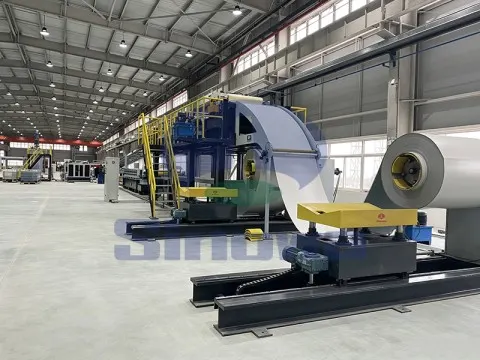
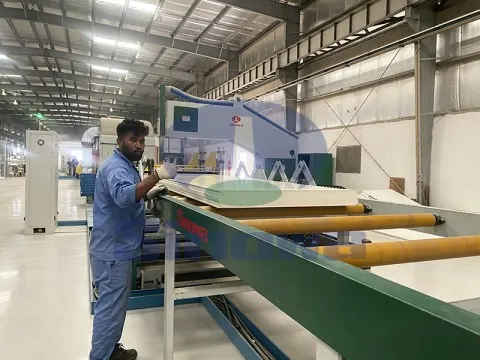
Sinowa is a professional manufacturer of sandwich panel machine in china, we provide diversified and high-performance sandwich panel production lines, including fully automatic continuous PU sandwich panel line and customized special lines to meet mass production and personalized order demands. These sandwich panel lines support processing multiple foam core materials, such as PU, PIR, mineral wool, rock wool and glass wool, covering different insulation and fireproof standards.
Featuring stable operation, high efficiency, energy saving and easy maintenance, our PU sandwich panel line deliver sandwich panels with excellent thermal insulation, fire resistance, sound insulation and lightweight durability. The finished panels are widely applied in industrial workshops, warehouse roofing and wall cladding, cold storage insulation, serving global construction and industrial insulation markets.
Main Products
-

Continuous PU Sandwich Panel Production Line
This continuous PU sandwich panel production line is an integrated automatic equipment. It covers uncoiling, forming, foaming, curing and cutting processes. With automatic raw material proportioning and precise temperature & pressure control, PIR sandwich panel production line continuously composites panels with double skins. Polyurethane sandwich panel production line stably produces steel and aluminum sandwich panels. Featuring high automation, the line makes fireproof and thermal-insulation panels for building enclosure and cold storage. -
Rock Wool Sandwich Panel Production Line
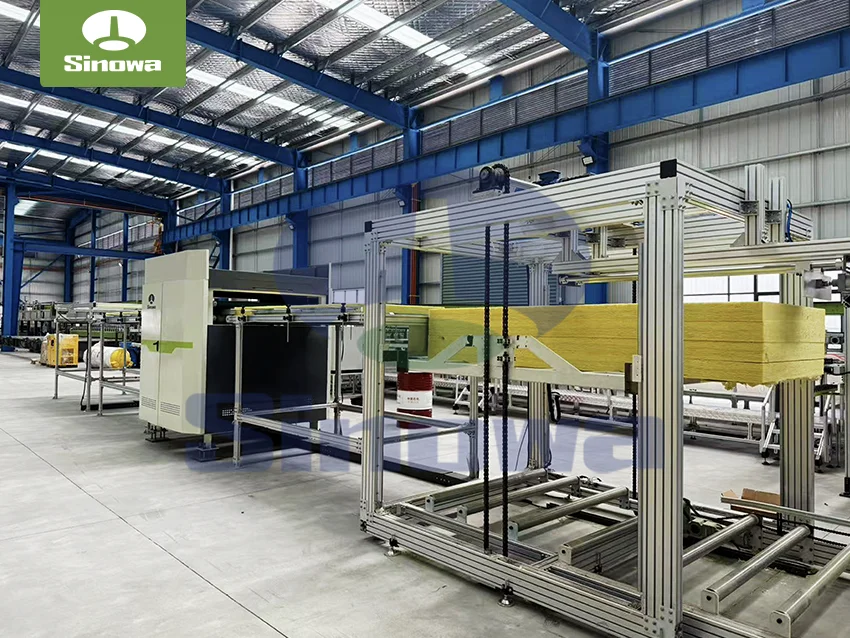
Continuous rockwool sandwich panel production line is an automatic integrated production equipment, consisting of uncoiling, forming, gluing and compounding, heating curing, fixed-length cutting, automatic stacking and other modules. The mineral wool sandwich panel production line continuously conveys color steel plates and rock wool core materials to automatically complete lamination and curing, which can produce fireproof and thermal insulation sandwich panels. Featuring high automation degree and stable operation, this production line is suitable for mass production of panels used for building walls, roofs and other scenarios. -
Phenolic Insulation Board Production Line
This integrated automatic production line continuously manufactures PU and phenolic insulation boards. The insulation board production line covers raw material proportioning, high-pressure foaming, laminating, curing and fixed-length cutting. Featuring high automation and stable molding, the insulation panel production line supports various surface materials. PU boards offer excellent thermal insulation, while phenolic boards have superior fire resistance. These products are widely used in construction, cold chain, ventilation ducts and other thermal insulation fields.
Other FAQs
- Does The Continuous PU Sandwich Panel Manufacturing Line Support Automatic Stacking And Packing
- Can PIR Sandwich Panel Production Line Produce Prefabricated Container House Roof Panels
- Why Is The Foaming Expansion Rate Unstable On The PU Foam Production Line
- How Does A PUF Sandwich Panel Production Line Cut Panels To Fixed Lengths
- Automatic Error Correction Function Of Polyurethane Sandwich Panel Production Line
- Workshop Space Layout Requirement For PU Sandwich Panel Production Line
- Operator Professional Training Content For PU Sandwich Panel Line
- Energy Consumption Standard Of Automatic PU Sandwich Panel Production Equipment
- What Safety Protection Measures Are Needed For A Polyurethane Sandwich Panel Manufacturing Line
- What Regular Maintenance Does A Polyurethane Sandwich Panel Line Need
Related Articles
- PU Sandwich Panel Roll Forming Machine
- PU Sandwich Panel Machine Made In China
- Customized PU Sandwich Panel Line For Different Thickness Panels
- Sandwich Panel Line Easy Maintainable
- PIR Sandwich Panel Line For Insulated Panels With B1-Grade Flame Retardancy
- PUR Sandwich Panel Line With Adjustable Panel Thickness
- Insulated Partition Panel Line
- PU Sandwich Panel Machine With Heavyweight Foam Core
- Clean Room Panel Continuous Production Line
- PU Sandwich Panel Line For Industrial Warehouse