How To Adjust The Foaming Ratio Of A Polyurethane Sandwich Panel Production Line
Sep 29, 2026
Adjusting the foaming ratio is a core operation to guarantee stable quality of finished products on a polyurethane sandwich panel production line.
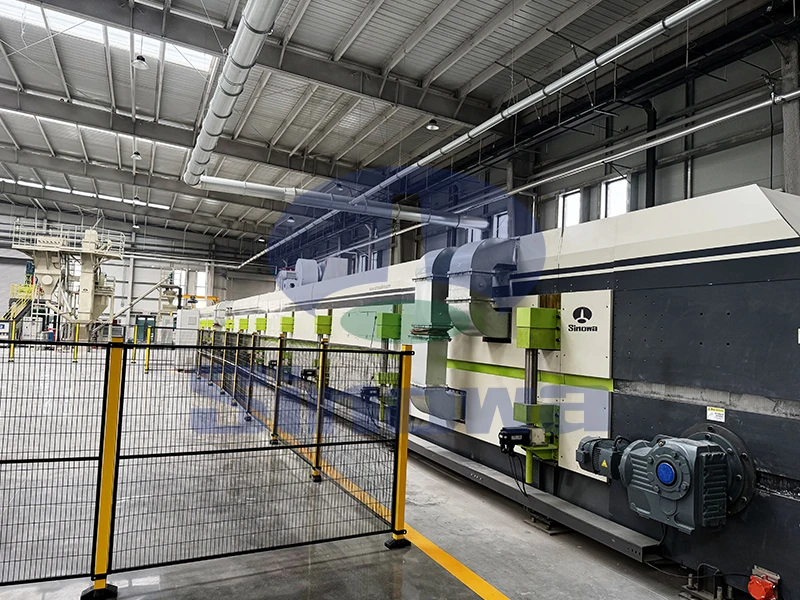
The foaming ratio directly determines the core density, thermal insulation performance and structural stability of finished panels, making precise adjustment indispensable for the polyurethane sandwich panel production line. The core essence of foaming ratio adjustment lies in balancing the chemical reaction speed and foam expansion degree of polyurethane raw materials, mainly including polyol, isocyanate, blowing agents and functional additives. Slight deviations in the foaming ratio will lead to common defects such as uneven foam pores, insufficient core filling, excessive expansion or local hollowing of panels. Before formal adjustment, operators need to conduct real-time inspection of the operating status of the entire polyurethane sandwich panel production line, focusing on the metering system and mixing device that directly affect raw material delivery accuracy. It is necessary to clean residual raw materials in the pipeline and mixing head to avoid residual old materials interfering with new material reaction and causing foaming ratio fluctuation. Meanwhile, preheat the production equipment to a stable operating state, because cold equipment will slow down the initial chemical reaction of polyurethane materials and cause inconsistent foaming expansion speed in the early and late stages of production. Standardized pre-adjustment inspection can eliminate equipment and pipeline interference factors and lay a foundation for accurate foaming ratio calibration.
Precise raw material proportioning is the primary step to adjust the foaming ratio of the polyurethane sandwich panel line. Polyurethane foaming is completed by the cross-linking reaction between polyol and isocyanate, and the dosage of blowing agents and catalysts directly controls the foam expansion multiple. In actual production, the basic foaming ratio is determined by the matching proportion of main raw materials. When the panel needs lower density and better thermal insulation, the dosage of blowing agents can be appropriately increased under the premise of ensuring the basic reaction proportion of main materials is stable, so as to improve the foam expansion ratio and reduce the core compactness. If the finished panel requires higher hardness and compressive resistance, it is necessary to reduce the addition of blowing agents and slightly increase the proportion of main reaction materials to reduce the foaming ratio and form a dense foam core layer. Operators need to adjust the metering parameters of the automatic feeding system of the polyurethane sandwich panel production line in real time, and the servo metering pump can accurately control the output of each raw material to avoid feeding deviation. It is forbidden to adjust the dosage of a single raw material excessively, as unbalanced proportion will cause incomplete chemical reaction, resulting in foam embrittlement, shrinkage or poor adhesion between the core layer and the panel surface layer.
Equipment operating parameters are key adjustable factors that affect the foaming ratio stability of the polyurethane sandwich panel line. The mixing speed of the mixing head and the material injection pressure are two core parameters that need fine tuning. Too low mixing speed will lead to uneven mixing of raw materials, partial insufficient reaction and inconsistent local foaming ratio of the panel; too high mixing speed will introduce excess air into the mixed materials, causing large foam pores and reduced panel uniformity. According to different production speeds, operators need to match the optimal mixing frequency to ensure full and uniform fusion of all raw materials. Injection pressure also plays a vital role in foaming effect. Stable and moderate injection pressure can make the polyurethane mixed materials evenly spread between the upper and lower surface layers of the panel, and complete uniform expansion and foaming in the limited space. Excessively high pressure will cause excessive foaming material overflow and excessive local compression, while low pressure will lead to incomplete material spreading and hollow core layer. In addition, the operating speed of the polyurethane sandwich panel production line needs to be coordinated with the foaming reaction speed. Fast production line speed requires appropriately accelerated material reaction and moderate increase of foaming ratio, to ensure that the foam completes expansion and curing before panel lamination and forming.
Temperature control throughout the production process indirectly regulates the foaming ratio of the polyurethane sandwich panel production line. The chemical reaction rate of polyurethane materials is extremely sensitive to temperature changes, and ambient temperature and equipment curing temperature will significantly affect the final foaming expansion effect. In low-temperature production environments, the molecular activity of raw materials decreases, the reaction speed slows down, and the foam expansion is insufficient, resulting in a low actual foaming ratio and dense and heavy panel core. At this time, operators can appropriately increase the preheating temperature of raw materials and the temperature of the foaming tunnel, and slightly adjust the catalyst dosage to accelerate the reaction rate, so as to compensate for the insufficient expansion caused by low temperature and restore the standard foaming ratio. In high-temperature environments, the material reaction is too fast, the foam expands rapidly and then shrinks partially, leading to unstable foaming ratio and easy generation of fine pores and cracks in the core layer. It is necessary to reduce the preheating temperature and appropriately delay the material curing time to make the foam expand stably and fully. Real-time temperature monitoring and dynamic adjustment can effectively avoid foaming ratio fluctuation caused by seasonal and environmental temperature changes, and maintain consistent product quality of the polyurethane sandwich panel production line.
Online detection and fine calibration are essential to maintain long-term stable foaming ratio of the polyurethane sandwich panel production line. After each parameter adjustment, operators need to conduct sampling inspection on the produced panels, detect the core density, foam pore uniformity and overall thickness consistency, and judge whether the foaming ratio meets the production requirements. If the panel has local bulging, it indicates that the partial foaming ratio is too high and the expansion is excessive, and it is necessary to reduce the blowing agent dosage or appropriately increase the lamination pressure to limit excessive foam expansion. If the panel core is loose and has gaps, the foaming ratio is insufficient, and the raw material proportion and injection parameters need to be adjusted to improve the expansion degree. In continuous production, the metering accuracy of the polyurethane sandwich panel production line will have slight drift with the extension of operating time. Regular calibration of the metering pump and mixing system can eliminate cumulative errors and ensure the long-term stability of the foaming ratio. Timely fine tuning according to product detection feedback can realize closed-loop control of foaming ratio adjustment.
Standardized daily maintenance and parameter file management can realize intelligent and precise adjustment of the foaming ratio for the polyurethane sandwich panel production line. Different types of polyurethane sandwich panels have differentiated foaming ratio requirements according to usage scenarios. Operators can sort out and record the optimal parameter combinations of raw material proportion, mixing speed, temperature and pressure corresponding to different foaming ratios, and form a complete production parameter database. When switching product specifications, it is only necessary to call the matched parameter scheme, which can quickly complete foaming ratio adjustment and avoid repeated debugging errors. Daily maintenance work includes cleaning the mixing head, checking pipeline blockage, and testing the sensitivity of temperature and pressure sensors, all of which can prevent equipment failure from affecting foaming ratio stability. Scientific maintenance and standardized parameter management not only improve the adjustment efficiency of the polyurethane sandwich panel production line, but also effectively reduce product defect rates and ensure the continuous and stable output of high-quality sandwich panels.
Gallery
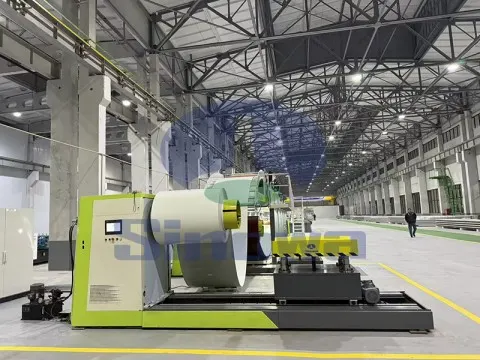
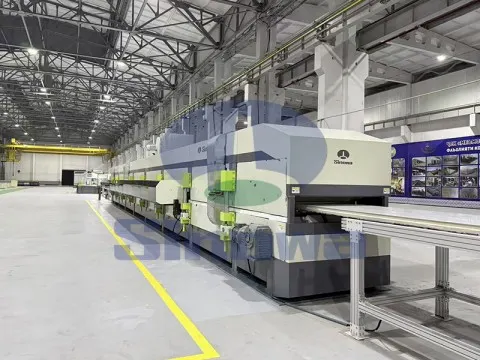
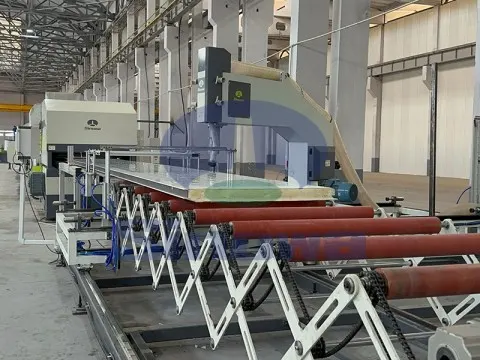
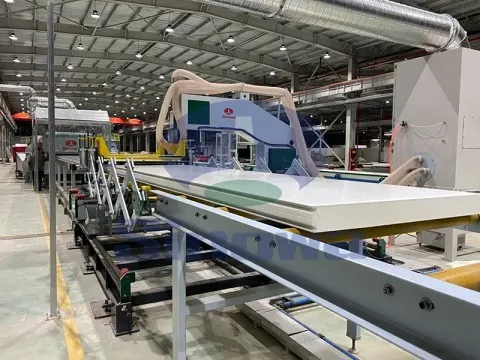
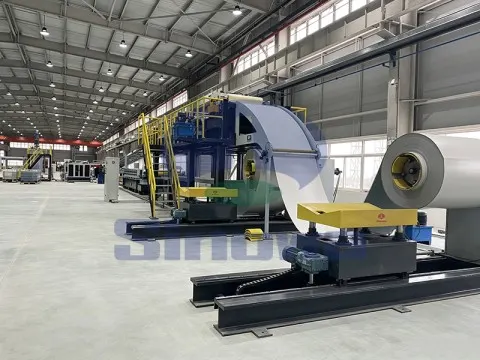
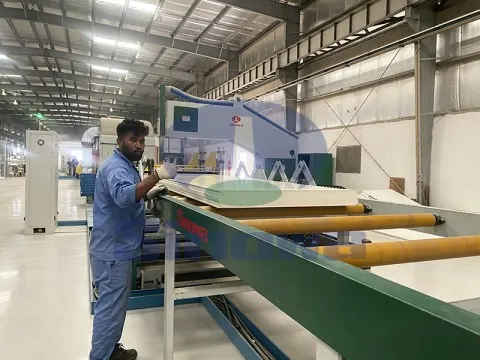
Sinowa is a professional manufacturer of sandwich panel machine in china, we provide diversified and high-performance sandwich panel production lines, including fully automatic continuous PU sandwich panel line and customized special lines to meet mass production and personalized order demands. These sandwich panel lines support processing multiple foam core materials, such as PU, PIR, mineral wool, rock wool and glass wool, covering different insulation and fireproof standards.
Featuring stable operation, high efficiency, energy saving and easy maintenance, our PU sandwich panel line deliver sandwich panels with excellent thermal insulation, fire resistance, sound insulation and lightweight durability. The finished panels are widely applied in industrial workshops, warehouse roofing and wall cladding, cold storage insulation, serving global construction and industrial insulation markets.
Main Products
-

Continuous PU Sandwich Panel Production Line
This continuous PU sandwich panel production line is an integrated automatic equipment. It covers uncoiling, forming, foaming, curing and cutting processes. With automatic raw material proportioning and precise temperature & pressure control, PIR sandwich panel production line continuously composites panels with double skins. Polyurethane sandwich panel production line stably produces steel and aluminum sandwich panels. Featuring high automation, the line makes fireproof and thermal-insulation panels for building enclosure and cold storage. -

Rock Wool Sandwich Panel Production Line
Continuous rockwool sandwich panel production line is an automatic integrated production equipment, consisting of uncoiling, forming, gluing and compounding, heating curing, fixed-length cutting, automatic stacking and other modules. The mineral wool sandwich panel production line continuously conveys color steel plates and rock wool core materials to automatically complete lamination and curing, which can produce fireproof and thermal insulation sandwich panels. Featuring high automation degree and stable operation, this production line is suitable for mass production of panels used for building walls, roofs and other scenarios. -

Phenolic Insulation Board Production Line
This integrated automatic production line continuously manufactures PU and phenolic insulation boards. The insulation board production line covers raw material proportioning, high-pressure foaming, laminating, curing and fixed-length cutting. Featuring high automation and stable molding, the insulation panel production line supports various surface materials. PU boards offer excellent thermal insulation, while phenolic boards have superior fire resistance. These products are widely used in construction, cold chain, ventilation ducts and other thermal insulation fields.
Other FAQs
- What Are The Common Faults Of A Polyurethane Sandwich Panel Machine
- How To Optimize Cutting Sequence Of PIR Sandwich Panel Production Line Batch Panels
- How To Adjust The Feeding Speed Of Insulation Panel Production Line For Stable Output
- Can A Continuous PU Sandwich Panel Production Line Be Customized For Special Panel Profiles
- Why Does The PUR Sandwich Panel Production Line Have Inaccurate Cutting Length
- Working Principle of PU Sandwich Panel Production Line
- PU Sandwich Panel Production Line Vibration Reduction And Noise Control Scheme
- Production Efficiency Improvement Measures Of Sandwich Panel Production Line
- Production Line Operation Steps For Continuous PU Sandwich Panel Molding
- How To Maintain A Polyurethane Sandwich Panel Machine Daily
Related Articles
- Latest Sandwich Panel Line
- PIR Sandwich Panel Production Line For Chiller Room Panels
- Polyurethane Sandwich Panel Line With Lubrication System
- High-quality PU Sandwich Panel Line For Sale
- Insulation Board Production Equipment
- Steel Structure PU Sandwich Panel Line
- PU Sandwich Panel Making Machine For Corrugated Composite Boards
- Roof Insulation Board Production Line
- Features of PU Foam Production Line
- PU Sandwich Panel Manufacturing Line With Automatic Cutting Length Setting