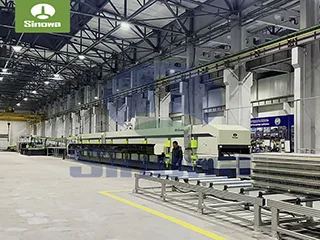
sandwich panel line
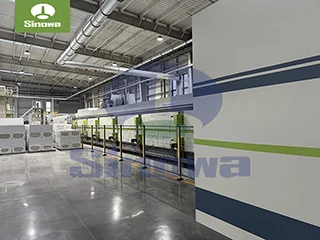
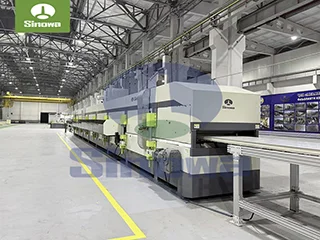
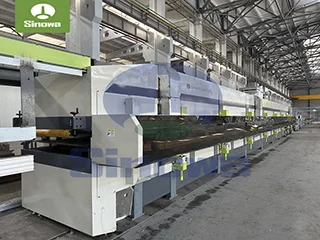
The structure of the exterior wall insulation board production line is a systematic combination of multiple functional units, each of which undertakes specific production tasks and cooperates closely to form a continuous and efficient production process. Generally speaking, a complete production line is mainly composed of raw material feeding system, mixing system, molding system, curing system, cutting system, conveying system, and control system, and each system is composed of multiple components with different functions, which together ensure the smooth progress of the entire production process. The raw material feeding system is the starting link of the production line, responsible for transporting various raw materials required for the production of insulation boards to the mixing system in a timely and accurate manner. The raw materials of exterior wall insulation boards are diverse, including inorganic materials such as cement, sand, fly ash, and mineral wool, and organic materials such as polystyrene foam, polyurethane, and phenolic resin. Therefore, the feeding system is usually equipped with multiple feeding hoppers, conveyors, and metering devices. The metering devices can accurately control the proportion of each raw material according to the production formula, which is the key to ensuring the performance stability of insulation boards. The conveyors are usually screw conveyors or belt conveyors, which have the characteristics of stable operation, uniform feeding, and low noise, and can avoid raw material waste and environmental pollution caused by leakage during the feeding process.
The mixing system is the core link affecting the uniformity and performance of insulation board raw materials. Its main function is to fully mix various raw materials transported by the feeding system with an appropriate amount of water or other additives to form a homogeneous mixture with stable performance. The mixing system is usually composed of a mixer, mixing tank, and auxiliary mixing equipment. The mixer is the core component of the system, and its type and structure directly affect the mixing effect and production efficiency. Common mixers include horizontal double-shaft mixers, vertical single-shaft mixers, and high-speed shear mixers. Among them, horizontal double-shaft mixers are widely used in insulation board production lines due to their strong mixing capacity, uniform mixing, and high efficiency. They can fully stir the raw materials through the reverse rotation of the two shafts and the special structure of the blades, ensuring that each component is evenly distributed in the mixture. The mixing tank is used to store the mixed materials and maintain their fluidity, so as to facilitate the smooth transportation of the materials to the molding system. In addition, the mixing system is usually equipped with a cleaning device, which can timely clean the inner wall of the mixer and the mixing tank after production, avoiding the caking of residual materials and affecting the quality of subsequent products.
The molding system is responsible for pressing or pouring the mixed raw materials into insulation board blanks of specified shape and size, which is the key link determining the appearance size and initial performance of insulation boards. According to the different production processes and raw material types of insulation boards, the molding systems of production lines are also diverse, mainly including extrusion molding, compression molding, pouring molding, and composite molding. Extrusion molding systems are usually used for the production of organic insulation boards such as polystyrene and polyurethane. They use extruders to heat and melt the raw materials, and then extrude them through molds of specified shapes to form continuous insulation board blanks, which have the characteristics of high production efficiency and uniform product size. Compression molding systems are suitable for the production of inorganic insulation boards such as cement-based insulation boards and mineral wool insulation boards. They use hydraulic presses or mechanical presses to press the mixed raw materials into blanks under a certain pressure and temperature, which can improve the density and strength of insulation boards. Pouring molding systems are mainly used for the production of large-size or special-shaped insulation boards. They pour the mixed fluid materials into prefabricated molds, and form blanks after natural curing or artificial curing, which have strong flexibility and can meet the personalized production needs of different projects. Composite molding systems are used for the production of composite insulation boards, which can combine two or more different types of insulation materials into one blank through lamination, bonding, or other processes, so as to give full play to the advantages of various materials and improve the comprehensive performance of insulation boards.
The curing system is used to treat the formed insulation board blanks to improve their strength, hardness, thermal insulation performance, and durability. The curing process is essentially a process in which the raw materials in the blanks undergo physical or chemical reactions to form a stable structure. According to the different types of insulation boards, the curing methods and curing systems are also different, mainly including natural curing, steam curing, and thermal curing. Natural curing systems are the simplest and most economical curing method, which only need to place the formed blanks in a clean, ventilated, and dry environment for a certain period of time to complete the curing process. This method is suitable for small-scale production or some inorganic insulation boards with slow curing speed. Steam curing systems are widely used in large-scale production lines, especially for cement-based insulation boards. They use steam curing chambers to control the temperature, humidity, and curing time of the blanks, which can greatly shorten the curing cycle and improve production efficiency. The steam curing system is usually composed of a steam generator, curing chamber, temperature and humidity control device, and ventilation device. The temperature and humidity control device can accurately adjust the environmental parameters in the curing chamber according to the curing requirements of different insulation boards, ensuring the curing quality. Thermal curing systems are mainly used for organic insulation boards such as polyurethane and phenolic resin insulation boards. They use heating equipment to heat the blanks to a certain temperature and keep them for a certain time, so as to promote the cross-linking reaction of organic materials and improve the performance of the products.
The cutting system is responsible for cutting the cured insulation board blanks into finished products of specified length, width, and thickness. The cutting accuracy directly affects the installation effect and quality of insulation boards, so the cutting system is required to have high cutting accuracy, stable operation, and high efficiency. The cutting system is usually composed of cutting machines, positioning devices, and dust removal devices. Common cutting machines include circular saw cutting machines, band saw cutting machines, and CNC cutting machines. Among them, CNC cutting machines are widely used in modern production lines due to their high cutting accuracy, flexible operation, and strong adaptability. They can accurately cut the blanks according to the preset size parameters through computer control, and can realize continuous cutting, greatly improving production efficiency. The positioning device is used to fix the blanks during the cutting process, avoiding the deviation of the blanks and affecting the cutting accuracy. The dust removal device is used to collect the dust and debris generated during the cutting process, which not only protects the environment but also ensures the health of operators.
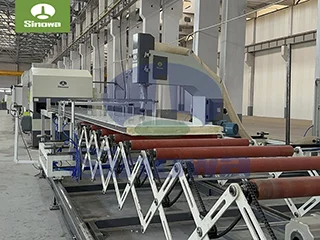
The conveying system runs through the entire production line, responsible for transporting raw materials, mixed materials, blanks, and finished products between various functional units, ensuring the continuity of the production process. The conveying system is composed of various conveyors, such as belt conveyors, screw conveyors, roller conveyors, and chain conveyors. Different types of conveyors are selected according to the characteristics of the transported materials and the layout of the production line. For example, belt conveyors are suitable for transporting bulk raw materials and finished products with large volume and light weight; screw conveyors are suitable for transporting powdery or granular raw materials and mixed materials; roller conveyors are suitable for transporting blanks and finished products with flat surfaces. The conveying system is usually equipped with speed control devices, which can adjust the conveying speed according to the production rhythm, ensuring the coordination between various processes. In addition, the conveying system is also equipped with protective devices to avoid safety accidents caused by material leakage or equipment failure.
The control system is the "brain" of the exterior wall insulation board production line, responsible for controlling and coordinating the operation of all functional units, ensuring the stability, accuracy, and efficiency of the entire production process. With the development of automation and intelligence technology, the control systems of modern production lines have gradually developed from manual control to automatic control and intelligent control. The automatic control system is composed of a controller, sensor, actuator, and human-machine interface. The sensor is used to collect various parameters in the production process, such as raw material dosage, mixing time, molding pressure, curing temperature, and cutting size, and transmit these parameters to the controller. The controller compares the collected parameters with the preset parameters, and issues control commands to the actuator to adjust the operation of each equipment, ensuring that the production process is carried out according to the set standards. The human-machine interface allows operators to set production parameters, monitor production status, and handle equipment faults in a timely manner, which is convenient for operation and management. The intelligent control system is based on the automatic control system, integrating technologies such as artificial intelligence, big data, and the Internet of Things. It can realize self-optimization of production parameters, predictive maintenance of equipment, and remote monitoring of production status, further improving production efficiency and product quality, and reducing labor costs.
The performance of the exterior wall insulation board production line is an important indicator to measure its quality and production capacity, which directly affects the production efficiency, product quality, and production cost. The main performance indicators of the production line include production efficiency, product quality stability, energy consumption, automation level, reliability, and environmental protection performance. Production efficiency refers to the output of insulation boards that the production line can complete per unit time, which is an important indicator reflecting the production capacity of the production line. The production efficiency of modern production lines is usually affected by factors such as the speed of each functional unit, the coordination between processes, and the automation level. With the continuous improvement of automation and intelligence, the production efficiency of the production line has been greatly improved, and some large-scale production lines can even achieve an annual output of tens of millions of square meters of insulation boards. Product quality stability refers to the consistency of the performance and size of the insulation boards produced by the production line. This indicator is mainly determined by the accuracy of the metering device, the mixing effect of the mixing system, the molding precision of the molding system, and the stability of the curing system. A high-quality production line can ensure that the performance indicators such as density, strength, thermal conductivity, and water absorption of each batch of insulation boards are within the preset range, avoiding quality fluctuations.
Energy consumption is an important indicator reflecting the economic performance and environmental protection performance of the production line. With the increasing emphasis on energy conservation and environmental protection, the energy consumption of the production line has become one of the key factors considered by enterprises when purchasing equipment. The energy consumption of the production line is mainly concentrated in the mixing system, molding system, curing system, and cutting system. Modern production lines usually adopt energy-saving technologies and equipment to reduce energy consumption, such as using high-efficiency motors, optimizing the structure of the mixer to reduce power consumption, using waste heat recovery technology to reuse the waste heat generated during the curing process, and adopting energy-saving heating methods to reduce the energy consumption of the curing system. Automation level refers to the degree to which the production line can complete the production process automatically without manual intervention. A high automation level can not only reduce the labor intensity of operators, reduce the number of operators, and reduce labor costs but also avoid human errors and improve the stability of product quality. The automation level of modern production lines is constantly improving, and some advanced production lines can even realize fully automatic production from raw material feeding to finished product packaging, with only a small number of operators responsible for monitoring and management.
Reliability refers to the ability of the production line to maintain stable operation for a long time under normal working conditions, which is an important indicator reflecting the service life and maintenance cost of the production line. The reliability of the production line is mainly determined by the quality of the equipment components, the rationality of the structure design, and the level of maintenance. High-quality production lines usually adopt high-quality components with good wear resistance, corrosion resistance, and fatigue resistance, and the structure design is reasonable, which can reduce the failure rate of equipment. In addition, the production line is usually equipped with fault diagnosis devices, which can timely detect equipment faults and issue alarm signals, facilitating operators to handle faults in a timely manner, reducing downtime, and improving production efficiency. Environmental protection performance refers to the impact of the production line on the environment during the production process, mainly including the emission of dust, waste water, and waste gas, and the generation of noise. Modern production lines pay great attention to environmental protection performance, and are usually equipped with dust removal devices, waste water treatment devices, and waste gas treatment devices to reduce the emission of pollutants. At the same time, the equipment adopts noise reduction design to reduce noise pollution, ensuring that the production process meets the national environmental protection standards and protecting the ecological environment and the health of operators.
Due to the diversity of raw materials, production processes, and product specifications of exterior wall insulation boards, the exterior wall insulation board production line also has a variety of types, which can be divided into different categories according to different classification standards. According to the type of raw materials of insulation boards, the production line can be divided into organic insulation board production lines, inorganic insulation board production lines, and composite insulation board production lines. Organic insulation board production lines are mainly used for the production of insulation boards made of organic materials, such as polystyrene foam insulation board production lines, polyurethane insulation board production lines, and phenolic resin insulation board production lines. Polystyrene foam insulation board production lines are divided into expanded polystyrene (EPS) insulation board production lines and extruded polystyrene (XPS) insulation board production lines. EPS insulation board production lines usually include raw material pre-expansion, aging, molding, curing, and cutting processes, and are characterized by simple equipment structure, low energy consumption, and wide application range. XPS insulation board production lines adopt extrusion molding process, which has the characteristics of high production efficiency, uniform product density, and excellent thermal insulation performance. Polyurethane insulation board production lines are mainly used for the production of rigid polyurethane insulation boards, which have the advantages of low thermal conductivity, light weight, and good sound insulation performance. The production line usually includes raw material mixing, foaming, molding, curing, and cutting processes, and requires high control accuracy of the production process. Phenolic resin insulation board production lines are used for the production of phenolic insulation boards with excellent fire resistance, which are widely applied in high-rise buildings and other projects with high fire protection requirements. The production line adopts foaming and curing processes, and the equipment has high requirements for high temperature resistance and corrosion resistance.
Inorganic insulation board production lines are mainly used for the production of insulation boards made of inorganic materials, such as cement-based insulation board production lines, mineral wool insulation board production lines, and glass wool insulation board production lines. Cement-based insulation board production lines are the most widely used inorganic insulation board production lines, which can produce cement-based composite insulation boards, cement foam insulation boards, and other products by using cement, fly ash, sand, and other raw materials. The production line usually includes raw material mixing, molding, steam curing, cutting, and other processes, and has the characteristics of wide source of raw materials, low cost, and good fire resistance. Mineral wool insulation board production lines are used for the production of mineral wool insulation boards made of basalt, diabase, and other raw materials. The production line includes raw material melting, fiber forming, mixing, molding, curing, and cutting processes, and the products have the advantages of good fire resistance, sound insulation performance, and high temperature resistance. Glass wool insulation board production lines are similar to mineral wool insulation board production lines, but the raw materials used are glass scraps and other materials, and the products have the characteristics of light weight, good flexibility, and easy construction. Composite insulation board production lines are used for the production of composite insulation boards made of two or more different types of materials, such as organic-inorganic composite insulation board production lines, metal composite insulation board production lines, and decorative composite insulation board production lines. Organic-inorganic composite insulation board production lines combine the advantages of organic and inorganic materials, making the products have both excellent thermal insulation performance and good fire resistance. The production line usually includes composite molding, curing, cutting, and other processes, and the equipment structure is relatively complex. Metal composite insulation board production lines combine metal panels with insulation cores to produce metal composite insulation boards, which are widely used in industrial plants, warehouses, and other projects. The production line includes metal panel processing, insulation core molding, composite bonding, cutting, and other processes. Decorative composite insulation board production lines integrate insulation and decoration functions, and the products can be directly used for exterior wall decoration and insulation, which can save construction time and cost. The production line usually includes decorative surface processing, insulation core production, composite molding, and other processes.
According to the production scale, the exterior wall insulation board production line can be divided into small-scale production lines, medium-scale production lines, and large-scale production lines. Small-scale production lines are usually suitable for small enterprises or individual workshops, with simple equipment structure, small investment, low production efficiency, and an annual output of usually less than 1 million square meters. The production line is mostly manually operated or semi-automatically operated, and is suitable for the production of small-batch and multi-specification insulation boards. Medium-scale production lines are suitable for medium-sized enterprises, with relatively complete equipment configuration, moderate production efficiency, and an annual output of 1-5 million square meters. The production line adopts semi-automatic or automatic control, which can realize continuous production and ensure the stability of product quality. Large-scale production lines are suitable for large enterprises with strong strength, with complete equipment configuration, high automation level, and an annual output of more than 5 million square meters. The production line adopts fully automatic control and intelligent management, which can realize the integration of raw material processing, production, packaging, and storage, with high production efficiency, stable product quality, and low labor cost. According to the molding process, the production line can be divided into extrusion molding production lines, compression molding production lines, pouring molding production lines, and lamination molding production lines. Extrusion molding production lines are mainly used for the production of organic insulation boards, with high production efficiency and uniform product size. Compression molding production lines are suitable for the production of inorganic insulation boards, with high product density and strength. Pouring molding production lines are suitable for the production of large-size or special-shaped insulation boards, with strong flexibility. Lamination molding production lines are mainly used for the production of composite insulation boards, which can combine multiple layers of materials into one.
The exterior wall insulation board production line has a wide range of applications, covering various fields such as construction, industry, agriculture, and transportation, and plays an important role in improving energy efficiency, protecting the environment, and improving the quality of buildings and facilities. In the construction field, which is the main application field of the production line, the insulation boards produced by the production line are widely used in the exterior wall insulation of residential buildings, commercial buildings, industrial plants, public buildings, and other projects. In residential buildings, exterior wall insulation boards can effectively reduce indoor heat loss in winter and heat gain in summer, improve indoor thermal comfort, reduce the energy consumption of air conditioning and heating equipment, and achieve the purpose of energy conservation and emission reduction. With the continuous improvement of people's living standards, the demand for residential comfort is increasing, and the application of exterior wall insulation boards in residential buildings is becoming more and more extensive. In commercial buildings and public buildings, such as shopping malls, office buildings, hospitals, and schools, exterior wall insulation boards not only can save energy but also can improve the sound insulation performance of buildings, reduce the impact of external noise on the indoor environment, and create a quiet and comfortable indoor space. In industrial plants, especially in plants that need to maintain a constant indoor temperature, such as chemical plants, electronics factories, and food processing factories, exterior wall insulation boards can effectively maintain indoor temperature stability, reduce energy consumption, and ensure the normal operation of production equipment and production processes.
In addition to the exterior wall insulation of new buildings, the production line also plays an important role in the energy-saving renovation of existing buildings. A large number of existing buildings in various countries have problems such as poor thermal insulation performance and high energy consumption, which need to be renovated to improve energy efficiency. The insulation boards produced by the exterior wall insulation board production line are easy to construct and have good compatibility with existing building structures, making them ideal materials for the energy-saving renovation of existing buildings. Through the exterior wall insulation renovation of existing buildings, the energy consumption of buildings can be greatly reduced, the indoor thermal comfort can be improved, and the service life of buildings can be extended, which has important economic and social benefits. In the industrial field, the insulation boards produced by the production line are widely used in the insulation of industrial equipment, pipelines, and storage tanks. Industrial equipment and pipelines often need to transport or store high-temperature or low-temperature media, and the use of insulation boards can effectively reduce heat loss or cold loss, improve the efficiency of equipment operation, reduce energy consumption, and ensure the safety of production. For example, in thermal power plants, chemical plants, and other enterprises, the insulation of boilers, pipelines, and other equipment is very important, and the insulation boards produced by the production line can meet the insulation requirements of different equipment and media.
In the agricultural field, the production line also has a certain application space. The insulation boards produced by the production line can be used for the construction of greenhouses, livestock houses, and other agricultural facilities. Greenhouses need to maintain a certain indoor temperature to ensure the normal growth of crops, especially in cold areas. The use of insulation boards as the exterior wall and roof materials of greenhouses can effectively reduce heat loss, improve the thermal insulation performance of greenhouses, reduce the energy consumption of heating equipment, and extend the growing period of crops, increasing crop yield and quality. Livestock houses need to maintain a suitable indoor temperature and humidity to ensure the healthy growth of livestock. The insulation boards can improve the thermal insulation and moisture-proof performance of livestock houses, reduce the impact of external environment on livestock, and reduce the incidence of livestock diseases. In the transportation field, the insulation boards produced by the production line are used in the insulation of transportation vehicles, such as refrigerated trucks, insulated carriages, and ships. Refrigerated trucks and insulated carriages need to maintain a low temperature during transportation to ensure the quality of perishable goods such as food and medicine. The insulation boards with excellent thermal insulation performance can effectively reduce the loss of cold energy, improve the insulation effect of the carriage, extend the transportation distance, and reduce the energy consumption of the refrigeration system. In ships, the insulation boards are used for the insulation of cabins and pipelines, which can improve the comfort of the cabin environment and ensure the normal operation of the ship's equipment.
In addition, with the continuous development of new materials and new technologies, the application scope of the exterior wall insulation board production line is still expanding. For example, in the field of new energy, the insulation boards produced by the production line can be used for the insulation of solar water heaters, solar greenhouses, and other equipment, improving the efficiency of new energy utilization. In the field of environmental protection, the production line can use industrial waste such as fly ash and slag as raw materials to produce insulation boards, realizing the recycling of waste resources and reducing environmental pollution. In the field of high-rise buildings and ultra-high-rise buildings, the production line can produce insulation boards with light weight, high strength, and good fire resistance, meeting the special requirements of high-rise buildings for insulation materials. It should be noted that the application of the exterior wall insulation board production line is closely related to the local climate conditions, building standards, and energy conservation policies. In cold areas, the demand for insulation boards with excellent thermal insulation performance is large, so the production line needs to focus on improving the thermal insulation performance of products; in hot areas, the demand for insulation boards with good heat insulation performance is large, so the production line can adjust the product formula and production process to meet the local needs; in areas with strict fire protection requirements, the production line needs to produce insulation boards with good fire resistance, ensuring the safety of buildings.
In conclusion, the exterior wall insulation board production line is an important equipment in the modern construction industry and related fields, whose structure, performance, types, and applications are closely related to the quality of insulation boards, production efficiency, and energy conservation and environmental protection. A complete production line is composed of multiple functional systems such as raw material feeding, mixing, molding, curing, cutting, conveying, and control, which cooperate closely to form a continuous and efficient production process. The performance of the production line is reflected in multiple indicators such as production efficiency, product quality stability, energy consumption, automation level, reliability, and environmental protection performance, which determine the application value and market competitiveness of the production line. The production line has a variety of types, which can be divided into different categories according to the raw material type, production scale, and molding process, meeting the diverse production needs of different enterprises and projects. The application scope of the production line covers construction, industry, agriculture, transportation, and other fields, playing an important role in promoting energy conservation and emission reduction, protecting the environment, and improving the quality of buildings and facilities. With the continuous advancement of global energy conservation and environmental protection causes and the continuous development of the construction industry, the exterior wall insulation board production line will face new opportunities and challenges. In the future, the production line will continue to develop towards automation, intelligence, multi-functionality, and environmental protection, continuously improving production efficiency and product quality, reducing energy consumption and environmental pollution, and making greater contributions to the sustainable development of the construction industry and the global energy conservation and environmental protection cause.
https://www.cnsinowa.com/sandwich-panel-machines/exterior-wall-insulation-board-production-line.html