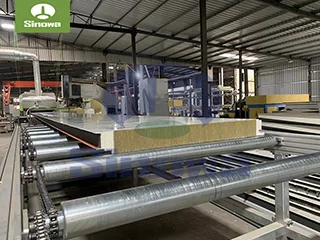
sandwich panel line
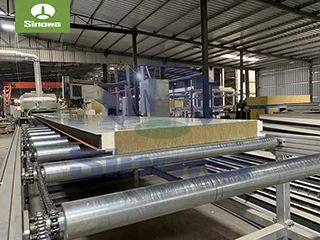
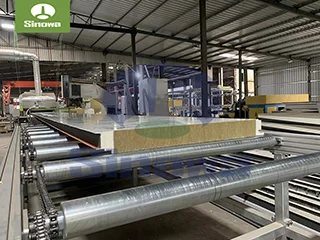
The structural composition of the production line is a modular integration of multiple functional units, each contributing to the final quality and performance of the panels. The line typically begins with uncoiling systems that handle metal sheets—commonly galvanized or coated steel—with thickness ranging from 0.4 to 0.8 millimeters. These uncoilers are equipped with tension control mechanisms to ensure smooth feeding of the metal sheets into the roll forming system, where the sheets are shaped into specific profiles (such as flat, embossed, or corrugated surfaces) according to design requirements. The roll forming process employs servo control and frequency conversion technology to maintain precision in profile dimensions, which is essential for ensuring tight fitting between layers and consistent edge sealing later in the process. Following roll forming, the metal sheets pass through pre-heating devices that regulate their temperature to optimize adhesion with the rock wool core and PU foam sealant.
The rock wool core processing unit is another core component of the production line. High-quality rock wool—made from natural basalt or volcanic rock through high-temperature melting and fiberization—is fed into the line in bulk form, where it is cut to the required thickness (typically 50 to 150 millimeters, with customization options for specific applications) and evenly distributed between the upper and lower metal sheets. An automatic adhesive spraying system applies a uniform layer of bonding agent to both the metal sheets and the rock wool core, ensuring strong mechanical adhesion between the layers. The key differentiator of this production line is the integrated PU foam edge sealing system, which operates immediately after the rock wool core is positioned between the metal sheets. This system uses high-pressure foaming technology to inject two-component polyurethane raw materials—consisting of isocyanate and polyol—into the edge cavities of the panel. The chemical reaction between these components forms a rigid, closed-cell foam layer that bonds molecularly with both the metal sheets and the rock wool core, creating a seamless seal along the panel edges.
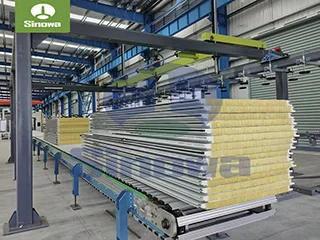
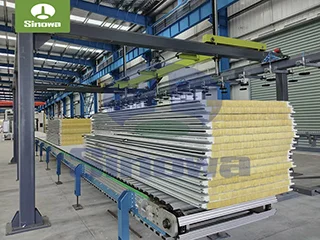
After edge sealing, the panels enter a double-belt pressing and heating system, which applies consistent pressure and temperature to ensure full curing of the PU foam and adhesive. This stage is critical for maintaining the flatness of the panels and enhancing the structural integrity of the bond between layers. The double-belt system also helps to control the density of the PU foam, which typically ranges from 38 to 60 kg/m³ to achieve optimal sealing performance. Once cured, the panels are cut to length using a non-stop cutting mechanism—often a band saw or flying saw—that ensures precision without disrupting the continuous production flow. The final stages of the production line include automatic stacking, surface cleaning, and packaging, with the entire process controlled by a centralized PLC system featuring a human-machine interface. This control system allows operators to input parameters such as panel thickness, length, and foam density, enabling fully automated production with minimal manual intervention—typically requiring only 5 to 8 operators to manage the entire line.
The performance characteristics of the panels produced by this line are largely defined by the synergy between the rock wool core and the PU foam edge sealing system, complemented by the structural stability of the metal facings. In terms of thermal insulation, the rock wool core provides excellent heat resistance with a thermal conductivity (k-value) ranging from 0.024 to 0.080 W/m·K, depending on thickness and density. The PU foam sealant further enhances thermal efficiency by eliminating air gaps at the edges, which are common sources of heat loss in traditional panels. The closed-cell structure of the PU foam—with a closed-cell rate exceeding 95%—creates an effective barrier against heat transfer, reducing the overall thermal transmittance of the panel and contributing to energy efficiency in buildings. This combination is particularly effective in preventing cold bridge formation, a critical factor in maintaining stable temperatures in insulated spaces such as cold storage facilities.
Waterproof and moisture-resistant performance is another key strength of these panels, primarily attributed to the PU foam edge sealing. Traditional edge treatments such as PVC strips or silicone sealants are prone to aging, cracking, and peeling over time, especially in environments with high humidity or temperature fluctuations. In contrast, the PU foam forms a permanent, molecular bond with the panel components, creating a continuous, impermeable seal that blocks moisture infiltration. Tests show that panels with PU edge sealing have a water vapor transmission rate of ≤0.85 mg/(m²·h), three times lower than that of panels with traditional adhesive sealing. This makes the panels highly suitable for use in humid environments such as food processing plants, coastal buildings, and cold storage facilities, where moisture penetration can damage the core material and reduce service life.
Structural strength and durability are also significantly enhanced by the integrated production process. The PU foam edge sealing improves the bond strength between the metal facings and the rock wool core, with a bonding strength of up to 1.2 MPa—representing a 60% increase in peel resistance compared to traditional panels. This strong bond ensures that the panels can withstand handling, transportation, and installation without damage, reducing construction waste and costs. The panels also exhibit excellent temperature resistance, withstanding extreme temperatures ranging from -50℃ to 120℃ without cracking or deforming, a performance that far surpasses traditional edge materials which tend to embrittlement or soften under extreme conditions. Additionally, the metal facings provide corrosion resistance when coated with appropriate finishes such as PVDF, HDP, or PE, further extending the service life of the panels in harsh outdoor or industrial environments.
Fire safety is a standout performance feature of these rock wool sandwich panels, driven by the non-combustible nature of the rock wool core. Rock wool is inherently fire-resistant, not burning or releasing harmful fumes when exposed to high temperatures, making it ideal for applications requiring strict fire protection. The PU foam edge sealing, while combustible under extreme heat, is formulated to have good flame-retardant properties, and its closed-cell structure limits the spread of fire. Together, these components ensure that the panels maintain structural stability during fire incidents, providing valuable escape time and minimizing property damage. This fire resistance, combined with the panels’ thermal and acoustic performance, makes them a preferred choice for buildings with high fire safety requirements.
Acoustic insulation is an additional performance benefit derived from the combination of rock wool and PU foam. The dense, fibrous structure of rock wool effectively absorbs sound waves, reducing noise transmission between spaces. The PU foam edge sealing further enhances acoustic performance by eliminating gaps that can act as sound bridges, resulting in a sound attenuation coefficient of 0.35 at 500 Hz—significantly higher than that of panels with traditional edge treatments. This makes the panels suitable for use in environments where acoustic comfort is critical, such as hospitals, laboratories, auditoriums, and industrial control rooms.
The rock wool sandwich panels produced with this production line can be categorized into several types based on their structural design, surface finish, and intended application. Wall panels are available in single-groove and double-groove designs, with the latter featuring a tongue-and-groove joint combined with foam-to-foam sealing for enhanced airtightness. These wall panels are commonly used for building facades, partitions, and modular constructions, with thickness options ranging from 50 to 150 millimeters to meet different insulation and structural requirements. Hidden screw wall panels are another variant, designed with an aesthetic seamless finish achieved by concealing fasteners, making them suitable for commercial buildings, showrooms, and other spaces where visual appeal is important.
Roof panels, including standing seam designs, are engineered to withstand wind loads and prevent water leakage. Standing seam roof panels feature a specialized joint system that engages tightly to provide superior waterproofness and wind resistance, with a three-crest wave design that improves load-bearing capacity and reduces the need for additional purlins. The PU foam edge sealing in these roof panels ensures that the seams remain impermeable, even in heavy rain or snow conditions. These roof panels are available in widths ranging from 500 to 1100 millimeters and can be customized to accommodate photovoltaic systems, enhancing their versatility in sustainable building projects.
Specialized panels for clean rooms and cold storage facilities are also produced using this line, with features tailored to meet the unique requirements of these environments. Clean room panels have smooth, easy-to-clean surfaces and tight joints to control particulate pollution, while cold storage panels are optimized for thermal insulation and moisture resistance to maintain stable low temperatures. These specialized panels often feature thicker rock wool cores and enhanced PU edge sealing to meet the stringent performance demands of their applications.
The versatility of these panels translates to a wide range of applications across multiple industries. In industrial settings, they are extensively used for the construction of factory walls, roofs, and partitions, where their fire resistance, thermal insulation, and sound attenuation properties are essential. Industrial facilities such as power plants, manufacturing plants, and chemical warehouses benefit from the panels’ ability to withstand harsh conditions and reduce energy consumption for heating and cooling. The PU foam edge sealing ensures that the panels remain durable even in environments with high humidity or temperature fluctuations, such as food processing plants and pharmaceutical facilities.
Cold storage and refrigeration facilities represent a key application area for these panels. The superior thermal insulation provided by the rock wool core, combined with the moisture barrier of the PU foam edge sealing, helps maintain consistent low temperatures while minimizing energy loss. This not only reduces operational costs but also prevents moisture-related damage to stored goods, making the panels ideal for food storage warehouses, refrigerated trucks, and cold chain facilities. The panels’ resistance to extreme temperatures also ensures their performance in both hot and cold climates, from tropical regions to cold northern areas.
Commercial and public buildings also benefit from the performance of these rock wool sandwich panels. Shopping malls, office buildings, and auditoriums use the panels for walls and ceilings to improve acoustic comfort and energy efficiency, while hospitals and laboratories rely on their fire resistance and airtightness to maintain safe and sterile environments. Educational institutions and public assembly halls utilize the panels’ fire safety features to protect occupants, and their lightweight construction reduces the overall structural load of the building, enabling more flexible design possibilities.
Modular and prefabricated construction is another growing application area, as the panels’ lightweight design and easy installation make them ideal for rapid construction projects. Modular buildings, portable offices, and temporary structures benefit from the panels’ durability and performance, with the PU foam edge sealing ensuring that the structures remain weathertight and energy-efficient. Additionally, the panels are used in infrastructure projects such as highway sound barriers, where their acoustic insulation properties help reduce traffic noise pollution in residential and commercial areas.
The environmental benefits of these panels further expand their application potential in sustainable building projects. Rock wool is a natural, recyclable material made from abundant volcanic rock, and the PU foam used in edge sealing can be formulated with low volatile organic compounds (VOCs), reducing environmental impact. The panels’ energy efficiency also contributes to lower carbon emissions in buildings, aligning with global efforts to reduce energy consumption and combat climate change. As the construction industry increasingly prioritizes green building practices, the demand for these high-performance, environmentally friendly panels continues to grow.
In conclusion, the rock wool sandwich panel production line with PU foam edge sealing system represents a significant advancement in building material manufacturing, combining precision engineering, advanced chemical technology, and automated control to produce panels with exceptional performance characteristics. The integration of PU foam edge sealing addresses the key limitations of traditional rock wool panels, enhancing their waterproofness, structural strength, thermal efficiency, and durability. The diverse range of panel types manufactured by this line caters to a wide spectrum of applications, from industrial facilities and cold storage to commercial buildings and modular constructions. As the construction industry evolves to prioritize sustainability, safety, and energy efficiency, these panels are poised to play an increasingly important role, offering a reliable and versatile solution for modern building projects worldwide. The continuous improvement of production line technology, including higher automation, improved material formulations, and enhanced customization capabilities, will further expand the potential of these panels, solidifying their position as a preferred building material for years to come.
https://www.cnsinowa.com/sandwich-panel-machines/rock-wool-sandwich-panel-production-line-with-pu-foam-edge-sealing-system.html