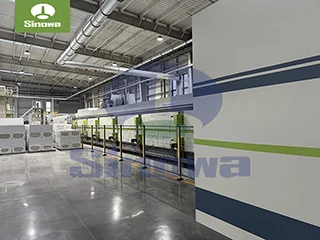
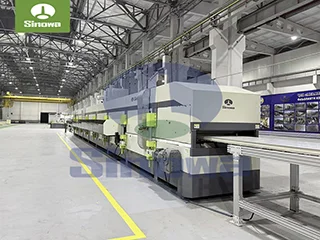
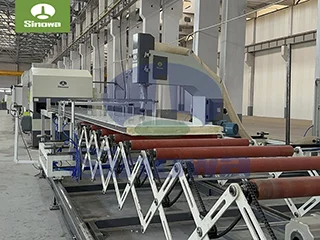
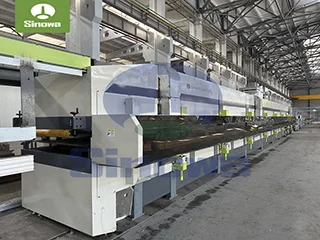
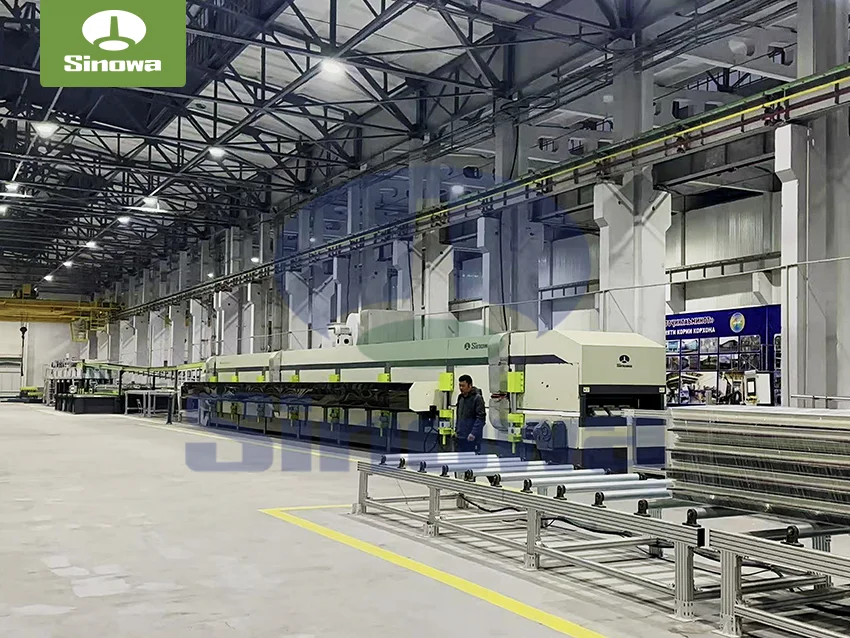
 sandwich panel line
The structural composition of a PIR sandwich panel production line is characterized by modular design, which allows for flexible configuration and easy maintenance. Each component is meticulously engineered to work in harmony, ensuring a smooth and continuous production process from raw material feeding to finished product stacking. The core structure typically includes uncoiling units, roll forming systems, preheating equipment, high-pressure foaming units, double-belt conveying and curing systems, cutting mechanisms, cooling modules, automatic stacking devices, and control systems. The uncoiling units are responsible for feeding metal coils—such as color steel, galvanized steel, or aluminum sheets—into the production line, with transverse positioning features to ensure precise alignment. These units are equipped with lifting mechanisms to facilitate easy loading and unloading of coils, reducing downtime and labor intensity. Following uncoiling, the metal sheets pass through roll forming systems, which use a series of tandem rolling stands to progressively bend and shape the sheets into desired profiles, such as trapezoidal or corrugated designs for roof panels or flat profiles for wall panels. The roll forming process is highly customizable, allowing for adjustments to profile dimensions to meet specific product requirements.
After forming, the metal sheets undergo preheating to optimize the bonding efficiency between the metal facings and the PIR core. The preheating equipment uses controlled heating methods—such as electric, natural gas, diesel, or steam heating—to raise the surface temperature of the metal sheets to an optimal range, typically between 50℃ and 75℃. This temperature control is critical, as it ensures uniform foaming and adhesion, preventing delamination and improving the overall structural integrity of the sandwich panels. The high-pressure foaming unit is a key component of the production line, responsible for mixing and injecting the PIR foam components between the two metal facings. This unit uses precision metering systems to accurately blend the foam ingredients, including polyol, isocyanate, and eco-friendly blowing agents such as pentane, ensuring consistent foam density and thermal performance. The foaming system can handle 2 to 6 components, allowing for customization of the PIR core properties to enhance flame retardancy, thermal insulation, or structural strength.
The double-belt conveying and curing system plays a vital role in shaping and solidifying the sandwich panels. This system consists of two parallel belts that apply uniform pressure to the panels as they move through the production line, ensuring flat surfaces, consistent thickness, and proper bonding between the metal facings and the foam core. The belts are equipped with heating elements to maintain the optimal curing temperature for the PIR foam, which expands and solidifies as it progresses along the conveyor. The effective length of the double-belt conveyor typically ranges from 20 to 36 meters, depending on production requirements, allowing sufficient time for the foam to cure fully before cutting. After curing, the panels are fed into an automatic tracking band saw, which cuts the continuous panel into fixed lengths with high precision. The cutting mechanism is synchronized with the conveyor speed to ensure clean, straight cuts without damaging the panel structure. Following cutting, the panels pass through a cooling system to lower their temperature, ensuring stability and preventing deformation before stacking.
The control system is the central nervous system of the PIR sandwich panel production line, integrating all components into a cohesive unit. It uses advanced programmable logic controller (PLC) technology to manage and synchronize every stage of the production process, from uncoiling to stacking. The control panel features a user-friendly human-machine interface (HMI) that allows operators to adjust parameters such as production speed, panel dimensions, foam density, and heating temperatures with ease. High-level integration enables parameter linkage, meaning adjustments to one setting automatically optimize related parameters to maintain product quality. Additionally, the system includes fault self-diagnosis capabilities, which detect and alert operators to issues such as equipment malfunctions, material shortages, or temperature deviations, minimizing downtime and reducing the risk of defective products. Remote control functionality is also available in many configurations, allowing for off-site monitoring and adjustments, further enhancing operational flexibility and efficiency.
The performance of a PIR sandwich panel production line is defined by its efficiency, precision, adaptability, and energy conservation. These lines are designed for high-speed continuous production, with adjustable production rates typically ranging from 3 to 12 meters per minute, depending on panel thickness and material specifications. For 50mm thick panels, a production rate of 6 to 8 meters per minute is common, enabling high-volume output to meet large-scale project demands. The modular design of the equipment ensures stable and reliable operation, with minimal component wear and tear, reducing maintenance costs and extending the service life of the production line. The use of precision servo lifting mechanism instead of hydraulic systems allows for precise control of panel thickness, which can be adjusted between 30mm and 200mm without the risks of hydraulic leaks or complex maintenance. This level of precision ensures consistent product quality, with minimal variation in thickness, foam density, and bonding strength across all panels.
Energy efficiency is a key performance feature of modern PIR sandwich panel production lines, with design elements that minimize energy consumption while maintaining optimal production conditions. The use of full closed-loop internal insulation systems reduces heat loss, ensuring that the heating and insulation systems can reach the required process temperature in less than one hour when the ambient temperature is above 5℃. This energy-saving design reduces energy consumption to approximately 40% of that of conventional production lines, resulting in significant cost savings over time. Additionally, the adoption of eco-friendly foaming agents and closed-loop systems reduces environmental impact, aligning with sustainable manufacturing practices. The production lines are also designed for all-weather operation, with built-in temperature control and insulation features that eliminate the need for additional isolation rooms or environmental heating, further reducing operational costs and expanding production flexibility.
Adaptability is another standout performance feature, allowing the production line to manufacture a wide range of sandwich panel types by simply adjusting configurations and components. Beyond PIR core panels, the lines can be modified to produce panels with polyurethane (PU), rock wool, glass wool, or mineral wool cores, catering to diverse application requirements. The surface materials can also be customized, with compatibility for color steel sheets, galvanized steel, aluminum sheets, mortar paper, kraft paper, non-woven fabrics, and aluminum foil, among others. Surface material thickness typically ranges from 0.35mm to 0.8mm, with panel widths adjustable between 600mm and 1250mm, and lengths customizable from 2000mm to 16000mm. This versatility enables manufacturers to produce panels for various applications, including roof cladding, wall cladding, cold storage facilities, partition walls, and suspended ceilings, all on a single production line.
The range of PIR sandwich panels produced by these lines is diverse, with each type engineered to meet specific performance and application needs. Roof sandwich panels are typically designed with trapezoidal profiles to ensure water tightness and structural stability, making them suitable for industrial warehouses, logistics centers, and commercial buildings with small to medium roof inclinations. The hidden or standard fastening systems of these panels ensure airtightness and resistance to rain and steam infiltration, enhancing the durability and energy efficiency of the building envelope. Wall sandwich panels are available in flat or corrugated profiles, with options for hidden or visible fastenings, offering both aesthetic appeal and structural strength. These panels are widely used for external and internal cladding in industrial buildings, factories, commercial complexes, and agricultural facilities, providing excellent thermal and acoustic insulation.
Cold storage sandwich panels are a specialized type produced by these lines, designed to meet the high thermal insulation requirements of cold storage rooms, freezers, and food processing facilities. These panels feature a high-density PIR core with extremely low thermal conductivity, ensuring minimal heat transfer and energy efficiency. The special profiling of the panel locks and technical details ensure airtightness and durability, which are critical for maintaining stable low temperatures in cold storage environments. The panels can also be manufactured with food-grade, hygienic surface materials to meet the sanitary requirements of the food and pharmaceutical industries. Corner sandwich panels are another specialized type, prefabricated to create aesthetically pleasing and functional edges for building cladding. These panels eliminate the need for additional corner flashings, ensuring a seamless and professional finish while maintaining the thermal and structural integrity of the building envelope.
The applications of PIR sandwich panels and the production lines that manufacture them span across numerous industries, driven by the panels’ superior performance characteristics. In the construction industry, PIR sandwich panels are widely used for the rapid construction of industrial warehouses, logistics centers, factories, and commercial buildings. Their lightweight nature reduces structural load, while their excellent thermal insulation properties lower heating and cooling costs, making them a cost-effective and energy-efficient building solution. The quick installation of prefabricated panels also shortens construction timelines, reducing labor costs and minimizing project delays. In the cold chain and food processing industries, cold storage sandwich panels are indispensable for constructing temperature-controlled facilities, ensuring the preservation of perishable goods, pharmaceuticals, and other temperature-sensitive products. The high thermal insulation and airtightness of these panels help maintain consistent temperatures, reducing energy consumption and ensuring product quality.
The agricultural industry also benefits from PIR sandwich panels, which are used to construct livestock barns, greenhouses, and storage facilities. The panels’ thermal insulation properties help maintain optimal temperatures for livestock and crops, while their durability and resistance to moisture and corrosion ensure long-term performance in harsh agricultural environments. In the automotive and aerospace industries, lightweight PIR sandwich panels are used for interior components, storage compartments, and insulation, thanks to their high strength-to-weight ratio and thermal performance. Additionally, PIR sandwich panels are used in modular construction, where prefabricated panels are assembled into modular units for residential, commercial, or industrial use. This construction method offers speed, flexibility, and sustainability, aligning with modern building trends.
The installation service provided alongside the PIR sandwich panel production line is a critical component of the overall solution, ensuring that the equipment is set up correctly and optimized for performance. Professional installation teams possess the expertise to handle all aspects of the installation process, from site preparation and equipment positioning to electrical and mechanical connection. Before installation, the team conducts a thorough assessment of the site to ensure it meets the production line’s spatial requirements, which typically range from 95 to 115 square meters with appropriate height and width clearances. The team then proceeds to position and assemble the modular components, ensuring precise alignment and connection to maximize operational efficiency.
During installation, the team also conducts comprehensive testing to verify the performance of each component and the integrated system. This includes testing the control system, adjusting parameters to optimize production speed and product quality, and ensuring safety features are functioning correctly. The installation service also includes operator training, where on-site personnel are instructed on the safe and efficient operation of the production line, including parameter adjustment, maintenance procedures, and fault diagnosis. This training empowers operators to handle day-to-day operations independently, reducing reliance on external support and minimizing downtime. Additionally, post-installation support is often provided, including routine maintenance checks and technical assistance, to ensure the production line continues to operate at peak performance.
The combination of a high-performance PIR sandwich panel production line and professional installation service offers numerous benefits for businesses. It ensures that the equipment is tailored to the specific production needs of the business, with optimal configuration to maximize output and product quality. The modular design of the production line allows for future expansion or modification, enabling businesses to adapt to changing market demands without significant additional investment. The energy-efficient and eco-friendly design of the production line reduces operational costs and environmental impact, aligning with sustainable business practices. Furthermore, the installation service and operator training minimize the risk of equipment damage or operational errors, ensuring a smooth transition to full-scale production.
In conclusion, PIR sandwich panel production lines are advanced manufacturing solutions that deliver efficient, precise, and versatile production of high-quality composite panels. Their modular structure, superior performance characteristics, and ability to produce a wide range of panel types make them indispensable for businesses across multiple industries. The inclusion of professional installation services enhances the value of these production lines, ensuring seamless integration, optimal performance, and safe operation. As the demand for energy-efficient, durable, and sustainable building materials continues to grow, PIR sandwich panel production lines will remain a key investment for businesses seeking to expand their manufacturing capabilities and meet the evolving needs of the market. Whether for constructing industrial facilities, cold storage units, commercial buildings, or agricultural structures, these production lines enable the efficient manufacture of panels that combine structural strength, thermal insulation, and aesthetic appeal, making them a cornerstone of modern construction and manufacturing processes.
https://www.cnsinowa.com/sandwich-panel-machines/pir-sandwich-panel-production-line-for-sale-with-installation-service.html