What Cooling System Is Required For A Continuous PU Sandwich Panel Line
Oct 13, 2026
A continuous PU sandwich panel line depends on a well-engineered cooling system to manage the heat released during the polyurethane foam reaction. Without precise temperature control, panels suffer uneven density, weak core-to-skin adhesion, warping, and surface defects.
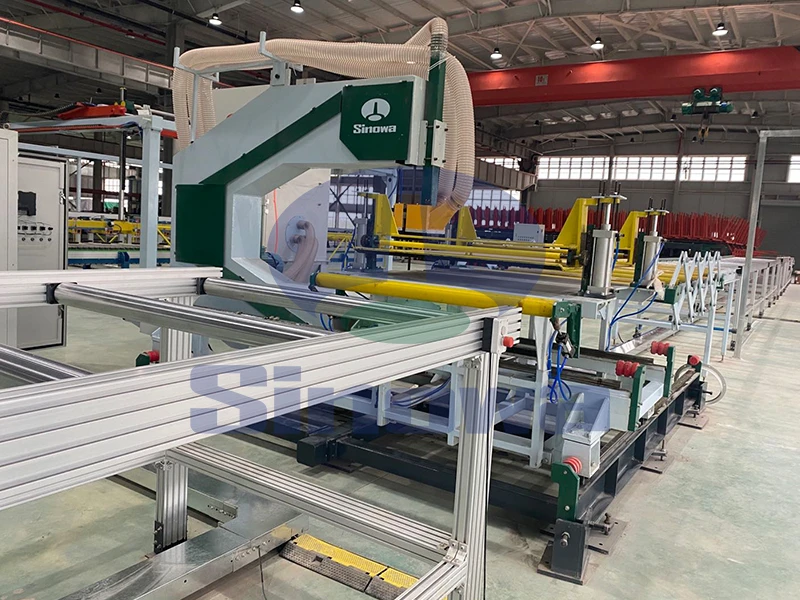
The polyurethane forming reaction is strongly exothermic. When the polyol and isocyanate components are mixed and deposited between the facing sheets, the system generates heat as it rises, gels, and cross-links. In a discontinuous batch press the foam has time to dissipate this heat gradually, but on a continuous line the sandwich travels between the belts at high speed, leaving only seconds to minutes before it must be cut, stacked, and packaged. If the reaction heat is not removed in a controlled way, several failure modes appear. The core can become overheated at the center while the skins stay relatively cool, producing a density gradient that bows the panel once it leaves the press. Adhesion between the foam and the facing sheet degrades because the skin temperature is too high at the moment of contact, or because water vapor and blowing-agent gases cannot escape evenly. The surface may show pinholes, ripples, or a sticky finish, and panels that look acceptable on the cut line can still warp days later as residual stress relaxes. The cooling system is therefore not an auxiliary utility but part of the forming process itself, and its capacity, distribution, and stability directly determine product quality and scrap rate.
The required cooling architecture can be understood as three interconnected heat-removal stages. The first is the forming conveyor, often called the double belt or continuous press, where the panel is sized and its thickness is set. Coolant flows through drilled channels inside the upper and lower platens or through cooling plates attached to the belt structure, drawing heat out through both facing sheets. The second stage is the pouring and mixing head area and the sheet pre-conditioning zone, where the metal skins are brought to the right temperature before the foam contacts them; this is more accurately a temperature-control function rather than pure cooling, because the sheets may need gentle heating in cold weather and cooling in hot weather. The third stage is the downstream or post-press cooling tunnel, through which the freshly cut panel passes on a roller conveyor so that the core reaches a stable, near-ambient temperature before stacking. A complete line must have all three stages sized together; a powerful press cooler without a downstream tunnel will still allow panels to creep in the stack, while a downstream tunnel alone cannot control density inside the press. The cooling plant itself consists of a refrigeration chiller or a pumped coolant circuit with heat rejection, distribution pumps, a buffer tank, and valving that allows each zone to be adjusted independently.
Within the forming conveyor, the cooling channels are arranged in long, narrow runs along the machine direction so that the panel sees a smooth temperature profile rather than hot spots at the belt joints. Channels must be sized for turbulent flow, because laminar flow inside a small bore gives poor heat transfer even at the same coolant volume. The platen temperature is sensed near the panel surface, not just at the coolant inlet, and the signal drives motorized three-way valves that mix chilled return water with supply water. This mixing approach is preferred over simply turning the chiller on and off, because it keeps flow velocity constant and avoids thermal shock to the platens. A common design rule is that the upper and lower platens should be independently controlled; the bottom platen, which contacts the sheet carrying the liquid foam, often runs slightly cooler to control initial rise, while the upper platen can be tuned to balance skin temperature. Because the panel core center can still be significantly hotter than the skins when it exits the press, the final exit section of the conveyor is where the most aggressive cooling is applied. This is also the section most prone to scale or fouling, since it handles the largest heat load, so easy-access cleaning ports and drain points are essential.
The choice of working coolant depends on the required supply temperature, local ambient conditions, and the risk of freezing. Pure water is the most efficient heat-transfer fluid because of its high specific heat and low viscosity, and it is the natural choice for lines operating above about ten degrees Celsius on the supply side. When winter shutdowns or unheated plant rooms are possible, a water-glycol mixture is used; the glycol concentration must be calculated from the lowest expected ambient, and the mixture's reduced heat capacity must be compensated by larger flow rates or larger heat exchangers rather than simply running the same pump. Where contamination of the platens by process water is a concern, a closed secondary circuit using a corrosion-inhibited water-glycol solution is preferred, with the refrigeration chiller sitting on a primary circuit and a plate heat exchanger separating the two loops. Thermal oil or other special fluids are rarely needed for this application and are generally avoided because their high viscosity increases pumping energy and worsens response time. The coolant must be filtered to around fine mesh at the inlet of each zone, because metal particles from the facing sheets, pipe scale, and glycol degradation products quickly block the small drilling in the platens. Inhibitors, pH adjustment, and regular sampling keep the circuit clean and prevent microbiological growth that forms biofilms on channel walls.
A continuous line is best served by a zoned temperature profile rather than a single platen temperature. Along the direction of travel, the line is divided into several independently controlled sections: the entry zone where the sheets meet the foam, the expansion zone where the panel reaches full thickness, the cure zone where cross-linking dominates, and the exit zone where heat is actively pulled out before cutting. In the entry and expansion zones, the aim is usually a moderate, stable temperature that supports even flow and prevents the bottom skin from chilling the foam too quickly; too-cold platens here cause skin-rich low-density edges and a wavy surface, while too-hot platens cause premature gelation and poor flow. In the cure zone, the temperature can be raised slightly to complete reaction, and in the exit zone it is lowered again to freeze the panel dimensionally. Each zone is served by its own supply and return header with manual balancing valves and automatic control valves, and each zone has its own temperature sensor and a readout in the control room. Operators can then adjust the profile for different panel thicknesses and formulations: thin panels require less total cooling and a gentler exit slope, while thick cores hold more heat and need a longer, colder exit section. The zone layout should also allow the upper and lower platens to track each other within a small band, because a temperature difference between the two sides is one of the most common causes of post-cut bowing.
The central refrigeration plant must be sized for the peak heat load, not the average. The peak occurs when the line runs at full speed with the thickest panel formulation and the warmest incoming sheets, and the chiller should be able to hold supply temperature under these conditions without short cycling. Water-cooled chillers with shell-and-tube or flooded evaporators are the usual choice because they offer stable leaving-water temperature and high efficiency; air-cooled chillers can be used where water is scarce, but their capacity degrades in hot weather and they should be sized with summer ambient in mind. A buffer tank on the secondary loop smooths out fluctuations and prevents the chiller from cycling on small loads, which is important because a continuous line's heat load changes as the operator switches products. Plate heat exchangers are preferred for separating the primary and secondary circuits because of their compactness and high heat-transfer coefficient, and they should be sized so that approach temperature between loops stays small. Pumps are typically installed in a duty-and-standby arrangement, with a third smaller pump reserved for low-load operation or night setback, and pressure differential sensors across the main header make it possible to detect fouling or blockage early. Controls should include flow switches on every zone, low-temperature protection against freezing in glycol circuits, and alarms for high return temperature, which is the first external sign of a process upset upstream such as an overactive pour or a sheet-temperature fault.
Downstream cooling is often underestimated but is essential for a line that stacks panels immediately after cutting. When a panel leaves the press, its skins may be near the target temperature while its core center is still warm, and if it is placed flat on a stack the hot center transfers heat to the skins and causes gradual deformation. A post-press cooling tunnel addresses this by forcing temperature-controlled air across the panel faces, or by passing the panel through a set of cooled rollers that draw heat from both sides. Air cooling is simpler and handles dust and condensation well if the air is dehumidified; contact cooling is faster but must be carefully designed so that the cooled rollers do not mark the facing sheets. The tunnel length depends on panel thickness and line speed, but it is generally sized so that the core reaches within a few degrees of ambient before stacking. Panels that are too warm when stacked also emit condensation on the packaging film, which causes staining and label damage, so the tunnel discharge temperature should be tracked against ambient dew point. In cooler climates the tunnel may need heating rather than cooling, because panels that are over-chilled will sweat when they meet room air; this means the downstream system should be reversible or at least capable of modulating its output rather than running at full cold capacity all the time.
Energy efficiency and heat recovery matter because a PU line is one of the largest energy consumers in a panel factory. The refrigeration plant pumps a lot of heat out of the panels, and that heat is normally rejected to the atmosphere through a cooling tower or dry cooler. Where the factory needs process hot water, space heating, or preheating for the sheet-conditioning zone, a heat-recovery module on the chiller condenser can capture a substantial fraction of this waste heat, reducing boiler load in winter. On the distribution side, variable-speed pumps driven by pressure differential across the farthest zone cut pumping energy significantly compared with constant-speed pumps with throttling valves. Floating head pressure control on the chiller, which allows the condenser to operate at lower pressure when ambient is cool, improves part-load efficiency. Insulating all supply and return pipes, and especially the buffer tank, reduces heat gain from the plant room; uninsulated pipes can pick up several degrees of heat before reaching the press, forcing the chiller to run colder than necessary. Regular inspection of condenser surfaces, cooling-tower water treatment, and plate heat-exchanger cleaning maintain efficiency over years of operation. Many lines find that their cooling capacity, after a few years, is limited not by the chiller but by fouled heat exchangers and blocked platen channels, so a preventive cleaning schedule protects both quality and energy use.
Common cooling-related faults follow predictable patterns and can be diagnosed by walking the heat path. If panels bow consistently in one direction, suspect a mismatch between upper and lower platen temperature or a plugged channel on one side; check flow rate and temperature at each corner rather than relying on a single reading. If surface defects appear along the panel length in repeating patterns that match the belt joints, hot spots in the platen are likely, usually caused by scale or by a failed zone mixing valve. If the chiller cannot hold supply temperature only during summer afternoons, the problem is usually condenser heat rejection rather than compressor size, and cleaning the tower or dry cooler often solves it. If panels warp only after stacking, the issue is almost always insufficient downstream cooling, not press cooling. Maintenance should include a yearly flush of the platen circuits with a mild, non-acidic cleaner, pressure testing of all zone valves, calibration of every temperature sensor against a reference instrument, and replacement of pump seals and gaskets before they leak. Operators should be trained to treat coolant temperature as a recipe parameter: any change in formulation, facing sheet, or panel thickness warrants a review of the zone setpoints, and records of these setpoints should be kept alongside production data so that quality issues can be traced back. With disciplined design, zoning, and maintenance, the cooling system becomes a quiet, reliable part of the line, and its quality contribution is felt most clearly in the panels that leave the factory flat, dimensionally stable, and free of the defects that temperature mismanagement would otherwise cause.
Gallery
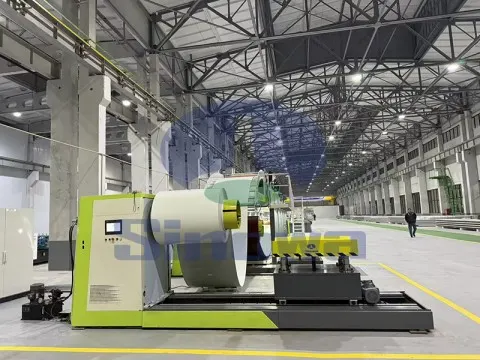
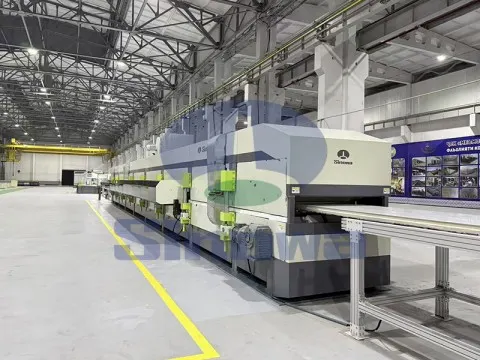
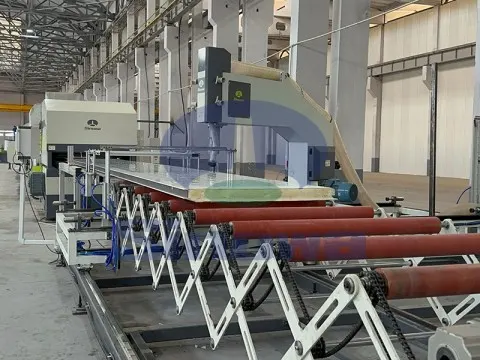
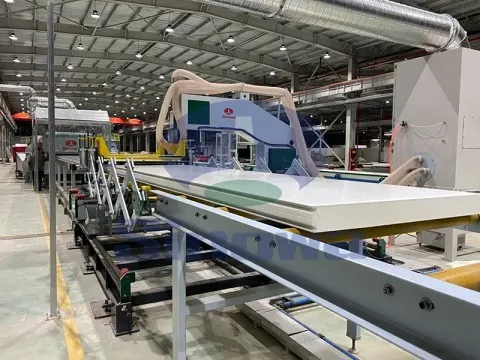
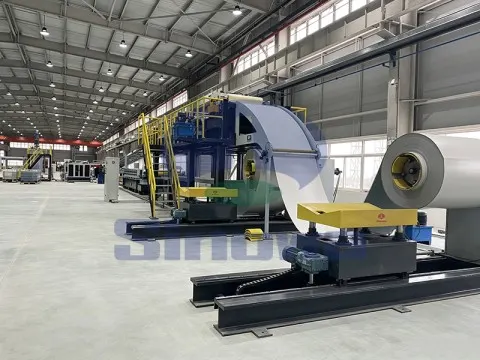
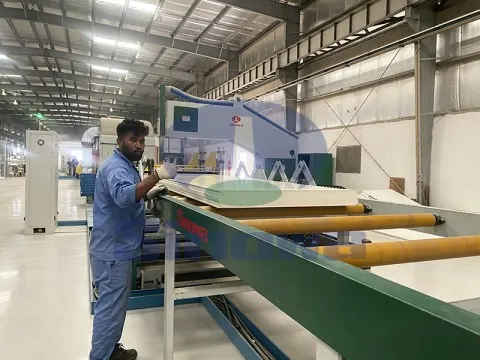
Sinowa is a professional manufacturer of sandwich panel machine in china, we provide diversified and high-performance sandwich panel production lines, including fully automatic continuous PU sandwich panel line and customized special lines to meet mass production and personalized order demands. These sandwich panel lines support processing multiple foam core materials, such as PU, PIR, mineral wool, rock wool and glass wool, covering different insulation and fireproof standards.
Featuring stable operation, high efficiency, energy saving and easy maintenance, our PU sandwich panel line deliver sandwich panels with excellent thermal insulation, fire resistance, sound insulation and lightweight durability. The finished panels are widely applied in industrial workshops, warehouse roofing and wall cladding, cold storage insulation, serving global construction and industrial insulation markets.
Main Products
-

Continuous PU Sandwich Panel Production Line
This continuous PU sandwich panel production line is an integrated automatic equipment. It covers uncoiling, forming, foaming, curing and cutting processes. With automatic raw material proportioning and precise temperature & pressure control, PIR sandwich panel production line continuously composites panels with double skins. Polyurethane sandwich panel production line stably produces steel and aluminum sandwich panels. Featuring high automation, the line makes fireproof and thermal-insulation panels for building enclosure and cold storage. -
Rock Wool Sandwich Panel Production Line
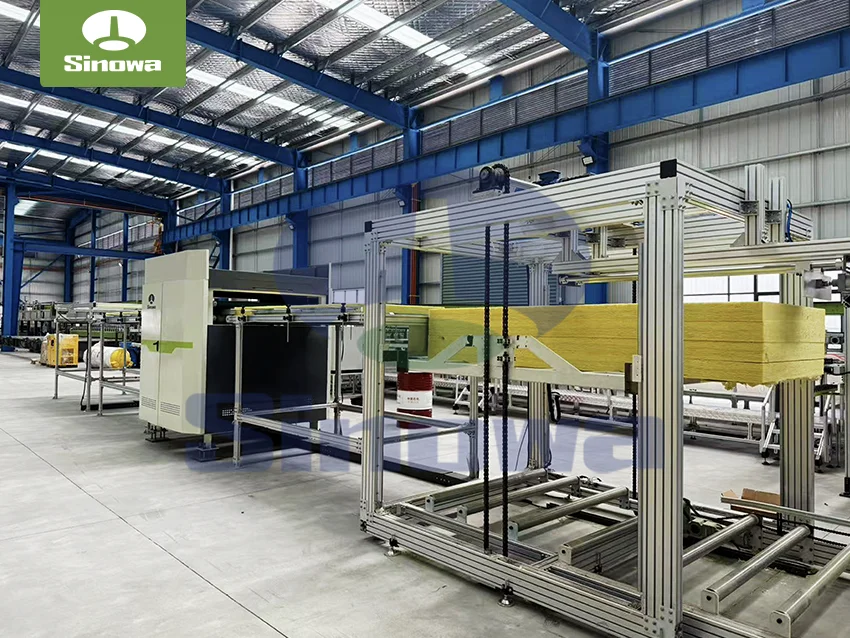
Continuous rockwool sandwich panel production line is an automatic integrated production equipment, consisting of uncoiling, forming, gluing and compounding, heating curing, fixed-length cutting, automatic stacking and other modules. The mineral wool sandwich panel production line continuously conveys color steel plates and rock wool core materials to automatically complete lamination and curing, which can produce fireproof and thermal insulation sandwich panels. Featuring high automation degree and stable operation, this production line is suitable for mass production of panels used for building walls, roofs and other scenarios. -
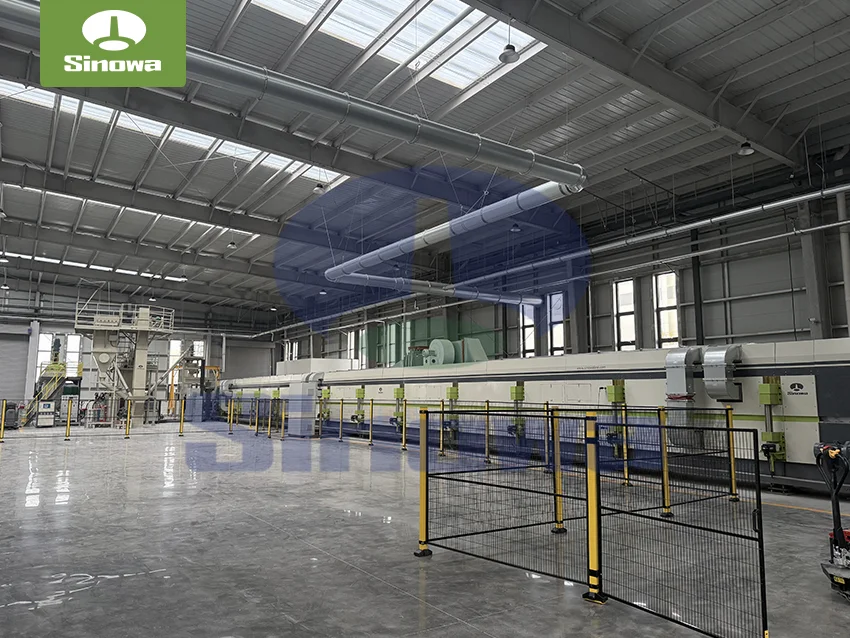
Phenolic Insulation Board Production Line
This integrated automatic production line continuously manufactures PU and phenolic insulation boards. The insulation board production line covers raw material proportioning, high-pressure foaming, laminating, curing and fixed-length cutting. Featuring high automation and stable molding, the insulation panel production line supports various surface materials. PU boards offer excellent thermal insulation, while phenolic boards have superior fire resistance. These products are widely used in construction, cold chain, ventilation ducts and other thermal insulation fields.
Other FAQs
- How To Maintain The Mixing Head Of A PUF Sandwich Panel Production Line
- How To Solve Surface Bubble Problems Of Panels From PU Foam Core Sandwich Panel Line
- Why Does The Polyurethane Sandwich Panel Line Produce Uneven Foam Distribution
- How To Improve The Production Efficiency Of Insulation Board Production Line
- How To Solve Foam Shrinkage Issues On A Polyurethane Sandwich Panel Production Line
- Polyurethane Sandwich Panel Production Line Idle Period Maintenance Management Scheme
- Polyurethane Sandwich Panel Production Line Start-up Pre-inspection Complete Items
- Noise Reduction Measures For PU Sandwich Panel Production Equipment
- Difference Between PUR And PIR Sandwich Panel Production Lines
- How To Maintain Foam Core Sandwich Panel Line Daily
Related Articles
- Continuous PU Sandwich Panel Line For Roof Wall
- Cold Roll Forming Sandwich Panel Machine
- PU Insulated Panel Line
- Industrial Sandwich Panel Production Machine
- PUF Panel Manufacturing Machine
- Sandwich Panel Production Line For Prefab House
- Continuous Sandwich Panel Manufacturing Line
- Automatic Continuous Sandwich Panel Production Line
- Color Steel Tile Sandwich Panel Machine
- Color Stainless Steel Sandwich Panel Manufacturing Line