How To Solve Foam Shrinkage Issues On A Polyurethane Sandwich Panel Production Line
Sep 29, 2026
Foam shrinkage is a prevalent quality defect in polyurethane sandwich panel production, causing edge depression, surface deformation and unstable product consistency.
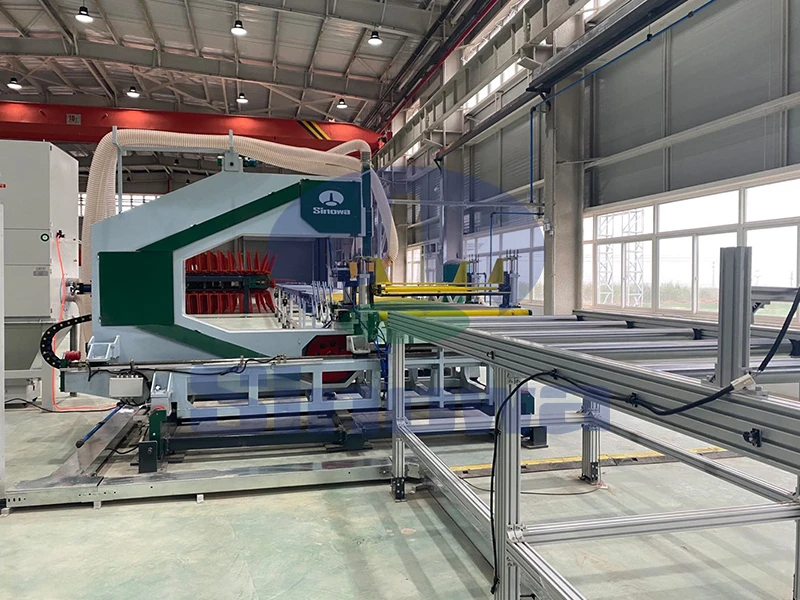
Foam shrinkage on polyurethane sandwich panels primarily stems from unbalanced internal pressure and unstable cell structure formation during the foaming and curing process, which is the fundamental root of most shrinkage defects. Rigid polyurethane foam forms countless tiny closed cells through chemical reactions between polyol and isocyanate, with gas generated by blowing agents filling these cells to support the foam’s overall shape. When the foam transitions from a high-temperature reaction state to normal ambient temperature, internal cell gas cools and contracts to form negative pressure. If the foam's polymer skeleton fails to gain sufficient structural strength before this pressure change, it cannot resist external atmospheric pressure, leading to gradual inward shrinkage, edge collapse and surface indentation. Many production lines overlook the matching degree between reaction speed and cell molding speed, resulting in premature gas loss or delayed crosslinking. Additionally, incomplete closed-cell structure caused by unreasonable formula ratios allows internal gas to diffuse outward slowly after molding, further exacerbating shrinkage deformation in the subsequent cooling and storage stage. This basic mechanism clarifies that most shrinkage problems are avoidable through precise control of reaction balance and structural stability.
Unreasonable chemical formula proportioning is one of the most critical factors triggering foam shrinkage, with the isocyanate index and catalyst dosage serving as core control indicators. The isocyanate index refers to the reaction ratio between isocyanate and polyol functional groups, which directly determines the crosslinking density and structural rigidity of the polyurethane polymer network. A low isocyanate index leads to insufficient reaction crosslinking, forming short polymer chains and a weak foam skeleton that lacks enough compressive strength to offset internal negative pressure during cooling. Conversely, an excessively high index without matched catalytic conditions will produce excessive internal stress inside the cured foam, causing slow shrinkage and deformation over time. Catalyst imbalance also brings obvious risks: insufficient gelling catalyst delays polymer chain growth, making the cell structure fragile and unstable before blowing agent gas fully expands the foam. Excessive blowing catalyst accelerates rapid gas generation, leading to premature cell opening and gas leakage before the foam skeleton solidifies completely. Moreover, inappropriate silicone surfactant dosage destroys cell uniformity, causing uneven cell size and partial structural collapse that evolves into overall shrinkage defects.
Production line process parameter deviations are common operational causes of continuous foam shrinkage in mass production, mainly focusing on temperature, polyurethane sandwich panel production line speed and material feeding accuracy. Temperature control covers mixing head temperature, conveyor belt temperature and curing tunnel temperature, all of which profoundly affect reaction efficiency and curing effect. Too low equipment temperature slows down chemical reactions, resulting in incomplete foaming and insufficient curing even after panel molding, and the under-cured foam will shrink significantly during subsequent cooling. Overly high local temperature causes partial over-reaction, forming inconsistent internal structural density and residual stress that induces irregular shrinkage. Matching between production line speed and material foaming cycle is also crucial. Excessively fast line speed shortens the foam’s free foaming and initial curing time, leading to incomplete cell molding and fragile structures. Slow line speed causes over-foaming, excessive cell expansion and reduced structural toughness. Inaccurate feeding rates of raw materials, including unstable flow rates of polyol, isocyanate and auxiliary agents, cause real-time formula ratio fluctuations during continuous production, breaking the reaction balance and producing defective foam prone to shrinkage in batches.
Production environment conditions greatly influence polyurethane foam molding stability, and uncontrolled temperature and humidity are easily ignored inducements of shrinkage defects. Polyurethane foaming and curing reactions are highly sensitive to ambient humidity. Excessively high air humidity allows moisture in the air to mix with raw materials, triggering extra side reactions that consume isocyanate components, disrupt the preset reaction ratio, and reduce foam crosslinking density and cell closure rate. Low ambient humidity slows down the hydrolysis reaction of trace water in the formula, leading to insufficient carbon dioxide generation, incomplete cell expansion and compact, shrinkage-prone foam structures. Ambient temperature changes also affect the entire reaction process: low workshop temperature prolongs the curing cycle, making the foam unable to form a stable skeleton in time and vulnerable to atmospheric pressure shrinkage. Drastic temperature fluctuations in the production area cause inconsistent reaction speeds of different panel parts, resulting in uneven internal stress and local shrinkage. In addition, poor workshop ventilation leads to accumulation of volatile blowing agent gas around the production area, interfering with normal gas exchange inside foam cells and increasing the probability of post-molding shrinkage deformation.
Optimizing formula configuration is the core fundamental solution to eliminate foam shrinkage and improve structural stability. The first step is to calibrate the isocyanate index to maintain a reasonable reaction range, ensuring sufficient crosslinking density to build a tough foam polymer skeleton that resists cooling negative pressure and external pressure. It is necessary to adjust the matching ratio of gelling catalyst and blowing catalyst to coordinate the speed of polymer chain growth and gas generation. Increasing gelling catalyst dosage appropriately accelerates skeleton formation, while controlling blowing catalyst dosage avoids excessive gas precipitation and premature cell rupture. Reasonable addition of silicone surfactant effectively improves cell uniformity and closed-cell rate, reduces gas diffusion inside the foam, and enhances overall structural stability. Meanwhile, strictly control the water content in raw materials to avoid excessive carbon dioxide generation from water-isocyanate side reactions, which cause cell over-expansion and structural fragility. Regular raw material testing is required to ensure stable activity of polyol and isocyanate, avoiding formula performance fluctuations caused by raw material attenuation that induce batch shrinkage problems.
Standardizing production process operation and environmental management can effectively prevent recurring foam shrinkage defects and stabilize long-term production quality. First, implement real-time calibration of polyurethane sandwich panel production line parameters, regularly detecting and adjusting mixing head temperature, curing tunnel temperature and conveyor speed to ensure all parameters match the foaming reaction cycle of raw materials. Optimize the raw material feeding system to maintain stable and continuous flow rates of all components, eliminate ratio deviations caused by feeding fluctuations, and ensure consistent reaction effects of each batch of foam. Strictly control workshop environment indicators, maintaining constant temperature and suitable humidity throughout the production process, and equip professional ventilation equipment to keep air circulation smooth and avoid volatile gas accumulation and moisture interference. Standardize post-production curing and storage processes, prohibiting early stacking and transportation of newly produced panels. Sufficient natural curing time allows the foam to complete internal stress release and thorough reaction, avoiding secondary shrinkage caused by external force extrusion and incomplete curing. Regular equipment maintenance and production process inspection can timely discover potential parameter drift and operational irregularities, forming a full-process prevention mechanism for foam shrinkage defects.
Gallery
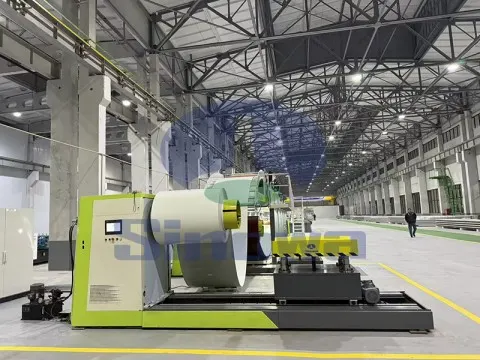
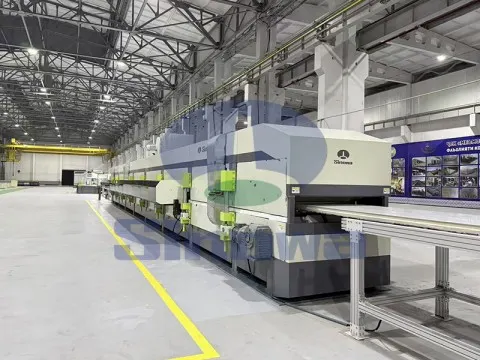
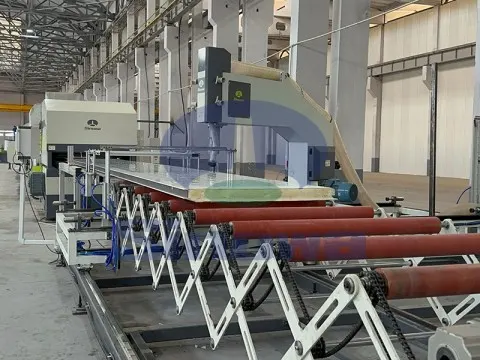
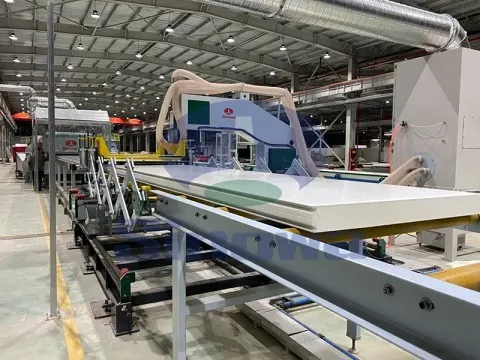
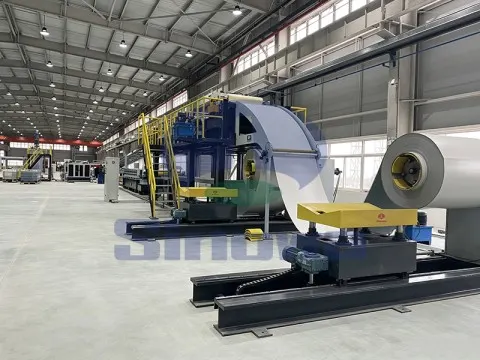
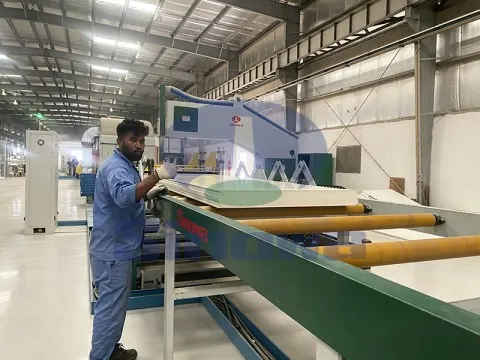
Sinowa is a professional manufacturer of sandwich panel machine in china, we provide diversified and high-performance sandwich panel production lines, including fully automatic continuous PU sandwich panel line and customized special lines to meet mass production and personalized order demands. These sandwich panel lines support processing multiple foam core materials, such as PU, PIR, mineral wool, rock wool and glass wool, covering different insulation and fireproof standards.
Featuring stable operation, high efficiency, energy saving and easy maintenance, our PU sandwich panel line deliver sandwich panels with excellent thermal insulation, fire resistance, sound insulation and lightweight durability. The finished panels are widely applied in industrial workshops, warehouse roofing and wall cladding, cold storage insulation, serving global construction and industrial insulation markets.
Main Products
-

Continuous PU Sandwich Panel Production Line
This continuous PU sandwich panel production line is an integrated automatic equipment. It covers uncoiling, forming, foaming, curing and cutting processes. With automatic raw material proportioning and precise temperature & pressure control, PIR sandwich panel production line continuously composites panels with double skins. Polyurethane sandwich panel production line stably produces steel and aluminum sandwich panels. Featuring high automation, the line makes fireproof and thermal-insulation panels for building enclosure and cold storage. -
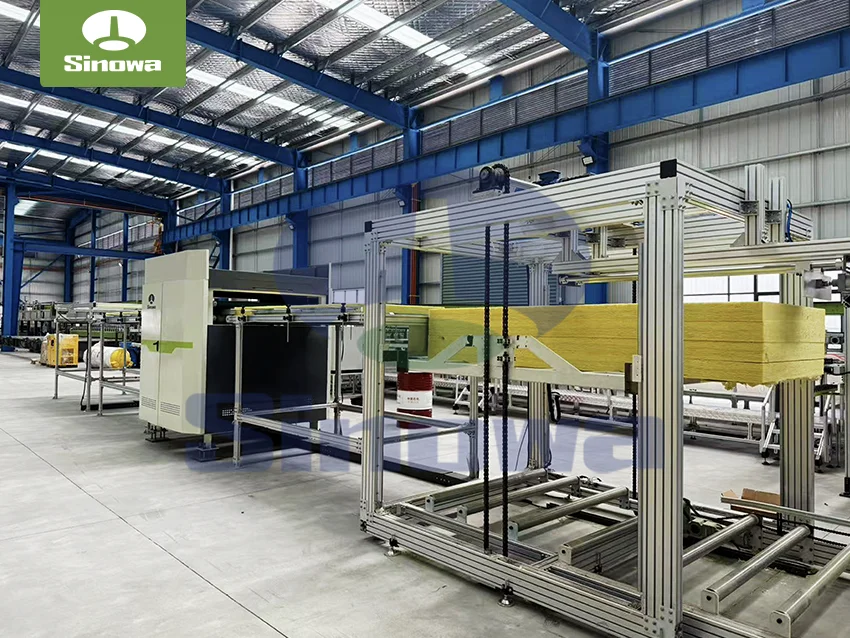
Rock Wool Sandwich Panel Production Line
Continuous rockwool sandwich panel production line is an automatic integrated production equipment, consisting of uncoiling, forming, gluing and compounding, heating curing, fixed-length cutting, automatic stacking and other modules. The mineral wool sandwich panel production line continuously conveys color steel plates and rock wool core materials to automatically complete lamination and curing, which can produce fireproof and thermal insulation sandwich panels. Featuring high automation degree and stable operation, this production line is suitable for mass production of panels used for building walls, roofs and other scenarios. -
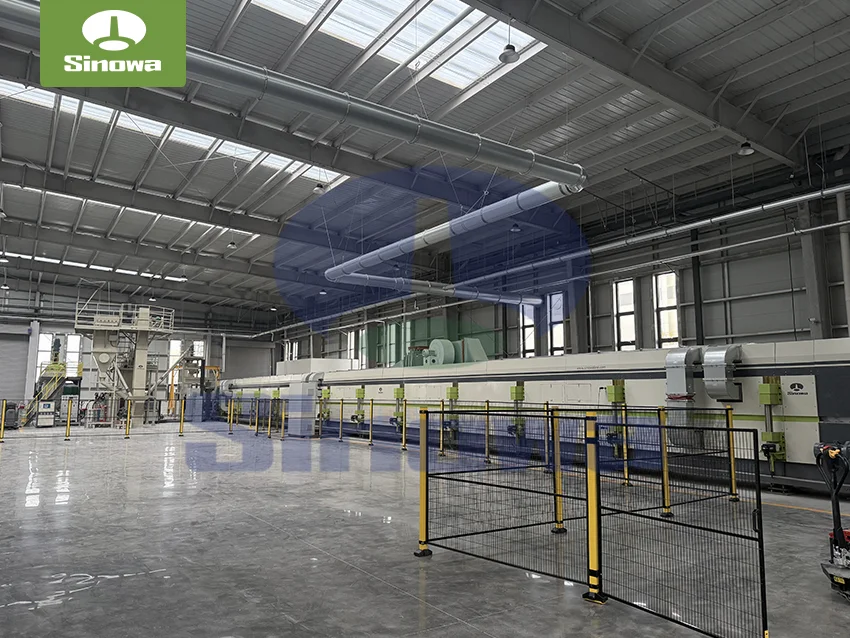
Phenolic Insulation Board Production Line
This integrated automatic production line continuously manufactures PU and phenolic insulation boards. The insulation board production line covers raw material proportioning, high-pressure foaming, laminating, curing and fixed-length cutting. Featuring high automation and stable molding, the insulation panel production line supports various surface materials. PU boards offer excellent thermal insulation, while phenolic boards have superior fire resistance. These products are widely used in construction, cold chain, ventilation ducts and other thermal insulation fields.
Other FAQs
- How To Solve Surface Bubble Problems Of Panels From PU Foam Core Sandwich Panel Line
- Why Does The Polyurethane Sandwich Panel Line Produce Uneven Foam Distribution
- How To Improve The Production Efficiency Of Insulation Board Production Line
- Polyurethane Sandwich Panel Production Line Idle Period Maintenance Management Scheme
- Polyurethane Sandwich Panel Production Line Start-up Pre-inspection Complete Items
- Noise Reduction Measures For PU Sandwich Panel Production Equipment
- Difference Between PUR And PIR Sandwich Panel Production Lines
- How To Improve The Flatness Of Panels Made By PIR Foam Core Sandwich Panel Line
- What Is A PU Sandwich Panel Machine And How Does It Work
- Why Is The Curing Effect Poor In Insulation Board Production Line
Related Articles
- Thermal Insulation Sandwich Panel Production Equipment
- Sandwich Panel Line
- Sandwich Panel Composite Production Line
- PU Sandwich Panel Line For Pipeline Insulation
- Fully Automatic Color Steel Sandwich Panel Production Line
- Cold Storage Insulation Board Production Line
- Purification And Flame Retardant Sandwich Panel Machine
- PU Sandwich Panel Production Line For Geothermal Insulation
- How To Debug Sandwich Panel Machine
- PU Sandwich Panel Making Machine With Material Level Monitoring System