sandwich panel line
The operational logic of the continuous foam core sandwich panel line is built on the precise coordination of mechanical transmission, chemical foaming reaction, constant-temperature curing, and automatic forming systems. The entire production process operates as a closed-loop automated flow, where each functional module works in synchronized motion to eliminate production gaps and reduce manual interference. The core manufacturing principle lies in achieving synchronous compounding of surface facing materials and in-situ foaming molding of polyurethane foam. Liquid polyurethane raw materials undergo accurate proportional mixing and uniform spraying between upper and lower surface layers, expanding, foaming, and curing under constant temperature and pressure conditions to form a tightly bonded integrated composite structure. This one-piece continuous molding method effectively avoids the delamination, uneven core density, and dimensional deviation issues commonly found in batch-produced sandwich panels, ensuring stable physical and thermal performance across every section of the finished panels.
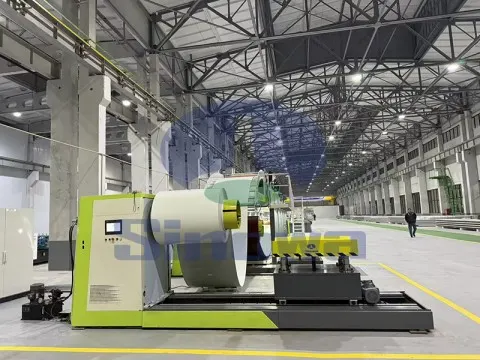
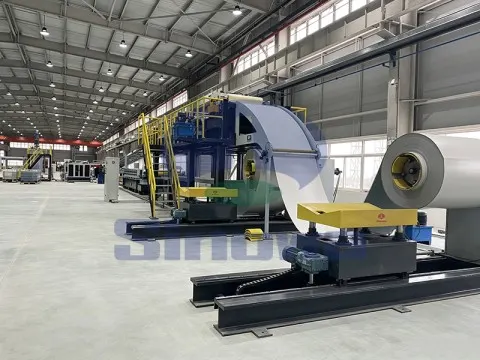
The complete production workflow of the sandwich panel line initiates with the surface material feeding and pretreatment stage, a foundational step that determines the flatness and bonding quality of the final product. Coiled metal or non-metal facing materials are loaded onto automatic unwinding devices, which release the raw materials at a constant and stable speed matched with the overall line operating rhythm. After unwinding, the sheet materials pass through a series of leveling and straightening rollers to eliminate residual bending deformation and surface wrinkles generated during coiling and storage. Following leveling, the materials enter a professional preheating zone that adopts uniform thermal radiation heating to raise the surface temperature of the facing sheets to a preset stable range. This preheating process is critical for subsequent foaming and bonding procedures, as it removes surface moisture, activates the material surface activity, and enables the polyurethane foam to achieve faster adhesion and more uniform compounding, greatly enhancing the bonding strength between the foam core and surface layers.
Parallel to the surface material pretreatment process, the polyurethane raw material supply and metering system operates stably to prepare core foaming materials. The system stores two key liquid chemical components in independent temperature-controlled sealed tanks, maintaining constant temperature and stirring states to ensure the stability and activity of the raw material properties. Professional closed-loop metering pumps deliver precise volumes of the two components to the high-pressure mixing unit, where the materials undergo intense hydrodynamic mixing at high pressure to form a homogeneous and reactive liquid mixture. The entire metering and mixing process features high-precision proportional control, which can adapt to different formula requirements for foam density and hardness, laying a solid foundation for producing sandwich panels with varying insulation and mechanical performance parameters. The mixed liquid foam material is evenly sprayed and distributed on the surface of the lower facing sheet through a reciprocating sweeping nozzle, covering the entire effective width of the sheet without dead angles or accumulation.
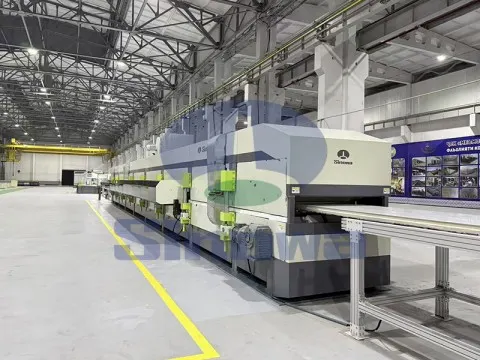
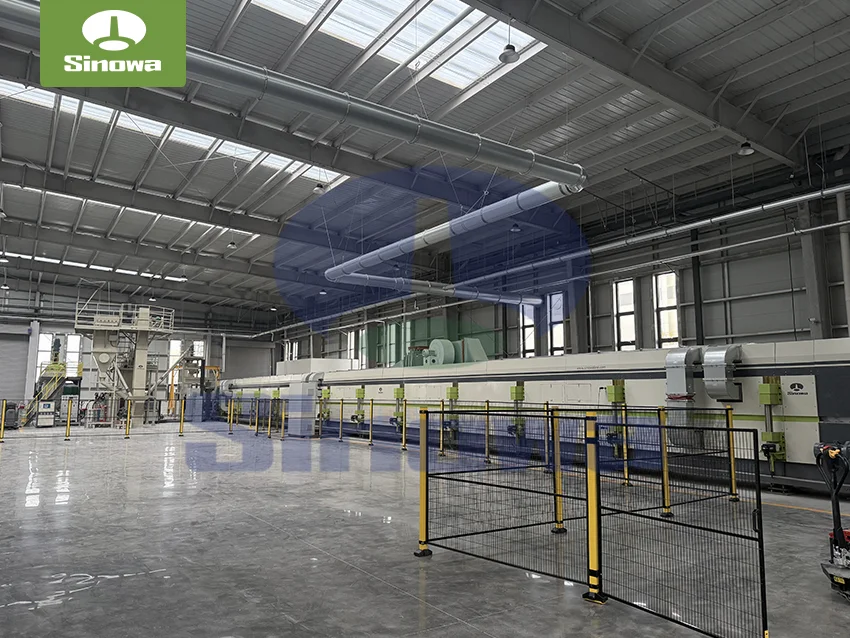
Laminating molding and constant-temperature curing represent the core functional stages of the entire continuous PU sandwich panel machine, directly defining the structural stability and performance quality of the sandwich panels. After the foam liquid is coated on the lower facing material, the upper and lower sheets are synchronously guided into the double-track laminating and pressing unit. This unit adopts parallel heatable conveyor structures that apply continuous and uniform vertical pressure across the entire width and length of the panels, ensuring that the liquid foam fully expands and fills the entire cavity between the two surface layers. Inside the fully enclosed thermal insulation curing channel, the foam material undergoes rapid chemical cross-linking reactions, completing foaming, shaping, and solidification in a stable temperature environment. The length of the curing section and internal temperature gradient are scientifically calibrated according to production speed and panel thickness, ensuring that the foam core achieves complete polymerization reaction, uniform internal cell structure, and reliable bonding with the surface materials. The continuous pressure maintaining and curing process effectively prevents foam shrinkage, hollowing, and interlayer separation, endowing the panels with consistent overall compactness and structural integrity.
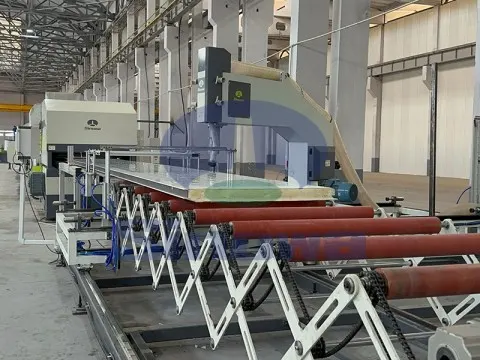
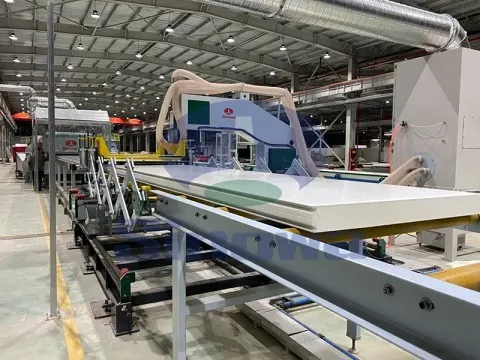
Following curing and preliminary shaping, the continuous panel body enters the cooling and shaping stage to stabilize the structural state and dimensional accuracy. The newly cured panels retain a certain internal temperature and residual stress, which may cause slight deformation or dimensional instability after cutting. The professional cooling system adopts circulating air cooling to gradually and uniformly reduce the panel temperature to ambient levels, releasing internal stress and fixing the overall shape and size of the panels. After cooling, the panels pass through automatic trimming equipment to trim irregular edges on both sides, ensuring consistent width and flatness of the finished products. Subsequently, the continuous long panels are accurately cut into specified lengths by a high-speed fixed-length cutting unit, which supports flexible adjustment of cutting parameters to meet diverse dimensional requirements for different application scenarios.
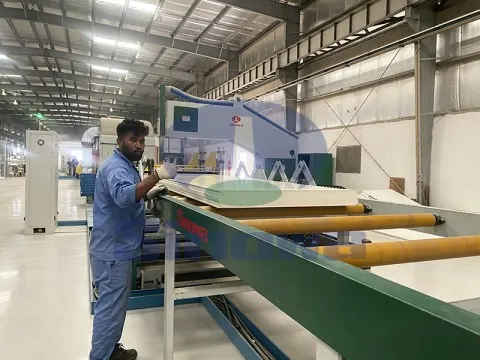
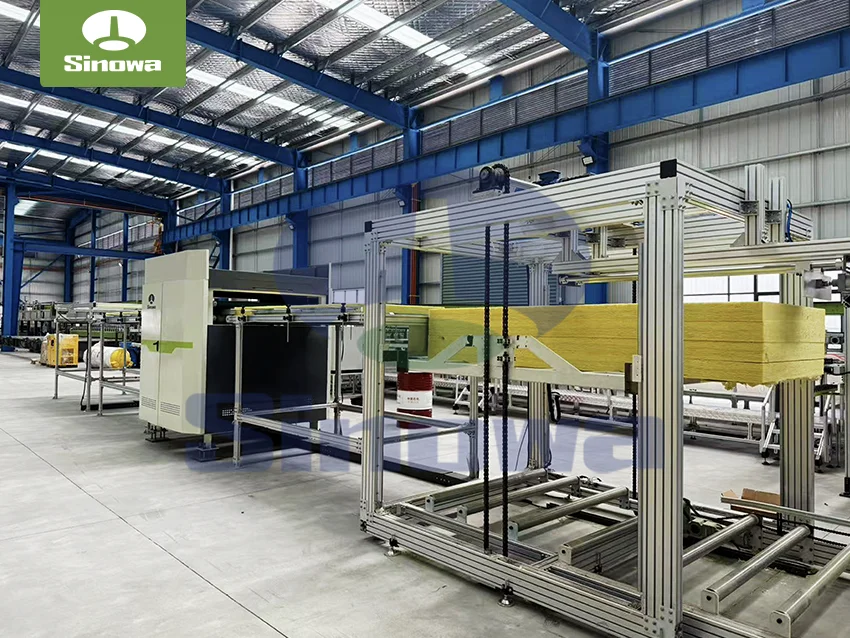
The final stage of the production process includes automatic inspection, stacking, and discharging. Integrated online monitoring modules conduct real-time detection of key indicators such as panel thickness, flatness, surface smoothness, and bonding firmness during operation, automatically identifying and marking individual defective products to ensure the quality qualification rate of batch products. Qualified finished panels are transported to the automatic stacking platform through the conveying system, where mechanical arms complete orderly stacking and arrangement according to set specifications. The entire process from raw material input to finished product output is fully automated, requiring only routine parameter monitoring and equipment maintenance by on-site staff, realizing continuous and uninterrupted large-scale production.
The core advantages of the continuous PU sandwich panel line are prominently reflected in production efficiency, product performance consistency, and resource utilization efficiency. In terms of production efficiency, the continuous non-stop operating mode completely eliminates the waiting time for material loading, mold closing, and mold opening in intermittent production modes, achieving a stable and efficient production rhythm. The synchronized operation of all functional modules ensures that the production speed maintains a stable high level while avoiding quality fluctuations caused by frequent equipment start-stop operations. In terms of product quality, the unified constant-temperature and constant-pressure molding environment enables each panel to have consistent foam cell structure, core density, and interlayer bonding strength. The finished panels feature excellent flatness, precise dimensional tolerance, and stable thermal insulation performance, with outstanding overall uniformity that cannot be matched by batch production equipment.
In terms of resource utilization and production cost control, this continuous sandwich panel production line achieves precise quantitative control of polyurethane raw materials, effectively avoiding raw material waste caused by inaccurate feeding and uneven coating in traditional production processes. The closed thermal circulation design of the curing section reduces energy loss during production, realizing efficient energy utilization and lowering comprehensive energy consumption per unit product. In addition, the highly automated operation reduces manual operation errors and labor investment, simplifying on-site production management and reducing long-term operational costs for enterprises. The equipment also features strong production flexibility, capable of adapting to the production of sandwich panels with different thicknesses, surface materials, and performance parameters by adjusting process parameters, meeting the diversified product iteration and market demand of manufacturing enterprises.
From the perspective of product application value, sandwich panels produced by continuous production lines have excellent comprehensive performance, driving their wide popularization in multiple industries. The uniform and dense polyurethane foam core provides ultra-low thermal conductivity, endowing the panels with superior thermal insulation and heat preservation effects, which can effectively reduce the energy consumption of building temperature regulation and create energy-saving and environmentally friendly building spaces. At the same time, the integrated composite structure formed by continuous molding gives the panels high overall structural strength, excellent compression resistance, bending resistance, and impact resistance, enabling them to withstand complex external loads during use. The panels also possess good sound insulation, moisture-proof, and weather resistance, adapting to various harsh indoor and outdoor use environments. In addition, the lightweight feature of the panels reduces the overall load of building structures, while the standardized finished product state supports rapid on-site assembly and construction, greatly shortening project construction cycles and improving engineering efficiency.
With the continuous advancement of industrial manufacturing technology, modern continuous polyurethane sandwich panel production line is constantly evolving toward intelligence, precision, and energy-saving upgrading. New generation equipment is equipped with intelligent closed-loop control systems, which can realize real-time collection, analysis, and adjustment of production parameters such as temperature, pressure, material ratio, and operating speed. The system can automatically optimize process parameters according to different production requirements, realizing adaptive production and further improving product qualification rate and production stability. At the same time, the optimized mechanical structure design reduces equipment operation friction and failure rates, extending the service life of production equipment and improving the stability and continuity of long-term operation.
In the context of global emphasis on energy conservation, emission reduction, and green building development, the technological advantages and market value of continuous PU sandwich panel production line is becoming increasingly prominent. The efficient and low-consumption production mode conforms to the development trend of green industrial manufacturing, while the high-performance energy-saving panels produced provide core material support for the upgrading of prefabricated buildings, cold chain logistics facilities, and industrial plant construction. Compared with traditional building insulation materials and intermittent production processes, this continuous production technology not only improves the industrialization level of sandwich panel production but also promotes the standardized and high-quality development of the entire lightweight insulation building material industry.
In practical industrial production applications, the stable operation of the continuous PU sandwich panel line depends on scientific process parameter matching and daily equipment maintenance. The coordinated adjustment of raw material ratio, foaming temperature, curing time, and operating speed is the key to ensuring product quality. Reasonable parameter matching can make the polyurethane foam undergo the most appropriate chemical reaction, forming a fine and uniform cell structure, and achieving the best balance between thermal insulation performance and mechanical strength. Regular maintenance of transmission components, metering systems, and heating and cooling systems can effectively avoid equipment aging and parameter drift, ensuring long-term stable and high-efficiency operation of the production line and consistent product quality in batch production.
Looking ahead, as the prefabricated construction industry continues to develop and the market demand for high-performance energy-saving insulation materials keeps growing, the continuous polyurethane foam sandwich panel production line will further develop in the direction of higher intelligence, higher efficiency, and more diversified production. The continuous innovation of automation control technology and material formula adaptation technology will enable the production line to produce more types of high-end composite panels, expanding the application boundary of polyurethane sandwich panel products. This advanced production technology will continue to empower the upgrading of the building materials industry, providing more efficient, energy-saving, and high-quality material solutions for modern architectural engineering and industrial construction.
Sinowa is a professional manufacturer of sandwich panel machine in china, we provide diversified and high-performance sandwich panel production lines, including fully automatic continuous PU sandwich panel line and customized special lines to meet mass production and personalized order demands. These sandwich panel lines support processing multiple foam core materials, such as PU, PIR, mineral wool, rock wool and glass wool, covering different insulation and fireproof standards.
Featuring stable operation, high efficiency, energy saving and easy maintenance, our PU sandwich panel line deliver sandwich panels with excellent thermal insulation, fire resistance, sound insulation and lightweight durability. The finished panels are widely applied in industrial workshops, warehouse roofing and wall cladding, cold storage insulation, serving global construction and industrial insulation markets.
https://www.cnsinowa.com/sandwich-panel-machines/continuous-polyurethane-foam-sandwich-panel-production-line.html