Can A Polyurethane Sandwich Panel Production Line Produce Pir Sandwich Panels
Oct 5, 2026
Standard polyurethane sandwich panel production lines can produce PIR sandwich panels with targeted technical adjustments rather than full equipment replacement. The core feasibility lies in shared production workflows, while differences in chemical formulas, mixing parameters and curing conditions determine necessary operational upgrades and calibration to qualify finished PIR products.
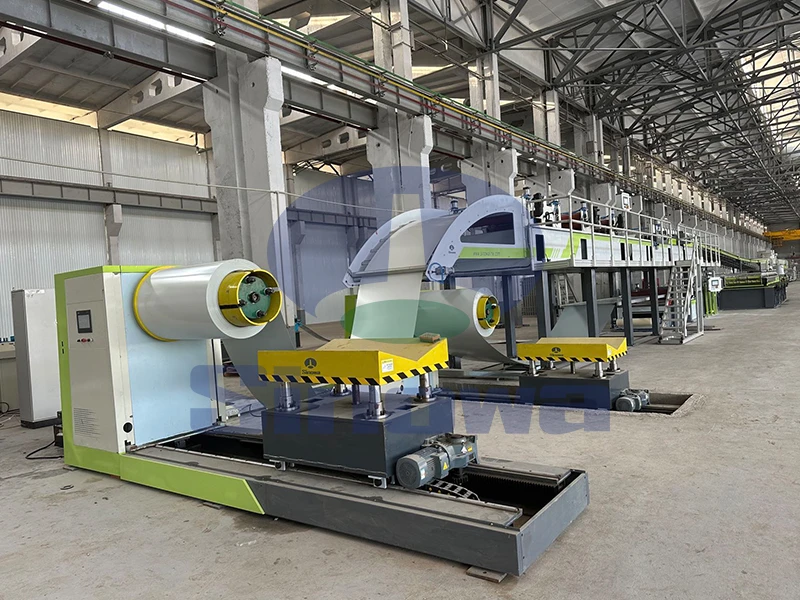
To clarify the production compatibility between traditional polyurethane (PU) sandwich panel lines and polyisocyanurate (PIR) panel manufacturing, it is essential to first recognize the overlapping core production workflows of the two panel types. Both PU and PIR sandwich panels adopt the continuous composite molding process that dominates the modern industry, covering consistent basic procedures including metal coil uncoiling, surface leveling, roll forming of upper and lower surface sheets, liquid core material pouring, high-pressure laminating, thermal curing, fixed-length cutting and finished product stacking. The mechanical structure of standard PU production lines, including double-belt conveyor systems, sheet forming units and cutting mechanisms, is fully adaptable to the overall molding logic of PIR panels. This structural consistency forms the fundamental basis for cross-production capability, eliminating the need for large-scale equipment disassembly and replacement. The key distinctions do not lie in mechanical operation processes, but in the precise control of chemical reaction conditions and raw material matching, which means existing PU production lines possess inherent hardware compatibility for PIR panel production with reasonable parameter optimization.
The most critical difference restricting direct PIR production on ordinary PU lines lies in the chemical formulation and raw material proportioning system of the foam core. Although both PU and PIR foams are synthesized from polyol and isocyanate as base raw materials, their reaction ratios and auxiliary components vary significantly. PIR production requires a much higher isocyanate proportion to trigger trimerization reactions and form stable isocyanurate ring structures inside the foam, a structural feature that distinguishes PIR’s superior thermal stability and heat resistance from ordinary PU foam. Meanwhile, PIR manufacturing adopts specialized polyol raw materials and targeted catalysts different from conventional PU formulas, which can effectively promote ring-forming polymerization and avoid unstable foam cell structures. Standard PU production lines are preset with fixed proportioning parameters for conventional PU raw materials, lacking flexible adjustment space for high-precision raw material ratio switching. Without modifying the dosing and mixing system, the raw material reaction will be incomplete, resulting in loose foam texture, uneven cell distribution and failure to form qualified PIR core structures.
High-pressure mixing unit calibration is another indispensable upgrade for PU production lines to achieve stable PIR panel production. The synthesis of PIR foam demands more stringent mixing pressure and uniformity control than PU foam. The trimerization reaction of isocyanate is extremely sensitive to material mixing uniformity; local uneven mixing will lead to inconsistent reaction degrees, causing partial foam scorching, hollow cavities or insufficient curing inside the panel core. Traditional PU mixing heads are designed for conventional urethane reaction characteristics, with fixed pressure ranges and mixing blade operating parameters that cannot fully meet PIR’s efficient and thorough mixing requirements. By upgrading the precision dosing module and adjusting the operating pressure of the mixing unit, the production line can achieve accurate metering of special PIR raw materials and uniform fusion of all components. This optimization ensures that the chemical reaction proceeds stably in the preset state, forming the dense, closed-cell cellular structure unique to high-quality PIR sandwich panels.
Temperature and curing process adjustment of the double-belt laminating system is vital to qualified PIR panel production on renovated PU lines. The curing mechanism of PIR foam differs greatly from that of PU foam, requiring a longer low-speed curing cycle and continuous and stable segmented temperature control to complete molecular cross-linking and ring-forming reactions. Ordinary PU production lines have relatively single temperature setting modes and fast curing rhythm adapted to PU foam characteristics, which cannot match the slow and precise thermal reaction needs of PIR materials. Simply applying PU curing parameters to PIR production will lead to insufficient internal polymerization, poor bonding strength between the foam core and metal surface sheets, and reduced overall structural stability of the panel. Optimizing the heating zone partition of the double-belt conveyor, adjusting running speed parameters and setting graded temperature rise and constant temperature curing procedures can perfectly adapt to PIR’s curing rules, ensuring full molding and stable performance of the panel core.
After completing targeted parameter calibration and partial module optimization, traditional PU sandwich panel production lines can achieve stable and standardized PIR panel production with reliable finished product quality. The optimized line can flexibly switch between PU and PIR panel production modes only by adjusting raw material formulas, mixing parameters and curing procedures, realizing multi-functional production of one set of equipment. The finished PIR panels produced by renovated lines have consistent core structural density, excellent thermal insulation performance and stable bonding effect between layers, fully meeting the application requirements of high-temperature resistance and heat preservation scenarios. This transformation mode avoids the high cost of purchasing dedicated PIR production lines, greatly improves the utilization rate of traditional PU production equipment, and provides a cost-effective production upgrade solution for manufacturers with diversified panel production demands.
In summary, conventional polyurethane sandwich panel production lines are not inherently incapable of producing PIR panels, but require professional technical optimization rather than blind direct production. The highly overlapping mechanical structure and production process of the two panel types determine the core compatibility of the equipment, while the differences in chemical reaction conditions and process parameters are the only barriers to cross-production. Through systematic upgrades of raw material proportioning systems, high-pressure mixing units and curing temperature control modules, ordinary PU production lines can efficiently and stably produce high-quality PIR sandwich panels. This flexible production mode effectively balances equipment investment cost and product diversification needs, bringing strong practical value to the prefabricated building insulation panel manufacturing industry.
Gallery
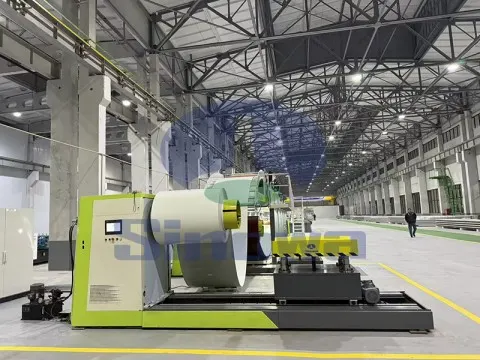
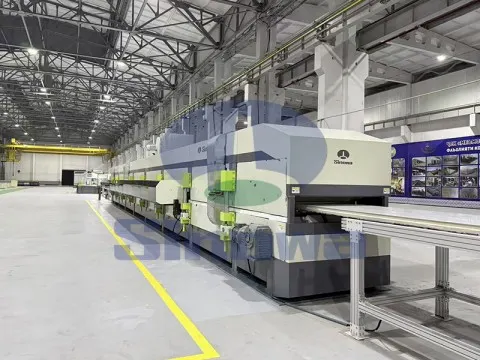
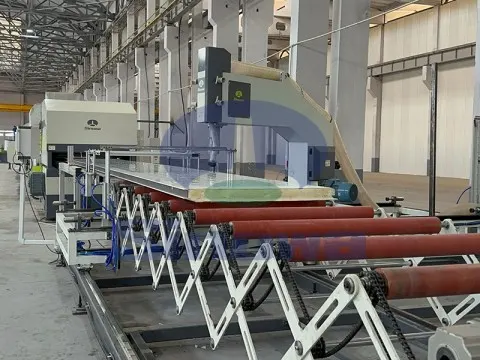
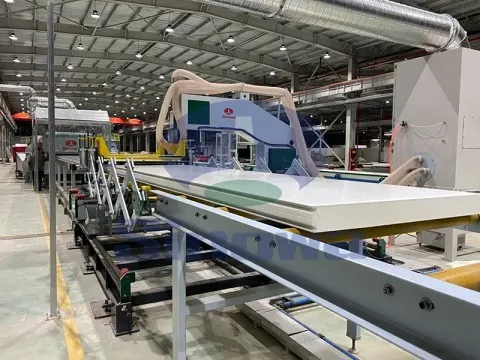
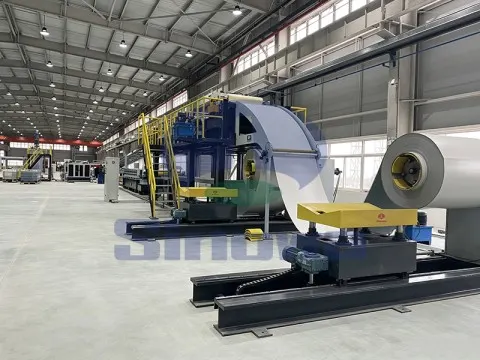
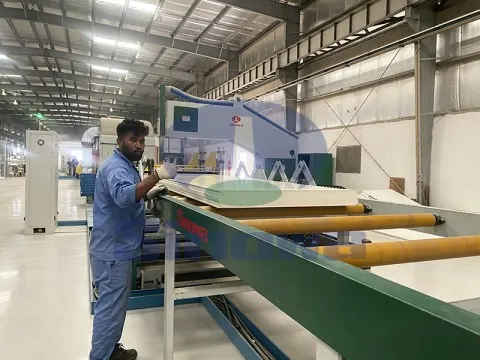
Sinowa is a professional manufacturer of sandwich panel machine in china, we provide diversified and high-performance sandwich panel production lines, including fully automatic continuous PU sandwich panel line and customized special lines to meet mass production and personalized order demands. These sandwich panel lines support processing multiple foam core materials, such as PU, PIR, mineral wool, rock wool and glass wool, covering different insulation and fireproof standards.
Featuring stable operation, high efficiency, energy saving and easy maintenance, our PU sandwich panel line deliver sandwich panels with excellent thermal insulation, fire resistance, sound insulation and lightweight durability. The finished panels are widely applied in industrial workshops, warehouse roofing and wall cladding, cold storage insulation, serving global construction and industrial insulation markets.
Main Products
-

Continuous PU Sandwich Panel Production Line
This continuous PU sandwich panel production line is an integrated automatic equipment. It covers uncoiling, forming, foaming, curing and cutting processes. With automatic raw material proportioning and precise temperature & pressure control, PIR sandwich panel production line continuously composites panels with double skins. Polyurethane sandwich panel production line stably produces steel and aluminum sandwich panels. Featuring high automation, the line makes fireproof and thermal-insulation panels for building enclosure and cold storage. -
Rock Wool Sandwich Panel Production Line
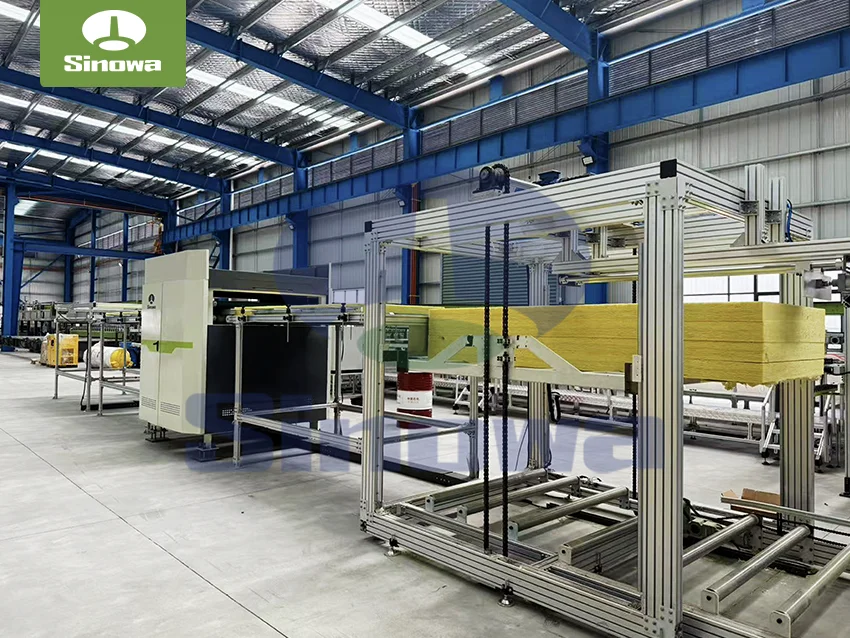
Continuous rockwool sandwich panel production line is an automatic integrated production equipment, consisting of uncoiling, forming, gluing and compounding, heating curing, fixed-length cutting, automatic stacking and other modules. The mineral wool sandwich panel production line continuously conveys color steel plates and rock wool core materials to automatically complete lamination and curing, which can produce fireproof and thermal insulation sandwich panels. Featuring high automation degree and stable operation, this production line is suitable for mass production of panels used for building walls, roofs and other scenarios. -
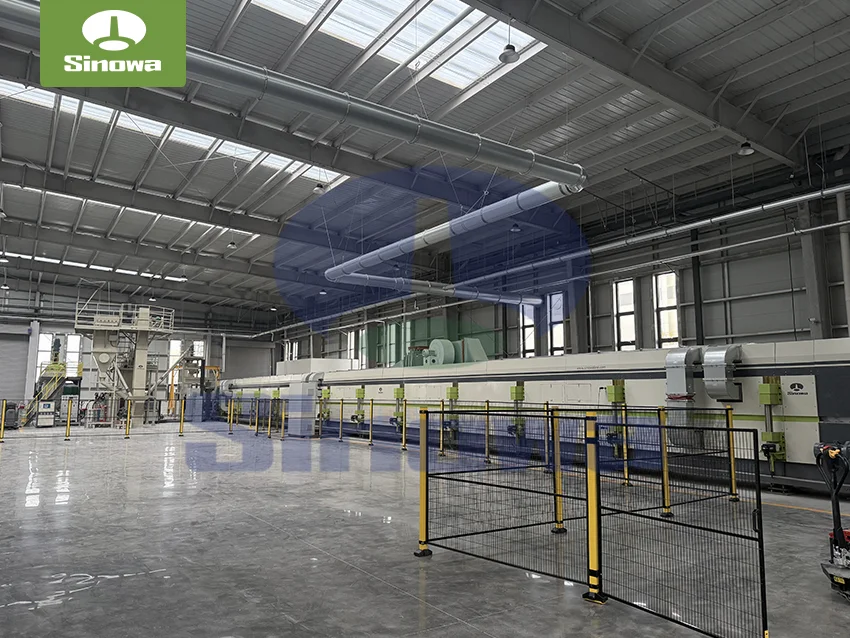
Phenolic Insulation Board Production Line
This integrated automatic production line continuously manufactures PU and phenolic insulation boards. The insulation board production line covers raw material proportioning, high-pressure foaming, laminating, curing and fixed-length cutting. Featuring high automation and stable molding, the insulation panel production line supports various surface materials. PU boards offer excellent thermal insulation, while phenolic boards have superior fire resistance. These products are widely used in construction, cold chain, ventilation ducts and other thermal insulation fields.
Other FAQs
- Does The Continuous PU Sandwich Panel Manufacturing Line Support Automatic Stacking And Packing
- Can PIR Sandwich Panel Production Line Produce Prefabricated Container House Roof Panels
- Why Is The Foaming Expansion Rate Unstable On The PU Foam Production Line
- How Does A PUF Sandwich Panel Production Line Cut Panels To Fixed Lengths
- Automatic Error Correction Function Of Polyurethane Sandwich Panel Production Line
- Workshop Space Layout Requirement For PU Sandwich Panel Production Line
- Operator Professional Training Content For PU Sandwich Panel Line
- Energy Consumption Standard Of Automatic PU Sandwich Panel Production Equipment
- What Safety Protection Measures Are Needed For A Polyurethane Sandwich Panel Manufacturing Line
- What Regular Maintenance Does A Polyurethane Sandwich Panel Line Need
Related Articles
- Thermal Insulation Panel Production Line
- Polyurethane Sandwich Panel Manufacturing Line With PLC Control System
- Insulated PU Sandwich Panel Line
- Polyurethane Sandwich Panel Production Line For Modular House
- High Quality PU Sandwich Panel Machine Design
- PU Sandwich Panel Making Machine For High Density Composite Panels
- Corrugated Sandwich Panel Production Line
- PIR Sandwich Panel Production Line With PLC Control System
- External Wall Composite Insulation Board Production Line
- PU Sandwich Panel Manufacturing Machinery For Double-sided Composite Panels