How To Troubleshoot Mixing Head Failures Of A Polyurethane Sandwich Panel Production Line
Oct 5, 2026
Mixing head failures are core operational faults that disrupt polyurethane sandwich panel production, causing uneven foaming, material waste and defective finished products.
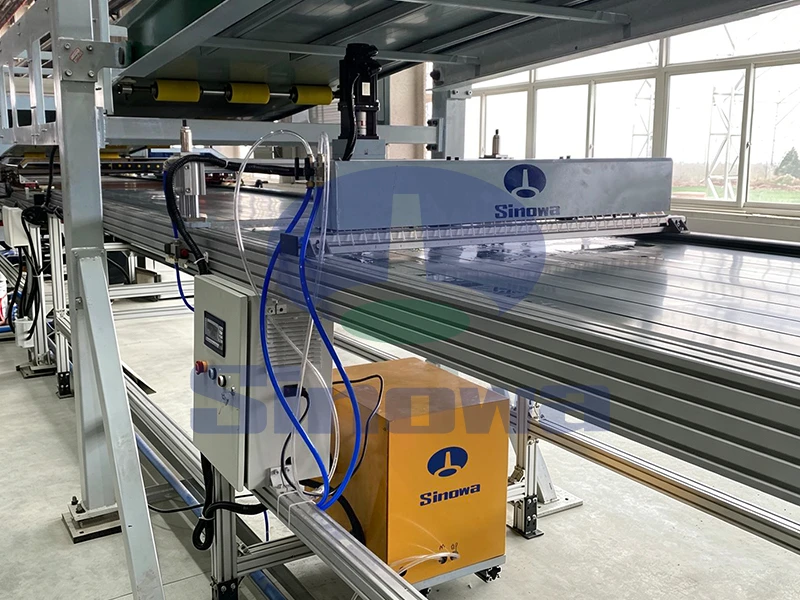
In continuous polyurethane sandwich panel production, the mixing head serves as the core component responsible for blending polyol and isocyanate materials evenly before foaming, and its abnormal operation directly determines the foam uniformity, adhesion performance and overall quality of finished panels. The most frequent early-stage mixing head failure is inconsistent material mixing ratios, which manifests as uneven foam density, partial soft or brittle areas on panel surfaces, and incomplete curing of local materials. This malfunction mainly stems from multiple subtle operational abnormalities in the mixing head system. Long-term material circulation will cause gradual wear of internal filter elements and check valves, leading to unsmooth material delivery and inconsistent supply rates of the two core raw materials. In addition, tiny cured polyurethane residues will accumulate in the mixing cavity and nozzle over time, blocking partial material channels and disrupting the precise mixing proportion. Slight pressure fluctuations in the feeding pipeline also easily trigger ratio deviations, as the mixing head relies on stable hydraulic pressure to maintain balanced material output. To troubleshoot this problem effectively, operators should first observe the real-time pressure data of the dual material pipelines to identify abnormal pressure differences, then disassemble and clean the mixing cavity and nozzle to remove residual blockages, and inspect the wear degree of filter elements and valve components, replacing aging and damaged parts in a timely manner to restore accurate material mixing ratios.
Material leakage around the mixing head is another common failure that plagues polyurethane sandwich panel production lines, which not only causes raw material waste and increases production costs but also leads to equipment corrosion and potential safety hazards. Leakage faults mainly occur at the sealing joints of the mixing head, nozzle connection parts and piston movement gaps. Long-term high-frequency operation will cause aging, deformation and wear of rubber sealing rings and gaskets, losing their original sealing elasticity and tightness. Meanwhile, residual cured materials attached to the contact surfaces of sealing components will scratch the sealing structure during equipment operation, resulting in gaps for material seepage. In particular, the oil leakage holes of the mixing head piston cylinder are easily blocked by foaming residues, causing un-discharged hydraulic oil to accumulate and break the internal sealing balance, leading to mixing material leakage and cross-contamination of hydraulic oil and foaming materials. During troubleshooting, operators need to comprehensively inspect all sealing parts and pipeline joints of the mixing head, clean up residual dirt and cured materials on the contact surfaces, replace all aging and damaged sealing accessories, and dredge blocked leakage holes to ensure smooth oil discharge. After maintenance, a trial operation with no-load and low-load feeding is required to verify the sealing performance and eliminate hidden leakage dangers.
Blockage failure of the mixing head nozzle and mixing cavity is a key factor leading to unstable production and defective panel products, which often occurs after long-term uninterrupted production or irregular equipment cleaning. Polyurethane raw materials undergo preliminary chemical reaction and curing once mixed, and residual materials remaining in the mixing cavity, nozzle and flow channels will gradually accumulate and harden with repeated production cycles. These hardened residues will narrow the material flow channels, affect the fluidity of mixed materials, and cause intermittent material output, resulting in pinholes, voids and uneven thickness on the surface of sandwich panels. In severe cases, complete nozzle blockage will lead to material interruption and forced production shutdown. Humid production environments will also aggravate this failure, as moisture in the air reacts with residual polyurethane materials to form hard and insoluble blockages that are difficult to clean. The troubleshooting process focuses on thorough dredging and standardized cleaning. Operators need to disassemble the detachable parts of the mixing head professionally, use special cleaning agents to soak and dissolve cured residues, and clean the flow channels and nozzle holes with professional tools to avoid residual dead corners. After cleaning, dry all components completely to prevent moisture from remaining inside, and establish a regular cleaning mechanism to avoid long-term accumulation of residues.
Abnormal noise and jitter during mixing head operation are atypical but critical equipment failures, which are early warning signals of internal component damage and mechanical failure. Normal mixing head operation presents stable and uniform operating sounds and smooth vibration frequency, while abnormal harsh noise, friction sound and violent jitter indicate internal mechanical abnormalities. This failure is mainly caused by worn internal transmission parts, loose fixed bolts and unbalanced piston movement. Long-term high-speed reciprocating operation will cause wear of the mixing head piston and transmission connecting parts, increasing mechanical friction resistance and generating abnormal noise. Loose fixed components will lead to displacement of the mixing head during operation, causing overall jitter and unstable mixing position. In addition, insufficient lubrication of internal mechanical structures or mixing of hard impurity particles in raw materials will aggravate mechanical friction and impact, triggering continuous abnormal vibration and noise. When troubleshooting, operators should first shut down the equipment for safety inspection, check the fastening degree of all fixed bolts and supports of the mixing head, supplement professional lubricating oil for mechanical transmission parts, and disassemble the internal structure to remove mixed impurity particles. For severely worn transmission components and pistons, timely replacement is required to restore the stable mechanical operation state of the mixing head.
Slow material injection and delayed mixing response of the mixing head will directly reduce production efficiency and cause batch inconsistency of sandwich panel products. This failure is mainly reflected in prolonged material injection time, slow start of mixing action, and inconsistent material output speed in different production cycles. The core causes include abnormal operation of the mixing head control solenoid valve, blocked auxiliary air passages and insufficient hydraulic power. The solenoid valve controls the start and stop of the mixing head and material injection action, and carbon deposition and residual dirt on the valve core will cause slow valve body response and delayed action execution. Blocked air passages will affect the pressure balance inside the mixing head, resulting in sluggish material pushing and mixing movement. Meanwhile, aging hydraulic systems and insufficient output pressure cannot provide stable power support for rapid material injection and mixing, reducing equipment response speed. During troubleshooting, operators need to focus on inspecting the solenoid valve operation status, clean the valve core and internal pipeline dirt to ensure flexible valve body switching, dredge all auxiliary air passages to maintain smooth air pressure circulation, and detect the hydraulic system pressure to adjust power parameters and replace aging hydraulic components, so as to restore the rapid and sensitive response capability of the mixing head.
Effective daily maintenance and standardized operation management are fundamental measures to prevent recurring mixing head failures and ensure long-term stable operation of polyurethane sandwich panel production lines. Most mixing head faults are caused by irregular operation, untimely cleaning and neglected daily inspection rather than sudden equipment damage. Operators should abide by standardized operating procedures in daily production, avoid overload operation and sudden start-stop of the mixing head, and prevent abnormal impact on internal components. A daily inspection mechanism should be established to regularly check the operating pressure, sealing status, noise and material output uniformity of the mixing head, and deal with minor abnormalities in a timely manner to avoid fault escalation. Regular deep cleaning and component inspection and replacement are also essential. Regularly clean internal flow channels, mixing cavities and nozzles, regularly replace aging filter elements, sealing rings and vulnerable mechanical parts, and conduct regular lubrication maintenance on transmission structures. Scientific maintenance can effectively reduce the failure rate of the mixing head, extend the service life of equipment, ensure the continuous stability of polyurethane sandwich panel production, and effectively reduce product defect rates and production operation costs.
Gallery
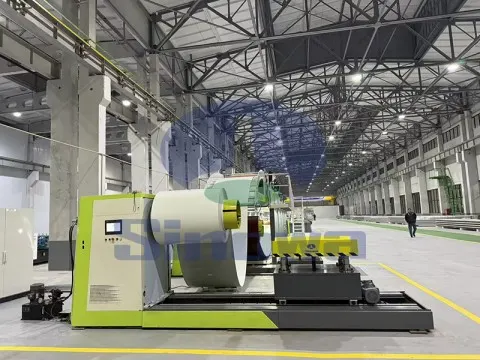
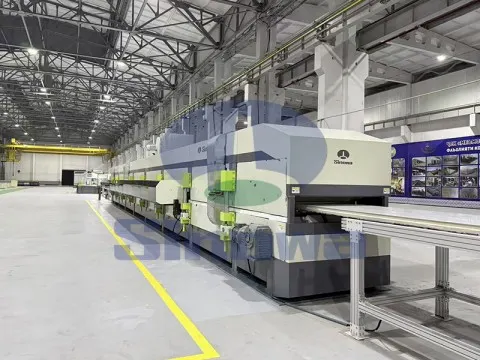
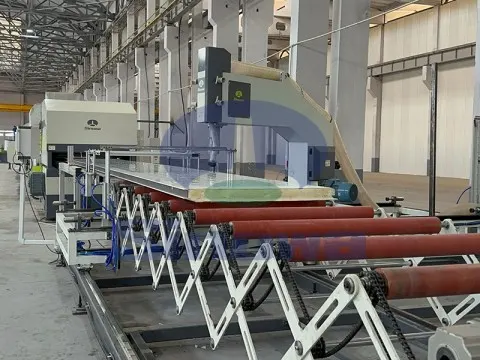
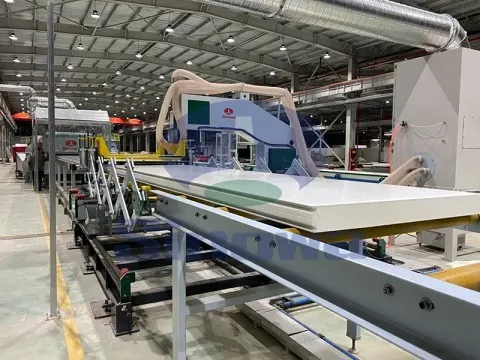
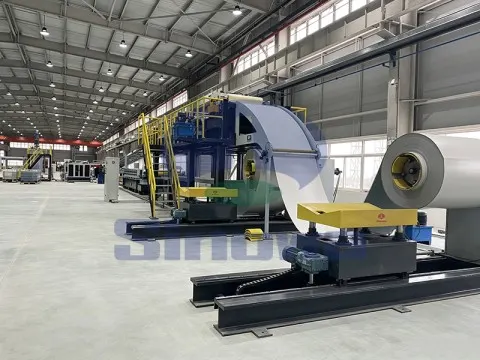
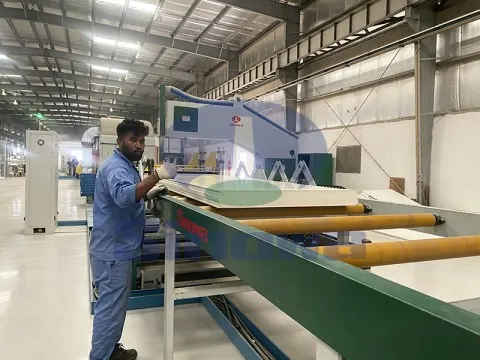
Sinowa is a professional manufacturer of sandwich panel machine in china, we provide diversified and high-performance sandwich panel production lines, including fully automatic continuous PU sandwich panel line and customized special lines to meet mass production and personalized order demands. These sandwich panel lines support processing multiple foam core materials, such as PU, PIR, mineral wool, rock wool and glass wool, covering different insulation and fireproof standards.
Featuring stable operation, high efficiency, energy saving and easy maintenance, our PU sandwich panel line deliver sandwich panels with excellent thermal insulation, fire resistance, sound insulation and lightweight durability. The finished panels are widely applied in industrial workshops, warehouse roofing and wall cladding, cold storage insulation, serving global construction and industrial insulation markets.
Main Products
-

Continuous PU Sandwich Panel Production Line
This continuous PU sandwich panel production line is an integrated automatic equipment. It covers uncoiling, forming, foaming, curing and cutting processes. With automatic raw material proportioning and precise temperature & pressure control, PIR sandwich panel production line continuously composites panels with double skins. Polyurethane sandwich panel production line stably produces steel and aluminum sandwich panels. Featuring high automation, the line makes fireproof and thermal-insulation panels for building enclosure and cold storage. -

Rock Wool Sandwich Panel Production Line
Continuous rockwool sandwich panel production line is an automatic integrated production equipment, consisting of uncoiling, forming, gluing and compounding, heating curing, fixed-length cutting, automatic stacking and other modules. The mineral wool sandwich panel production line continuously conveys color steel plates and rock wool core materials to automatically complete lamination and curing, which can produce fireproof and thermal insulation sandwich panels. Featuring high automation degree and stable operation, this production line is suitable for mass production of panels used for building walls, roofs and other scenarios. -

Phenolic Insulation Board Production Line
This integrated automatic production line continuously manufactures PU and phenolic insulation boards. The insulation board production line covers raw material proportioning, high-pressure foaming, laminating, curing and fixed-length cutting. Featuring high automation and stable molding, the insulation panel production line supports various surface materials. PU boards offer excellent thermal insulation, while phenolic boards have superior fire resistance. These products are widely used in construction, cold chain, ventilation ducts and other thermal insulation fields.
Other FAQs
- What Safety Protection Measures Are Needed For A Polyurethane Sandwich Panel Manufacturing Line
- What Regular Maintenance Does A Polyurethane Sandwich Panel Line Need
- How To Fix Uneven Foam Density On The PU Foam Production Line
- What Raw Materials Are Required For The PUR Sandwich Panel Production Line Operation
- Emergency Fault Handling Process For PU Sandwich Panel Line Shutdown
- Polyurethane Sandwich Panel Production Equipment Lubrication Maintenance Standard
- Troubleshooting For Sandwich Panel Production Line Frequent Shutdown Failure
- How To Solve Surface Bubble Problems Of Panels From PU Foam Core Sandwich Panel Line
- Why Does The Polyurethane Sandwich Panel Line Produce Uneven Foam Distribution
- How To Improve The Production Efficiency Of Insulation Board Production Line
Related Articles
- Partition PU Sandwich Panel Machine
- PU Insulation Board Production Line
- Corrosion Resistant PU Sandwich Panel Machine
- Cold Storage Panel Production Line
- Automatic PIR Sandwich Panel Production Line
- PU Sandwich Panel Production Line For Warehouse Partition Panels
- Color Steel Sandwich Panel Line
- Continuous PU Sandwich Panel Line For Prefabricated Building
- High-speed Automatic PU Sandwich Panel Production Line For Roofing Panels
- Continuous PU Sandwich Panel Making Machine