How To Adjust The Feeding Speed Of Insulation Panel Production Line For Stable Output
Sep 29, 2026
Stable output of insulation panel production line relies heavily on scientific feeding speed adjustment, which eliminates material accumulation, feeding gaps and product defects.
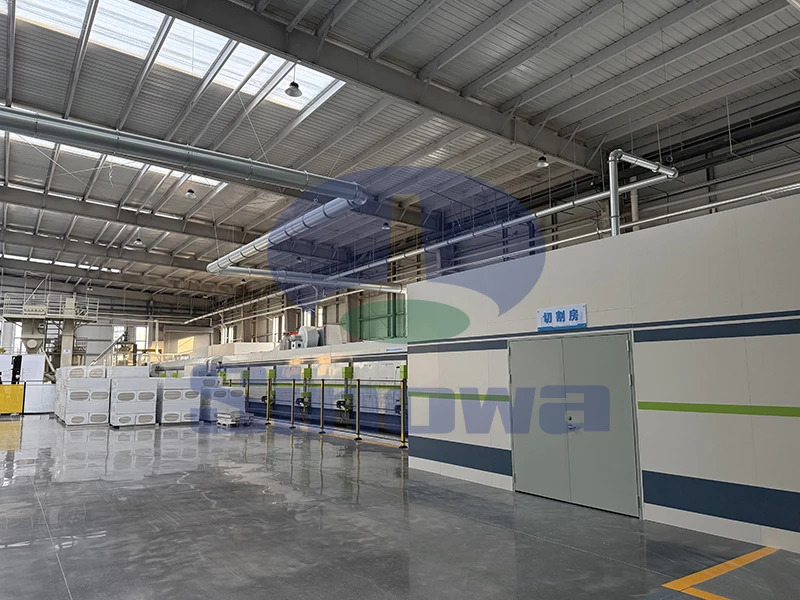
The feeding speed of insulation panel production line serves as the core operational parameter that coordinates the entire continuous production process, directly determining production stability and finished product uniformity. Many operational instability issues in daily production, such as uneven panel thickness, foaming defects and material waste, stem from mismatched feeding speed with subsequent processing procedures. The insulation panel production line integrates multiple interconnected modules including raw material conveying, substrate processing, foaming compounding and shaping cutting, and each module has its own optimal operating rhythm. If the feeding speed is too fast, raw materials cannot be fully processed in the foaming and compounding stage, leading to incomplete bonding and surface irregularities of insulation panels. Conversely, excessively low feeding speed causes idle operation of follow-up equipment, reduces production efficiency, and may trigger local overheating of materials to affect product performance. Therefore, accurate speed adjustment must take the overall operational coordination of the insulation panel production line as the core principle, rather than simply pursuing high-speed operation or static low-speed stability. Operators need to fully grasp the linkage relationship between the feeding system and other functional modules to lay a foundation for targeted speed fine-tuning and real-time dynamic adjustment.
Before adjusting the feeding speed of insulation panel production line, it is essential to complete comprehensive equipment inspection and parameter calibration to eliminate mechanical and systematic hidden troubles that affect speed stability. Long-term continuous operation will cause slight wear on conveyor rollers, transmission belts and servo drive components of the production line, resulting in unstable feeding speed fluctuation even with fixed parameter settings. Operators should first check the tightness and flatness of the feeding conveyor belt to avoid material slipping or stuck conveying caused by loose or deformed belts. Meanwhile, it is necessary to calibrate the sensor and frequency conversion control components of the feeding system to ensure real-time accurate collection of feeding volume and speed data, which is the premise of precise speed regulation. In addition, the smoothness of the raw material feeding channel should be inspected to remove residual debris and accumulated materials that may block conveying. Only when all mechanical parts operate flexibly and control components respond sensitively can the subsequent feeding speed adjustment of insulation panel production line achieve expected results, avoiding invalid parameter adjustments caused by equipment failures and ensuring the basic stability of the feeding process.
Incremental speed adjustment and real-time operational monitoring are key measures to maintain stable output of insulation panel production line. Sudden large-scale speed changes will disrupt the coordinated operation rhythm of all production modules, easily causing material accumulation in the transition section and unqualified finished products. The standard adjustment method is to adopt small-range incremental fine-tuning, changing the feeding speed by a tiny margin each time and maintaining the adjusted state for a certain period to observe the overall production operation status. During the adjustment process, operators need to focus on multiple key indicators, including the uniformity of raw material supply, the matching degree between feeding volume and foaming coating rate, and the surface flatness and bonding tightness of semi-finished insulation panels. Once minor abnormal signs such as intermittent feeding jitter or slight material stacking appear, the speed should be fine-tuned back in time. This gradual adjustment mode can effectively balance production efficiency and operational stability, help the insulation panel production line adapt to the optimal feeding speed state, and avoid quality fluctuations caused by drastic parameter changes.
Real-time linkage adjustment based on production line operation feedback is crucial for long-term stable feeding and continuous output of insulation panel production line. The production state of insulation panel production line is not static, and factors such as raw material batch differences, ambient temperature changes and equipment operating load will subtly affect the adaptability of feeding speed. Fixed speed parameters cannot adapt to dynamic production changes, so it is necessary to rely on the production line’s real-time feedback system for dynamic optimization. The sensors distributed in each processing link can feed back data such as material processing progress, equipment operating load and product molding effect to the central control system in real time. When the follow-up foaming unit is under high load and the material processing speed slows down, the system will appropriately reduce the feeding speed to prevent material backlog; when the processing efficiency of each module is improved, the feeding speed can be slightly increased to optimize production capacity. This intelligent linkage adjustment mode realizes the dynamic matching between feeding speed and overall operation of the insulation panel production line, fundamentally reducing unqualified products and production stagnation problems.
Standardized parameter recording and operational summary help form a mature speed adjustment system for insulation panel production line, realizing sustainable stable output. Each speed adjustment operation should be accurately recorded, including the initial speed parameter, adjustment range, real-time production state after adjustment and final product quality performance. Accumulated adjustment data can form a complete parameter database, enabling operators to quickly locate the optimal feeding speed range corresponding to different production conditions and raw material states. For conventional production scenarios, mature parameter schemes can be directly applied to avoid repeated debugging and reduce operational errors. In addition, regular operational summary and parameter optimization are required to eliminate inappropriate speed setting habits formed by empirical operation. Standardized management makes the feeding speed adjustment of insulation panel production line more scientific and standardized, effectively reducing manual operation errors and maintaining long-term stable and efficient production output of the entire line.
Reasonable maintenance cycle matching with speed adjustment further consolidates the stable output effect of insulation panel production line. Different feeding speeds will bring different load pressures to the feeding transmission system and follow-up processing equipment. Long-term high-speed feeding will accelerate component wear, while long-term low-speed operation may cause equipment operation stagnation and parameter drift. Therefore, on the basis of determining the optimal feeding speed, enterprises need to formulate targeted equipment maintenance plans according to daily operating speed parameters. Regular lubrication of transmission components, calibration of control systems and inspection of wearing parts can ensure that the equipment always maintains good operating performance, avoiding speed instability caused by equipment aging and failure. The combination of scientific speed adjustment and standardized equipment maintenance forms a closed-loop operation management mode for the insulation panel production line, which continuously optimizes production stability, reduces failure downtime, and ensures consistent and reliable production output in long-term continuous operation.
Gallery
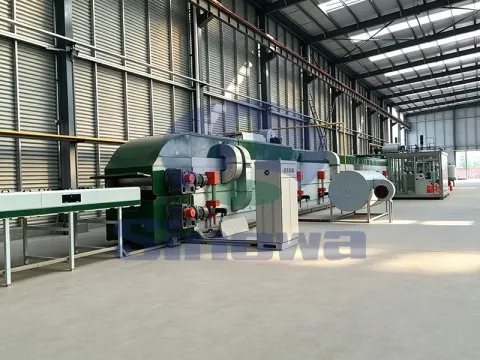
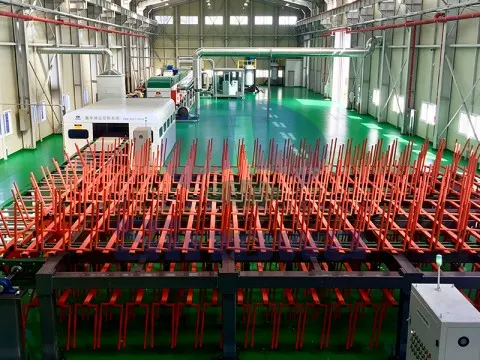
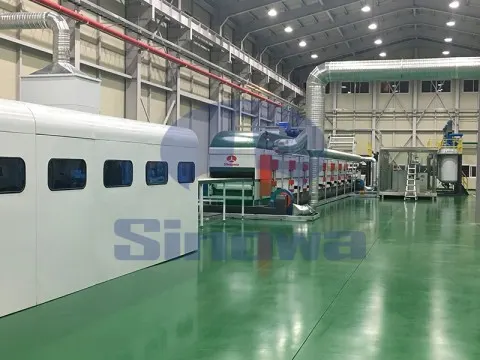
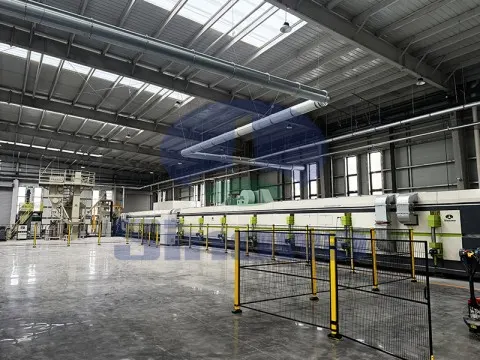
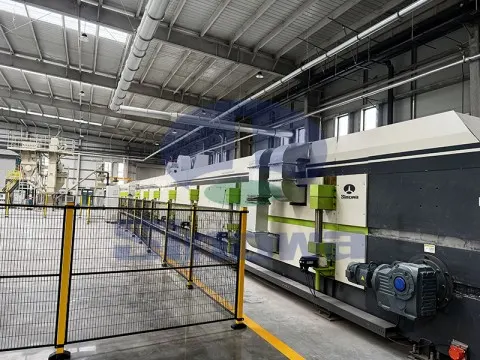
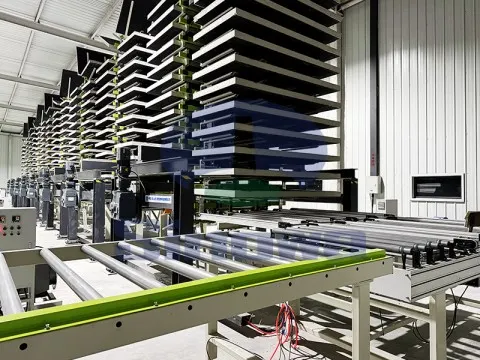
Sinowa is a professional manufacturer of sandwich panel machine in china, we provide diversified and high-performance sandwich panel production lines, including fully automatic continuous PU sandwich panel line and customized special lines to meet mass production and personalized order demands. These sandwich panel lines support processing multiple foam core materials, such as PU, PIR, mineral wool, rock wool and glass wool, covering different insulation and fireproof standards.
Featuring stable operation, high efficiency, energy saving and easy maintenance, our PU sandwich panel line deliver sandwich panels with excellent thermal insulation, fire resistance, sound insulation and lightweight durability. The finished panels are widely applied in industrial workshops, warehouse roofing and wall cladding, cold storage insulation, serving global construction and industrial insulation markets.
Main Products
-

Continuous PU Sandwich Panel Production Line
This continuous PU sandwich panel production line is an integrated automatic equipment. It covers uncoiling, forming, foaming, curing and cutting processes. With automatic raw material proportioning and precise temperature & pressure control, PIR sandwich panel production line continuously composites panels with double skins. Polyurethane sandwich panel production line stably produces steel and aluminum sandwich panels. Featuring high automation, the line makes fireproof and thermal-insulation panels for building enclosure and cold storage. -

Rock Wool Sandwich Panel Production Line
Continuous rockwool sandwich panel production line is an automatic integrated production equipment, consisting of uncoiling, forming, gluing and compounding, heating curing, fixed-length cutting, automatic stacking and other modules. The mineral wool sandwich panel production line continuously conveys color steel plates and rock wool core materials to automatically complete lamination and curing, which can produce fireproof and thermal insulation sandwich panels. Featuring high automation degree and stable operation, this production line is suitable for mass production of panels used for building walls, roofs and other scenarios. -

Phenolic Insulation Board Production Line
This integrated automatic production line continuously manufactures PU and phenolic insulation boards. The insulation board production line covers raw material proportioning, high-pressure foaming, laminating, curing and fixed-length cutting. Featuring high automation and stable molding, the insulation panel production line supports various surface materials. PU boards offer excellent thermal insulation, while phenolic boards have superior fire resistance. These products are widely used in construction, cold chain, ventilation ducts and other thermal insulation fields.
Other FAQs
- Does The Continuous PU Sandwich Panel Manufacturing Line Support Automatic Stacking And Packing
- Can PIR Sandwich Panel Production Line Produce Prefabricated Container House Roof Panels
- Why Is The Foaming Expansion Rate Unstable On The PU Foam Production Line
- How Does A PUF Sandwich Panel Production Line Cut Panels To Fixed Lengths
- Automatic Error Correction Function Of Polyurethane Sandwich Panel Production Line
- Workshop Space Layout Requirement For PU Sandwich Panel Production Line
- Operator Professional Training Content For PU Sandwich Panel Line
- Energy Consumption Standard Of Automatic PU Sandwich Panel Production Equipment
- What Safety Protection Measures Are Needed For A Polyurethane Sandwich Panel Manufacturing Line
- What Regular Maintenance Does A Polyurethane Sandwich Panel Line Need
Related Articles
- Sandwich Panel Line System
- PU Sandwich Panel Roll Forming Machine
- PU Sandwich Panel Machine Made In China
- Customized PU Sandwich Panel Line For Different Thickness Panels
- Sandwich Panel Line Easy Maintainable
- PIR Sandwich Panel Line For Insulated Panels With B1-Grade Flame Retardancy
- PUR Sandwich Panel Line With Adjustable Panel Thickness
- Insulated Partition Panel Line
- PU Sandwich Panel Machine With Heavyweight Foam Core
- Clean Room Panel Continuous Production Line