How To Reduce Material Waste Of Continuous PU Sandwich Panel Production Line
Sep 29, 2026
Material waste is a common challenge in continuous PU sandwich panel production line operations, hindering resource utilization and sustainable manufacturing.
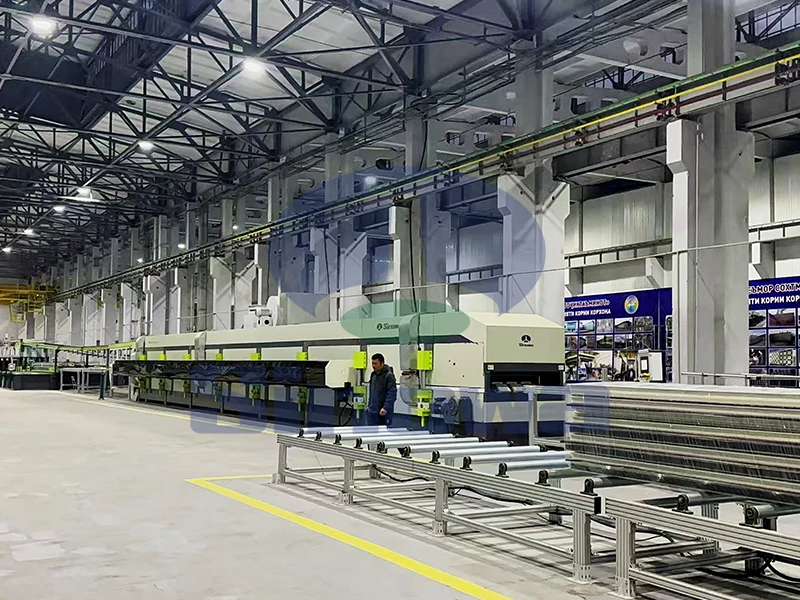
Precise raw material proportioning and flow control stands as the most fundamental measure to cut waste in continuous PU sandwich panel production line workflows. Polyurethane foam formation relies on accurate mixing of multiple chemical raw materials, and minor deviations in proportion or flow rate will directly lead to insufficient foaming, excessive expansion or uneven density, resulting in a large number of unqualified panels and raw material waste. Many traditional production operations adopt fixed manual proportioning modes, which are prone to errors due to human judgment and operational differences. By upgrading to intelligent automatic flow regulation systems, manufacturers can achieve real-time dynamic adjustment of PU raw material delivery volume. The system can automatically match the material output according to the running speed and processing specifications of the continuous PU sandwich panel production line, ensuring that the injected raw materials fully adapt to the internal cavity volume of panel products. This eliminates redundant chemical materials that originally overflowed or failed to form effective foam structures. Meanwhile, real-time monitoring of material pressure and temperature in the conveying pipeline avoids material deterioration and waste caused by pipeline blockage or parameter fluctuation. Stable and accurate material supply not only reduces defective product rates but also maximizes the conversion rate of PU raw materials into qualified foam core materials, effectively curbing source waste in continuous production.
Optimization of production parameter setting and process stability plays a vital role in reducing material waste during the operation of continuous PU sandwich panel line. Continuous panel manufacturing is a highly integrated process involving feeding, laminating, foaming, curing and cutting, and any unstable process link will trigger chain waste problems. In actual production, frequent parameter adjustments, inconsistent equipment operating speeds and unstable curing temperatures often lead to product defects such as panel deformation, foam delamination and incomplete curing. These unqualified products have to be scrapped or trimmed in large quantities, causing huge material losses. Manufacturers can formulate standardized parameter databases for different panel specifications based on long-term production data. Solidifying optimal operating parameters for foaming temperature, curing time, equipment operating speed and laminating pressure avoids random parameter changes by operators. In addition, regular equipment calibration and maintenance for the continuous PU sandwich panel production line ensures the stable operation of each functional module. Wear and aging of rollers, cutters and spraying nozzles will cause processing deviations; regular inspection and replacement of vulnerable parts can maintain processing accuracy. Stable and standardized production processes greatly reduce the generation of defective and substandard products, thereby significantly lowering overall material waste and improving production consistency.
Scientific cutting and edge trimming optimization effectively reduces marginal material waste generated in the finishing stage of continuous PU sandwich panel production line. The cutting process is the main source of solid waste in panel production, including edge trimming residues, tailing materials and leftover materials from size cutting. Traditional fixed-length cutting modes often reserve excessive trimming margins to avoid dimensional errors, resulting in a large amount of usable PU foam and surface metal material being wasted as scrap. To solve this problem, manufacturers can adopt intelligent fixed-length cutting systems with precise positioning functions. The system can automatically calculate the optimal cutting size according to customer order specifications and real-time production panel dimensions, minimizing the trimming margin while ensuring product dimensional accuracy. Meanwhile, optimizing the cutting sequence and production scheduling can make full use of raw material plates. Arranging small-size panel production in a matching manner according to the leftover materials of large-size panels avoids bulk leftover material accumulation. In addition, installing centralized waste collection devices at the cutting and trimming stations of the continuous PU sandwich panel production line can completely collect foam fragments and metal edge materials generated in production. These collected waste materials can be recycled and reused through professional processing, turning originally discarded waste into available production resources and further improving the overall material utilization rate.
Professional raw material storage and pre-production management can effectively avoid invisible material waste in continuous PU sandwich panel line. PU chemical raw materials have strict requirements on storage environment, temperature and humidity. Improper storage will lead to raw material deterioration, failure and performance degradation, making them unable to participate in normal production and causing direct material waste. Many production enterprises ignore refined raw material management, resulting in partial failure of raw materials due to long-term storage, dampness or high temperature exposure. Establishing a standardized raw material warehouse with constant temperature and humidity control can ensure the stability of PU materials before use. At the same time, implementing the first-in-first-out inventory management mode avoids raw material overstocking and expiration. Before raw materials are put into the continuous PU sandwich panel production line, simple performance detection and screening can eliminate deteriorated and unqualified materials, preventing defective raw materials from entering the production process and causing batch product waste. In addition, standardized material handling and feeding operations avoid raw material leakage, splashing and loss during manual transportation and feeding, reducing trivial but long-term cumulative material waste in daily production.
Skill improvement and standardized operation training for production operators are essential soft measures to reduce material waste in continuous PU sandwich panel production machine. The operating proficiency and standardized awareness of employees directly affect the yield rate and material utilization level of the entire production line. Unskilled operation, irregular parameter adjustment and improper emergency disposal are important human factors leading to production waste. New employees often lack in-depth understanding of the operating logic and waste points of the continuous PU sandwich panel manufacturing line, and improper operation is prone to cause foaming failure, panel deviation and equipment jams, resulting in material scrapping. Enterprises can carry out regular professional training, focusing on equipment standardized operation, parameter adjustment specifications, waste prevention points and emergency disposal methods. Establishing a strict operation assessment mechanism can standardize employees’ daily operating behaviors and reduce operational errors caused by human factors. In addition, encouraging employees to summarize production experience and put forward process optimization suggestions can continuously tap the potential of waste reduction. Skilled and standardized operation teams can effectively reduce human-induced material waste and maintain efficient and low-consumption operation of the production line for a long time.
Continuous process monitoring, data analysis and iterative optimization help realize long-term waste reduction and efficiency improvement for continuous PU sandwich panel production line. Material waste reduction is not a one-time transformation but a continuous optimization process. The production process of continuous PU sandwich panel production line generates a large amount of real-time data including material consumption, product yield, defective rate and waste generation. By introducing a production data monitoring system, enterprises can fully collect and sort out production data, accurately locate key links with high waste rate, such as foaming deviation, cutting excess and parameter mismatch. Through longitudinal data comparison and cross-link analysis, the root causes of waste problems can be found out, and targeted process improvement plans can be formulated. Regularly summarizing waste reduction effects, adjusting production strategies and optimizing process details according to actual production conditions can gradually reduce redundant material consumption. This data-driven continuous optimization mode can continuously improve the material utilization efficiency of the production line, realize green and low-consumption production, and create greater economic and environmental benefits for panel manufacturing enterprises.
Gallery
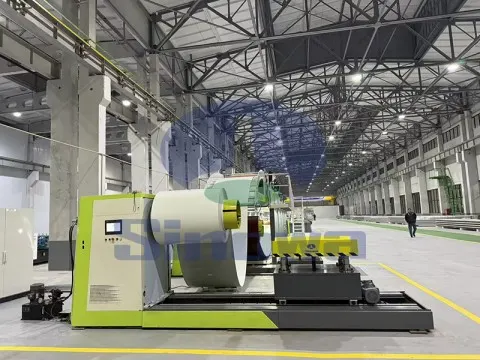
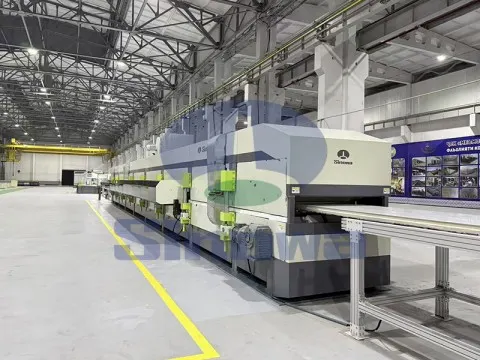
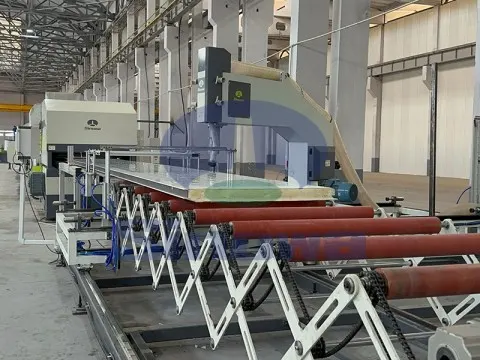
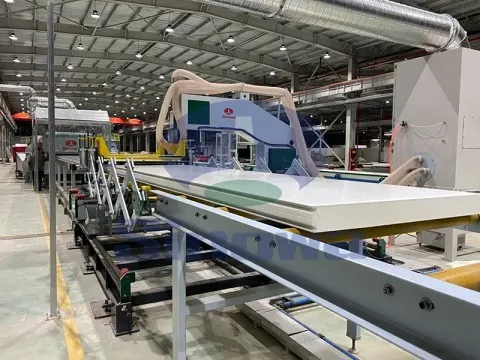
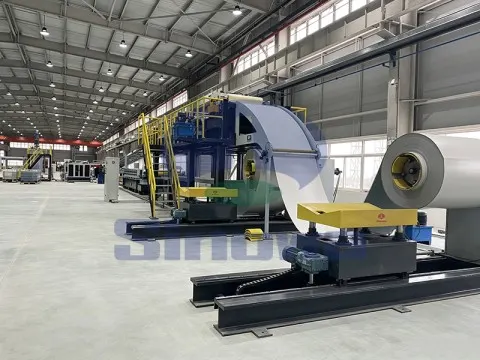
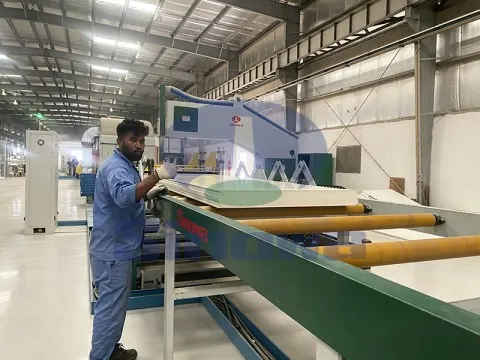
Sinowa is a professional manufacturer of sandwich panel machine in china, we provide diversified and high-performance sandwich panel production lines, including fully automatic continuous PU sandwich panel line and customized special lines to meet mass production and personalized order demands. These sandwich panel lines support processing multiple foam core materials, such as PU, PIR, mineral wool, rock wool and glass wool, covering different insulation and fireproof standards.
Featuring stable operation, high efficiency, energy saving and easy maintenance, our PU sandwich panel line deliver sandwich panels with excellent thermal insulation, fire resistance, sound insulation and lightweight durability. The finished panels are widely applied in industrial workshops, warehouse roofing and wall cladding, cold storage insulation, serving global construction and industrial insulation markets.
Main Products
-

Continuous PU Sandwich Panel Production Line
This continuous PU sandwich panel production line is an integrated automatic equipment. It covers uncoiling, forming, foaming, curing and cutting processes. With automatic raw material proportioning and precise temperature & pressure control, PIR sandwich panel production line continuously composites panels with double skins. Polyurethane sandwich panel production line stably produces steel and aluminum sandwich panels. Featuring high automation, the line makes fireproof and thermal-insulation panels for building enclosure and cold storage. -

Rock Wool Sandwich Panel Production Line
Continuous rockwool sandwich panel production line is an automatic integrated production equipment, consisting of uncoiling, forming, gluing and compounding, heating curing, fixed-length cutting, automatic stacking and other modules. The mineral wool sandwich panel production line continuously conveys color steel plates and rock wool core materials to automatically complete lamination and curing, which can produce fireproof and thermal insulation sandwich panels. Featuring high automation degree and stable operation, this production line is suitable for mass production of panels used for building walls, roofs and other scenarios. -

Phenolic Insulation Board Production Line
This integrated automatic production line continuously manufactures PU and phenolic insulation boards. The insulation board production line covers raw material proportioning, high-pressure foaming, laminating, curing and fixed-length cutting. Featuring high automation and stable molding, the insulation panel production line supports various surface materials. PU boards offer excellent thermal insulation, while phenolic boards have superior fire resistance. These products are widely used in construction, cold chain, ventilation ducts and other thermal insulation fields.
Other FAQs
- How To Maintain A Polyurethane Sandwich Panel Machine Daily
- How To Adjust Foaming Density Gradient Of PIR Sandwich Panel Production Line Core Layer
- What Causes Color Difference Of Finished Boards In Insulation Panel Production Line
- What Is The Standard Production Speed Of A PUF Sandwich Panel Production Line
- Polyurethane Sandwich Panel Production Line Energy Saving Transformation Effect
- PU Sandwich Panel Line Installation And Commissioning Steps
- Sandwich Panel Production Line Adaptation For Different Metal Facing Materials
- Price Composition Of Complete PU Sandwich Panel Production Line
- Does The Continuous PU Sandwich Panel Manufacturing Line Support Automatic Stacking And Packing
- Can PIR Sandwich Panel Production Line Produce Prefabricated Container House Roof Panels
Related Articles
- Energy Saving PU Sandwich Panel Machine
- PIR Insulation Board Production Line
- PIR Polyurethane Sandwich Panel Production Line
- Customizable PU Sandwich Panel Production Line For Cold Storage Panels
- PIR Sandwich Exterior Wall Panel Line
- Custom Continuous PU Sandwich Panel Line
- Full-auto PU Sandwich Panel Line With PLC Control System
- Polyurethane Sandwich Panel Line
- Continuous PU Insulated Sandwich Panel Line
- Insulated Sandwich Panel Machine