How Much Does A Full Automatic Sandwich Panel Machine Cost
Sep 29, 2026
The cost of a full automatic sandwich panel machine varies drastically based on functional configuration, production capacity, and integrated intelligent features.
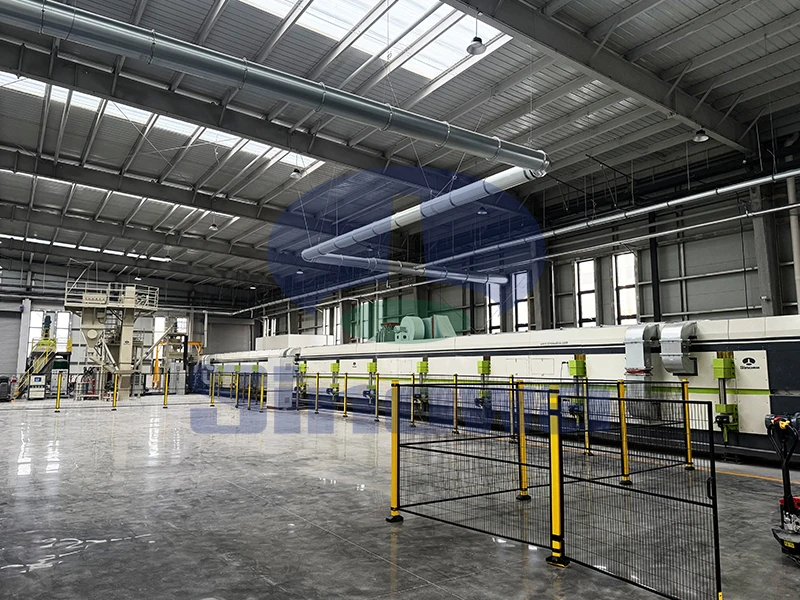
A full automatic sandwich panel machine stands out from semi-automatic and manual models due to its high level of intelligent integration and unmanned operation capabilities, which fundamentally shapes its overall investment cost structure. Unlike basic equipment that requires frequent manual intervention for material feeding, panel forming, and finished product collection, a standard full automatic sandwich panel machine can complete the entire production workflow automatically, from raw material proportioning and foaming to laminating, cutting, and stacking. The core cost difference mainly stems from its internal core components and intelligent control systems. These machines are equipped with precise PLC control modules, high-precision transmission systems, and automatic detection devices, all of which adopt high-quality industrial-grade accessories to ensure stable long-term operation. The sophisticated assembly process and strict component matching standards further raise the manufacturing cost of the equipment. For investors, the initial purchase cost is the most intuitive expenditure, and the configuration level of core components directly determines the basic investment threshold of the full automatic sandwich panel machine, forming the primary gradient of equipment market pricing.
Production capacity is one of the most critical factors that drive the cost fluctuation of a full automatic sandwich panel manufacturing machine, creating obvious differentiated investment ranges for different production demands. Small-capacity full automatic sandwich panel machine models are designed for small-scale production scenarios, with relatively simplified operational modules and moderate operating speeds, which control the overall manufacturing cost at a lower level. In contrast, medium and large-capacity models built for mass production adopt upgraded power systems, accelerated transmission structures, and multi-station synchronous operation designs. These upgraded structures enable the equipment to achieve continuous high-speed production while maintaining product uniformity, but they require more raw materials and complex mechanical structures during production. Additionally, high-capacity automated machines need to be matched with intelligent scheduling systems to coordinate multi-process linkage, which adds research and development and manufacturing costs. Enterprises with daily high-yield demands need to invest more in high-capacity equipment, while small-scale manufacturers can choose cost-effective low and medium-capacity models to balance production needs and budget constraints.
Functional expansion and customized configurations are key variables that further adjust the total investment cost of a full automatic sandwich panel making machine. Standard universal models only retain basic sandwich panel production functions, covering conventional plate making processes, with fixed structural design and no redundant functional modules, so their cost is relatively stable and moderate. To meet diverse production needs in different application scenarios, many buyers will choose personalized functional customization, which will significantly change the overall equipment cost. Common customized functions include automatic thickness adjustment, real-time product quality detection, intelligent raw material shortage alarm, and multi-type core material adaptive production. Some extended configurations such as automatic cleaning systems and remote operation monitoring modules also belong to optional upgraded functions. Each customized functional module needs independent program debugging, structural transformation, and component addition, which increases the production and debugging cycle of the full automatic sandwich panel machine, thereby raising the final equipment quotation and overall investment cost.
Beyond the one-time purchase fee, the long-term operational and maintenance costs constitute an indispensable part of the total investment of a full automatic sandwich panel production machine, affecting the overall cost performance of the equipment. Although automated equipment reduces manual labor costs in the production process, it has higher requirements for daily maintenance and regular inspection compared with traditional manual machines. High-precision automatic transmission parts and intelligent control systems need regular lubrication, calibration, and software debugging to avoid equipment failure and production downtime. In addition, the equipment will generate conventional operating costs such as energy consumption and vulnerable part replacement during long-term operation. High-quality full automatic sandwich panel machine with excellent manufacturing craftsmanship has lower failure rates and longer component service life, which can effectively reduce later maintenance and replacement costs. In contrast, low-cost simplified automated models may save initial investment but require more frequent maintenance and part replacement in the later stage, resulting in higher comprehensive long-term operating costs.
Market supply conditions and equipment technical iteration also subtly influence the market cost of a full automatic sandwich panel machinery. In the industrial machinery market, the maturity of automated production technology directly affects equipment manufacturing costs. With the continuous upgrading of industrial intelligent manufacturing technology, the production process of mainstream automated panel making equipment is becoming more standardized and streamlined, which appropriately reduces the basic manufacturing cost of conventional models. However, with the continuous emergence of new functional technologies, newly iterated full automatic sandwich panel machine equipped with the latest intelligent technologies will have a higher market cost due to the investment in new technology research and development and process upgrading. Meanwhile, changes in market supply and demand will also cause short-term cost fluctuations. When market demand for automated panel production equipment rises, the overall market quotation will rise slightly, while sufficient market supply will stabilize the equipment cost range, providing more cost-effective choices for buyers.
The comprehensive value output of a full automatic sandwich panel machine explains why its overall investment cost is higher than that of traditional semi-automated equipment, and also reflects its long-term economic advantages. The core value of this automated equipment lies in its ultra-high production efficiency and stable product quality, which can maximize production output while reducing the error rate and defective rate caused by manual operation. The full-process automatic control mode greatly saves labor input, reduces enterprise human resource costs, and realizes standardized and large-scale production. Although the upfront investment of the full automatic sandwich panel machine is relatively high, its advantages of low failure rate, long service life, and low comprehensive operating cost can help enterprises recover investment quickly in long-term continuous production. For modern panel production enterprises pursuing scale, efficiency and product stability, the comprehensive investment value of this automated equipment far outweighs the cost gap with low-end equipment, making it the mainstream choice for industrial standardized production.
Gallery
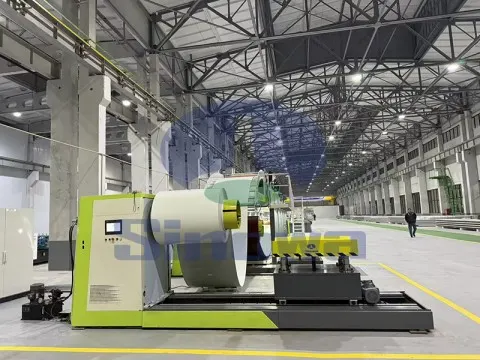
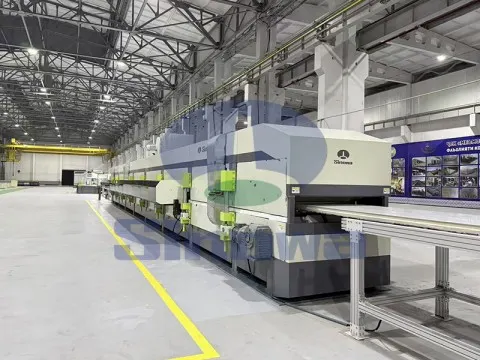
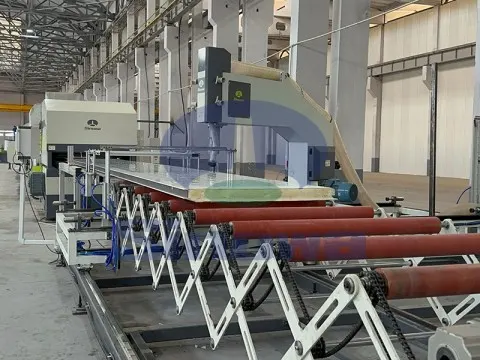
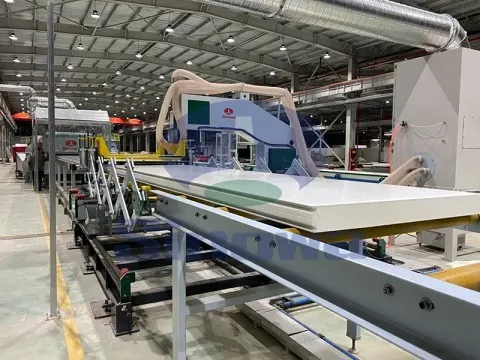
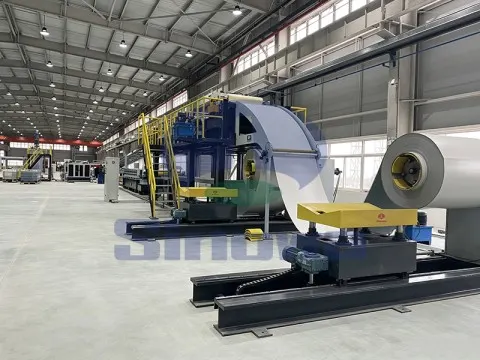
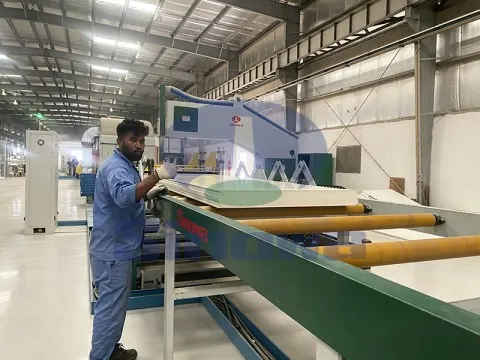
Sinowa is a professional manufacturer of sandwich panel machine in china, we provide diversified and high-performance sandwich panel production lines, including fully automatic continuous PU sandwich panel line and customized special lines to meet mass production and personalized order demands. These sandwich panel lines support processing multiple foam core materials, such as PU, PIR, mineral wool, rock wool and glass wool, covering different insulation and fireproof standards.
Featuring stable operation, high efficiency, energy saving and easy maintenance, our PU sandwich panel line deliver sandwich panels with excellent thermal insulation, fire resistance, sound insulation and lightweight durability. The finished panels are widely applied in industrial workshops, warehouse roofing and wall cladding, cold storage insulation, serving global construction and industrial insulation markets.
https://www.cnsinowa.com/faqs/how-much-does-a-full-automatic-sandwich-panel-machine-cost.html
Main Products
-

Continuous PU Sandwich Panel Production Line
This continuous PU sandwich panel production line is an integrated automatic equipment. It covers uncoiling, forming, foaming, curing and cutting processes. With automatic raw material proportioning and precise temperature & pressure control, PIR sandwich panel production line continuously composites panels with double skins. Polyurethane sandwich panel production line stably produces steel and aluminum sandwich panels. Featuring high automation, the line makes fireproof and thermal-insulation panels for building enclosure and cold storage. -

Rock Wool Sandwich Panel Production Line
Continuous rockwool sandwich panel production line is an automatic integrated production equipment, consisting of uncoiling, forming, gluing and compounding, heating curing, fixed-length cutting, automatic stacking and other modules. The mineral wool sandwich panel production line continuously conveys color steel plates and rock wool core materials to automatically complete lamination and curing, which can produce fireproof and thermal insulation sandwich panels. Featuring high automation degree and stable operation, this production line is suitable for mass production of panels used for building walls, roofs and other scenarios. -

Phenolic Insulation Board Production Line
This integrated automatic production line continuously manufactures PU and phenolic insulation boards. The insulation board production line covers raw material proportioning, high-pressure foaming, laminating, curing and fixed-length cutting. Featuring high automation and stable molding, the insulation panel production line supports various surface materials. PU boards offer excellent thermal insulation, while phenolic boards have superior fire resistance. These products are widely used in construction, cold chain, ventilation ducts and other thermal insulation fields.
Other FAQs
- Does The Continuous PU Sandwich Panel Manufacturing Line Support Automatic Stacking And Packing
- Can PIR Sandwich Panel Production Line Produce Prefabricated Container House Roof Panels
- Why Is The Foaming Expansion Rate Unstable On The PU Foam Production Line
- How Does A PUF Sandwich Panel Production Line Cut Panels To Fixed Lengths
- Automatic Error Correction Function Of Polyurethane Sandwich Panel Production Line
- Workshop Space Layout Requirement For PU Sandwich Panel Production Line
- Operator Professional Training Content For PU Sandwich Panel Line
- Energy Consumption Standard Of Automatic PU Sandwich Panel Production Equipment
- What Safety Protection Measures Are Needed For A Polyurethane Sandwich Panel Manufacturing Line
- What Regular Maintenance Does A Polyurethane Sandwich Panel Line Need
Related Articles
- PU Sandwich Panel Production Machine For Sound Insulation Project
- PU Sandwich Board Machinery
- PIR Sandwich Panel Line With After-Sales Maintenance Service
- High Efficiency PU Sandwich Panel Making Line With Energy Recovery
- Sandwich Panel Foam Production Line
- Energy-Saving PIR Sandwich Panel Production Line With Closed-Loop Heating
- Purification Board Production Line
- Heavy-Duty PIR Sandwich Panel Making Line For Steel Structure Buildings
- Insulated Panel Line
- PU Sandwich Panel Machine For Wall Insulation