What Is The Standard Production Speed Of A PUF Sandwich Panel Production Line
Sep 29, 2026
PUF sandwich panel production lines feature adjustable standard operating speeds tailored to panel specifications and line configurations.
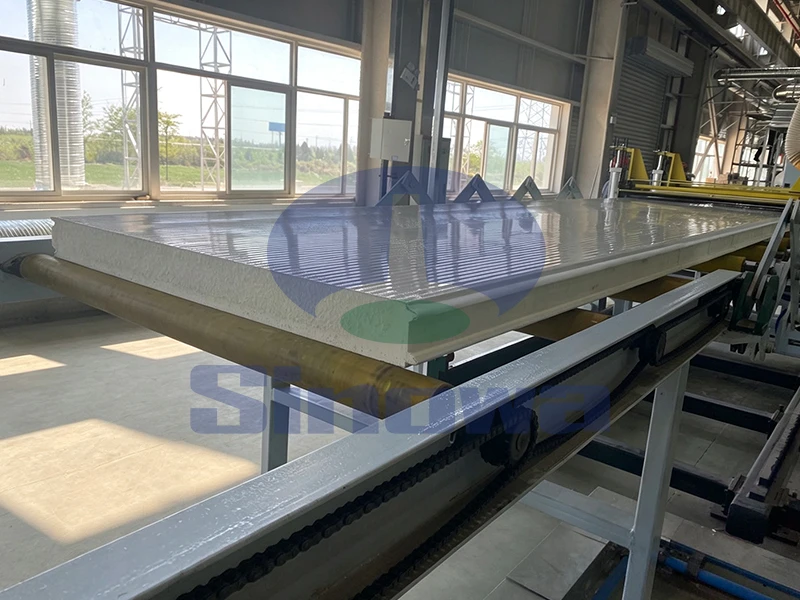
The standard production speed of a conventional automated PUF sandwich panel production line mainly falls within a stable adjustable range of 3 to 12 meters per minute, forming the core efficiency benchmark for mainstream industrial production models. Among these parameters, the most widely adopted standard working speed for general-purpose building insulation panels hovers between 4 and 8 meters per minute, balancing production efficiency and product molding quality perfectly. This standard speed setting is not arbitrarily defined but optimized through long-term operational verification to adapt to the integrated workflow of PU foaming, surface material lamination, high-temperature curing, and fixed-length cutting. Lines operating within this speed range can maintain consistent panel density, uniform bonding strength between core materials and metal surfaces, and stable overall dimensional accuracy, avoiding quality defects caused by excessive speed or low capacity utilization from overly conservative speed settings. For basic specification panels products with medium thickness and conventional structural requirements, this speed interval represents the most cost-effective and stable production state in daily industrial operations.
Panel structural specifications serve as the most direct factor that regulates the standard production speed of PUF sandwich panel lines, with core thickness being the primary influencing indicator. Thin-specification PUF panels with a thickness of 30mm to 50mm support the upper limit of standard production speed, typically running steadily at 6 to 8 meters per minute. The thin core layer requires less foaming raw material injection and shorter curing time, allowing the assembly line to advance faster without compromising foam expansion uniformity and bonding tightness. In contrast, thick panels ranging from 100mm to 200mm demand a lower standard operating speed, generally stabilized at 3 to 4 meters per minute. Thick PUF core layers need sufficient time for full chemical foaming reaction and gradual solidification to prevent internal hollowing, uneven density, or incomplete bonding between the core and surface layers. Additionally, customized panels with special surface treatments or enhanced structural designs also require appropriate speed reduction within the standard range to ensure each processing procedure is completed in place, guaranteeing finished product quality consistency.
The automation level and structural configuration of the production line further refine the standard production speed parameters and operational stability. Fully continuous automated PUF sandwich panel lines, equipped with integrated PLC intelligent control systems, automatic raw material metering devices, and long constant-temperature curing tunnels, can stably operate at the middle and upper ranges of the standard speed spectrum. These advanced configurations realize synchronous linkage of foaming injection, material pressing, heat preservation curing, and fixed-length cutting, eliminating manual intervention delays and mechanical coordination errors, thus supporting sustained high-speed and stable production. In comparison, semi-automatic production lines with simplified structural configurations have a relatively lower standard stable speed, mostly concentrated in the 3 to 5 meters per minute range. Their limited automation functions lead to longer response intervals between processes, requiring a reduced operating speed to match mechanical operation rhythms and avoid production failures such as material deviation and foaming dislocation. Moreover, production lines with longer curing tunnels provide more sufficient heat preservation conditions, enabling higher standard operating speeds while ensuring complete core material curing.
There is a clear positive correlation between the standard linear production speed and the actual hourly and daily output of PUF sandwich panels, forming a predictable production capacity system. Calculated based on the mainstream standard speed of 6 to 7 meters per minute for conventional 50mm-thick panels, the hourly effective production area can reach approximately 420 square meters under continuous stable operation. With a standard 8-hour daily working cycle and deducting short equipment inspection and material replacement intervals, the daily effective output can stabilize at over 3300 square meters. For thick 100mm panels running at a standard speed of 3 meters per minute, the hourly output is about 180 square meters, with a daily output of around 1400 square meters. This capacity difference fully reflects why different standard speed parameters are set for different panel specifications. Scientific speed matching ensures that production efficiency is maximized on the premise of qualified product quality, avoiding resource waste caused by blind speed pursuit or low production benefits from overly cautious speed control.
Reasonable control of standard production speed is critical to maintaining long-term stable operation of PUF sandwich panel production lines and reducing operational failure rates. When the line runs within the formulated standard speed range, the PU foaming system can maintain precise raw material mixing ratios and uniform injection volume, ensuring consistent foaming density of each panel core layer. The conveyor belt and pressing system operate at a matched speed, enabling uniform pressure on composite panels and firm integration between surface materials and core layers. Meanwhile, moderate operating speed reduces mechanical wear of key components such as transmission gears and cutting blades, lowering the frequency of equipment failure and maintenance costs. Once exceeding the standard speed limit, the foaming reaction cannot keep up with the mechanical propulsion speed, easily causing incomplete curing and unqualified product bonding strength. Long-term low-speed operation will lead to reduced equipment utilization, increased unit energy consumption, and declined overall production economic benefits.
In actual industrial production, the standard speed of PUF sandwich panel lines allows for flexible fine adjustment within the fixed range to adapt to diverse production scenarios. Seasonal environmental changes, such as temperature and humidity fluctuations, affect the PU foaming reaction rate, requiring slight speed modification to maintain production stability. In low-temperature environments, appropriately reducing the standard operating speed provides sufficient time for foaming and curing, while in constant-temperature and constant-humidity production workshops, the line can operate stably at the medium and upper standard speed range. In addition, different batch production demands also support reasonable speed adjustment. Small-batch and high-precision customized production adopts a slightly lower standard speed to prioritize quality control, while large-batch standardized panel production applies medium and high standard speeds to improve delivery efficiency. This flexible adjustable standard speed mechanism enables the production line to adapt to complex and changeable market production needs while maintaining basic operational and quality stability.
Gallery
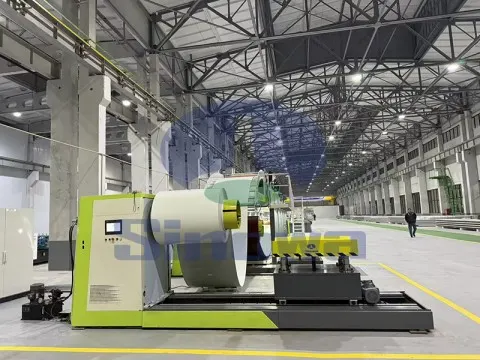
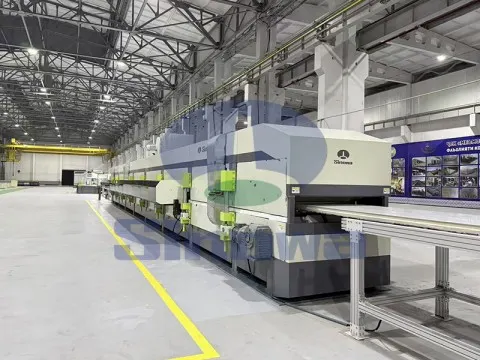
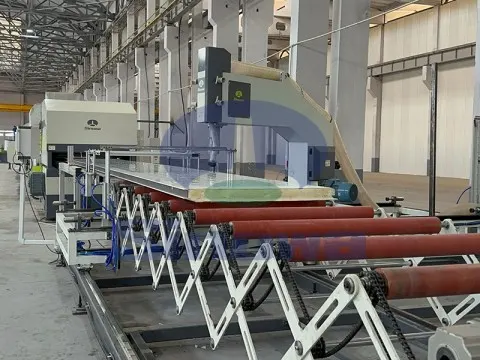
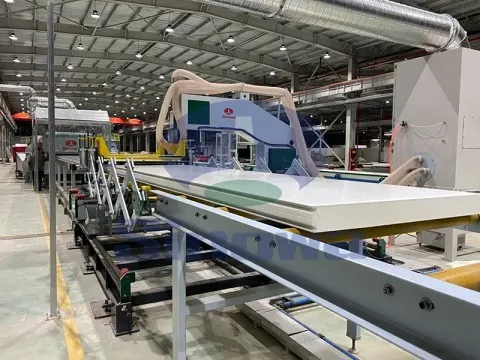
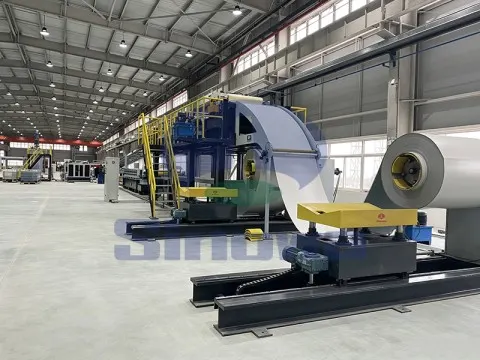
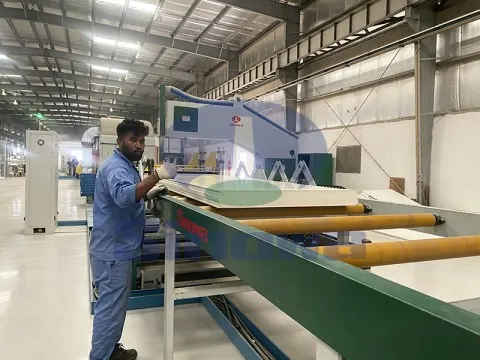
Sinowa is a professional manufacturer of sandwich panel machine in china, we provide diversified and high-performance sandwich panel production lines, including fully automatic continuous PU sandwich panel line and customized special lines to meet mass production and personalized order demands. These sandwich panel lines support processing multiple foam core materials, such as PU, PIR, mineral wool, rock wool and glass wool, covering different insulation and fireproof standards.
Featuring stable operation, high efficiency, energy saving and easy maintenance, our PU sandwich panel line deliver sandwich panels with excellent thermal insulation, fire resistance, sound insulation and lightweight durability. The finished panels are widely applied in industrial workshops, warehouse roofing and wall cladding, cold storage insulation, serving global construction and industrial insulation markets.
Main Products
-

Continuous PU Sandwich Panel Production Line
This continuous PU sandwich panel production line is an integrated automatic equipment. It covers uncoiling, forming, foaming, curing and cutting processes. With automatic raw material proportioning and precise temperature & pressure control, PIR sandwich panel production line continuously composites panels with double skins. Polyurethane sandwich panel production line stably produces steel and aluminum sandwich panels. Featuring high automation, the line makes fireproof and thermal-insulation panels for building enclosure and cold storage. -

Rock Wool Sandwich Panel Production Line
Continuous rockwool sandwich panel production line is an automatic integrated production equipment, consisting of uncoiling, forming, gluing and compounding, heating curing, fixed-length cutting, automatic stacking and other modules. The mineral wool sandwich panel production line continuously conveys color steel plates and rock wool core materials to automatically complete lamination and curing, which can produce fireproof and thermal insulation sandwich panels. Featuring high automation degree and stable operation, this production line is suitable for mass production of panels used for building walls, roofs and other scenarios. -

Phenolic Insulation Board Production Line
This integrated automatic production line continuously manufactures PU and phenolic insulation boards. The insulation board production line covers raw material proportioning, high-pressure foaming, laminating, curing and fixed-length cutting. Featuring high automation and stable molding, the insulation panel production line supports various surface materials. PU boards offer excellent thermal insulation, while phenolic boards have superior fire resistance. These products are widely used in construction, cold chain, ventilation ducts and other thermal insulation fields.
Other FAQs
- How To Improve The Flatness Of Panels Made By PIR Foam Core Sandwich Panel Line
- What Is A PU Sandwich Panel Machine And How Does It Work
- Why Is The Curing Effect Poor In Insulation Board Production Line
- How To Adjust The Foaming Ratio Of A Polyurethane Sandwich Panel Production Line
- Continuous PU Sandwich Panel Production Line Speed Adjustment Synchronization Method
- Compressed Air Supply Requirement For PU Sandwich Panel Line Operation
- Polyurethane Sandwich Panel Production Line Fault Alarm System Debugging Method
- Sandwich Panel Production Line Startup And Shutdown Standard Operating Procedures
- Maximum Production Capacity Of Polyurethane Sandwich Panel Production Line
- How Much Does A Full Automatic Sandwich Panel Machine Cost
Related Articles
- PU Sandwich Panel Wall Panel Making Machine
- Roof and Wall Panel Production Line
- Continuous PU Sandwich Panel Line For 50mm To 200mm Panel
- Custom Insulation Sandwich Panel Machine
- Continuous Laminating of PU Sandwich Panel Line
- PU Sandwich Panel Machine With Multi-component Foaming System
- PIR Insulated Partition Panel Production Line
- Continuous PU Sandwich Panel Line Export
- PU Sandwich Panel Insulation Board Machine
- Benefits Of PU Insulation Board Production Line