sandwich panel line
PIR, short for Polyisocyanurate, is a type of rigid foam insulation material derived from polyurethane, with enhanced chemical properties that make it superior to traditional insulation materials such as EPS and PU. PIR foam has a closed-cell structure, which gives it excellent thermal insulation performance, low thermal conductivity, and good water resistance. When used as the core material of sandwich panels for office building exteriors, it can effectively reduce the energy consumption of the building by minimizing heat transfer between the interior and exterior, thereby lowering the operating costs of air conditioning and heating systems. Additionally, PIR foam has outstanding fire resistance, being self-extinguishing and non-combustible in most cases, which significantly improves the fire safety level of office buildings. The exterior panels made of PIR sandwich panels are also lightweight, which reduces the load on the building structure and simplifies the installation process, shortening the construction period. Given these advantages, the production line of PIR sandwich panels for office building exteriors must be designed to fully exert the performance advantages of PIR materials, ensuring that each panel meets the strict requirements of office building construction in terms of quality, size, and performance.
The PIR sandwich panel production line for office building exterior panels is a continuous and automatic production system composed of multiple functional modules, each responsible for a specific link in the production process. The core components of the production line include the uncoiling system, panel pretreatment system, foaming system, composite forming system, cooling and solidification system, cutting system, and stacking and packaging system. These modules are closely connected and coordinated with each other, forming a seamless production process from raw material input to finished product output. The entire production line is controlled by a centralized electrical control system, which realizes automatic adjustment of production parameters, real-time monitoring of the production process, and timely handling of abnormalities, ensuring the stability and efficiency of production.
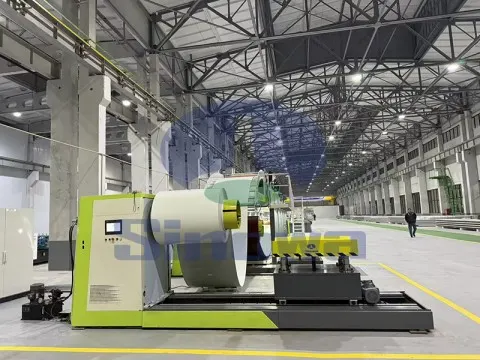
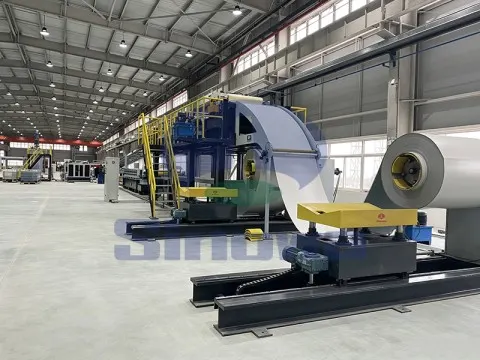
The uncoiling system is the starting point of the production line, responsible for unwinding the metal facing materials used for the surface of the PIR sandwich panels. The metal facings for office building exterior panels are usually made of galvanized steel sheets, color steel sheets, or aluminum sheets, which have good corrosion resistance, weather resistance, and structural strength. The thickness of the metal facings generally ranges from 0.4mm to 0.8mm, and the width can be adjusted according to the design requirements of the office building exterior panels, with a maximum width of 1250mm. The uncoiling system is equipped with a tension control device, which ensures that the metal sheet is unwound smoothly and evenly without wrinkles or deformation, laying a solid foundation for the subsequent pretreatment and composite forming processes. In addition, the uncoiling system is also equipped with a protective film coating device, which covers the surface of the metal sheet with a layer of protective film to prevent scratches and contamination during the production process, ensuring the aesthetic appearance of the finished exterior panels.
After uncoiling, the metal sheets enter the panel pretreatment system, which is a key link to ensure the bonding strength between the metal facing and the PIR foam core. The pretreatment process mainly includes surface cleaning, degreasing, and activation. First, the metal sheets are passed through a cleaning device, where high-pressure air or cleaning agents are used to remove dust, oil, and other impurities on the surface. Oil and impurities on the surface of the metal sheet will seriously affect the adhesion between the metal and the PIR foam, leading to delamination of the sandwich panel during use, which is extremely dangerous for the exterior panels of office buildings. Therefore, the cleaning process must be thorough, ensuring that the surface of the metal sheet is clean and dry. Next, the cleaned metal sheets are subjected to degreasing treatment, which removes the oil film on the surface through chemical or physical methods, further improving the surface activity of the metal. Finally, the metal sheets are activated by a special treatment process, which enhances the bonding performance between the metal and the adhesive, ensuring that the PIR foam core can be firmly bonded to the metal facings during the composite forming process. The pretreatment system is equipped with temperature and speed control devices, which can adjust the treatment parameters according to the type and thickness of the metal sheet, ensuring the consistency of the pretreatment effect.
The foaming system is the core part of the PIR sandwich panel production line, responsible for producing the PIR foam core with excellent performance. The raw materials used for PIR foam include polyol, isocyanate, foaming agent, catalyst, and other additives. These raw materials are stored in special storage tanks, and the feeding process is controlled by a precise metering system to ensure the accuracy of the mixing ratio. The mixing ratio of raw materials directly affects the performance of the PIR foam, such as thermal conductivity, fire resistance, and compressive strength. Therefore, the metering system must have high precision, with an error range of less than 1%, to ensure that each batch of PIR foam has consistent performance. The foaming agent used in the production line is usually a non-ozone-depleting substance such as pentane or 141b, which is environmentally friendly and meets the requirements of modern green construction. The raw materials are transported to the high-pressure mixing head through pipelines, where they are fully mixed and reacted under high pressure to form a foaming mixture. The high-pressure mixing head ensures that the raw materials are mixed evenly, avoiding local uneven foaming and affecting the quality of the foam core.
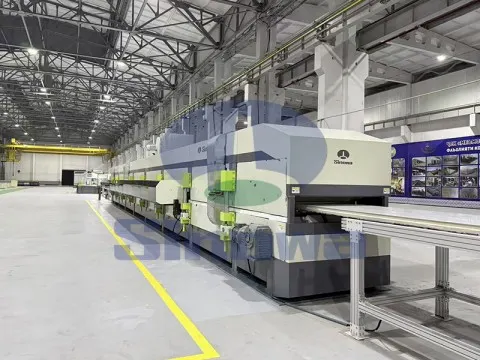
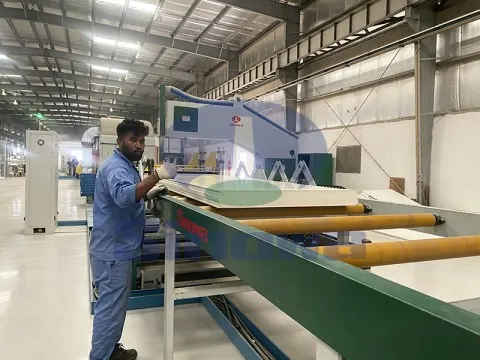
After the foaming mixture is prepared, it is injected into the composite forming system, where it is combined with the pretreated metal facings to form the PIR sandwich panel. The composite forming system mainly consists of a double-belt conveyor and a pressing device. The pretreated upper and lower metal facings are continuously conveyed to the composite area by the double-belt conveyor, and the foaming mixture is evenly injected between the two metal facings through the foaming nozzle. The double-belt conveyor is equipped with a heating device, which controls the temperature of the composite area within a reasonable range (usually between 40℃ and 60℃) to promote the foaming and solidification of the PIR mixture. The pressing device applies a uniform pressure to the metal facings and the foaming mixture, ensuring that the PIR foam core is closely bonded to the metal facings and that the thickness of the sandwich panel is uniform. The thickness of the sandwich panel can be adjusted according to the design requirements of the office building exterior panels, ranging from 30mm to 200mm (excluding the height of the corrugation). During the composite forming process, the production speed can be adjusted between 3m/min and 8m/min, which can be flexibly set according to the production demand and the performance of the raw materials. The continuous composite forming mode ensures that the PIR sandwich panels have a seamless structure, improving their overall strength and thermal insulation performance.
After the composite forming, the PIR sandwich panels enter the cooling and solidification system, which is responsible for cooling the panels to room temperature and ensuring the complete solidification of the PIR foam core. The cooling and solidification system usually adopts a combination of air cooling and water cooling, which can quickly reduce the temperature of the panels and shorten the solidification time. The length of the cooling conveyor is usually between 16 meters and 36 meters, ensuring that the panels have sufficient cooling time. During the cooling process, the temperature of the panels is monitored in real time, and the cooling speed is adjusted according to the temperature change to avoid cracks or deformation caused by rapid cooling. The complete solidification of the PIR foam core is crucial for the performance of the sandwich panel, as it ensures that the panel has sufficient compressive strength, tensile strength, and dimensional stability. After cooling and solidification, the PIR sandwich panels have a stable structure and can be further processed in the next link.
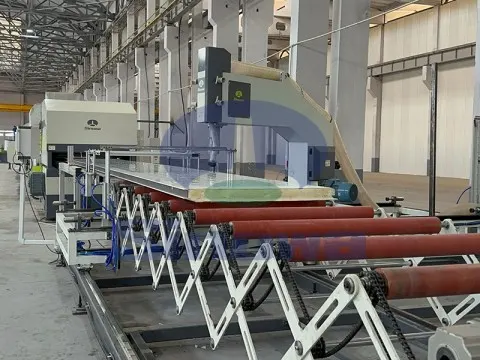
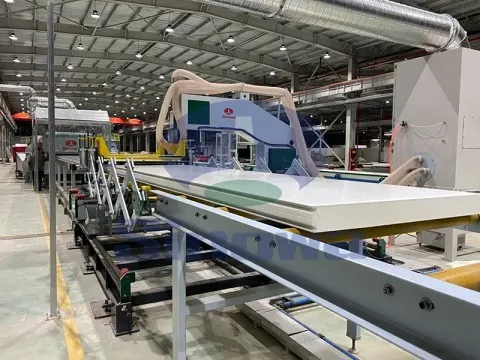
The cutting system is responsible for cutting the continuous PIR sandwich panels into the required length according to the design requirements of the office building exterior panels. The cutting system usually adopts a band saw cutting device, which has the advantages of high cutting precision, smooth cutting surface, and no damage to the foam core. The cutting length can be adjusted flexibly, ranging from 2000mm to 16000mm, to meet the different size requirements of office building exterior panels. The cutting system is equipped with a precise length measurement device, which ensures that the cutting length error is within ±2mm, ensuring the consistency of the panel size. During the cutting process, the band saw is equipped with a dust removal device, which removes the dust generated during cutting, protecting the working environment and the health of the operators. After cutting, the edges of the panels are trimmed to ensure that the edges are smooth and free of burrs, which is convenient for the installation of the exterior panels.
The final link of the production line is the stacking and packaging system, which is responsible for sorting, stacking, and packaging the cut PIR sandwich panels. The stacking device automatically stacks the panels in an orderly manner according to the size and specification of the panels, ensuring that the stack is stable and not easy to topple. The stacking height can be adjusted according to the storage and transportation requirements, usually not exceeding 2 meters to avoid damaging the panels at the bottom. The packaging system wraps the stacked panels with plastic film or waterproof cloth to prevent moisture, dust, and scratches during storage and transportation. The packaging process is also automated, which improves the packaging efficiency and ensures the consistency of the packaging quality. After packaging, the finished PIR sandwich panels are ready to be transported to the construction site for installation as office building exterior panels.
The PIR sandwich panel production line for office building exterior panels has many technical advantages that make it stand out in the field of construction material production. First, the production line adopts a fully automatic continuous production mode, which greatly improves the production efficiency and reduces the labor intensity of operators. Compared with traditional manual or semi-automatic production methods, the automatic production line can realize 24-hour continuous operation, with an annual output of up to 1 million square meters, which can meet the large-scale demand for office building exterior panels. Second, the production line is equipped with a precise control system, which can accurately adjust the production parameters such as temperature, pressure, mixing ratio, and production speed, ensuring that each batch of PIR sandwich panels has consistent performance and quality. The control system adopts advanced PLC control technology and human-machine interface, which is easy to operate and maintain, and can realize real-time monitoring and fault alarm of the production process, reducing the occurrence of production accidents. Third, the production line adopts environmentally friendly raw materials and processes, which meets the requirements of green and low-carbon construction. The foaming agent used is non-ozone-depleting, and the production process produces little waste gas, waste water, and waste residue, which has little impact on the environment. In addition, the PIR sandwich panels produced by the production line are recyclable, which further reduces the environmental burden.
In addition to the technical advantages of the production line itself, the PIR sandwich panels produced are also highly suitable for office building exteriors, with obvious application value. Office buildings usually have high requirements for energy conservation and environmental protection, and the excellent thermal insulation performance of PIR sandwich panels can effectively reduce the energy consumption of the building. Studies have shown that the thermal conductivity of PIR foam is as low as 0.022 W/m·K, which is much lower than that of EPS foam (about 0.037 W/m·K). Under the same environmental conditions, office buildings using PIR sandwich panels as exterior panels can save 30% to 50% of energy consumption compared with those using traditional exterior materials. This not only reduces the operating costs of the office building but also contributes to the realization of global carbon emission reduction goals. Moreover, the PIR sandwich panels have excellent fire resistance, which can effectively prevent the spread of fire and protect the safety of the building and its internal personnel. For office buildings with dense personnel, fire safety is particularly important, and the use of PIR sandwich panels can significantly improve the fire safety level of the building.
The lightweight and high-strength characteristics of PIR sandwich panels also bring great convenience to the construction of office buildings. The weight of PIR sandwich panels is usually between 13 kg/m² and 16 kg/m², which is much lighter than traditional exterior materials such as brick and concrete. This reduces the load on the building structure, allowing for a more reasonable design of the building structure and reducing the construction cost of the foundation. At the same time, the lightweight panels are easy to transport and install, which can shorten the construction period and reduce the labor cost of installation. The installation of PIR sandwich panels usually adopts a tongue-and-groove or aluminum rail connection method, which does not require special tools and can be installed quickly, improving the construction efficiency. In addition, the PIR sandwich panels have a variety of surface finishes, such as smooth, woodgrain, or custom colors, which can be tailored to the architectural style of the office building, enhancing the aesthetic appeal of the building exterior. The surface of the metal facings can also be treated with anti-corrosion coatings, which improves the weather resistance of the panels, making them suitable for various harsh environmental conditions and extending their service life.
With the continuous development of the construction industry and the increasing emphasis on energy conservation and environmental protection, the demand for PIR sandwich panels for office building exteriors is expected to continue to grow, which will drive the continuous upgrading and improvement of the PIR sandwich panel production line. In the future, the production line will develop in the direction of intelligence, high efficiency, and environmental protection. The integration of digital twin technology and AI quality inspection systems will become more common, which can simulate the production process, optimize the production parameters, and automatically detect the quality of the panels, reducing the product defect rate and improving the production efficiency. The modular design of the production line will also be further promoted, allowing a single production line to flexibly produce various types of PIR sandwich panels, such as exterior wall panels, roof panels, and internal wall panels, improving the comprehensive utilization rate of the production line. In addition, the research and development of new environmentally friendly raw materials and foaming technologies will further improve the performance of PIR foam, making the produced sandwich panels more energy-saving,
In conclusion, the PIR sandwich panel production line for office building exterior panels is a key equipment in modern construction material manufacturing, which integrates multiple advanced technologies to produce high-quality PIR sandwich panels that meet the strict requirements of office building construction. The production line has the advantages of high automation, high precision, high efficiency, and environmental protection, and the produced PIR sandwich panels have excellent thermal insulation, fire resistance, lightweight, and aesthetic performance, which can effectively improve the energy efficiency, fire safety, and architectural appearance of office buildings. With the continuous advancement of technology and the increasing demand for green construction, the PIR sandwich panel production line will play an increasingly important role in the construction industry, contributing to the sustainable development of the construction industry and the realization of energy conservation and carbon emission reduction goals. The development of this production line not only promotes the upgrading of the construction material industry but also provides strong support for the construction of modern, energy-saving, and environment-friendly office buildings.
Sinowa is a professional manufacturer of sandwich panel machine in china, we provide diversified and high-performance sandwich panel production lines, including fully automatic continuous PU sandwich panel line and customized special lines to meet mass production and personalized order demands. These sandwich panel lines support processing multiple foam core materials, such as PU, PIR, mineral wool, rock wool and glass wool, covering different insulation and fireproof standards.
Featuring stable operation, high efficiency, energy saving and easy maintenance, our PU sandwich panel line deliver sandwich panels with excellent thermal insulation, fire resistance, sound insulation and lightweight durability. The finished panels are widely applied in industrial workshops, warehouse roofing and wall cladding, cold storage insulation, serving global construction and industrial insulation markets.
https://www.cnsinowa.com/sandwich-panel-machines/pir-sandwich-panel-production-line-for-office-building-exterior-panels.html