What Causes Color Difference Of Finished Boards In Insulation Panel Production Line
Sep 29, 2026
Color inconsistency of finished boards is a common quality defect in the insulation panel production line, undermining product uniformity and market appearance. This issue stems from intertwined factors including raw material fluctuations, unstable processing parameters, equipment operation deviations, and environmental changes during continuous production.
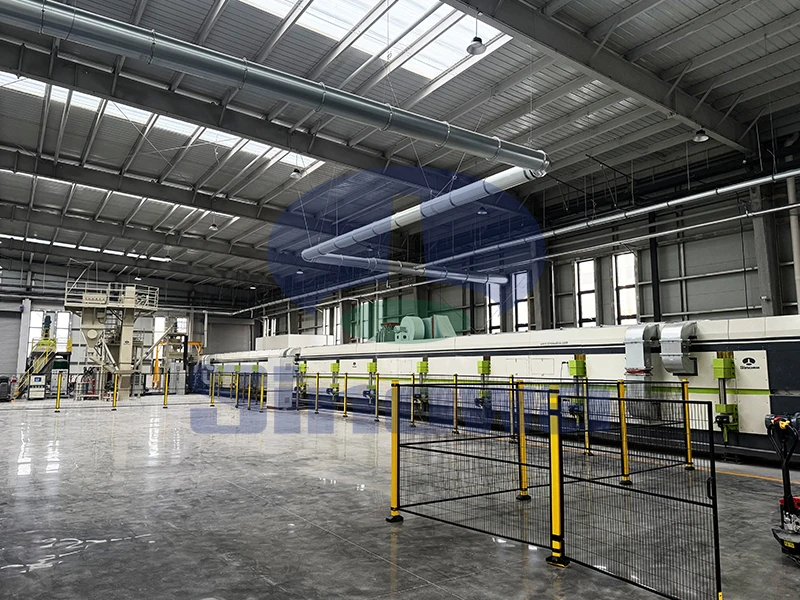
Raw material inconsistency stands as the primary trigger for color difference of finished boards in the insulation panel production line, laying the fundamental basis for uneven panel hues. The core color-forming components of insulation panels include color masterbatch, pigments, and base resins, and subtle variations in these materials across different production batches can directly lead to visible color discrepancies. Different batches of color masterbatch often have inconsistent pigment concentration, particle size distribution, and heat resistance performance. Some low-dispersive pigments tend to agglomerate during melting and mixing, failing to blend uniformly with the base material, which results in partial color streaks or shade differences on finished boards. In addition, the base resin’s inherent color and purity may fluctuate due to different production cycles, and residual impurities or slight aging of stored resins will also alter the base tone of insulation panels. Even minor differences in auxiliary materials such as additives and solvents can affect pigment dispersion and color presentation. In the continuous operation of the insulation panel production line, frequent switching of raw material batches without standardized pre-mixing and color testing will inevitably accumulate color errors, making finished products show obvious light and dark differences, which is difficult to eliminate through subsequent processing adjustments.
Unstable thermal processing parameters in the insulation panel production line are another critical factor inducing finished board color difference, as temperature and heat duration directly affect pigment stability and material curing effects. Insulation panel manufacturing relies on precise temperature control during extrusion, foaming, and curing stages, and any deviation from optimal thermal settings will trigger pigment discoloration and uneven curing. Excessively high processing temperatures will cause thermal degradation of organic pigments, leading to darkening, yellowing, or fading of panel surfaces, while uneven temperature distribution in the production equipment will result in inconsistent color depth on the same board. Meanwhile, inappropriate heating and curing time also plays a key role: insufficient curing time leaves the surface coating or composite material uncured completely, causing dull and uneven color, while over-curing leads to excessive oxidation of surface materials and pigment aging. In daily production, frequent fluctuations in equipment heating power, inconsistent furnace wind speed, and uncalibrated temperature sensors will disrupt the thermal balance of the entire insulation panel production line. These subtle parameter changes are easy to ignore in routine operation but will cause cumulative color differences in mass-produced finished boards, seriously affecting the overall consistency of product appearance.
Uneven material mixing and feeding operation errors in the insulation panel production line greatly amplify finished board color difference, affecting the uniformity of color distribution inside and outside panels. Uniform mixing of colorants and base materials is the prerequisite for consistent panel color, and abnormal operation of mixing and feeding equipment will destroy this uniformity. Long-term operation of mixing equipment may cause residual material accumulation and partial wear, leading to insufficient mixing uniformity of new materials. Some pigments with high density are prone to precipitation and stratification during static mixing, resulting in uneven color concentration in different material layers. In terms of feeding control, unstable feeding speed and intermittent feeding will cause inconsistent proportions of color masterbatch and base resin in unit production volume. Excessive addition of color masterbatch leads to dark panel color, while insufficient dosage causes light and faded finished products. In addition, manual feeding errors and irregular material sequencing will mix different batches of raw materials randomly. In the continuous running insulation panel production line, unstable mixing and feeding states will make each batch of semi-finished products have different color base tones, finally forming obvious color differences in finished insulation boards after molding and curing.
Equipment maintenance status and mechanical operation deviations in the insulation panel production line cannot be overlooked, as they indirectly cause persistent color difference of finished boards. Long-term continuous operation of production equipment will lead to mechanical aging, component wear, and parameter drift, all of which interfere with stable product color presentation. The coating and rolling components of the production line are key equipment affecting panel surface color; worn roller surfaces, uneven coating thickness, and blocked spray nozzles will result in uneven surface coverage of color materials. Partial thick coating leads to dark color areas, while thin coating causes light color spots, forming patchy color differences on finished boards. Moreover, aging temperature control modules and uncalibrated transmission systems will cause inconsistent operating speed and temperature in different production sections. Unmatched line speed will make the material stay in the heating and curing section for different durations, leading to inconsistent color development effects. Inadequate daily equipment cleaning will also leave residual color materials and degraded old materials inside the machine, which will mix into new production materials and cause color contamination. Regular and professional equipment maintenance is essential to maintain stable operation of the insulation panel production line and avoid recurring color difference problems.
Production environment changes further exacerbate color difference of finished boards processed by the insulation panel production line, with temperature, humidity, and dust conditions exerting subtle but widespread impacts. The production workshop’s ambient humidity directly affects material moisture content; excessive humidity will make raw materials absorb moisture, causing foaming defects and uneven pigment dispersion during processing, which leads to dim and uneven panel color. Overly dry air will make some fine pigment particles float and lose during mixing, reducing color saturation of finished products. Ambient temperature fluctuations also affect the material’s fluidity and curing speed, interfering with uniform color formation. In addition, floating dust, debris, and residual particles in the workshop will adhere to the surface of semi-finished panels during production, forming tiny color spots and local color differences. Poor workshop air circulation will cause uneven volatilization of solvents in coating materials, resulting in inconsistent surface flatness and color gloss of finished boards. These environmental factors do not cause drastic color changes in a single product but lead to gradual color deviation among different production batches in the long-term operation of the insulation panel production line, reducing the overall appearance quality of batch products.
Post-production cooling and storage conditions also contribute to color difference of finished boards from the insulation panel production line, affecting final color stabilization and consistency. After leaving the curing and molding section, insulation boards require standardized gradual cooling to complete color fixation, while irregular cooling modes will cause inconsistent color aging effects. Rapid forced cooling leads to uneven shrinkage of panel surface materials, resulting in subtle color tone differences and uneven gloss. Slow and uneven cooling in an open environment makes panel surfaces contact air and oxidize inconsistently, causing partial yellowing or fading. Besides, different storage environments of finished boards will aggravate color deviation: long-term exposure to strong light and high temperature accelerates pigment aging and color fading, while storage in humid and stuffy environments causes surface damp discoloration. Even boards produced in the same batch will show obvious color differences if they undergo different cooling rates and storage conditions. Many production sites focus on front-end processing control but ignore post-production management, making this hidden factor a common cause of persistent color inconsistency in finished insulation panels.
Gallery
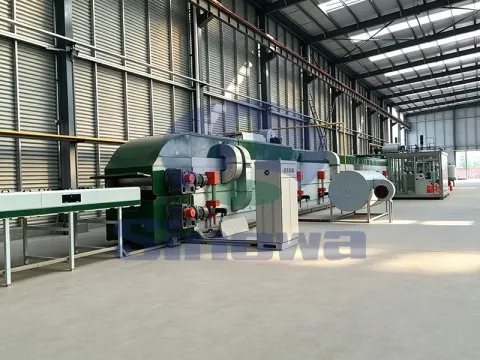
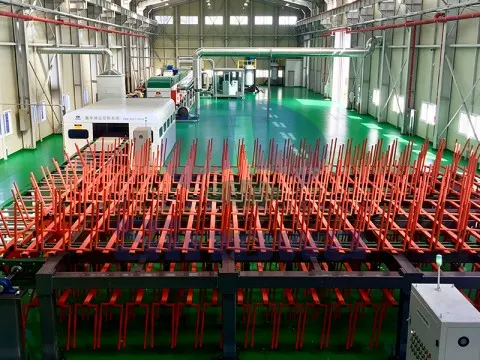
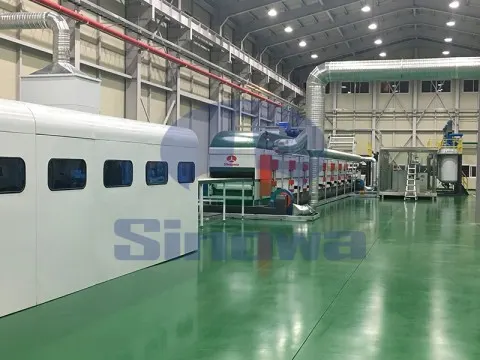
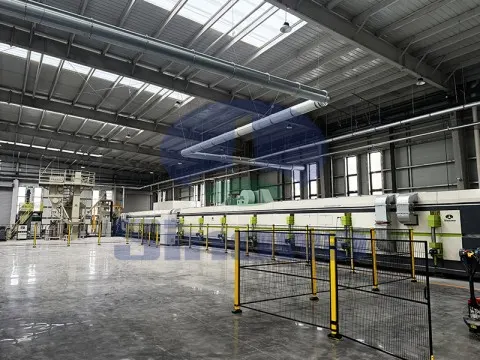
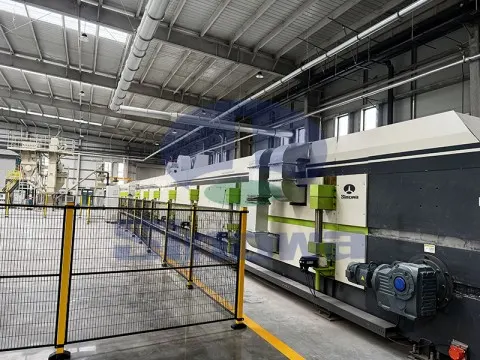
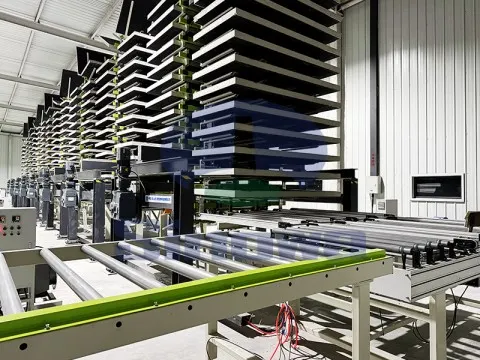
Sinowa is a professional manufacturer of sandwich panel machine in china, we provide diversified and high-performance sandwich panel production lines, including fully automatic continuous PU sandwich panel line and customized special lines to meet mass production and personalized order demands. These sandwich panel lines support processing multiple foam core materials, such as PU, PIR, mineral wool, rock wool and glass wool, covering different insulation and fireproof standards.
Featuring stable operation, high efficiency, energy saving and easy maintenance, our PU sandwich panel line deliver sandwich panels with excellent thermal insulation, fire resistance, sound insulation and lightweight durability. The finished panels are widely applied in industrial workshops, warehouse roofing and wall cladding, cold storage insulation, serving global construction and industrial insulation markets.
Main Products
-

Continuous PU Sandwich Panel Production Line
This continuous PU sandwich panel production line is an integrated automatic equipment. It covers uncoiling, forming, foaming, curing and cutting processes. With automatic raw material proportioning and precise temperature & pressure control, PIR sandwich panel production line continuously composites panels with double skins. Polyurethane sandwich panel production line stably produces steel and aluminum sandwich panels. Featuring high automation, the line makes fireproof and thermal-insulation panels for building enclosure and cold storage. -

Rock Wool Sandwich Panel Production Line
Continuous rockwool sandwich panel production line is an automatic integrated production equipment, consisting of uncoiling, forming, gluing and compounding, heating curing, fixed-length cutting, automatic stacking and other modules. The mineral wool sandwich panel production line continuously conveys color steel plates and rock wool core materials to automatically complete lamination and curing, which can produce fireproof and thermal insulation sandwich panels. Featuring high automation degree and stable operation, this production line is suitable for mass production of panels used for building walls, roofs and other scenarios. -

Phenolic Insulation Board Production Line
This integrated automatic production line continuously manufactures PU and phenolic insulation boards. The insulation board production line covers raw material proportioning, high-pressure foaming, laminating, curing and fixed-length cutting. Featuring high automation and stable molding, the insulation panel production line supports various surface materials. PU boards offer excellent thermal insulation, while phenolic boards have superior fire resistance. These products are widely used in construction, cold chain, ventilation ducts and other thermal insulation fields.
Other FAQs
- Does The Continuous PU Sandwich Panel Manufacturing Line Support Automatic Stacking And Packing
- Can PIR Sandwich Panel Production Line Produce Prefabricated Container House Roof Panels
- Why Is The Foaming Expansion Rate Unstable On The PU Foam Production Line
- How Does A PUF Sandwich Panel Production Line Cut Panels To Fixed Lengths
- Automatic Error Correction Function Of Polyurethane Sandwich Panel Production Line
- Workshop Space Layout Requirement For PU Sandwich Panel Production Line
- Operator Professional Training Content For PU Sandwich Panel Line
- Energy Consumption Standard Of Automatic PU Sandwich Panel Production Equipment
- What Safety Protection Measures Are Needed For A Polyurethane Sandwich Panel Manufacturing Line
- What Regular Maintenance Does A Polyurethane Sandwich Panel Line Need
Related Articles
- Full-auto PU Sandwich Panel Line With PLC Control System
- Polyurethane Sandwich Panel Line
- Continuous PU Insulated Sandwich Panel Line
- Insulated Sandwich Panel Machine
- Polyurethane Insulation Panel Manufacturing Line
- Continuous Metal Faced Sandwich Panel Production Line
- PU Rigid Foam Sandwich Panel Machine
- PUF Panel Production Line
- Continuous Corrugated Sandwich Panel Production Line
- Fireproof Sandwich Panel Machines