What Thickness Range Can A Polyurethane Sandwich Panel Production Line Manufacture
Oct 13, 2026
Polyurethane sandwich panel production lines are engineered to deliver a broad, continuously adjustable thickness range that matches the varied, real-world demands of architectural cladding, cold chain storage, modular equipment enclosures and lightweight prefabricated building systems, without forcing lengthy, costly retooling for most common project use cases, across every order size and project type, no matter whether the application prioritizes minimal weight, maximum insulation, or fast on-site installation.
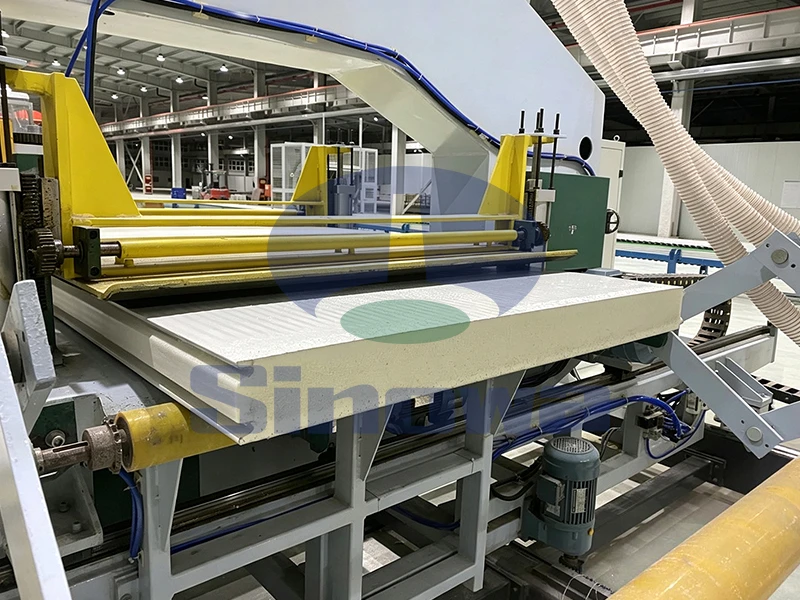
The lower bound of a standard line’s producible thickness lands in the ultra-thin zone built for light-duty, portable applications where reduced panel weight is a top priority. These thin-gauge panels are designed for use in temporary exhibition booth partitions, mobile kiosk cladding, lightweight storage facility walls, and retrofit projects where existing building structures cannot support the load of thicker, heavier cladding materials. To reliably produce panels at this end of the thickness range, production systems rely on tightly synchronized control of raw material mixing ratio, core foam expansion pressure, and the continuous, even traction speed of the upper and lower metal facing layers. The narrow gap between facing layers means the polyurethane core must spread evenly across the full panel width before its chemical reaction progresses enough to set, so production lines adjust the initial reaction speed of the foam blend to give the material enough flow time, eliminating common defects like localized bubbling, uneven core density, or partial delamination between the foam core and metal faces. The press roller system is calibrated to its smallest usable gap, with real-time tension monitoring to ensure the thin facing materials do not wrinkle or stretch unevenly as they pass through the narrow press channel. Even at these reduced thicknesses, the closed-cell structure of the polyurethane core still delivers meaningful thermal insulation, removing the need for separate secondary insulation layers on many light-duty projects, and cutting total installation time by reducing the number of components crews need to carry and lift on site.
The core, most efficiently operated section of a production line’s thickness range covers the mid-range panel thicknesses that make up the majority of global construction demand. This is the operating sweet spot where line speed, foam reaction profile, and press roller pressure can remain stable for hours or even days of continuous production, with minimal manual adjustment and extremely low rates of off-spec product. Panels in this range are the default choice for commercial building exterior walls, general-purpose cold storage room dividers, clean production workshop enclosures, and warehouse roof cladding, where balance of structural rigidity, insulation value, and cost efficiency is the primary design goal. Within this range, production systems can even introduce subtle, targeted density adjustments across the panel cross-section without changing the overall finished thickness: for example, slightly higher foam density along the panel edges improves grip for installation fasteners, preventing core chipping or crumbling when crews drive screws or lock the panel edges into place. The consistent thickness and density across this mid-range also delivers reliable acoustic damping, making panels suitable for installations adjacent to busy roadways, noisy manufacturing equipment, or public gathering spaces where unwanted sound transfer between interior and exterior is a concern. Because the line operates at peak efficiency in this range, production lead times for mid-thickness orders are typically the shortest, and the consistency between production runs is the most reliable, reducing the risk of mismatched panel batches on large construction sites.
Moving above the mid-range sweet spot, production lines can reliably deliver mid-thick panels built for moderate temperature control requirements, including constant-temperature production spaces, medium-temperature cold storage zones, and indoor grow facility enclosures. When running at these thickness levels, production systems adjust their thermal curing zones to match the longer set time required for a thicker foam core: a denser, thicker foam block holds more of the heat generated by its own chemical reaction, so curing oven temperature profiles are calibrated to slow the outer layer’s set rate, ensuring the entire core sets evenly from the facing surfaces inward to the panel center. This prevents the common defect of premature surface set that can trap trapped gas inside the core, creating weak, porous sections that reduce insulation performance. Production teams also increase facing layer tension slightly for these thicker panels, because the greater volume of expanding foam exerts higher outward pressure as it fills the press cavity; uneven tension would allow the facing layers to buckle or wrinkle as pressure builds, ruining the smooth, flat surface required for high-quality architectural cladding. The added thickness in this range delivers a measurable boost in thermal resistance, enough to maintain stable mid-range temperatures without adding separate insulation batts, which simplifies the wall build-up and reduces overall wall thickness for projects with limited interior space. Panels in this range also have enough structural rigidity to span longer distances between support frames, cutting the number of support beams required for large open-span buildings.
The upper end of a standard production line’s thickness range covers heavy, high-insulation panels built for deep cold storage, cryogenic logistics hubs, and low-temperature industrial test chambers where thermal performance is the non-negotiable design priority. Producing panels at this thickness level requires production lines to integrate extended press sections and higher-flow foam dispensing heads, because the larger internal volume requires a bigger volume of mixed foam to fill the press cavity evenly without leaving voids. The biggest production challenge at this thickness is eliminating core burn: the heat released during polyurethane reaction builds up inside the thick foam block, and if not properly managed, can raise internal temperatures high enough to make the core brittle, discolored, or structurally weak. Modern line control systems solve this by using continuous surface temperature sensors along the curing oven, dynamically adjusting heating power at each oven zone to keep the reaction front moving evenly from the outer edges of the core toward the panel center, so the entire core reaches consistent, stable strength before the panel exits the press line. Panels at this thickness level deliver extreme thermal resistance, cutting long-term energy costs for cold storage operators by reducing constant refrigeration load, and preventing the surface condensation and ice build-up that can create safety hazards on cold room floors. Because these panels are significantly heavier than mid-range alternatives, production lines also include integrated lifting point markers along the panel length, to help installation crews position panels safely without risking face damage from uneven lifting pressure.
A key advantage of modern polyurethane sandwich panel production lines is their ability to shift between different thickness settings without long, labor-intensive mechanical retooling. Rather than requiring custom die sets or dedicated press molds for every target thickness, lines store pre-calibrated parameter sets for every common thickness in their control system memory; when a new order requires a different panel thickness, operators simply select the target value on the line’s touchscreen interface, and the system automatically adjusts press roller gap, foam dispensing flow rate, traction speed, and oven zone temperatures to match the new setting. Most thickness changes are completed in under 20 minutes, with only a quick first-part measurement to confirm the finished thickness, core density, and face bond strength meet requirements before full batch production starts. This rapid changeover capability means a single line can serve a diverse mix of customers, switching from ultra-thin partition panels one shift to extra-thick cold storage panels the next, without long idle periods between orders that waste energy and reduce total annual output. The parameterized adjustment process also removes the human error that comes with manual mechanical retooling, ensuring that every production run of a given thickness matches the exact same settings, regardless of which shift crew is operating the line. This consistency is especially valuable for large projects that order panels across multiple production runs, as it eliminates the risk of mismatched thickness causing installation gaps or poor edge alignment when crews fit panels together on site.
Across its entire producible thickness range, a well-calibrated production line maintains extremely tight thickness tolerance, even across the full width and length of every finished panel. Lines install non-contact thickness sensors along the press exit, scanning every point across the panel width as it moves down the line, and feeding real-time thickness data back to the control system. If a local section of panel is slightly too thick or too thin, the system makes micro-adjustments to the corresponding press roller position or foam flow rate, correcting the deviation before the panel fully cures. This level of precision is critical for panel performance, especially for cold storage and sealed enclosure applications: even a small local thickness reduction creates a thermal bridge, where heat passes through the panel faster than surrounding sections, leading to surface condensation, frost build-up, and wasted energy over time. The consistent, uniform thickness across every panel also ensures tight, gap-free edge locks when panels are installed, removing the need for extra sealant on every panel joint and reducing air leakage through the building envelope. The line’s control system logs every thickness measurement for each produced panel, creating a traceable production record that makes it easy to diagnose quality issues if a problem emerges later, rather than requiring full batch testing to identify the source of a defect. This precision also means panels can be manufactured to match existing cladding dimensions during renovation projects, without requiring custom fabrication that would extend project timelines.
Thickness adjustments on a production line do not operate in isolation: the line’s edge forming system automatically adapts the panel’s interlocking edge profile to match the selected thickness, ensuring a tight, secure joint no matter how thick or thin the finished panel is. For ultra-thin panels, which have lower inherent structural rigidity, the forming system creates a wider, more robust interlock that distributes installation load across a larger area, preventing edge damage when panels are locked into place. For extra-thick, heavy panels, the forming system creates a deeper, stronger slot that can support the long-term weight of the panel without popping loose over decades of service. Because the multi-roller forming system adjusts roller positions rather than requiring full roller set changes, these edge profile adjustments happen simultaneously with the thickness change, adding no extra time to the order changeover process. This structural consistency across thickness ranges means crews can use the same installation tools and techniques for panels of every thickness produced on the line, reducing on-site learning curves and lowering the risk of installation errors. The matched edge profiles also create a continuous, uniform building envelope across a project, even if some wall sections use thinner panels and others use thicker high-insulation panels, eliminating visual mismatches and air gaps where different panel types meet at corners or wall transitions.
While standard production settings cover nearly all common thickness requirements, lines are designed to accommodate custom modifications that expand usable thickness options for specialized project needs. For example, projects that require embedded structural stiffeners, routed cable channels, or pre-applied decorative surface finishes can integrate auxiliary production units without modifying the core foam and press system, allowing the line to produce panels with integrated features even at the extreme ends of its thickness range. These modifications do not narrow the line’s base producible thickness range: the modular design of modern lines means auxiliary units can be added or removed as needed, letting the line return to standard production as soon as the custom order is complete. This flexibility means designers are not locked into a narrow set of thickness options when specifying panels for a project; they can select the exact thickness needed to meet insulation, structural, and budget requirements, rather than settling for a closest available off-the-shelf thickness that compromises performance. For example, a project combining a thin, lightweight facade on sun-facing walls and extra-thick high-insulation panels on shaded, high-thermal-loss walls can source all panels from the same production line, ensuring consistent surface finish and edge profile across the entire building, even with different thicknesses on different wall sections. This unified production source also reduces supply chain complexity, as project teams only need to coordinate with one production partner rather than sourcing panels from multiple facilities that may have mismatched material properties.
The wide, adjustable thickness range of modern polyurethane sandwich panel production lines delivers long-term value that extends well beyond immediate production flexibility. By removing the traditional trade-off between production speed, material efficiency, and thickness customization, these lines let building designers and construction teams optimize every wall and roof section for its specific performance needs, rather than settling for a one-size-fits-all panel thickness that wastes material or fails to meet performance targets. As construction trends shift toward more prefabricated, low-energy building systems, the ability to quickly produce panels across a broad thickness range will only grow more valuable, letting lines adapt to new building performance requirements, emerging insulation material blends, and evolving customer expectations without full equipment overhauls. The consistent, high-quality output across every thickness setting also helps polyurethane sandwich panels remain a competitive, sustainable cladding option for a wide range of building types, from temporary event spaces to permanent industrial facilities, by balancing low material waste, fast on-site installation, and long-term thermal performance across every application. Over time, this production flexibility drives down total lifecycle costs for building owners, as optimized panel thickness reduces both upfront material costs and long-term energy consumption, without forcing unnecessary structural upgrades to support heavier cladding materials.
Gallery
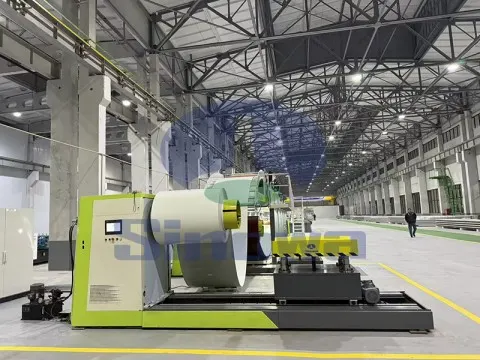
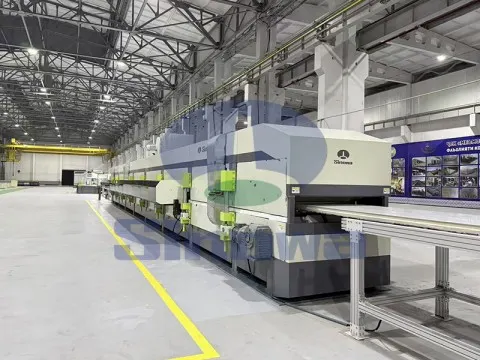
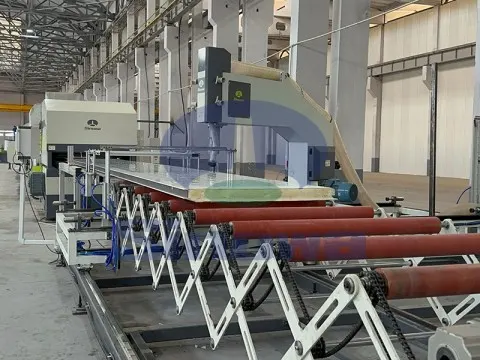
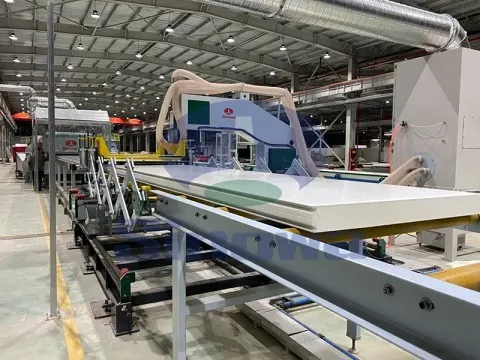
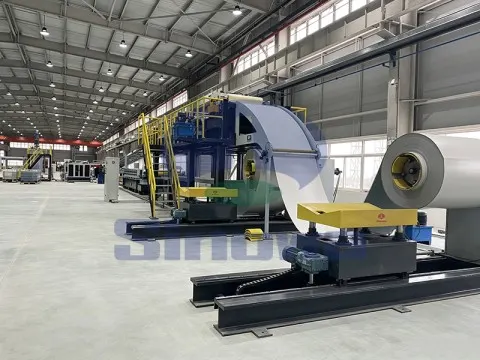
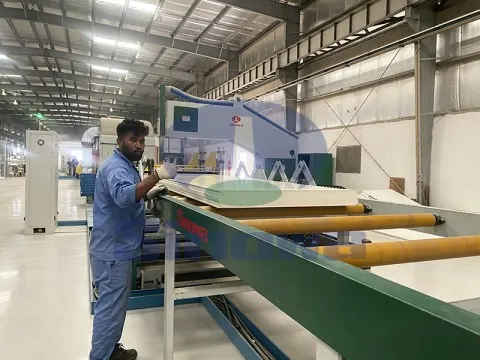
Sinowa is a professional manufacturer of sandwich panel machine in china, we provide diversified and high-performance sandwich panel production lines, including fully automatic continuous PU sandwich panel line and customized special lines to meet mass production and personalized order demands. These sandwich panel lines support processing multiple foam core materials, such as PU, PIR, mineral wool, rock wool and glass wool, covering different insulation and fireproof standards.
Featuring stable operation, high efficiency, energy saving and easy maintenance, our PU sandwich panel line deliver sandwich panels with excellent thermal insulation, fire resistance, sound insulation and lightweight durability. The finished panels are widely applied in industrial workshops, warehouse roofing and wall cladding, cold storage insulation, serving global construction and industrial insulation markets.
Main Products
-

Continuous PU Sandwich Panel Production Line
This continuous PU sandwich panel production line is an integrated automatic equipment. It covers uncoiling, forming, foaming, curing and cutting processes. With automatic raw material proportioning and precise temperature & pressure control, PIR sandwich panel production line continuously composites panels with double skins. Polyurethane sandwich panel production line stably produces steel and aluminum sandwich panels. Featuring high automation, the line makes fireproof and thermal-insulation panels for building enclosure and cold storage. -
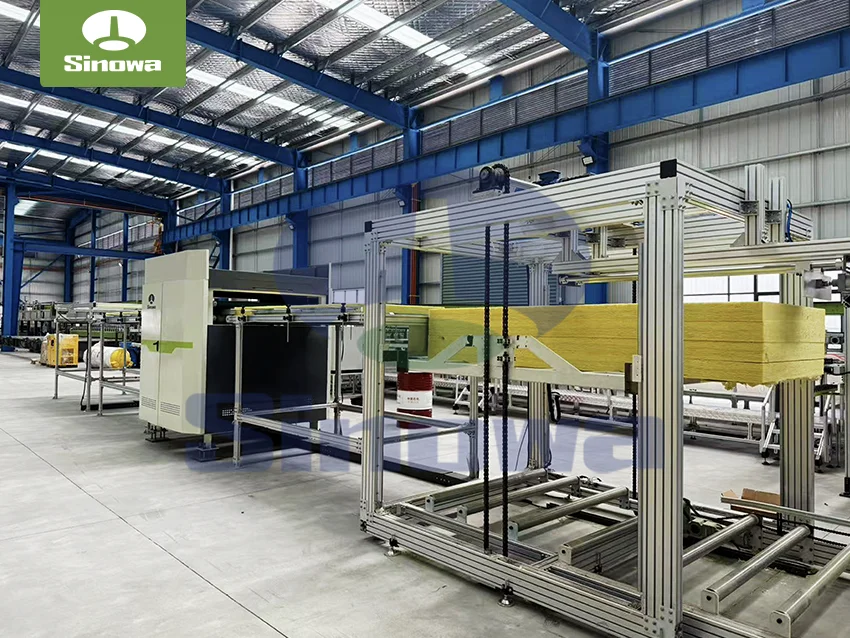
Rock Wool Sandwich Panel Production Line
Continuous rockwool sandwich panel production line is an automatic integrated production equipment, consisting of uncoiling, forming, gluing and compounding, heating curing, fixed-length cutting, automatic stacking and other modules. The mineral wool sandwich panel production line continuously conveys color steel plates and rock wool core materials to automatically complete lamination and curing, which can produce fireproof and thermal insulation sandwich panels. Featuring high automation degree and stable operation, this production line is suitable for mass production of panels used for building walls, roofs and other scenarios. -
Phenolic Insulation Board Production Line
This integrated automatic production line continuously manufactures PU and phenolic insulation boards. The insulation board production line covers raw material proportioning, high-pressure foaming, laminating, curing and fixed-length cutting. Featuring high automation and stable molding, the insulation panel production line supports various surface materials. PU boards offer excellent thermal insulation, while phenolic boards have superior fire resistance. These products are widely used in construction, cold chain, ventilation ducts and other thermal insulation fields.
Other FAQs
- What Are The Main Noise Sources Of Insulation Board Production Line
- What Is The Standard Production Speed Of A Continuous PU Sandwich Panel Line
- How To Troubleshoot Mixing Head Failures Of A Polyurethane Sandwich Panel Production Line
- How To Maintain A Polyurethane Sandwich Panel Machine Daily
- How To Adjust Foaming Density Gradient Of PIR Sandwich Panel Production Line Core Layer
- What Causes Color Difference Of Finished Boards In Insulation Panel Production Line
- How To Reduce Material Waste Of Continuous PU Sandwich Panel Production Line
- What Is The Standard Production Speed Of A PUF Sandwich Panel Production Line
- Polyurethane Sandwich Panel Production Line Energy Saving Transformation Effect
- PU Sandwich Panel Line Installation And Commissioning Steps
Related Articles
- PU Sandwich Panel Production Line With Glass Wool-PU Composite Structure
- High-end PU Sandwich Panel Machine For House
- PU Sandwich Panel Manufacturing Line For Air-Conditioning Duct
- PU Sandwich Panel Production Line For Cold Storage Construction
- Custom-Built PU Sandwich Panel Production Line For Specific Industry
- Continuous PIR Sandwich Panel Production Line
- New Design PU Foam Production Line
- PIR Sandwich Panel Production Line
- PU Foam Production Line Factory In China
- Metal Carved Insulated Sandwich Panel Machine