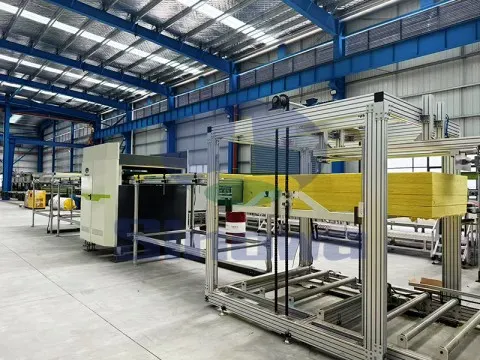
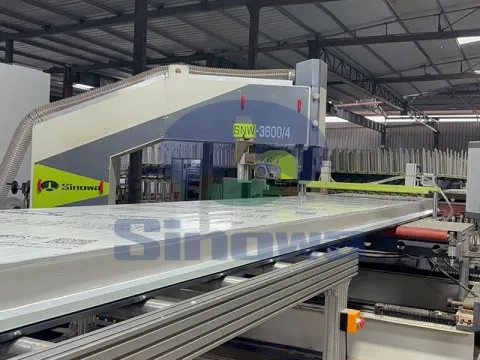
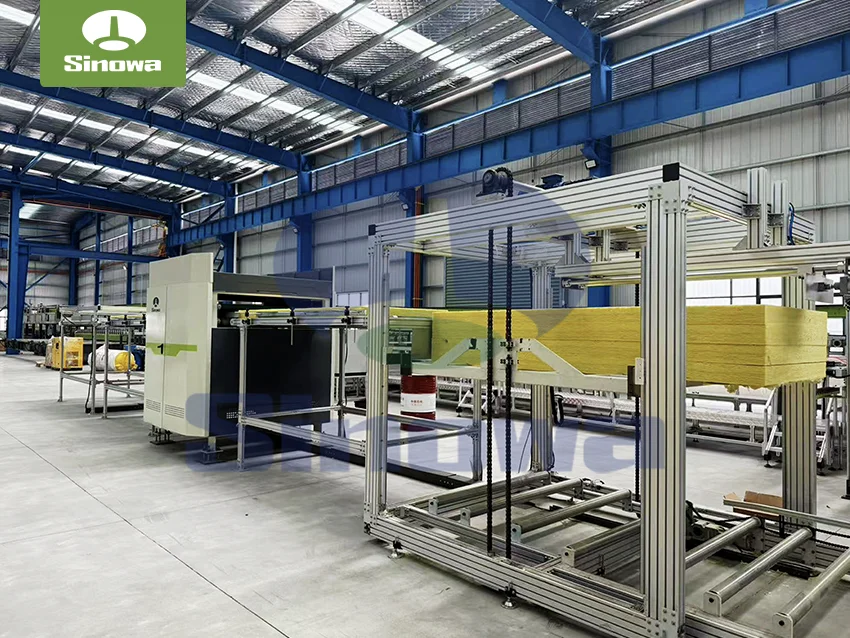
 sandwich panel line
The glass wool-PU composite structure PU sandwich panel is a three-layer composite structure, usually composed of upper and lower surface layers, a middle composite core layer, and an adhesive layer that bonds each layer closely. The surface layers are mostly made of metal sheets, which can provide good structural support and surface protection for the panel, ensuring the overall rigidity and durability of the panel. The middle composite core layer is the core part of the panel's performance, which is composed of glass wool and PU foam. Glass wool is an inorganic thermal insulation material made of glass fiber through melting, drawing, curing and other processes. It has the characteristics of non-combustibility, low thermal conductivity, good sound absorption and corrosion resistance, and can effectively improve the fire safety and sound insulation performance of the panel. PU foam is a polymer material formed by the reaction of isocyanate and polyol. It has the advantages of light weight, high strength, good thermal insulation and strong adhesion. When combined with glass wool, it can make up for the defects of glass wool's poor water resistance and low mechanical strength, and give full play to the complementary advantages of the two materials. The adhesive layer is used to bond the surface layers and the composite core layer into a whole, ensuring that there is no delamination between the layers during use, and improving the overall structural stability and service life of the panel. The production line of this kind of composite panel needs to accurately control the proportion of each component, the bonding degree between layers and the forming quality, so as to ensure that the produced panels meet the requirements of various performance indicators.
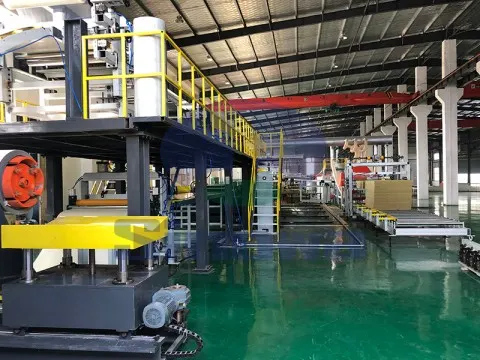
The PU sandwich panel production line with glass wool-PU composite structure is a continuous automatic production equipment composed of multiple functional sections, each of which undertakes different production tasks and cooperates closely to complete the whole production process from raw material input to finished product output. The main functional sections include raw material feeding system, surface layer forming system, composite core layer preparation and feeding system, bonding and compounding system, curing system, cutting system, stacking system and automatic control system. Each system is designed according to the characteristics of glass wool-PU composite materials, and the parameters can be adjusted according to the production needs to adapt to the production of panels of different specifications and performance requirements. The overall design of the production line adheres to the principles of high efficiency, energy saving, environmental protection and stability, and adopts advanced automatic control technology to minimize manual intervention, reduce production errors and improve production efficiency and product quality.
The raw material feeding system is the starting link of the entire production line, which is responsible for the storage, transportation and quantitative feeding of various raw materials. The raw materials involved in the production include metal coils for surface layers, glass wool rolls for composite core layers, isocyanate, polyol, foaming agent, catalyst, adhesive and other chemical raw materials for PU foam. The metal coils are usually placed on the uncoiler, and the uncoiler can stably uncoil the metal coils and feed them into the next process at a uniform speed. The surface of the metal coil can be pre-treated according to the needs, such as degreasing, derusting and coating, to improve the adhesion between the metal surface and the adhesive and enhance the corrosion resistance of the panel surface. The glass wool rolls are placed on the special glass wool feeding frame, and the glass wool is uncoiled and cut into strips of the required width through the cutting device, and then transported to the composite area. For the chemical raw materials used in PU foam, they are stored in special storage tanks respectively, and the feeding amount is accurately controlled by the metering pump. The metering pump has high precision and stability, which can ensure the accurate proportion of each component in the PU foam reaction, thus affecting the foaming quality and performance of the foam. In addition, the raw material feeding system is also equipped with a material detection device, which can real-time monitor the storage capacity of raw materials and send an alarm when the material is insufficient, ensuring the continuous operation of the production line.
The surface layer forming system is used to process the metal coils into the required surface layer shape. After the metal coils are uncoiled, they first enter the leveling device to eliminate the internal stress of the metal sheet and ensure the flatness of the surface layer. Then, the metal sheet is fed into the roll forming machine, which is composed of multiple sets of forming rollers arranged in sequence. Under the action of the forming rollers, the metal sheet is gradually bent and formed into the designed profile, such as corrugated, planar or other special shapes. The profile of the surface layer can be adjusted according to the use scenario of the panel. For example, the corrugated surface layer has higher structural strength and is suitable for the roof and exterior wall of industrial buildings; the planar surface layer is more beautiful and is suitable for the interior wall and ceiling of commercial buildings. The roll forming machine adopts advanced servo control technology, which can accurately control the forming size and shape of the surface layer, ensuring that the dimensional error of the surface layer is within the allowable range. After forming, the surface layer is transported to the composite area through the conveyor belt, waiting for compounding with the composite core layer.
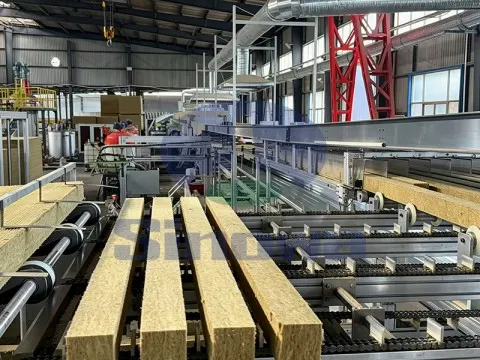
The composite core layer preparation and feeding system is the core part of the production line, which directly determines the performance of the glass wool-PU composite core layer. The preparation of the composite core layer mainly includes two parts: glass wool processing and PU foam preparation. The glass wool uncoiled from the feeding frame is cut into strips of the required width and thickness by the cutting device, and then transported to the composite area. In the process of transportation, the glass wool can be pre-treated, such as opening and flattening, to ensure that the glass wool is evenly distributed and has good air permeability, which is conducive to the penetration and foaming of PU foam. The preparation of PU foam is completed by the PU high-pressure foaming system. The isocyanate, polyol, foaming agent, catalyst and other raw materials are transported to the mixing head of the foaming machine through the metering pump according to the set proportion. Under the action of high pressure, the raw materials are fully mixed and reacted to form a liquid PU foam mixture. The mixing head has a good mixing effect, which can ensure that the raw materials are evenly mixed, avoid local uneven foaming, and improve the uniformity of the foam. The liquid PU foam mixture is sprayed onto the glass wool through the spraying device, and the foam quickly expands and fills the gaps between the glass wool fibers, forming a dense glass wool-PU composite core layer. In the process of foam spraying, the spraying amount and speed can be adjusted according to the thickness of the composite core layer and the performance requirements, ensuring that the composite core layer has uniform thickness and stable performance.
The bonding and compounding system is responsible for bonding the upper surface layer, the composite core layer and the lower surface layer into a whole. After the upper and lower surface layers are formed and the composite core layer is prepared, they are transported to the compounding machine at the same time. The compounding machine is equipped with a double belt pressing device, which can apply uniform pressure and temperature to the three layers. The temperature and pressure in the compounding process are strictly controlled. The appropriate temperature can promote the curing reaction of the PU foam and the adhesive, and the uniform pressure can ensure that the three layers are closely bonded, avoiding the generation of gaps and delamination. The adhesive used in the compounding process is a special high-temperature resistant and high-adhesion adhesive, which can firmly bond the metal surface layer and the composite core layer, ensuring that the panel has good structural stability. In the compounding process, the conveyor belt runs at a uniform speed, which ensures that the bonding time of each part of the panel is consistent, and the bonding quality is stable. After compounding, the panel becomes a continuous composite board, which is then transported to the curing system for further curing.
The curing system is used to make the PU foam in the composite core layer fully cure and form, so as to ensure the performance of the composite panel. The continuous composite board after compounding enters the curing tunnel, which is equipped with a heating system and a temperature control device. The temperature in the curing tunnel is set according to the curing characteristics of the PU foam, usually between 60℃ and 80℃. The curing time is determined by the production speed and the thickness of the panel, generally ranging from several minutes to more than ten minutes. During the curing process, the PU foam undergoes a series of chemical reactions, gradually hardens and forms a solid structure, and firmly bonds with the glass wool and the surface layer. The curing tunnel adopts a hot air circulation heating method, which can ensure that the temperature in the tunnel is uniform, avoiding local overheating or insufficient curing, and improving the curing quality of the panel. After fully curing, the composite panel has stable performance, high strength and good thermal insulation, which can meet the use requirements of various scenarios.
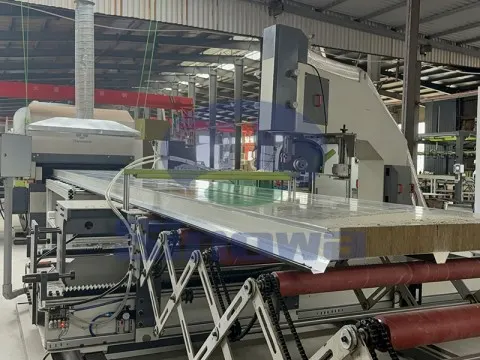
The cutting system is used to cut the continuous composite panel into finished products of the required length. After curing, the continuous panel is transported to the cutting machine, which is usually a flying saw cutting machine. The flying saw cutting machine can cut the panel while the panel is moving, without stopping the production line, ensuring the continuity of production and improving production efficiency. The cutting length can be set through the automatic control system according to the customer's needs, and the cutting precision is high, which can ensure that the length error of the finished product is within a small range. The cutting machine is equipped with a high-speed cutting blade, which can cut the panel smoothly, avoiding the occurrence of burrs, cracks and other defects on the cutting surface. After cutting, the finished panels are transported to the stacking system through the conveyor belt.
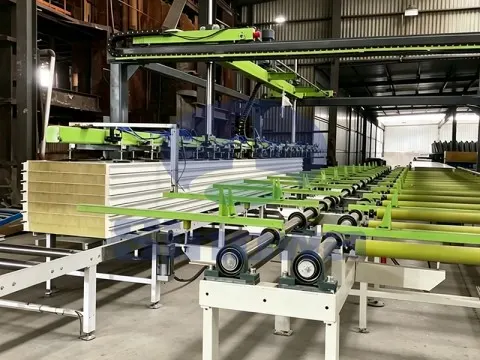
The stacking system is responsible for the automatic stacking and sorting of the finished panels. The finished panels after cutting are transported to the stacking area, and the stacking machine automatically stacks the panels according to the set number and specifications. The stacking machine adopts a flexible clamping device, which can avoid damage to the surface of the panel during stacking. The stacked panels are neat and stable, which is convenient for storage, transportation and loading. The stacking system is also equipped with a counting device, which can accurately count the number of finished panels, facilitating production management and inventory statistics. In addition, the stacking system can be connected with the packaging system according to the needs, and the stacked panels can be packaged to prevent damage during transportation and storage.
The automatic control system is the "brain" of the entire production line, which is responsible for the coordinated control of each functional section. The automatic control system adopts a PLC control system, which is equipped with a human-machine interface. Operators can set production parameters, monitor production status and adjust production processes through the human-machine interface. The system can real-time collect the operating parameters of each equipment, such as the speed of the conveyor belt, the temperature of the curing tunnel, the feeding amount of the metering pump, etc., and display them on the human-machine interface. If an abnormal situation occurs during the production process, the system will automatically send an alarm and stop the relevant equipment to avoid the expansion of faults and ensure the safety of production. The automatic control system can also realize the linkage control of each equipment, ensuring that the production line runs smoothly and efficiently. In addition, the system can store production data, such as production volume, production time, product specifications, etc., which is convenient for production statistics and quality traceability.
Compared with the traditional single material panel production line, the PU sandwich panel production line with glass wool-PU composite structure has many obvious advantages. First of all, the production line has high automation degree, which can realize continuous production from raw material input to finished product output, greatly reducing manual intervention, improving production efficiency and reducing labor costs. Secondly, the production line has high production precision, which can accurately control the size, thickness and performance of the panel, ensuring that the product quality is stable and consistent, and meeting the strict requirements of various application scenarios. Thirdly, the production line is environmentally friendly and energy-saving. In the production process, it adopts environment-friendly raw materials and production technologies, reduces the emission of waste gas, waste water and waste residue, and meets the requirements of environmental protection. At the same time, the energy consumption of the production line is low, which can effectively reduce production costs. In addition, the production line has strong flexibility, which can adjust production parameters according to the needs of customers, produce panels of different specifications, thicknesses and performance, and adapt to the diverse needs of different industries.
The glass wool-PU composite structure PU sandwich panels produced by this production line have excellent comprehensive performance, and are widely used in various fields such as industrial buildings, commercial buildings, residential buildings, cold storage, warehouses, and vehicles. In industrial buildings, such as factories and workshops, the panels can be used as roof and exterior wall materials, which have good thermal insulation and fire resistance, and can reduce the energy consumption of air conditioning and heating, and improve the working environment of the workshop. In commercial buildings, such as shopping malls and office buildings, the panels have beautiful appearance, good sound insulation and thermal insulation, which can create a comfortable indoor environment. In residential buildings, the panels can be used as interior wall and ceiling materials, which are environmentally friendly and healthy, and can improve the living comfort of residents. In cold storage and warehouses, the panels have excellent thermal insulation and waterproof performance, which can maintain a stable low temperature environment, prevent the deterioration of goods, and extend the storage life of goods. In vehicles, such as refrigerated trucks and caravans, the panels are light in weight and good in thermal insulation, which can reduce the energy consumption of the vehicle and ensure the transportation quality of goods.
In the process of using the production line, daily maintenance and maintenance are very important, which can ensure the stable operation of the production line, extend the service life of the equipment, and reduce the failure rate. The daily maintenance mainly includes cleaning the equipment, checking the tightness of the parts, adding lubricating oil, and checking the operation status of the electrical system. For the key equipment, such as the PU high-pressure foaming system, the roll forming machine and the cutting machine, regular inspection and maintenance should be carried out to check whether the parts are worn, whether the parameters are accurate, and whether there is leakage. If any fault is found, it should be handled in time to avoid affecting the normal production. In addition, the operators should be trained professionally to be familiar with the working principle and operation method of the production line, so as to ensure the correct operation of the equipment and reduce the occurrence of operational errors.
With the continuous development of the construction and industrial insulation industry, the demand for high-performance composite insulation materials is increasing, and the PU sandwich panel production line with glass wool-PU composite structure will also face new development opportunities and challenges. In the future, with the continuous progress of technology, the production line will be more intelligent, efficient and environmentally friendly. For example, the application of artificial intelligence technology can realize the intelligent adjustment of production parameters and the intelligent diagnosis of equipment faults, further improving production efficiency and product quality. The development of new environment-friendly raw materials can make the produced composite panels more environmentally friendly and healthy, meeting the higher requirements of the market for environmental protection. In addition, the production line will be more flexible and versatile, able to produce more types of composite panels to adapt to the changing market needs.
In conclusion, the PU sandwich panel production line with glass wool-PU composite structure is a professional production equipment integrating multiple technologies, which plays an important role in the production of high-performance composite insulation panels. The production line has the advantages of high automation, high precision, environmental protection and energy saving, and strong flexibility. The glass wool-PU composite structure PU sandwich panels produced by it have excellent comprehensive performance and are widely used in various fields. With the continuous development of technology, the production line will be further improved and upgraded, providing more powerful support for the development of the composite insulation material industry, and making greater contributions to the energy conservation, environmental protection and sustainable development of the construction and industrial fields.
Sinowa is a professional manufacturer of sandwich panel machine in china, we provide diversified and high-performance sandwich panel production lines, including fully automatic continuous PU sandwich panel line and customized special lines to meet mass production and personalized order demands. These sandwich panel lines support processing multiple foam core materials, such as PU, PIR, mineral wool, rock wool and glass wool, covering different insulation and fireproof standards.
Featuring stable operation, high efficiency, energy saving and easy maintenance, our PU sandwich panel line deliver sandwich panels with excellent thermal insulation, fire resistance, sound insulation and lightweight durability. The finished panels are widely applied in industrial workshops, warehouse roofing and wall cladding, cold storage insulation, serving global construction and industrial insulation markets.
https://www.cnsinowa.com/sandwich-panel-machines/pu-sandwich-panel-production-line-with-glass-wool-pu-composite-structure.html