sandwich panel machine
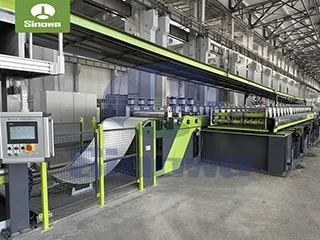
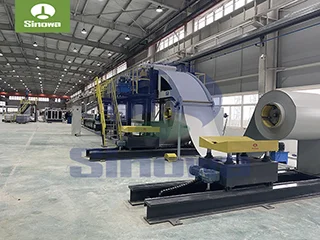
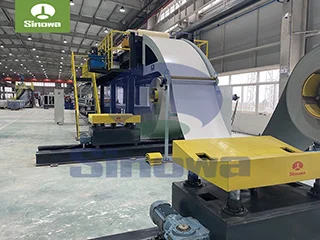
The structure of a PU sandwich panel machine with rigid foam core is composed of several interconnected systems, each contributing to the overall production process. At the heart of the machine is the material handling system, which includes uncoilers for the facing materials. These uncoilers are designed to hold large rolls of facing sheets—such as metal, fiberglass-reinforced plastic (FRP), aluminum, or coated fabrics—and feed them into the production line at a steady, controlled speed. The facing materials undergo preliminary processing before reaching the foaming station, including tempering to ensure optimal adhesion and the application of adhesion promoters where necessary. This preparation step is critical, as it enhances the bond between the facing layers and the PU foam core, preventing delamination and ensuring long-term durability of the panels.
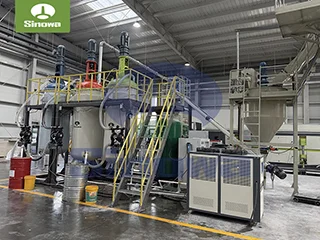
Following the material handling system is the metering and mixing unit, a core component that dictates the quality of the PU foam core. This unit precisely measures the two main components of polyurethane foam—polyol and isocyanate—along with additives such as catalysts, blowing agents, and flame retardants. The accuracy of this metering process is essential, as even minor deviations in the chemical ratio can affect the foam’s density, thermal conductivity, and mechanical strength. The components are then mixed in a high-pressure mix head, which ensures thorough homogenization before the mixture is dispensed onto the lower facing layer. Blowing agents, typically hydrocarbons like pentane or pentane mixtures, facilitate the expansion of the foam, creating a closed-cell structure that delivers excellent insulation properties. Safety systems are integrated into this unit to handle flammable blowing agents, including explosion-proof enclosures and ventilation systems to maintain a safe production environment.
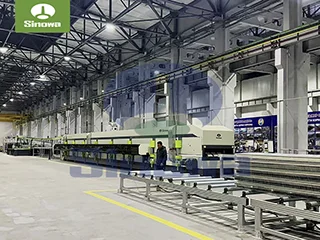
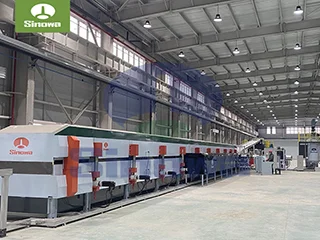
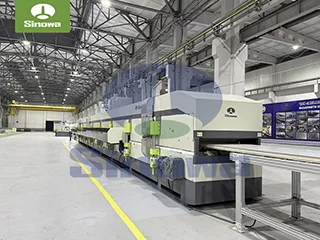
The double belt laminating system is another key structural element, responsible for shaping and bonding the sandwich panel. This system consists of two parallel, endless belts that run through the machine, applying consistent pressure and temperature to the panel assembly as the foam cures. The belts are made from durable materials capable of withstanding high temperatures and pressure, ensuring flatness and uniform thickness across the entire panel. As the foam mixture is dispensed onto the lower facing layer, it begins to expand and react chemically. The upper belt presses down on the expanding foam, confining it between the two facing layers and ensuring complete adhesion. The length of the double belt conveyor varies depending on the production speed and the curing time required for the foam, with typical lengths ranging from 12 to 50 meters to allow sufficient time for the foam to harden and stabilize.
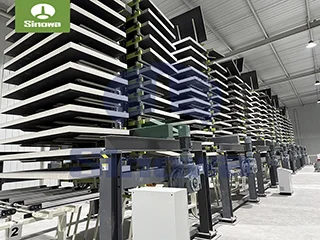
Completing the machine’s structure are the post-processing and control systems. After the foam has cured within the double belt system, the continuous panel is fed into a cross-cutter, which trims the panel to the desired length using either a flying band saw or a disk saw. Some machines also integrate additional post-processing units, such as embossing tools to add texture to the facing layers, stacking mechanisms to organize finished panels, and packaging stations for protection during transportation. The control system, often a programmable logic controller (PLC), oversees the entire production process, regulating parameters such as production speed, foam density, temperature, and pressure. Operators can adjust these parameters via a human-machine interface (HMI) to accommodate different panel specifications, ensuring flexibility and customization capabilities.
The performance of a PU sandwich panel machine with rigid foam core is evaluated based on several key metrics that directly impact the quality of the finished panels and the efficiency of production. Precision is a primary performance indicator, encompassing the machine’s ability to maintain consistent foam density, panel thickness, and bonding strength. Foam density is typically adjustable within a range of 28 to 80 kg/m³, depending on the application requirements—lower densities for lightweight insulation and higher densities for structural applications. The machine’s metering system must maintain this density with minimal variation, as inconsistent density can lead to weak points in the core and compromised insulation performance. Similarly, panel thickness control is critical, with most machines capable of producing panels ranging from 10 mm to 250 mm in thickness, with deviations of less than 1% to ensure uniformity.
Productivity is another essential performance characteristic, measured by the machine’s production speed and output capacity. Standard machines operate at speeds of up to 15 meters per minute, while high-speed laminators can reach speeds of 60 meters per minute, making them suitable for large-scale production facilities. The output capacity is also influenced by the machine’s width capability, with most models accommodating panel widths up to 1.2 meters, though some can be customized to handle widths of up to 3.6 meters. Energy efficiency is an increasingly important performance factor, with modern machines incorporating design features such as energy-saving motors, heat recovery systems, and optimized insulation for the double belt conveyor. These features reduce power consumption and material waste, lowering production costs while minimizing environmental impact.
Durability and reliability are critical for industrial equipment, and PU sandwich panel machines are built to withstand the rigors of continuous operation. The machine’s frame and components are constructed from high-strength steel and corrosion-resistant materials, ensuring longevity even in harsh manufacturing environments. The double belt system, in particular, is designed to resist wear and tear, with replaceable components to extend the machine’s service life. Additionally, the machine’s ability to maintain consistent performance over time—without frequent breakdowns or adjustments—contributes to its overall reliability, reducing downtime and ensuring steady production schedules.
Versatility is another key performance attribute, as modern machines must accommodate a wide range of facing materials and panel configurations. The equipment should be compatible with various facing materials, including prepainted steel, aluminum, stainless steel, FRP, and composite fabrics, allowing manufacturers to produce panels tailored to specific applications. Customization capabilities also extend to panel profiles, with some machines capable of producing tongue-and-groove panels for enhanced installation efficiency, or embossed panels for improved aesthetic appeal. This versatility enables manufacturers to serve diverse market needs without investing in multiple specialized machines.
PU sandwich panel machines with rigid foam core can be categorized into several types based on their production method, configuration, and intended application. The most common type is the continuous production machine, which operates in an uninterrupted workflow to produce long panels that are later cut to length. These machines are ideal for large-scale production of standard panels used in construction, cold storage, and industrial facilities. Continuous machines offer high productivity and consistent quality, making them the preferred choice for mass manufacturing.
Semi-continuous machines, by contrast, combine elements of batch and continuous production. These machines produce panels in sections, with each section curing before the next is processed. They are suitable for small to medium-scale production runs or for manufacturing custom panels with unique specifications, such as non-standard thicknesses or specialized facing materials. Semi-continuous machines offer greater flexibility than continuous models but with lower productivity, making them a practical option for niche markets or small manufacturing operations.
Another classification is based on the type of foam core produced, with machines specialized for either PU or polyisocyanurate (PIR) foam cores. While PU and PIR foams are chemically similar, PIR foam offers enhanced fire resistance and thermal stability, making it suitable for applications with strict fire safety requirements. Machines designed for PIR foam production feature modified metering and mixing systems to accommodate the different chemical composition of PIR, ensuring optimal foam properties. Some advanced machines are dual-purpose, capable of producing both PU and PIR foam cores with minimal adjustments, offering manufacturers greater flexibility.
Customized machines are also available, tailored to specific production needs or industry requirements. For example, machines used for producing panels for refrigerated truck bodies may include specialized bonding systems to ensure the panels can withstand extreme temperature fluctuations and vibration during transportation. Machines for cleanroom applications may incorporate additional quality control features to ensure the panels meet strict hygiene and particle emission standards. Customized machines can also be designed to handle extra-large panel sizes, up to 13.8 meters in length, for use in large-span buildings or modular structures.
The applications of PU sandwich panels produced by these machines are diverse, spanning multiple industries due to the panels’ unique combination of thermal insulation, structural strength, and lightweight design. The construction industry is the largest consumer, utilizing the panels for walls, roofs, and partitions in industrial buildings, warehouses, commercial facilities, and residential structures. The excellent thermal insulation properties of PU foam cores help reduce energy consumption for heating and cooling, making the panels a sustainable choice for green buildings. Additionally, the lightweight nature of the panels simplifies transportation and installation, reducing construction time and labor costs compared to traditional materials like concrete or brick.
Cold storage and refrigeration facilities represent another major application area. PU sandwich panels are ideal for constructing walk-in freezers, cold rooms, and refrigerated warehouses, as their closed-cell foam core provides superior thermal insulation, maintaining stable internal temperatures with minimal energy input. The panels also offer excellent moisture resistance, preventing condensation and mold growth, which is critical for preserving food products, pharmaceuticals, and other temperature-sensitive goods. Refrigerated truck bodies and shipping containers also rely on these panels to maintain temperature control during transportation, ensuring the integrity of perishable goods in the cold chain.
The food processing and pharmaceutical industries utilize PU sandwich panels for constructing cleanrooms and sterile environments. The panels’ smooth, non-porous facing materials are easy to clean and disinfect, meeting strict hygiene standards. Their thermal insulation properties also help maintain consistent temperatures and humidity levels, which are essential for food safety and pharmaceutical production. Additionally, the panels’ structural strength allows for the installation of specialized equipment and fixtures without compromising the integrity of the building envelope.
Prefabricated and modular construction is another growing application area, driven by the need for fast and efficient building methods. PU sandwich panels are well-suited for modular structures, as they can be prefabricated off-site with precise dimensions, allowing for quick assembly on-site. This method reduces construction time by up to two-thirds compared to traditional building methods, minimizing disruption to surrounding areas. Modular homes, portable offices, and temporary structures for events or disaster relief all benefit from the versatility and durability of PU sandwich panels.
The transportation industry also uses PU sandwich panels for various applications beyond refrigerated trucks. The panels are used in the construction of train carriages, ship interiors, and aircraft components, where lightweight design and structural strength are critical. The panels’ resistance to corrosion and extreme weather conditions makes them suitable for marine applications, while their thermal insulation properties enhance passenger comfort in transportation vehicles. Additionally, the panels can be customized to meet specific safety standards, such as fire resistance and impact resistance, for use in public transportation.
Agricultural facilities, such as greenhouses, livestock barns, and storage sheds, also benefit from PU sandwich panels. The panels’ thermal insulation helps maintain optimal temperatures for plant growth and livestock comfort, improving crop yields and animal health. Their durability and resistance to moisture and pests make them suitable for harsh agricultural environments, reducing maintenance costs over time. Greenhouses, in particular, benefit from the panels’ light transmission capabilities when combined with transparent facing materials, allowing for natural sunlight while maintaining temperature control.
In addition to these mainstream applications, PU sandwich panels are used in specialized areas such as sound insulation barriers along highways and railways, due to their ability to absorb and block noise. They are also used in industrial ovens and kilns as insulation linings, thanks to their high-temperature resistance when combined with appropriate facing materials. The versatility of the panels, enabled by the flexibility of the manufacturing machines, continues to expand their applications into new industries and use cases.
The future of PU sandwich panel machines with rigid foam core is focused on enhancing efficiency, sustainability, and automation. Manufacturers are developing machines with advanced control systems that utilize artificial intelligence (AI) to optimize production parameters in real time, reducing waste and improving quality. Sustainable features, such as the use of bio-based polyols and low-global-warming-potential blowing agents, are becoming more prevalent, aligning with global efforts to reduce carbon emissions. Additionally, increased automation, including robotic stacking and packaging, is reducing the need for manual labor, improving production efficiency and workplace safety.
As industries continue to prioritize energy efficiency, sustainability, and cost-effectiveness, the demand for PU sandwich panels and the machines that produce them is expected to grow. The ability of these machines to produce high-quality, customizable panels for a wide range of applications ensures their relevance in modern manufacturing, supporting the development of more efficient, sustainable, and innovative buildings and products across the globe.
https://www.cnsinowa.com/sandwich-panel-machines/pu-sandwich-panel-machine-with-rigid-foam-core.html